30 September 2026 - Approx. 6 min read
TikTok seems to be a never-ending source of bad advice that needs to be debunked, and this latest article in my series detailing the nonsense people say on TikTok involves taping your mouth shut. Specifically, this pseudo-medical idea involves you taping your mouth shut while you sleep, forcing you to breathe through your nose.
30 September 2026 - Approx. 4 min read
I've just spent a few days away with my family, enjoying being in the middle of nowhere and ignoring my emails - I took my laptop with me, but it stayed in its bag for the entire trip. Now I'm back to reality, and sending this newsletter out a couple of days late as a result of my absence.
30 March 2026 - Approx. 2 min read
I must admit I had believed climate change due to anthropogenic (man-made) effects meant that parts of the planet became hotter and wetter, and parts became colder. In other words, summers were hotter and winters could become colder.
30 March 2026 - Approx. 8 min read
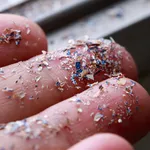
Tiny microplastics are making big headlines. Are they a ticking time bomb for human health, or just another overblown environmental scare?
20 January 2026 - Approx. 10 min read
It is with great dismay that I report that the second season of the Telepathy Tapes podcast has been released, and it's weirder than ever. Topics covered across the 11 available episodes take pseudoscience to new heights, including mediumship, animal telepathy, near-death experiences, energy healing, and plant intelligence. My scan of the transcripts indicates that while the psychic abilities of Autistic children are still discussed, Autism has largely taken a back seat to a broader exploration of fringe science involving human consciousness. As Meghan Boilard for Asterisk Mag put it,
5 January 2026 - Approx. 18 min read
To be credible, scientific claims must be able to survive informed criticism. The nature of the critique that is needed will vary, depending on what is in question. It will vary, at a broader level, depending on whether what is in question is.
13 October 2025 - Approx. 12 min read
Earlier this month the UK Coroner ruled that British health blogger Kate Shemirani, who promoted conspiracy theories, had "adversely influenced" her daughter, Paloma Shemirani, to refuse chemotherapy, causing her death from cancer on the 24th of July 2024.
13 October 2025 - Approx. 3 min read
RFK Jr. continues to find more and more reasons to blame acetaminophen for autism.
29 September 2025 - Approx. 17 min read
What I hope has been self-evident in previous instalments of my Wham, Bam, Autism Scams series is that some people are willing to do whatever it takes to spare their children from what they see as a lifetime of suffering; usually by avoiding vaccines and making their children ingest all sorts of god awful things, i.e. bleach. What I haven't really explored is the things people do to themselves to prevent having Autistic children because, well, people don't necessarily think of preventing Autism at the parent-level, save for the occasional new blurb about sex selection in fertility medicine. Developments in the United States last week demonstrate what happens when unchecked Autism misinformation is used to justify asking women, pregnant people, and their families to make a choice that could kill them.
15 September 2025 - Approx. 8 min read
The documentary Prisoners of Silence marked one of the first critical investigations of Facilitated Communication (FC) that aired on prime-time television in the United States. Because the mechanics of FC has changed very little since its inception, the documentary is still relevant today. Not only did Prisoners of Silence capture the religious-like fervor of proponents at FC conferences hosted at Syracuse University, the documentary also debunked the idea that individuals using a one-finger hunt-and-peck style of typing can accurately select letters to spell out words without looking at the board (they cannot…no one can). It also showed FC founder Rosemary Crossley “facilitating” with someone in a coma.
26 May 2025 - Approx. 7 min read
I have an out-of-town meeting, and the other party is bringing a lawyer. I print a recent court decision that I think could be very relevant. I read it, this takes a while, but I come to the conclusion that nope, it's not relevant to my case. Time wasted. I'm in a rush and there is no recycling bin near me, so I put the court decision in my bag and start driving.
3 February 2025 - Approx. 16 min read
There is wide acceptance that the evidence provided by randomised controlled trials (RCTs) that are conducted to high standards is at the top of a hierarchy of evidence. Some web sources are listed below that, because they base their advice on careful and transparent evaluations of the available evidence, can be trusted.
11 November 2024 - Approx. 7 min read
I went to the Go Green Expo in Wellington on the 2nd of November, along with Mark, Bronwyn and my two tiny sidekicks. Mia had a great time having her own little disco on the power company's display, and they both enjoyed all the free samples. However I had to steer them clear of the booze, and there was a surprising amount of that. That and mushrooms. I think I must have missed a memo somewhere – when did mushrooms become a thing?
29 October 2024 - Approx. 9 min read
Equine Touch (ET) is a horse therapy modality started in 1997 by Scotsman Jock Ruddock. Ruddock, who passed away in 2011, was an interesting character. Here's a brief list of his past occupations:
30 September 2024 - Approx. 5 min read
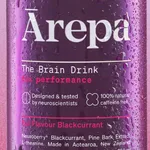
A few days ago I tuned eight pianos in one day. That has nothing to do with this article. I just wanted to let you know that, because I think it's impressive. The pianos were all in one location, at a venue/arts complex in Queenstown, and all regulars, and of high quality, so maybe not that impressive I guess, but it was a long day. While there, a kind lady who worked in the complex handed me a bottle of Ārepa. Reading the label on the glass bottle, I instantly sensed that a deep dive might be in order.
8 July 2024 - Approx. 6 min read
Over a year ago my wife and I were on a cavalcade. Present on the same cavalcade was a woman who was an equine vet. While we were discussing various 'alternative' treatments and such she happened to say “but I'm a real believer in the power of placebo, though…”. I found that statement a little surprising, coming from (I assume) a qualified medical person, but perhaps in a way this is telling.
6 November 2023 - Approx. 6 min read
I have a feeling we've written about Ārepa before, but as a refresher, it's a kiwi brand that produces “health drink” products that claims to make brains work better.
13 March 2023 - Approx. 4 min read
There's been a recent hubbub around the efficacy of masks for reducing the spread of infectious diseases, with Covid being the most obvious one.
6 March 2023 - Approx. 2 min read
I received a company wide email at work recently from a colleague, where they were recommending an app to help people concentrate during work hours by minimising distractions. What caught my eye, though, was a justification given for the need for this app. Apparently if you've been distracted at work, it takes people on average 23 minutes - or, to be precise, 23 minutes and 15 seconds - to fully regain your focus and get back to your work properly. Now, as a skeptic, the specificity of that number alerted me that this was probably nonsense. On top of the unlikely nature of that number, I wondered what relevance “fully” regaining your focus is. If your focus (however that may be measured) is 95% recovered in the first 60 seconds after a disruption, and the rest of the time is a slow crawl to 100%, I imagine that's not so bad. If it's a linear recovery, then it's not so great.
20 February 2023 - Approx. 5 min read
P-hacking is a data analysis technique that can be used to present patterns as statistically significant when there is really no underlying effect. It is a misuse of statistics and a misrepresentation, plain and simple, and disappointingly it's usually perpetrated by scientists.
11 July 2022 - Approx. 3 min read
I got into a conversation with some people on Twitter over this past weekend, after commenting on an article about people overdosing on vitamin D.
18 October 2021 - Approx. 2 min read
There are many kinds, and some are, frankly, full of bulldust! So what am I, and what are the members of the NZ Skeptics?
20 September 2021 - Approx. 2 min read
I feel impelled to comment on Mike Alder's "While the Newtonian insistence on ensuring that any statement is testable by observation (or has logical consequences which are so testable) undoubtedly cuts out the crap, it also seems to cut out almost everything else as well. Newton's Laser Sword should therefore be used very cautiously.”
19 July 2021 - Approx. 2 min read
The drug Ivermectin is an anti-parasite drug (used on worms and head-lice), and has been touted as a treatment for COVID-19. On the anti-vaxx Facebook groups I monitor, it's frequently cited as the favoured treatment for COVID-19, along the same lines as Hydroxychloroquine - though that seems to have faded a little now.
5 July 2021 - Approx. 1 min read
An anti-vax paper was published recently in the open access Vaccines journal. “The Safety of COVID-19 Vaccinations - We Should Rethink the Policy”. The paper has now been retracted, though just getting it published is likely to fuel anti-vax misinformation.
27 April 2021 - Approx. 1 min read
Essential oils are one of those trendy products that seem to be very popular at the moment, and they seem to be a great money-maker for their manufacturers and retailers, with the estimated market size of over $17 Billion dollars globally in 2017.
21 April 2021 - Approx. 2 min read
A friend sent me an article about a paper published recently in the Journal for the Scientific Study of Religion called:
12 April 2021 - Approx. 4 min read
One of our contacts noticed an item on TVNZ news on the 7th March detailing a product being developed by the University of Otago for prevention treatment of type 2 Diabetes. A complaint was made to TVNZ but they have not upheld the complaint.
5 April 2021 - Approx. 3 min read
Stuff published an article recently about the dangers of LED light bulbs, arguing that the blue light from LED bulbs disturbs our circadian rhythm and disrupts our sleep, with wide ranging knock-on effects to our health. My skeptical radar beeped at reading this, as I've looked into this issue in the past and found much speculation and very little actual science.
1 August 2019 - Approx. 4 min read
A story about essential oils being used in classrooms https://tinyurl.com/y5vs9pvo hit the headlines on 30th March.
1 May 2019 - Approx. 3 min read
One of the myths (and there are a lot of them) continually pushed by those opposed to vaccination, is that “the MMR vaccine causes autism” – often coupled with claims that “there are no studies comparing the health of vaccinated & unvaccinated children”. (That's another myth, by the way.)
22 July 2018 - Approx. 1 min read
Sellers of alternative therapies usually say publicly that they always recommend their patients continue normal therapy while they also use acupuncture, herbal remedies, etc for their medical conditions. This is especially important in the case of people who have life threatening medical conditions that can be successfully treated with conventional medicine, such as cancer. However, there are many stories in the news of people who have enough faith in their choice of alternative medicine that they decide not to use conventional therapy, or turn down some proven conventional therapies on offer - and in the worst cases, the alternative therapy practitioners actively dissuade their patients from using modern medicine.
18 December 2016 - Approx. 4 min read
The Society for Science Based Healthcare were asked about Applied Kinesiology this week and I helped to write this response to questions:
18 September 2016 - Approx. 1 min read
Stuff have reprinted another article from Juice Daily, which claims that garlic, pineapple, a salt water gargle and chicken soup can help with allergies. Of course, this is all unproven tosh and certainly not good medical advice. Thomas Lumley at Stats Chat does a good job of deconstructing the article, going through all the links in the article and checking out the evidence for the claims. Unsurprisingly, the given evidence is very thin:
28 February 2016 - Approx. 1 min read
Jacqueline Fox, who died last year, had used Johnson & Johnson's talcum powder for 35 years on her genitals.
1 November 2015 - Approx. 7 min read
A new systematic review published in the International Journal of Obesity looks at the totality of evidence investigating whether consuming low energy sweeteners (LES), such as aspartame, sucralose, or stevia, is a net benefit or detriment for weight control.
1 August 2015 - Approx. 5 min read
Truly understanding placebo effects (note the plural) is critical to science-based medicine.
1 May 2015 - Approx. 10 min read
Why do individuals who read the same information react differently? To some extent, beliefs affect individuals' reactions. While this is normal, it can be problematic if beliefs interfere with objective reasoning.
1 February 2014 - Approx. 11 min read
Most people are very bad at distinguishing genuine patterns from random noise, but fortunately there are statistical methods that can help. This article is adapted from a talk at the NZ Skeptics Conference, in Wellington, 7 September 2013.
1 February 2012 - Approx. 6 min read
The NZ Herald (10-14 January) must have been having trouble filling its pages during the silly season, looking at its recent series on alternative therapies.
1 February 2011 - Approx. 9 min read
Linda Bryder responds to an article in our last issue.
1 August 2008 - Approx. 6 min read
Charlene Makaza went into hospital with an acute Aids-related condition in the first week of 2007. By the time the 10-year-old Zimbabwean girl died 18 hours later, doctors had decided she'd been murdered (Sunday Star Times, 25 May).
1 February 2008 - Approx. 5 min read
Despite a series of studies showing it to be ineffective, ultrasound continues to be widely used by physiotherapists.
1 May 2007 - Approx. 13 min read
This is a transcript of a talk given at the Skeptics conference in Auckland last year. Parts of it were also presented at the inaugral lecture for Bruce Arroll on being appointed to a personal chair last October. The title of that talk was Highways Through Uncertainty and will be published in the NZ Family Physician in early 2007. This paper can be found on the internet at www.rnzcgp.org.nz
1 November 2006 - Approx. 5 min read
It has become a cliché that whenever something bad happens, a horde of counsellors descend on the survivors to make their lives a misery. It's true. Counselling does make you more sick compared to doing nothing.
1 November 2005 - Approx. 6 min read
Could it be that visitations from flying saucers, which have been so frequent over the last 60 years, are now on the wane? Or is something more sinister going on? British UFO-watching clubs, it seems, may have to close because of a lack of sightings, and dwindling interest (The Guardian, 11 August).
1 August 2005 - Approx. 1 min read
Herald Sun, Australia - 21 July 2005
1 May 2005 - Approx. 6 min read
The Scottish border city of Carlisle says a stone artwork commissioned to mark the millennium has brought floods, pestilence and sporting humiliation, but an unlikely white knight is riding to their rescue (Dominion Post, 10 March). The Cursing Stone is a 14-tonne granite rock inscribed with an ancient curse against robbers, but since it was put in a city museum in 2001 the region has been plagued by foot and mouth disease, a devastating flood and factory closures. Perhaps worst of all, the Carlisle United soccer team has dropped a division.
1 November 2003 - Approx. 6 min read
Level-headed Virgos everywhere will not be surprised, but a 40-year study of astrology has found it doesn't work (Dominion Post, August 19).
1 August 2003 - Approx. 2 min read
Should we trust psychologists and psychiatrists, especially as expert witnesses in court cases?
1 November 2001 - Approx. 1 min read
Scientific studies suggest "organic" foods are neither healthier nor safer than genetically modified products or those grown conventionally.
1 August 2001 - Approx. 2 min read
The placebo effect has long been of interest to skeptics for its presumed role in alternative medicine. The Skeptics' Dictionary (http://www.skepdic.com) has a lengthy entry, describing a placebo as an inert substance, or fake surgery or therapy, used as a control in an experiment or given to a patient for its probable beneficial effect. It goes on to add the effect has at least three components.
1 May 2001 - Approx. 4 min read
Recently returned from a posting in Saudi Arabia and now suffering from a cold and a bleeding nose, John Welch continues his column on medical matters.
1 February 2001 - Approx. 5 min read
I wished I'd tried this one when I was at Gisborne Girl's High. An Oklahoma student has been suspended from school for casting a spell against a teacher, reports the Dominion (Monday October 30). The American Civil Liberties Union has filed a lawsuit in Tulsa, Oklahoma, on behalf of the student and also charged the school with repeatedly violating her rights by seizing notebooks she used to write horror stories and barring her from drawing or wearing signs of the pagan religion Wicca. No mention was made of how the teacher was faring…
1 February 2001 - Approx. 19 min read
The following is an abridged version of a paper presented at Skeptics 2000, Dunedin, New Zealand. The author would like to thank NZCSICOP and NZARH for sponsoring this visit to New Zealand.
1 May 2000 - Approx. 1 min read
People involved in incidents such as rail crashes, bombings or armed robberies may suffer more in the long run if they undergo intensive counselling, some psychologists believe.
1 November 1998 - Approx. 5 min read
I was interested to read the letters by Jim Ring and Felicity Goodyear-Smith to my article with the above title [NZ Skeptic 47].
1 August 1998 - Approx. 3 min read
An article by Gordon Hewitt in NZ Skeptic 47 states, "In June 1995...an article appeared in this publication saying counselling was no use. This judgement was based on a single study conducted in 1939." This is not true, but as the author of the article I am obviously biased. May I urge all skeptics to read it for themselves?
1 August 1998 - Approx. 4 min read
EMILY ROSA of Loveland, Colorado, designed and carried out an experiment two years ago that challenges a leading treatment in alternative medicine. Her study, reported in the Journal of the American Medical Association, has thrown the field into tumult.
1 May 1998 - Approx. 3 min read
As a counsellor and psychotherapist also trained in science and in scepticism I have been disappointed in the apparent lack of depth to the sceptical analysis of counselling that seems to be present from time to time in the NZ Skeptic. This lack of rigour in analysis goes back some way. In June 1995, for example, an article appeared in this publication saying counselling was no use. This judgement was based on a single study conducted in 1939.
1 February 1996 - Approx. 2 min read
Ian McWilliam's comments on the Dunedin Chelation Study [Forum, September] indicates the many difficulties in understanding medical research papers. In consideration of his critique of the study:
1 February 1996 - Approx. 9 min read
An article in NCAHF reminded me of past activities with respect to joint manipulation. Following a one week course I embarked on a short-lived career in spinal manipulation which is very easy to learn and causes a greatly inflated belief in one's ability to "cure" spinal ailments.
1 February 1996 - Approx. 5 min read
One of the arguments presented in favour of this year's Bent Spoon award was that the NZ Skeptics increasingly provide an early warning system against strange notions from abroad. For example, Skeptical activities helped New Zealand develop some early immunity to the worst excesses of the "repressed memory" virus. While many members supported the Hitting Home award on similar grounds, some members may have wondered whether Hitting Home was no more than a local aberration and that we were seeing international demons where none existed.
1 August 1995 - Approx. 4 min read
Surprising results from a US study of the effectiveness of counselling on reducing juvenile crime.
1 May 1993 - Approx. 8 min read
Many people will remember Dr Bill Morris's entertaining autobiographical talk at the last Skeptics' conference in Wellington. From his presentation, we extract this discussion of what is still the most persistent and potent medical effect known to the human race.
1 February 1993 - Approx. 1 min read
Dr J.F. De Bock gave the 1992 Conference an update on the study of UFOs.
1 February 1992 - Approx. 5 min read
Myocardial infarction (heart attack, coronary thrombosis) is commonly caused by a blood clot blocking one of the three coronary arteries supplying blood to the heart muscle. It is the commonest cause of death (4,000 p.a.) in New Zealand and other Western countries. Specialists have long wondered whether early administration of a fibrinolytic (blood clot dissolving drug) would reduce mortality.
1 November 1991 - Approx. 3 min read
On the National Programme recently, Vicki Hyde mentioned a claim that a bird had changed one element to another inside one of its vital organs.
1 November 1991 - Approx. 7 min read
Myalgic encephalomyelitis (ME) has been described as epidemic neuromyasthenia, Iceland disease, Royal Free disease and post-infective fatigue syndrome. I will refer to it as chronic fatigue syndrome (CFS), a good neutral description free of unproven association with infective illnesses.
1 February 1991 - Approx. 2 min read
The results of a study of women attending the Bristol Cancer Help Centre have concentrated a few minds. The findings published in The Lancet last week may be baffling, but they are undoubtedly disturbing: women with breast cancer who attended the centre in addition to having conventional treatment fared very much worse than a control group of women who received conventional treatment alone.
1 February 1989 - Approx. 15 min read
Reprinted from June 1987 issue of University of Edinburgh Graduates Journal