Should We Be Worried About Microplastics?
Katrina Borthwick - 30th March 2026
Tiny microplastics are making big headlines. Are they a ticking time bomb for human health, or just another overblown environmental scare?
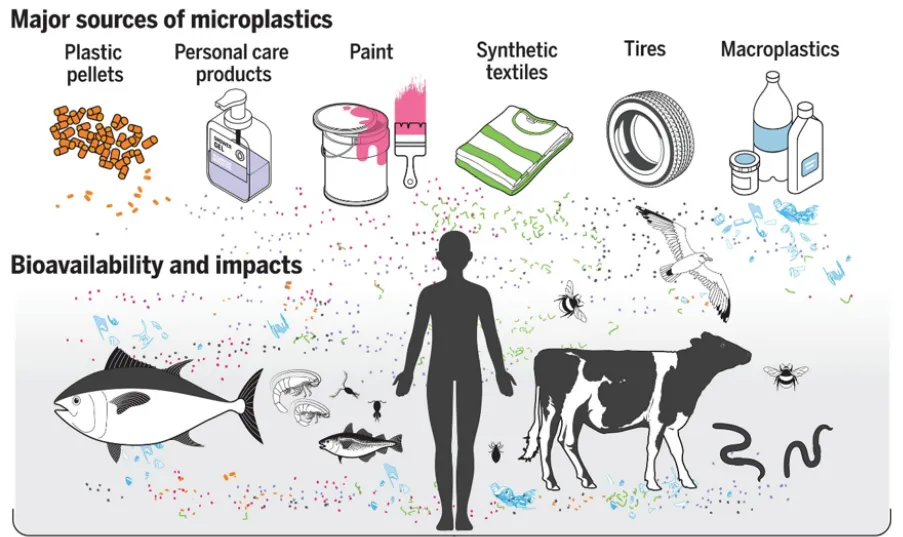
Microplastics are small plastic particles, less than 5 millimetres in diameter (about the size of a sesame seed or smaller). They come from all sorts of sources, for example the breakdown of bigger plastics like bottles and bags, wear and tear from tyres, and manufactured microbeads found in some toothpastes or scrubs, where they haven’t been outlawed.
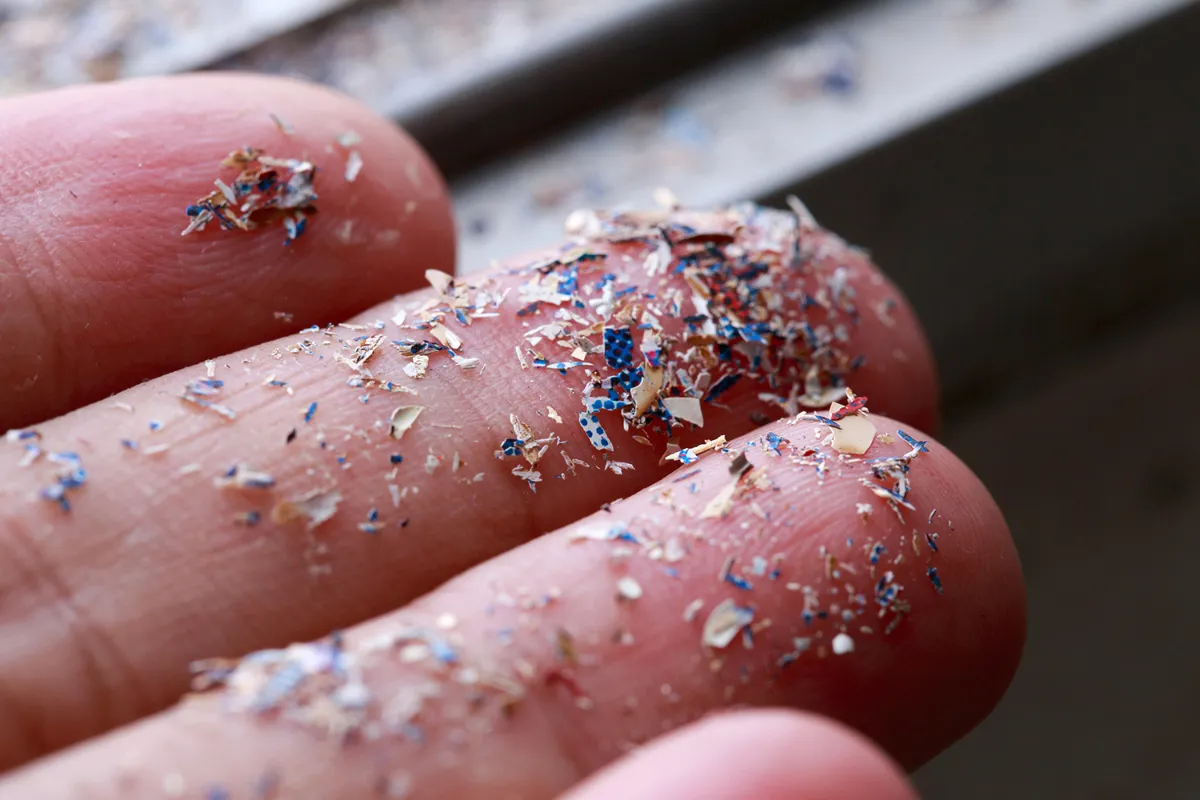
There are plastic crumbs left behind when you chop veggies on a plastic cutting board, synthetic fibres that escape from your washing machine, and bits of plastic swirling in your morning cup of tea from your tea bag.
They’re everywhere - from the depths of the Pacific Ocean to the air you breathe. Microplastics have been detected in oceans, rivers, soil, the atmosphere, rainwater, snow, arctic ice, and, yes, your food and drink. If you’ve ever eaten seafood, sprinkled salt on your chips, or gulped from a water bottle, you’ve almost certainly swallowed microplastics. They’re in bottled and tap water, beer, honey, milk, and even the dust on your bookshelf. Synthetic clothes shed microfibres every time you wash them. Tyres wear down, releasing particles that float through the air and into our lungs. City dust? Loaded with plastic bits. Even personal care products can leave a trace on your skin. Microplastics are so ubiquitous that avoiding them entirely would require next-level effort. They get into our bodies too through ingestion, inhalation and skin contact.
The Evidence for Harm - What Do Researchers Say?
Ever since the first microplastics floated into public awareness, scientists have been racing to figure out whether they’re harming us. There have been many studies using animals (most commonly mice or rats) and cell cultures to investigate what happens when microplastics are ingested or inhaled. There is some evidence of injury to tissues and immune responses, and of microplastics carrying toxic chemicals such as flame retardants or phthalates. In animal models, microplastics have been linked to changes in the balance of gut bacteria. For instance, a 2025 study found that chopping on plastic cutting boards released microplastics with different effects - polypropylene increased gut inflammation, while polyethylene shifted the microbial balance in mice.
Some researchers suggest that because microplastics are so tiny, they might cross biological barriers (like the gut wall or even the blood-brain barrier) and accumulate in organs. A 2024 study, for example, found microplastics embedded in human carotid artery plaque, and suggested a link to higher risks of heart attack, stroke, or death. Another study reported finding microplastics and nanoplastics in the human brain. These discoveries made headlines worldwide, with dramatic phrases like “Microscopic plastics could raise risk of stroke and heart attack” and “microplastics in human brains may be rapidly rising.”
Animal studies have also shown that microplastics can lead to intestinal inflammation, metabolic changes, or altered fertility. In children, microplastics have even been detected in tonsil tissue. Researchers are investigating whether these particles could play a role in thyroid disease or other immune problems - though the jury is still very much out.
Why isn’t everyone panicking?
As with any hot scientific topic, there’s another side to the story. Many experts urge caution, arguing that the evidence for harm in humans remains thin, and that much of the research has important limitations. Here’s what those experts say:
- Laboratory doses are unrealistic: Many studies use concentrations of microplastics much higher than anyone would realistically encounter in daily life. So, while mice may get sick from a heavy “plastic diet,” humans typically aren’t exposed at those levels.
- Animal and cell studies don’t always apply to people: The way a mouse or a test tube cell reacts could be very different from how a human body handles microplastics.
- Our bodies expel most microplastics: Microplastics have been detected in human poop, suggesting the body can get rid of them before they cause trouble.
- Regulatory reviews find little risk: The European Food Safety Authority (EFSA) and the U.S. Food and Drug Administration (FDA) both say that, so far, levels of microplastics found in food are not shown to pose a human health risk.
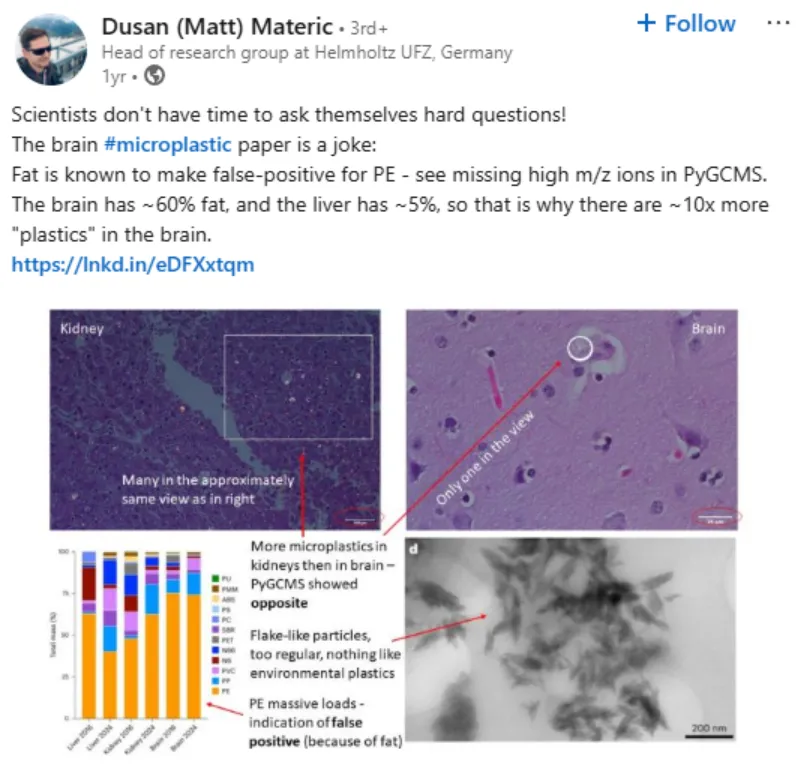
Detection challenges and false positives: Some “too-good-to-be-true” studies have been criticised for contamination, or for using techniques that can mistake natural tissue for plastic. A much-discussed brain study was recently called a “joke” by a leading chemist, because normal fat in the brain can mimic a plastic signal in the analysis.
Critics also point out that the human body is remarkably good at eliminating foreign substances. Unless microplastics are of a certain size - nanoplastics, which are even smaller than microplastics, and much harder to detect - the likelihood of them getting into organs in significant amounts is questionable.
Finally, while animal studies often show effects, the actual prevalence of diseases like inflammatory bowel disease or gut problems in the general population doesn’t match the “everyone’s at risk” narrative. Most of us are exposed to microplastics, but only a small percentage develop these conditions.
Uncertainties and the Race for Answers
If you’re confused, you’re not alone. The science of microplastics is evolving fast, but it’s full of uncertainties. Here are the biggest research gaps and challenges:
- Lack of long-term, real-world human studies: Most research is short-term and lab-based. We don’t yet know the chronic effects of low-level exposure over decades.
- Analytical limitations: Measuring microplastics (and especially nanoplastics) in human tissues is hard. Many detection techniques can’t reliably distinguish between plastics and natural substances, leading to potential false alarms.
- No standard definitions or protocols: What counts as a microplastic? How should we collect and analyse samples? Different studies use different criteria, making direct comparisons difficult.
- Uncertain mechanisms of harm: Even when microplastics are found in the body, we don’t know how (or if) they cause disease. Do they accumulate? Are they broken down or excreted? What particle sizes are most dangerous?
- Role of additives and contaminants: Plastics can carry harmful chemicals, but not all microplastics are created equal. The specific type, size, and what else is “hitching a ride” matter. It may not be the microplastic itself that is the issue.
- Vulnerable populations: Children, pregnant women, and people with pre-existing conditions might be more at risk, but research here is understandably limited.
To address these questions, scientists are developing better tests, more robust experimental protocols, and real-world exposure studies. But for now, the full picture remains hazy.
Media Hype, Documentaries, and Scientific Disagreements
You’ve probably seen breathless news headlines or streaming documentaries warning that “microplastics are everywhere”, and casting them as a major health crisis. But not everyone is convinced.
Some scientists featured in such media, including, are themselves subjects of controversy - either for their methods, or for advocating strong conclusions before the evidence is settled. Take the Netflix documentary “The Plastic Detox”, for example.
In this documentary, critics argue that Dr Shanna Swan cherry-picked worst-case scenarios and downplayed uncertainties, risking unnecessary alarm. This included statements that microplastics are reducing fertility and - alarmingly - making “man parts” smaller. Dr Swan is also the author of the book Countdown, on the same topic.
The Plastic Detox followed six couples with unexplained infertility (subfertility) trying to get pregnant while cutting down their microplastic exposure. Dr Swan used a 90-day trial of detoxification, a time frame based on the 70-day life cycle of sperm. The show contains dramatic animated imagery of “particles” bubbling off just about every household object, as if they are radioactively contaminated. Half the couples successfully got pregnant after the “detox”.
However I’m not sure the numbers stack up. These people may have become pregnant anyway. Some research shows that of couples with unexplained infertility, 50% of them will conceive in the following 12 months, and another 12% in the year after that. Other research shows that after three years of trying, the chances of conception occurring are about 1-3% each cycle (so 12-36% a year). So there is a bit of a sweet spot in the 2-3-year mark, where couples have been trying long enough to be diagnosed with unexplained infertility, but still have a decent chance of getting pregnant and nothing may be horribly wrong. Dr Swan’s couples fall into this window, and were likely making a bit more of an effort than your average couple, due to being on TV. Half the couples (3) successfully got pregnant. The timeline is a bit opaque, but I’m pretty sure at least one of the couples was pregnant before the 70 “sperm cycle” was complete. The third couple seems to have become pregnant after the 90-day filming period. It’s not exactly convincing. But, to be fair, she says upfront that this is not scientific study.
There are also other “factoids” in the doco that give me pause. Dr Swan states “almost all receipts contain bisphenol A (BPA)”, which is plain wrong. She also states that “there are nine chemicals that are banned from personal care products in the United States, and over 1,100 that are banned in the EU”. If her hypothesis was correct, you would expect there to be higher sperm counts in Europe, but they are falling by the same amount.
Meanwhile, as often happens, the news cycle has gotten ahead of the science. A single study may be reported as definitive proof of harm, even when follow-up research or commentary suggests otherwise. Notably, several high-profile studies claiming to find microplastics in human arteries, brains, or reproductive organs have been challenged for possible contamination or flawed analysis.
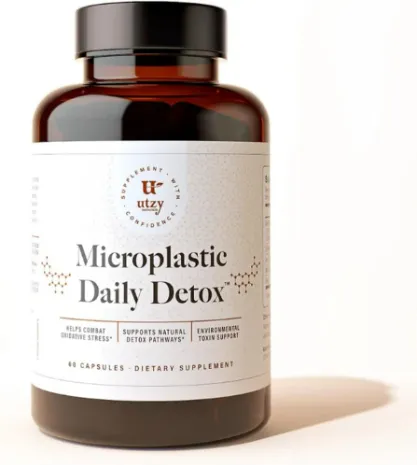
The stakes are high, and of course there is money to be made. Alarmist narratives can drive policy, lawsuits, and a booming market for “microplastics detox” products, many with dubious scientific backing. Added to this, there’s premium “plastic-free” goods, water filter systems, alternative packaging, media and special interest funding for activists or campaigners. There’s currently no scientific evidence that you can “flush out” microplastics with special treatments or supplements - some of which could do more harm than good.
On the flip side, poorly conducted research can give ammunition to industry groups hoping to downplay any real risks. As one expert Dr Cassandra Rauert put it, “We want to get the data right so that we can properly inform our health agencies, our governments, and the general population - and make sure that the right regulations and policies are put in place.”
Conclusion
Microplastics are everywhere, and human exposure is real and likely unavoidable. The science is still out on health impacts. No major regulatory agency has declared microplastics a proven health threat at current exposure levels.
Analytical techniques and definitions need work. Better, more consistent methods are in development, but many studies still suffer from methodological challenges. More robust, long-term studies are needed.
Precaution is reasonable, but I don’t think that panic is justified. Many scientists reduce their personal exposure (ventilating homes, using less plastic in the kitchen), but stop short of recommending drastic measures. Perhaps the best advice is to stay informed, ask good questions (especially when reading alarming headlines), and support ongoing research. Microplastics may yet turn out to be a health concern - but, for now, they’re a lesson in the complexity of modern science, the power of media narratives, and the importance of keeping calm and staying curious.