Mouth Taping
Mark Honeychurch - 30th September 2026
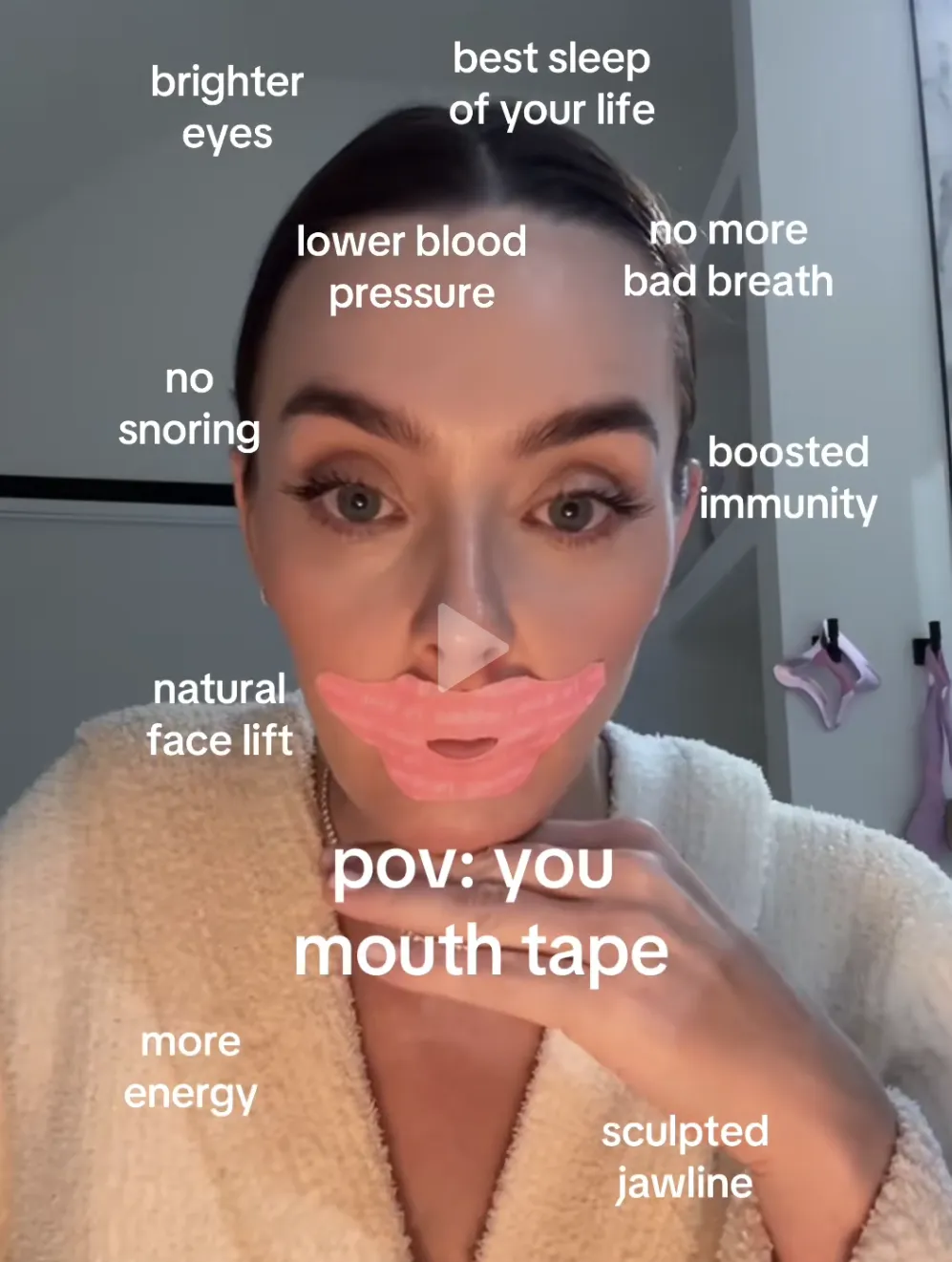
TikTok seems to be a never-ending source of bad advice that needs to be debunked, and this latest article in my series detailing the nonsense people say on TikTok involves taping your mouth shut. Specifically, this pseudo-medical idea involves you taping your mouth shut while you sleep, forcing you to breathe through your nose.
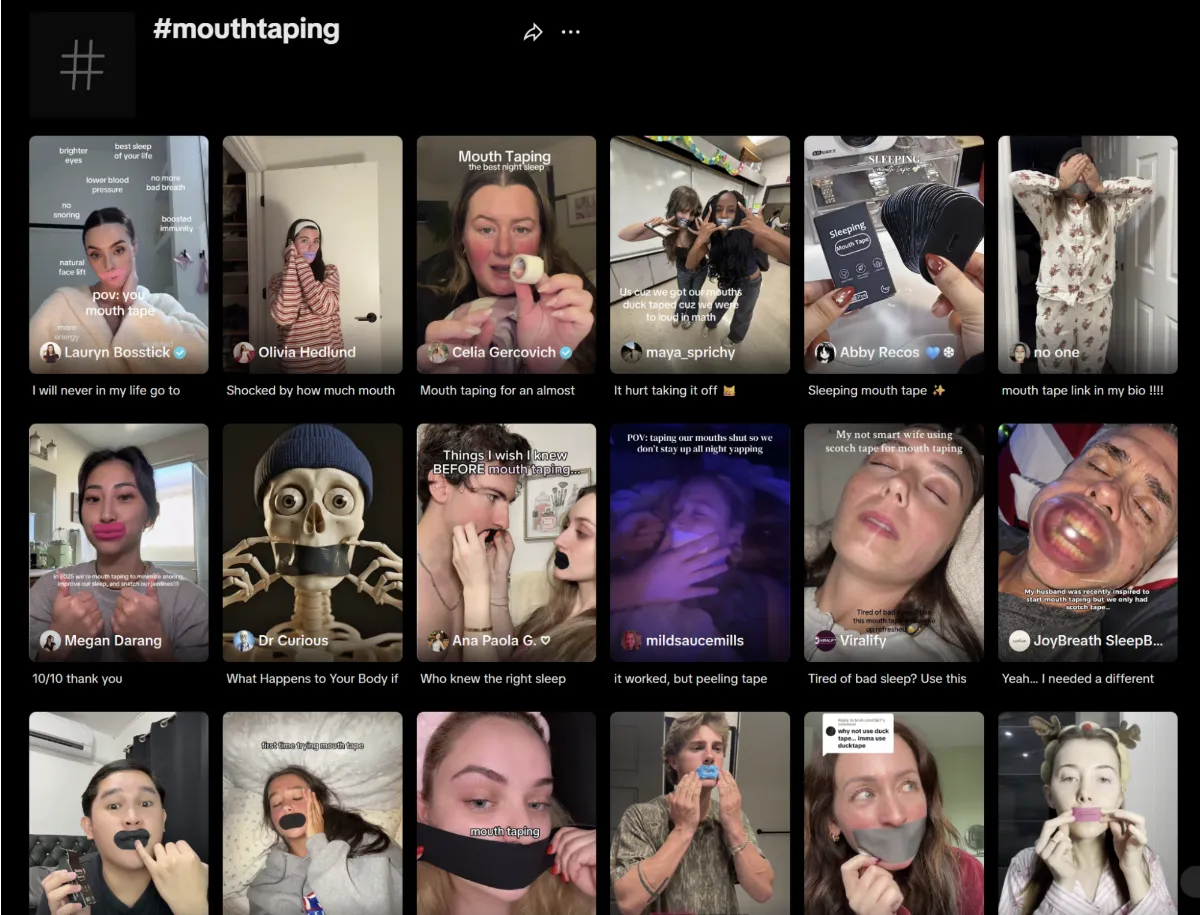
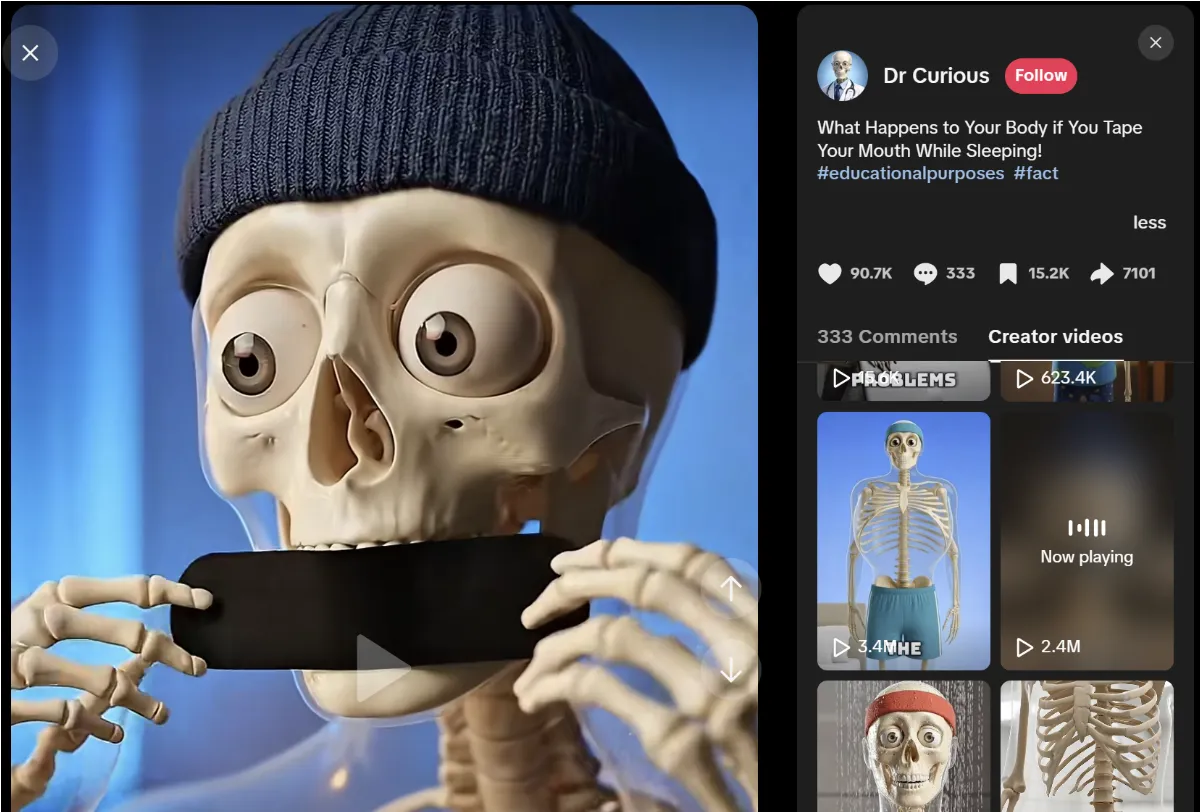
When I watched a bunch of these TikTok videos, there were a few categories they seemed to fall under. The first was true converts, people who claim their life has been changed by taping their mouths at night. The second, most numerous category consisted of thinly-veiled adverts for specific brands of mouth tape - and sadly none of these videos seemed to have any kind of disclaimer. Many of the videos were posted by wellness influencers on their accounts, and others were posted to the mouth tape manufacturers’ official accounts. They employed tactics like showing before/after shots, showing people trying to use sellotape before being given a branded product, or giving hints and tips on how to use the tape. The third category was pseudo-healthcare accounts that appear to push lots of silly health misinformation, jumping on new trends and using them to farm as many views as possible. These channels had titles like “Dr Curious” and “Dr Nikol”:
The companies making strips of tape include Au Claire, Insanely Clean, Adellina, Mintier, Queen Tape, Snore, Puff Tape, Sissy, DreamVision, Seald, Sport Sleep, ZZSleep, Koec and Goodnight - all of which I saw promoted on TikTok, giving you an idea of just how popular this trend is. There’s also Hostage Tape, as promoted by Joe Rogan, and ZZZone, MyoTape, Breath Sleep, CollaSeal, Betta Sleep and Snorblok, all available in New Zealand:
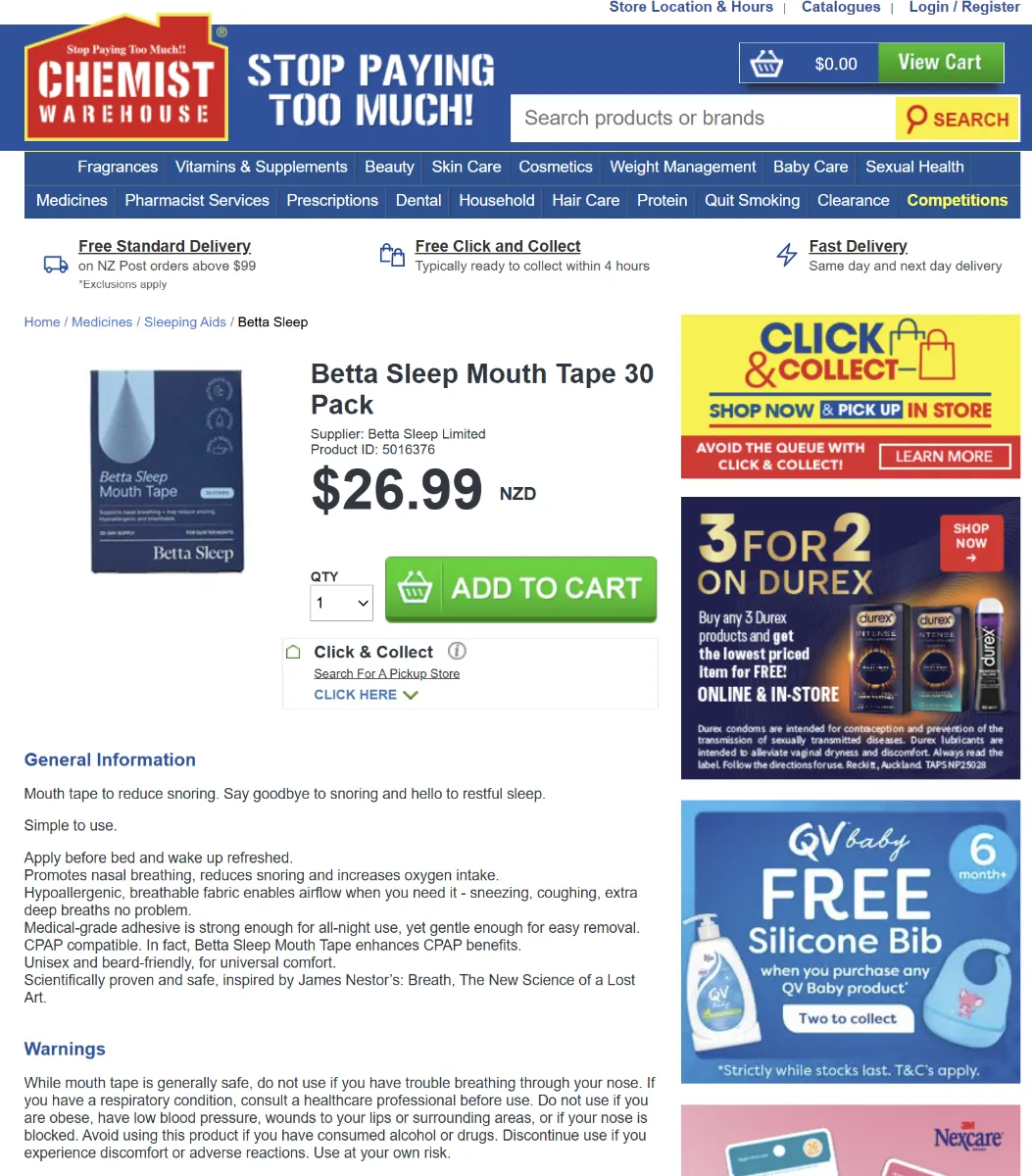
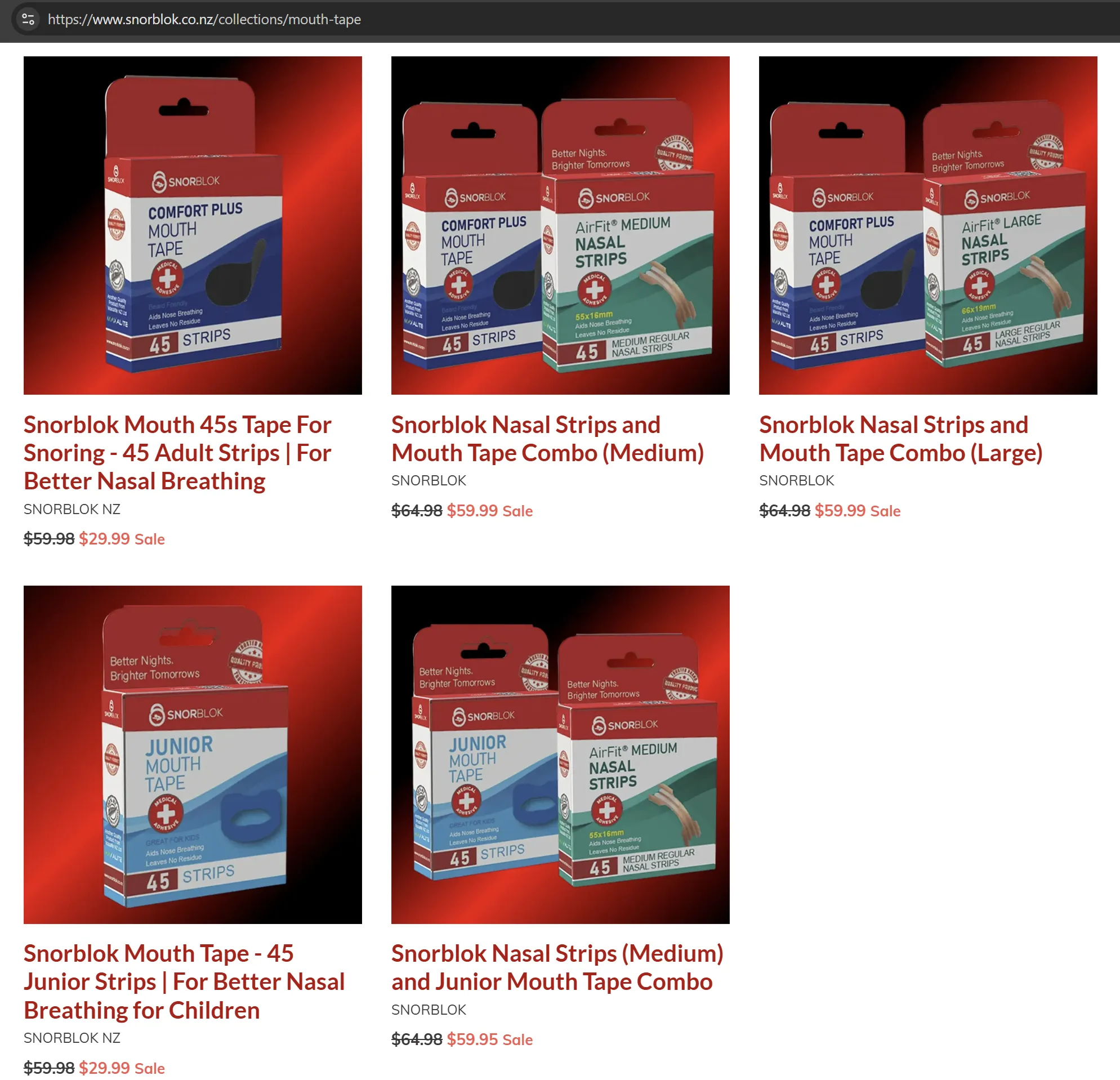
Some of these tapes are porous, to allow some air through, and some others have a small hole in the middle to allow talking and drinking. Some claim to have collagen in them, to repair damage to your lips, and others claim to puff your lips up, making them look fuller.
Now, why would you want to tape your mouth shut? According to many, many unqualified video makers on TikTok, there are a host of benefits to taping your mouth. These include:
- Stop snoring
- Sleep better
- Avoid dry mouth
- Boost your immune system
- Lower your blood pressure
- Eliminate bad breath
- Reduce stress and anxiety
- Avoid gum disease
- Sharpen your jawline
- Improve brain function
- Recover quicker when exercising
- Help reduce asthma symptoms
The reasoning behind at least some of these benefits is based around the fact that taping your mouth shut forces you to breathe through your nose. The general idea is that air passing through your nose is better temperature regulated (as it has contact with blood vessels in your nose before reaching your lungs), better filtered (by the hair and mucus in your nose, as well as other more subtle effects) and is more humid. For what it’s worth, Google’s AI gave me the following table when I pressed it for peer-reviewed values to compare nose and mouth breathing:
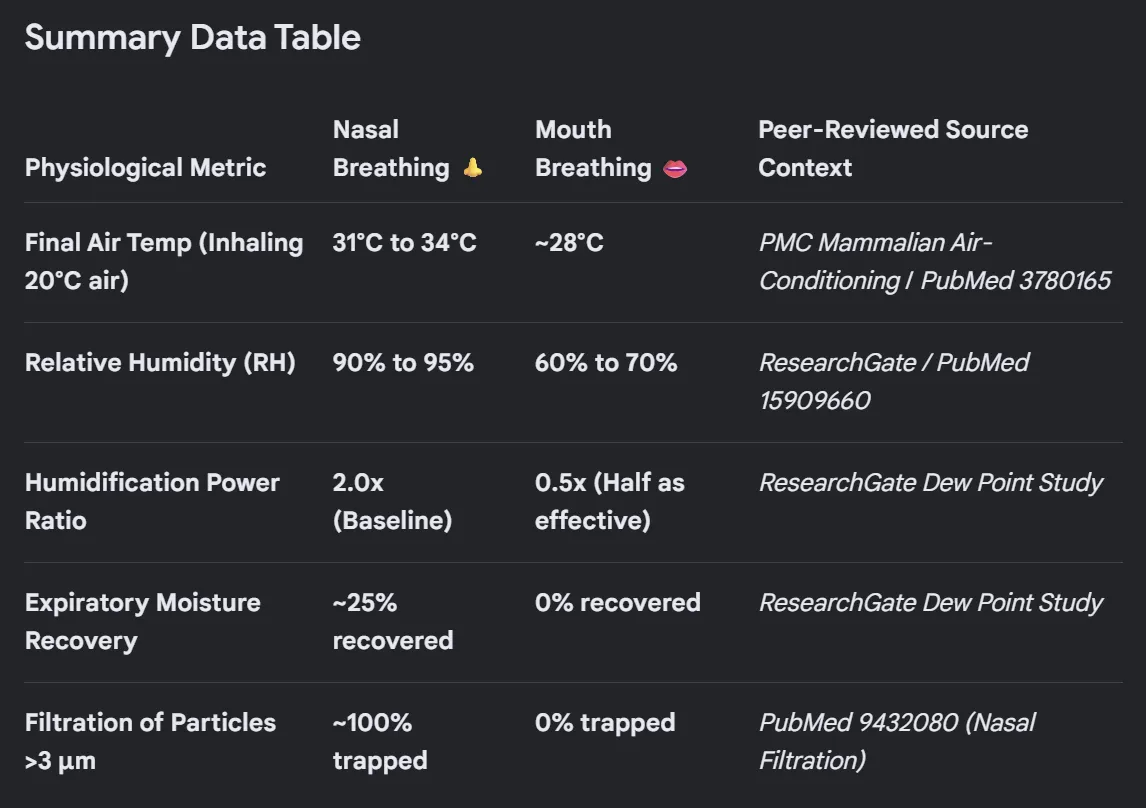
- https://pmc.ncbi.nlm.nih.gov/articles/PMC11032399/
- https://pubmed.ncbi.nlm.nih.gov/15909660/
- https://pubmed.ncbi.nlm.nih.gov/9432080/
I only had full access to the first of those three papers, but the numbers it gave me for that one seemed to check out at least when I scanned through the study.
Showing that there are measurable differences to the air breathed through the nose and the mouth is only the first part of what’s needed to prove that mouth taping isn’t nonsense. We’d also need to show that these changes in the air physiologically affect the human body, and on top of that to show that those physiological changes are clinically useful. To top it off, it would also be nice to show that taping your mouth is an effective way of causing these beneficial changes, and ensuring that there aren’t any negative consequences.
It’s obvious that several of the purported benefits are so far-fetched that it’s not even worth wasting time on clinical trials. There’s no purported mechanism for claims of mouth taping improving your jawline or making your eyes brighter, just horribly untrustworthy anecdotes on TikTok that can be safely ignored. But one of the most frequently touted benefits, for sleep apnea, has at least had some research behind it.
A systematic review, “Breaking social media fads and uncovering the safety and efficacy of mouth taping in patients with mouth breathing, sleep disordered breathing, or obstructive sleep apnea”, looked at 86 articles covering the use of mouth tape for sleep apnea. Of those 86, only 10 were deemed relevant and of high enough quality to be included in the analysis. As an indicator of how small these studies were, the total number of participants in all ten combined was just over 200, meaning that each of the studies will have only used around 20 patients. Although the paper reports that two of the studies showed some positive results, it also mentioned that some of the studies didn’t manage to measure any difference between the treatment and control groups. The review’s conclusion summarises the authors’ findings nicely:
Some studies report very minor improvement in certain outcomes such as AHI, ODI, and snoring index. However, the evidence for mouth taping as a treatment modality for mouth breathing, OSA, or SDB is minimal in most patient population groups outside of mild OSA, and not clinically significant. Moreover, there are potential serious detrimental health outcomes to those with nasal obstruction who seek oral taping as means to ameliorate their mouth breathing, OSA, or SDB during sleep. The existing data does not support mouth taping or oral occlusion as a sound clinical intervention for the general population with sleep disordered breathing.
Beyond this research, I found a single study that looked at restricting mouth breathing while exercising, and which unsurprisingly showed that athletes saw a drop in performance:
Our study demonstrates that a breathing technique involving just nasal respiration (eNAS condition) is related to a significant impairment in exercise performance at CPET, mainly linked to a reduced capability to increase VE during maximal exercise. In particular, we show a ~ 40% reduction in peakVE compared to the normal condition (STD), triggered by a negative effect on both RR and TV. This translates in a reduction in peak workload and namely in key exercise metabolic parameters like peakVO2, and peakVCO2.
I also found a study that looked at mouth taping at night for asthma, and concluded:
Our study rationale was based on the assumption that mouth breathing could compromise asthma control. The nose warms and humidifies inspired air, filters particles and gaseous materials that may be allergenic or irritant, and slows flow velocity in the airways, which may reduce frictional resistance and mucosal damage. The nose also provides two thirds of the resistance in the respiratory tract and an expiratory resistance helps to maintain lung volume.
Few studies have looked at the effects of mouth breathing in patients with asthma. When compared to nasal breathing, mouth breathing has been associated with a fall in FEV1, an increase in exercise bronchoconstriction, and a trend towards lower end-tidal carbon dioxide levels. Conversely, the use of a nasal dilator overnight has been associated with fewer awakenings due to asthma whilst breathing warm, humid air reduced the overnight fall in FEV1 in patients with nocturnal asthma. Such studies suggest that patients with asthma may benefit from breathing through the nose rather than the mouth at night.
It is disappointing therefore that mouth taping at night to induce nasal breathing did not improve asthma control in our patients.
So, from what I can find, there’s not much research out there looking at mouth taping, but what there is doesn’t look very promising. It would have been nice if the people recommending this silly health intervention on TikTok had figuratively taped their own mouths up and kept quiet instead of spreading dangerous misinformation.
I have to say, though, that this trend sounds stupid enough that I may well buy myself a pack of mouth tape from Temu and try it out. Not because my anecdotal evidence either way should be considered evidence of efficacy, but I do wonder how uncomfortable it is to be forced to breathe through your nose all night. Expect a review soon, if I live to tell the tale.