22 June 2026 - Approx. 3 min read
Last year I wrote about Majorana, a quantum computing chip created by Microsoft. Back then the company claimed that they had discovered/invented a new state of matter, the topological superconductor, which exists at near-zero temperatures and allows their chips to work more reliably than other quantum computer designs.
18 August 2025 - Approx. 9 min read
The MMR vaccine was developed for use in preventing measles, mumps, and rubella. Andrew Wakefield was the lead author of a study published in 1998, based on just twelve children, that claimed to find indications of a link between the MMR vaccine and autism. The journalist Brian Deer had a key role in identifying issues with the work, including fraudulent manipulation of the medical evidence.
30 September 2024 - Approx. 6 min read
As part of my postgraduate Psychology course, I had to take a course called Multivariate Data Analysis.
19 August 2024 - Approx. 2 min read
I mentioned a couple of weeks ago that I was going to attend a talk given by Sara Rahmani to the NZ Humanists in Wellington. At the talk she summarised her findings from a set of interviews she's conducted with Māori who have been happy to talk with her about their spiritual journeys with her. Although most of these journeys have been from belief to non-belief, taking a variety of different paths to get there, she has also interviewed a few people who still hold religious or spiritual beliefs.
11 December 2023 - Approx. 7 min read
You'll no doubt have heard about the supposed revelations of COVID vaccine deaths recently revealed by an IT employee of Te Whatu Ora - a government agency - the MInistry of Health.
2 October 2023 - Approx. 12 min read
Personal VPN services are all the rage now, and you may have watched or heard a lot of “host-read advertising” for them on YouTube and popular podcasts. They purport to provide fantastic advantages, while also making alarming claims about who is out to get your personal data on the internet. Today I'm going to analyse some of those claims, using my 20-something years of Internet Service Provider (ISP) industry experience.
28 August 2023 - Approx. 5 min read
One of our members emailed us last week asking about a climate change denier's blog article.
1 May 2023 - Approx. 6 min read
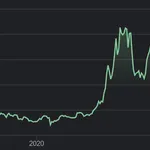
Aleh Tsyvinski is a professor of economics at Yale who has been researching Bitcoin and other cryptocurrencies over the last few years, in a bid to understand where the currencies sit within an economy, and figure out how to use them to make money.
20 February 2023 - Approx. 5 min read
P-hacking is a data analysis technique that can be used to present patterns as statistically significant when there is really no underlying effect. It is a misuse of statistics and a misrepresentation, plain and simple, and disappointingly it's usually perpetrated by scientists.
10 October 2022 - Approx. 7 min read
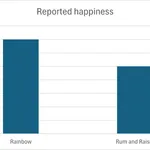
In preparation for our next podcast episode, where we plan to talk about Bronwyn's articles on Dr Bronner, I watched a documentary the other day called Dr Bronner's Magic Soapbox. The documentary used footage from another, much older documentary called Rainbow Bridge - a weird piece of experimental film about a hippie community in Hawaii. The end of the documentary contains footage of a live gig Jimi Hendrix performed in Hawaii soon before his death.
30 May 2022 - Approx. 7 min read
The Ishango Bone - photo by Joeykentin
13 May 2018 - Approx. 1 min read
18 December 2016 - Approx. 3 min read
I was contacted by a journalist about a local cancer "cure", Te Kiri Gold, and sent a response (with a little help from ex-chair of the NZ Skeptics, Vicki Hyde):
1 February 2014 - Approx. 11 min read
Most people are very bad at distinguishing genuine patterns from random noise, but fortunately there are statistical methods that can help. This article is adapted from a talk at the NZ Skeptics Conference, in Wellington, 7 September 2013.
1 February 2013 - Approx. 2 min read
Do you believe in climate change? Based on my past readings of NZ Skeptic of course not. After all this is the skeptic's magazine.
1 November 2010 - Approx. 14 min read
Many people lost a lot of money investing in non-existent data compression software because well:established principles of information theory were ignored. This article is based on a presentation to the 2010 NZ Skeptics conference.
1 February 2005 - Approx. 5 min read
SCIENCE has not "progressed only by slow cautious steps" as Piers McLaren claims (Forum, Spring 2004), but by great bold ones. Scientists should resist new ideas but it is a myth that they do so irrationally. Contrary to Maclaren's letter, quantum theory rapidly won the day. Planck published in 1900, Einstein in 1905, in 1913 Bohr produced a quantum structure for an atom. By 1922 all three had won Nobel prizes for work on quantum theory.
1 May 2001 - Approx. 4 min read
Howard Bezar and Denis Curtain
1 May 1995 - Approx. 2 min read
One of the fictions of the "naive-greens" and other "irrationalists" is that "chemicals" are bad while natural products (non-chemicals?) are good. When asked if water is a chemical, and hence evil, and whether cyanide, nicotine or the botulism toxin, are natural and hence benign they change the subject. You might think that our classrooms are immune to such nonsense; in the November issue of Chemistry in New Zealand, Ian Millar of Carina Chemical Laboratories Ltd tells us we are wrong.
1 February 1987 - Approx. 2 min read
The Health Department was planning a study of pesticides and other Chemicals which New Zealanders might be consuming In food and water, said the acting departmental press officer, Mr John Boyd, yesterday.