UV2: Electric Boogaloo
30th September 2026
I’ve just spent a few days away with my family, enjoying being in the middle of nowhere and ignoring my emails - I took my laptop with me, but it stayed in its bag for the entire trip. Now I’m back to reality, and sending this newsletter out a couple of days late as a result of my absence.
Once again our last newsletter generated a decent amount of feedback, this time mostly to my question about how far we should go when publishing controversial ideas like Lance’s recent UV article. Here are a couple of emails we received suggesting we apply caution:
Yes we need to be careful about publishing both sides of an argument as sometimes this provides legitimacy to things we are rightly sceptical about. To me it could be akin to the cry from Christians that both sides of the debate, evolution vs intelligent design should be taught as science in schools.
Mark Thompson
I am constantly explaining to friends that the NZ Skeptics are not tin foil hat wearing nut bars. Personally I prefer the high editorial standards you generally keep, and have concerns that the newsletter taking a looser approach risks putting people off, especially if they are only dipping their toes into skepticism.
Max Crowe
We also received another critique of Lance’s article, this time from Barry:
As an electronic / electromagnetics engineer, I barely recognise one end of a stethoscope from the other, so rely very heavily on the Cochrane Collaboration for evidence based medical efficacy .
They have examined the question “ does vitamin D reduce heart attacks and strokes” and published a meta analysis of 56 such studies with 95,286 patients and report this….
This review suggests that vitamin D3 may reduce mortality, showing that about 150 participants need to be treated over five years for one additional life to be saved. We found comparable effects of vitamin D3 in studies that included only women compared with studies including both women and men. Vitamin D3 also seemed to decrease cancer mortality, showing a reduction in mortality of 4 per 1000 persons treated for five to seven years. We also observed adverse effects to vitamin D such as renal stone formation (seen for vitamin D3 combined with calcium) and elevated blood levels of calcium (seen for both alfacalcidol and calcitriol). In conclusion, we found some evidence that vitamin D3 seems to decrease mortality in elderly people not dependent on help or living in institutional care.
So, not really compelling either way. I live on 1.6 Ha, so probably spend more time outdoors than most, but cover up sensibly. Like all life choices, moderation is a good guide.
Barry Lennox
And finally Lance weighed in:
I was disappointed and somewhat offended by Mark Honeychurch’s response to my article on the benefits of low doses of ultra violet on human skin. I suggest the science deniers who oppose what I said read the following.
My comments were NOT pseudoscience. Instead they were based on recent and proper medical research. As skeptics, we should be open to new science, and not bound by obsolete ideas.
Lance Kennedy
I think the word “might” in the URL for the article Lance referenced, along with the word “may” in the subtitle of the article (“Sunshine may hold healing rays for a variety of autoimmune diseases”) both hint that, despite his assertion that his claims were based on medical research, the researchers themselves haven’t yet reached a confident conclusion. Reaffirming this, the article contains wording such as “the new studies offer tantalizing hints”, “may be at the forefront of a revolution in how we think about light”, “it’s too soon to make that leap”, “current evidence is not enough to conclude a definitive treatment effect” and “results are probably still years away”. The article’s thesis is that, although it’s not prudent to recommend people spend more time in the sun, there may be one or more chemicals produced in the body when exposed to sunlight that can be used to treat various conditions. And it’s this chemical connection that we’re still years away from figuring out. So, although I may risk another angry email from Lance, at the very least it appears that he’s jumping the gun with his recommendations.
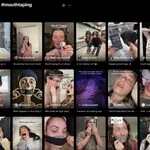
In this week’s newsletter, we have an article from Katrina about a god-awful audiobook she listened to recently and I convinced her to review. I’ve been dismayed to learn about mouth taping, and found a distinct lack of evidence for its usefulness. Bronwyn continues her series on charity fundraising, looking this time at how charities spend the money they receive. And committee member Hamish has written the second of three articles looking at the UFO phenomenon, and why it’s very, very unlikely we’re being visited by Little Green Men.
Tags: article, vitamin, time, newsletter, evidence, studies, mortality, lance