Why we may not be visited by beings from another planet
Hamish Dickson - 30th September 2026
In my last article on UFOs, I talked about the Extra-Terrestrial UFO Hypothesis. According to this hypothesis, unidentified flying objects are often attributed to craft piloted by beings from another planet when no other explanation is found. This is similar to how mundane but unexplained bumps in the night are attributed to ghosts by some people. In this article, I will endeavour to present an argument that makes the ET hypothesis less likely, due to the many prerequisites that need to occur before life can develop complexity to a point where interstellar travel is possible.
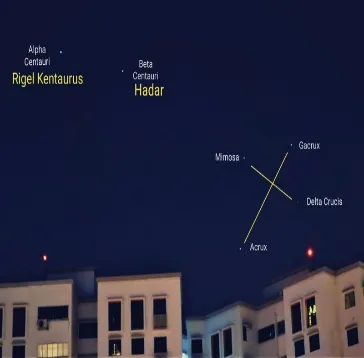
If you look at the Southern Cross constellation, you will see two stars known as pointer stars to the south of the cross (left). The one closer to the cross is known as Hadar, while the one further away is known as Alpha Centauri, which is 4.32 light years away. Alpha Centauri is two stars in a binary orbit around each other, and are known as Alpha Centauri A and B respectively. A decent refracting telescope of around 70mm or greater on a steady mount should be able to see it as two stars. Alpha Centauri A is about the same size as our sun, while B is much dimmer. There are reports that Alpha Centauri B has an exoplanet, but this is not confirmed and is likely an artifact of stellar activity.
The difficulty in detecting planets near these stars is that they are very close together. Their orbit around each other is about the distance between the sun and Saturn. Detecting their exoplanets is a bit like trying to read the wattage of an incandescent bulb while it’s running.
Orbiting around the Alpha Centauri pair at a distance of 13000 AU is Proxima Centauri. An AU is a measurement that means astronomical Units. One astronomical unit is the distance between the Earth and our sun. Proxima Centauri being so far away means this three-star system does not suffer from the three-body problem, so could support life.
Three-body problem - Wikipedia
Proxima Centauri is invisible to the naked eye. It is 4.25 light years away, and closer to us than any other star. It is a red dwarf star, so is much smaller and dimmer than our own. There are three rocky confirmed exoplanets orbiting, but only one is thought to be in the habitable zone, and is known as Proxima Centauri B. To be in the habitable zone means a planet is at a distance from its sun that allows water to be a liquid. Keep in mind here that both Venus and Mars are in the habitable zone too, but are both lifeless. Little is known about this exoplanet other than it is likely to be tidally locked, much like our moon is to the earth. This means one side always faces its sun while the other faces deep space. Dwarf stars tend to be rather volatile and eject radiation flare causing any planet around it to lose any atmosphere, due to its closeness to its sun. As the other side gets no sun, it is unlikely to host life. Only at the band around the middle between the hemispheres could there be life, but only if there is an atmosphere. Red dwarfs tend to have much longer life spans than most other stars, so have more time for life to evolve but, given their volatility, they are unlikely to have exoplanets that are able to support life as we know it.
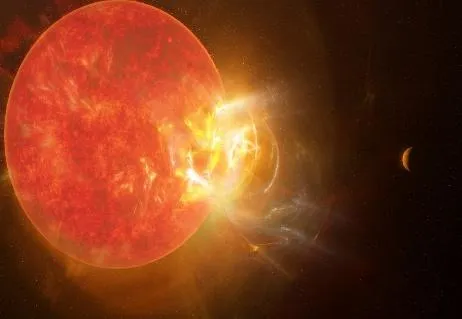
The next star from earth is known as Barnard’s Star, which is just under 6 light years away from us. It is a red dwarf, as are around 75 percent of the stars in our Milky Way. It, like Proxima, is a Flare Star that ejects massive solar flares, wiping out any atmosphere that might be on any of its four confirmed planets. None of these are in the habitable zone. The next star is Luhman 16, at around seven light years away with no confirmed planets. It is a brown dwarf, and very dim. Further away, at 8.6 light years, is Sirius, the brightest star in our night sky. Sirius is a star much like our sun, but twice as large. It has a white dwarf in binary orbit. In general, white dwarfs are more stable than a red dwarf, as they don’t have solar flares wiping out atmospheres of orbiting planets. What makes this star system unlikely to support intelligent life is that it is only 240 million years old. This time frame makes it unlikely for life to evolve to the point of achieving interstellar travel. Between Sirius and Earth there is little chance of intelligent life evolving, except for Alpha Centauri, which may or may not have suitable planets. At 10.5 light years away we have Epsilon, which is a star like earth’s, but only 800 million years old - so too young for life to evolve with the technology to visit earth. Below is a link if you would like to further investigate the stars near our sun:
List of nearest stars - Wikipedia
One could go on to describe every exoplanet to a distance of 40 light years out from Earth, but you get the point. Nothing that is confirmed within 8.6 light years can support lifeforms who have the technology to visit us. The massive distance between stars will be the topic of a future article, where the laws of physics place barriers on interstellar space travel, thus reducing the validity of the Extra-Terrestrial UFO Hypothesis. For now, the possible rarity of life sophisticated enough to travel to Earth will be the topic of this article.
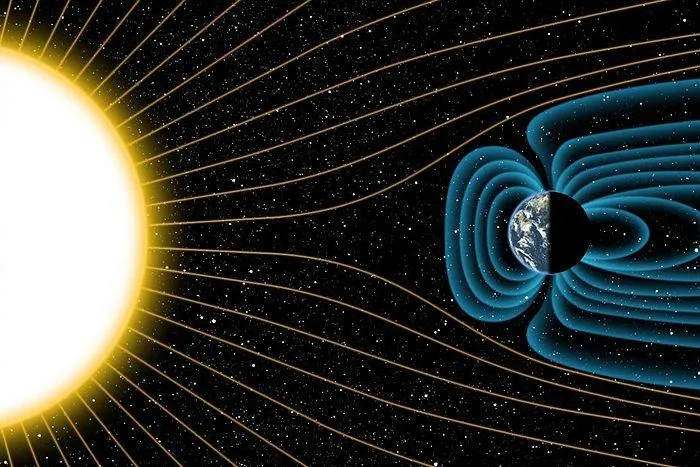
There are other barriers to a planet’s ability to harbour life, other than those mentioned above. For life to evolve on a planet’s surface, it must have a magnetic field. A magnetic field is created deep inside a planet due to an iron core rotating in magma causing magnetism, much like a dynamo. Having a magnetic field protects a planet from the harmful cosmic radiation that would prevent life from forming. Another effect is enabling a planet to hold an atmosphere.
Risks of weakening of the Earth’s magnetic field - Risk Frontiers
Mars is a classic example of when this happens. Mars once had water and an atmosphere, around 3.9 billion years ago, but the core stopped rotating and the planet lost its atmosphere, causing water to evaporate into space as there was virtually no air pressure to retain it. Mars is in the habitable zone, but is lifeless.
Magnetic field of Mars - Wikipedia
Another barrier that can affect life developing is a geologically inactive crust. Our planet is geologically active, as it has tectonic plate movements that recycle and replenish the Earth’s crust over time. This, along with erosion from wind and rain, causes the CO2 levels to create an equilibrium, provided extra CO2 is not added from burning fossil fuels or from volcanoes.
Without this process, a runaway greenhouse effect would occur. This is precisely what has happened on Venus, which also lies in the habitable zone. Earth maintains a stable climate because active plate tectonics continuously recycle CO2 and carbonates between the surface and the mantle. Venus lost this mechanism, trapping a dense 96% CO2 atmosphere that drives a runaway greenhouse effect with surface temperatures over 464°C (867°F). It is so hot on the surface of Venus that not only is water a vapour and not liquid, but the metal lead is a liquid and not a solid.
Venus had Earth-like plate tectonics billions of years ago, study suggests | Brown University
Plate tectonics, along with the atmospheric events such as rain and wind and UV rays, help to infuse minerals and nutrients in the sea for life to begin.
Another barrier to advanced life evolving is the need for a planet to have oceans and continents. Early life began in the sea, and more advanced life began on land. This means gas giants like Jupiter or Saturn are unlikely to support life. It is hypothesised that Alpha Centauri has a gas giant around it.
A planet’s axial tilt cannot be too large or too small. A planet with a large tilt will experience extreme seasonal variations in climate. A planet with little or no tilt will lack the stimulus to evolution that climate variation provides. In this view, the Earth’s tilt is “just right”. The gravity of a large satellite such as our moon stabilises the planet’s tilt; without this effect, the variation in tilt would be chaotic, thus making complex life forms on land almost impossible. It might also help to have a large gaseous planet nearby, like Jupiter, that has enough gravity to pull asteroids towards it rather than them hitting the earth. This is not considered a prerequisite for life, but is helpful to reduce disruption by asteroids causing extinctions.
The first signs of life on earth in the geological record have been dated to around 4.1 billion years ago, just over half a billion years after the forming of the earth. This may indicate that simple single cell life could be reasonably common in our galaxy for planets that can sustain them. However, for about 90 percent of these 4.1 billion years, life on earth consisted of blue-green algae and single celled organisms.
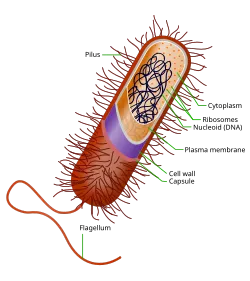
A Prokaryote (above) is a single celled organism without a nucleus. These organisms made up most of the life on earth for the first two billion years. According to most biologists, prokaryotes lack the architecture to evolve into larger organisms with a nucleus and mitochondria DNA. Around two billion years ago, one single simple cell incorporated itself into an aerobic bacterium, multiplied, and evolved into a eukaryote containing a nucleus of Mitochondria.
https://ib.bioninja.com.au/endosymbiosis/
Eukaryotes are the building block of all life on earth today. If this incorporation occurred only once in two billion years, such an event must be extremely rare, so one could conclude that life could remain very simple on other worlds. Out of this chance incorporation, we also got sexual reproduction, which is another milestone in complex life on earth. This could indicate that many planets able to sustain life might only be populated by single-cell organisms.
A major geological event occurred 650 million years ago where the entire earth froze over. This event is colloquially known as the Snowball Earth Hypothesis. It is unknown what exactly caused this event, but the after effects were very useful for more complex life to evolve. As these glaciers melted, elements such as carbonates, copper, phosphorus and other essential minerals were released into the biosphere to be used by future life.
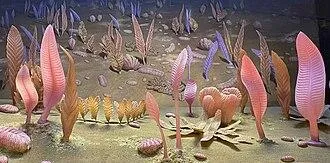
About 100 million years later, during the Ediacaran Period, life had evolved into simple soft-bodied sea-dwelling creatures that were the apex of life during this time (above). At this time, oxygen levels were only around 15% of what they are now. The Ediacaran Period, around 550 to 539 million years ago, marked the first known mass extinction which killed 80% of all life on earth at that time. It is believed to be a result of a sudden decrease in oxygen levels caused by climate change. Later, oxygen levels began to rise again as a byproduct of photosynthesis of algae that dominated life on Earth. This large increase in oxygen ushered in a new geological period, known as the Cambrian.
Now with warmer seas, more oxygen and the minerals that were deposited during the snowball earth (mentioned above), an explosion of new life occurred, known as the Cambrian Explosion. This explosion in life diversity occurred during the first 20 million years of the Cambrian. Many of the animals quickly evolved into new body plans that persist to today. These plans include nervous systems, eyes, hard body parts so muscles can articulate, sex organs and a digestive tract including mouth and anus. This abundance of diversity created predators and prey dynamics, beginning an evolutionary arms race. Hard shells and sharp teeth were made possible by carbonates left over from the melting glaciers of the snowball earth. Animal diversity began to take off, with complex organisms such as the predator Opabinia and the prey trilobites (below) after 4 billions years of slime and microbes.
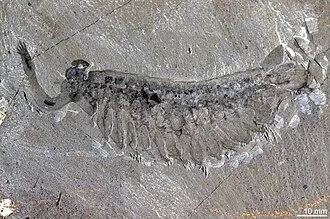
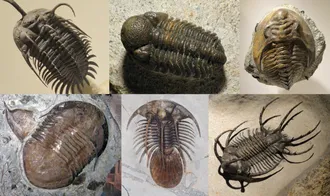
Many prey animals developed spikes, like the trilobites in the figure above and bizarre creatures such as Hallucigenia:
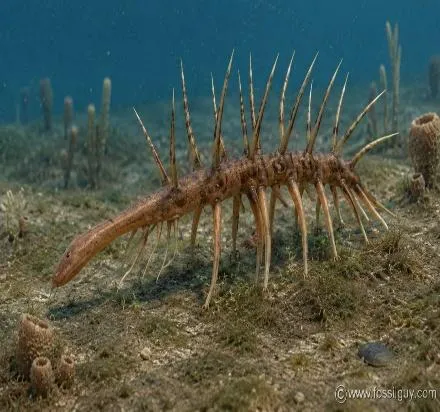
This creature is thought to be similar to a velvet worm with protective spikes. It is thought to have no living descendants. There were many prerequisites for the Cambrian explosion to happen which often involved major climate change and extinction. If these previous events had not occurred, life on earth would have remained devoid of the kind of life as we know it today.
The time from the beginning of the Cambrian to the present day is known as the Phanerozoic Eon. This period has been marked by 5 major extinctions, which wiped out up to 90 percent of all life on our planet:
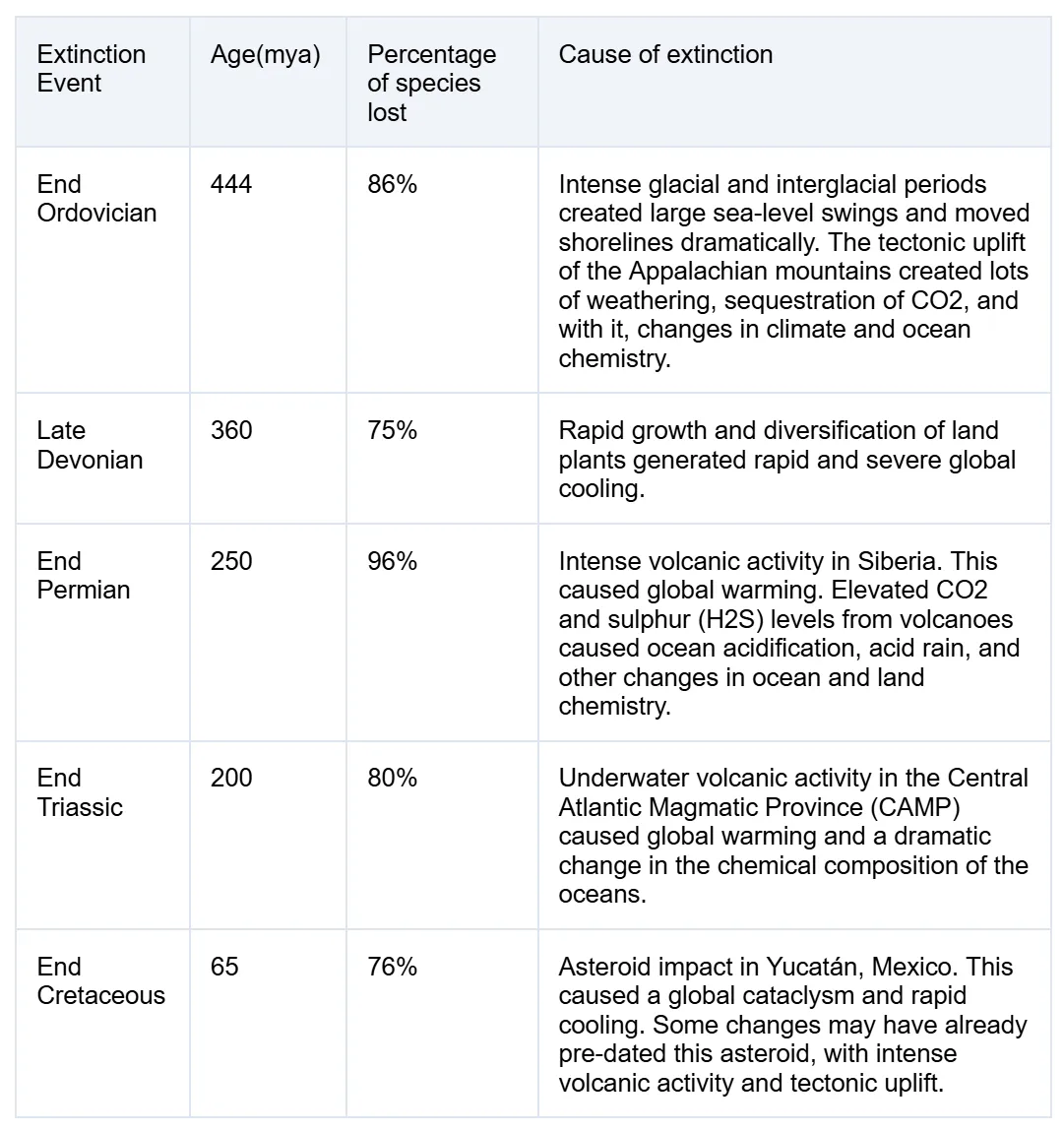
There have been five mass extinctions in Earth’s history | Our World in Data
In order for life to progress to a state advanced enough for interstellar travel, mass extinctions may need to be kept to a minimum for life to progress. Life on earth has come very close to being wiped out several times. If any of these events happened in a slightly different way, it may have been a much worse outcome. Even if the asteroid that hit the earth and killed off non-avian dinosaurs struck on a slightly different angle, dinosaurs may not have been wiped out, and humans may never have evolved. To think that intelligence is the apex of successful life is very naive when you consider the shark has been on earth for 450 million years, whereas we have only been around for one hundred thousand years. Some planets may have all the prerequisites for intelligent life yet it may never evolve.
Humans shared the earth with at least 3 other hominid species who all died out. These included the Neanderthals of Europe, Denisovans of Asia, and Homo Floresiensis of Indonesia. We as a species almost went extinct ourselves some 75,000 years ago, after a volcanic eruption reduced our number to less than 10,000 - with some estimates putting it as low as 1,000 individuals.
The Most Extreme Volcanic Eruption in Ancient History | HISTORY
There are noted problems with looking at the earth as an example of barriers that could exist on other planets that may inhibit complex life. This is mainly due to having a sample size of one (the earth), so extrapolating this to all other planets is a folly. However, it does illustrate the enormous time needed, and how things must be just right before complex life can occur.
As illustrated above, there are several filters that life has to go through before it can get to the point where interstellar space travel is possible. We have survived this long, but still do not have the capability to travel to other stars. We still have other filters to move through. Advanced organisms could destroy themselves before they even build their first interstellar space craft. There have been close calls on our demise as a result of situations that nearly meant the accidental launch of nuclear missiles, only prevented by the quick thinking, often Russian, person in command.
Broken Arrows: Nuclear Weapons Accidents | atomicarchive.com
There is global warming, which threatens our species. We have also developed a more recent threat: Artificial Intelligence, potentially capable of hacking nuclear silos and launching nuclear weapons, or turning off power grids during winter. All these things could affect life on other planets, where an organism might almost get close to developing technology to explore the stars, but destroys themselves first.
One can compare the above barriers as a series of filters of different size holes, one beneath the other. As you shake the top tray, what comes out at the last tray after filtering through those above it includes complex life, including humans. With all the barriers listed above, the silence from advanced civilisations able to send messages and receive them via radio telescopes such as ours could mean one of three things. One is that they are using a different frequency than the ones we are detecting. This would be a bit like us using smoke signals while they are using Bluetooth. A second is they are cautious of sending out signals, as this may indicate their location to potentially hostile lifeforms. This concern has been expressed by the late Stephen Hawking, who compared a visit by advanced aliens to Columbus landing in the Americas, which “didn’t turn out well for the Native Americans” he said.
Stephen Hawking: Alien Contact Could Be Risky - ABC News
The other reason is more sobering. We are alone! Remember, nothing within 12 light years is likely to be able to harbour intelligent life that could visit us.
Just imagine if an advanced life form makes it to the final level of building a craft capable of interstellar travel. The next barrier is getting to the Earth, in an acceptable time limit, without dying on the way. This will be the topic of the next article in my series, which will hopefully shed more doubt on the extraterrestrial UFO Hypothesis.

Join us in person at