28 April 2026 - Approx. 6 min read
The Cochrane Reports are comprehensive reviews that summarise and evaluate the results of clinical research on healthcare interventions. They are produced by an international network of researchers and healthcare professionals called the Cochrane Collaboration. These reports are widely respected for their sound scientific approach, and often include meta-analyses of multiple studies.
13 April 2026 - Approx. 1 min read
I appreciated the look at plastic detox ideas and highlighting other silly things, but felt like part of the main point of concern around micro plastics was missed.
30 March 2026 - Approx. 2 min read
I must admit I had believed climate change due to anthropogenic (man-made) effects meant that parts of the planet became hotter and wetter, and parts became colder. In other words, summers were hotter and winters could become colder.
17 February 2026 - Approx. 5 min read
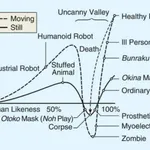
Do you ever get the creeps from a robot that's just a bit too lifelike, or feel a shiver run down your spine when a CGI character seems like it's almost - but not quite - human? This weird feeling is called the uncanny valley effect.
21 July 2025 - Approx. 4 min read
According to Life Extension, a website selling brain-boosting supplements called nootropics, our brains can be hacked (known as “neurohacking”) through “a variety of complementary strategies, including dietary and lifestyle changes and the use of nootropic drugs and supplements, brain-training activities and games, and neurotechnologies (e.g. electrical stimulation devices) designed to increase brain fitness”. Their Australian branch will sell you 30 pills for about AU$30. The pills contain gotu kola, bacopa, and marigold extract.
30 September 2024 - Approx. 5 min read
A few days ago I tuned eight pianos in one day. That has nothing to do with this article. I just wanted to let you know that, because I think it's impressive. The pianos were all in one location, at a venue/arts complex in Queenstown, and all regulars, and of high quality, so maybe not that impressive I guess, but it was a long day. While there, a kind lady who worked in the complex handed me a bottle of Ārepa. Reading the label on the glass bottle, I instantly sensed that a deep dive might be in order.
16 September 2024 - Approx. 5 min read
I stated on the podcast a few weeks ago that I think I could cover a different horse pseudoscience in each issue, and keep going for an entire year. That was before I looked into it…
5 August 2024 - Approx. 3 min read
The first batch of Pfizer Covid-19 vaccinations hit New Zealand in February 2021. That means we have now had 3.5 years to study the side effects.
8 July 2024 - Approx. 6 min read
Over a year ago my wife and I were on a cavalcade. Present on the same cavalcade was a woman who was an equine vet. While we were discussing various 'alternative' treatments and such she happened to say “but I'm a real believer in the power of placebo, though…”. I found that statement a little surprising, coming from (I assume) a qualified medical person, but perhaps in a way this is telling.
19 February 2024 - Approx. 8 min read
Those who know me well know that I have a thing for painful, uncomfortable experiences - I'm finally planning to redeem my colonic irrigation voucher in the next few weeks, I've enjoyed stabbing myself with acupuncture needles and joining interminably boring cult meetings. So for some it's no surprise that I'm a big fan of bad movies - some of my favourites are Twisted Pair (or anything really) by Neil Breen, Champagne and Bullets, Jurassic Shark, Dangerous Men, Dolemite, Tammy and the T-Rex, and Birdemic. Yep, these movies are so bad that The Room doesn't even make the list.
3 July 2023 - Approx. 6 min read
About 10 years ago a friend asked me about binaural beats. I had to admit at the time that I was oblivious, and had never heard of them. He proceeded to describe a fun audio effect, one that only works through a pair of headphones. If you play an audio tone (frequency) in each ear, and make the tone in each ear a little different, the difference between the frequencies of these two tones - their interference pattern - can be heard as a third audio tone that sounds like it's originating from somewhere between your ears. So, if you play a 550Hz tone in your left ear, and a 500Hz tone in your right ear, you will also “hear” a 50Hz tone between your ears: 550 - 500 = 50.
26 June 2023 - Approx. 7 min read
Reading some of the latest research on chronic pain management led me down a rabbit hole of further reading, and the discovery of just how damn weird and counterintuitive pain is.
1 May 2023 - Approx. 5 min read
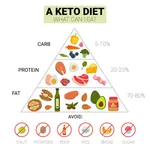
The ketogenic (keto) diet is based on reducing carbohydrate intake drastically, usually to less than 50g a day, and increasing protein and particularly fat intake.
3 April 2023 - Approx. 2 min read
I've had a wee break off writing the newsletter for the past couple of weeks, as Brownyn and Mark have contributed lots of content, but it's my turn again this week - thankfully with some great contributions from the aforementioned Bronwyn - with a continuation of her look at the life of Christian Evangelist Ray Comfort, and also previous contributor Alistair Blenney, who takes a look at NESARA.
24 January 2022 - Approx. 1 min read
A week seems like a very long time at the moment! But just over a week ago, the island nation of Tonga experienced a huge volcanic eruption and resulting tsunami. The effect of the tsunami was made worse by the fact that the islands are low-lying so seeking high ground is all but impossible.
13 December 2021 - Approx. 1 min read
It has emerged that there's a man who's been showing up to receive the COVID vaccine on behalf of other people (for which he's being paid), having up to 10 vaccinations in a single day.
15 November 2021 - Approx. 1 min read
In a recent Nature article, some researchers of Chinese origin describe their research into the effects of stimulation at various acupuncture points on the induction of inflammation by bacterial endotoxins (toxic proteins released by some bacteria when they disintegrate). They found that this stimulation has beneficial effects at some acupuncture sites and not others. Despite the use of the word “electroacupuncture” in the title, their abstract in the Nature paper ends with “Our studies provide a neuroanatomical basis for the selectivity and specificity of acupoints in driving specific autonomic pathways.” a normal reading of which strongly suggests that the authors believe that acupuncture is a real phenomenon and is based upon specific neurological pathways which they are claiming to have identified.
26 October 2021 - Approx. 1 min read
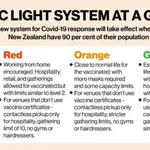
This week has seen the introduction of the Traffic Light System to replace the COVID lockdown levels currently in place. This will take effect once all of the country's DHB's achieve a 90% fully vaccinated rate for their populations.
5 July 2021 - Approx. 1 min read
This past week saw the release of a report on misinformation, on research conducted by the Classification Office Te Mana Whakaatu. The Classification Office is traditionally responsible for classifying media, such as films and assessing whether material may need to be restricted.
27 April 2021 - Approx. 1 min read
An interesting video has appeared on YouTube which gives a rational explanation for a UFO video taken by US Navy personnel.
14 December 2020 - Approx. 1 min read
Renowned Otago researcher, Jim Flynn has died, aged 86. He discovered a very interesting effect - now named after him - the Flynn Effect, which states that IQ scores are increasing decade by decade. Basically, people are scoring better on IQ tests than they did in the past. This has had the effect of moving the 100 score - which is, by definition, the average IQ score upwards. There is speculation on the reasons for the Flynn effect, but nothing completely conclusive. But it is interesting to ponder.
1 May 2019 - Approx. 9 min read
In late March, representatives from NZ Skeptics attended an evening session of 'Psychic Healing' in Christchurch, as performed by so-called 'psychic-healer', Jeanette Wilson. NZ Skeptics Society was formed in part to examine and counter this sort of ridiculous woo, so we felt it was important to investigate and report on the sort of depths to which woo-sters will go.
13 March 2016 - Approx. 1 min read
The Mandela Effect is where people have false memories of past events, and decide that there's been a jump to an alternative universe where history is different.
1 August 2015 - Approx. 5 min read
Truly understanding placebo effects (note the plural) is critical to science-based medicine.
1 February 2015 - Approx. 5 min read
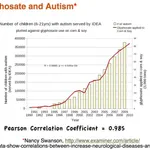
Dr. Steven Novella breaks down the latest environmental factor that apparently causes autism.
1 May 2013 - Approx. 2 min read
Alison Campbell has been spending time on Facebook recently.
1 August 2012 - Approx. 7 min read
Darcy Cowan takes another look at a subject that just won't go away.
1 February 2012 - Approx. 6 min read
ACC's best-practice guidelines for identifying cases of sexual abuse are not credible.
1 May 2011 - Approx. 2 min read
The Moral Landscape: How Science can Determine Human Values. Sam Harris. 2010. Free Press, New York. ISBN 978-1-4391-7121-9 Reviewed by Martin Wallace.
1 August 2009 - Approx. 2 min read
Justin Vodane's letter (NZ Skeptic 91) is a classic defence of the indefensible.
1 August 2009 - Approx. 5 min read
Tim Hume (Sunday Star Times June 21) has written a good account of traditional Maori Medicine (Rongoa Maori). The Health Ministry provides $1.9 million annually for this nonsense. That money would pay for approximately 1000 hip replacements.
1 May 2009 - Approx. 12 min read
Placebos may contain no active ingredients, but they have real effects on the human brain. This article is based on a presentation to the NZ Skeptics 2008 conference in Hamilton, September 26-28.
1 August 2008 - Approx. 10 min read
Extravagant claims are often made for the health-giving effects of anti-oxidants in the foods we eat. But sorting out the truth from the hype is not at all easy.
1 February 2008 - Approx. 9 min read
Intersecting as it does sex, religion, blood, medicine and masculinity, circumcision is a subject that is hard to discuss rationally.
1 November 2006 - Approx. 5 min read
It has become a cliché that whenever something bad happens, a horde of counsellors descend on the survivors to make their lives a misery. It's true. Counselling does make you more sick compared to doing nothing.
1 February 2006 - Approx. 3 min read
The leading medical journal The Lancet recently published yet another analysis of trials of homeopathy. After examining 110 such trials, the Swiss researchers concluded that there was no convincing evidence that homeopathy was any more effective than placebo. In the accompanying editorial, the editor, Dr Richard Horton, made a comment which has an uncanny, and no doubt intentional parallel with the views of the founder of homeopathy over two hundred years ago:-
1 February 2006 - Approx. 8 min read
Many pharmaceuticals originate from nature, but their development is very different from that of so-called natural health products. This article was originally presented at the 2005 Skeptics Conference.
1 May 2005 - Approx. 2 min read
Given his ratings, only a tiny handful of you probably saw Paul Holmes in his new slot on Prime a few weeks back, talking to Don Maisch, described as an Australian expert on the health effects of magnetic fields. More precisely, he's doing a PhD in the Arts Faculty of Wollongong University on changes in the health status of Chronic Fatigue Syndrome patients following removal of excessive 50 Hz magnetic field exposure.
1 February 2004 - Approx. 6 min read
Cellulite is the term used by women's magazines to describe dimpled fat. It has no scientific or anatomical validity and it is simply ordinary fatty tissue that assumes a waffled appearance because fibrous tissue prevents the skin from fully expanding in areas where fatty tissue accumulates. This has been confirmed by a study where biopsies of fat and cellulite were microscopically indistinguishable by pathologists who were blinded as to the samples' origin. Calling fat "cellulite" is part of the modern trend to seeking alternatives to the (unpalatable) truth, in this case an adipose euphemism.
1 February 2003 - Approx. 7 min read
If the caring practitioner has no idea of what to do next, the decision may be best left in the hands of the Almighty. Too many clinicians, unfortunately, are unable to resist giving God a hand with the decision-making.
1 November 2002 - Approx. 16 min read
This is the press release (slightly edited) which announced this year's Bent Spoon Winner. Most of the reports used only a small proportion, and included a quote from Ms Fitzsimons saying that the Skeptics could "do whatever they like with their silly bent spoon".
1 August 2001 - Approx. 2 min read
The placebo effect has long been of interest to skeptics for its presumed role in alternative medicine. The Skeptics' Dictionary (http://www.skepdic.com) has a lengthy entry, describing a placebo as an inert substance, or fake surgery or therapy, used as a control in an experiment or given to a patient for its probable beneficial effect. It goes on to add the effect has at least three components.
1 November 1999 - Approx. 5 min read
There are three types of people in this country. Those that can count and those that can't. It is common to blame the education system for this.
1 November 1998 - Approx. 3 min read
Oh My God, it's the End of the World! Again!
1 November 1997 - Approx. 4 min read
John Riddell spends a lot of time in the pub. Ask his wife. Often, over a pint or two, some bloke or blokess spouts forth some new age dogma which naturally requires correction.. Now a seasoned debater, he this month begins a regular series sharing his collection of responses honed to the mental capabilities of your average bar-room intellectual.
1 May 1993 - Approx. 8 min read
Many people will remember Dr Bill Morris's entertaining autobiographical talk at the last Skeptics' conference in Wellington. From his presentation, we extract this discussion of what is still the most persistent and potent medical effect known to the human race.
1 February 1992 - Approx. 5 min read
Myocardial infarction (heart attack, coronary thrombosis) is commonly caused by a blood clot blocking one of the three coronary arteries supplying blood to the heart muscle. It is the commonest cause of death (4,000 p.a.) in New Zealand and other Western countries. Specialists have long wondered whether early administration of a fibrinolytic (blood clot dissolving drug) would reduce mortality.
1 November 1991 - Approx. 7 min read
Hydrogen peroxide — sometime rocket fuel, blonde bleacher and disinfectant — is increasingly being touted as a cure for what ails you.
1 November 1989 - Approx. 7 min read
In order to supplement the article on homeopathy by Bill Morris (March, 1989), I enclose copies of abstracts of clinical trials of homeopathic preparations published in reputable medical journals, some of which Morris has overlooked.
1 May 1989 - Approx. 4 min read
Book Review of “Astrology; The Evidence of Science”, by Percy Seymour (Lennard Publishing, £12.95).
1 February 1989 - Approx. 6 min read
I have been reading Neil Postman's Amusing Ourselves to Death (Methuen 1987) and very interesting it is too. Postman takes some vicious swipes at Television; although tolerant of Dynasty, Dallas and Sledge Hammer he is unrelenting in his condemnation of its 'best' programmes. His main point is that TV is killing off our abilities to think and express ourselves logically. I will summarise briefly; to catch the full flavour of Postman's invective you will have to read the book.
1 November 1988 - Approx. 2 min read
In your November 1987 issue, Dennis Dutton (page 3) asks whether it matters that sick people, especially cancer sufferers, are not discouraged from using "alternative" or "complementary" treatments, The answer of course is the one that he himself has given: it does and it doesn't.
1 November 1988 - Approx. 8 min read
The Spectator, 20 September 1986
1 August 1988 - Approx. 3 min read
The Dominion Sunday Times, 4 October 1987
1 November 1986 - Approx. 1 min read
Carison, S. A double-blind test of the astrology hypothesis. Nature, December 5, 1985, 318, 419-425. Two double-blind tests were made of the thesis that astrological 'natal charts' can be used to describe accurately personality traits of test subjects. Despite using highly regarded astrologers, despite incorporating their suggestions into the design, and despite the fact that they approved the design, astrology failed to perform at a level better than chance. The astrological hypothesis was clearly refuted.