Be the Early Bird

30th September 2024

Today is the last day to get early bird tickets for our annual NZ Skeptics Conference, this year in partnership with the NZARH, in Auckland from the 15th to the 17th of November. If you’re keen to come and listen to some fascinating talks about skepticism, covering a diverse array of topics (and with something of a focus on religion, given this year’s partnering with the Rationalists), make sure you get your tickets today to save a little money. The regular authors of this newsletter will be there, as we’ll be recording a live episode of our Yeah… Nah! Podcast at the event. If you’re able to make it, be sure to come over and say hi to us as it’s always good to chat with people and make new connections at these events.

In this week’s newsletter, Bronwyn has looked into New Zealand’s connection to the now controversial practice of cult deprogramming. Katrina, hoping to write a series of articles on how to do good science, has jumped right in at the deep end with an article on multivariate data analysis. I’ve asked my kids about what the hell mewing is. Brad’s had a look at the amount of scientific evidence Ārepa has for their brain boosting drink (spoiler: not much at all). And, finally, both myself and Richard Alexander have received interesting scam emails, and tried to respond to them in a fun way.

Mark Honeychurch

Learning from our mistakes: Problems with the New Zealand Anti-cult response of the 80s and 90s

Bronwyn Rideout - 30 September 2024

Learning from our mistakes: Problems with the New Zealand Anti-cult response of the 80s and 90s

During our “very special” episode of the Yeah…Nah podcast with Anke Richter, Anke referred to an anti-cult organisation that was taken over by Scientology. The group she was referring to was the Citizen's Freedom Foundation / Cult Awareness Network (CAN), which was founded by Ted Patrick in 1978. Although he had no formal education or training, Patrick was a pioneer of deprogramming, which he developed in response to the expansion of various cults and religion movements throughout the 60s, 70s, and 80s. Deprogramming was always controversial, but seen as a necessary evil by many parents who paid Patrick and others like him to return their (often adult) children to them. Methods employed by Patrick and others included abduction, sleep and food deprivation, emotional abuse, desecration of symbols of the detainee's faith, and sometimes physical violence.

Mewing

Mark Honeychurch - 30 September 2024

Mewing

I was sent a link to an article in the Independent the other day, and asked if I'd heard of a new thing the kids are doing called mewing. I quizzed my children about it, as they're young and hip, and they told me that this was old news - “so 6 months ago”, apparently. But the story of mewing was more interesting that I'd first suspected it would be, and involves a good deal that's of skeptical interest.

Ārepa: great minds drink alike? Or a storm in a drink bottle?

Brad MacClure - 30 September 2024

Ārepa: great minds drink alike? Or a storm in a drink bottle?

A few days ago I tuned eight pianos in one day. That has nothing to do with this article. I just wanted to let you know that, because I think it's impressive. The pianos were all in one location, at a venue/arts complex in Queenstown, and all regulars, and of high quality, so maybe not that impressive I guess, but it was a long day. While there, a kind lady who worked in the complex handed me a bottle of Ārepa. Reading the label on the glass bottle, I instantly sensed that a deep dive might be in order.

The Most Inspiring Entrepreneur

Richard Alexander - 30 September 2024

The Most Inspiring Entrepreneur

Imagine the honour of being selected as one among the “10 Most Inspiring Entrepreneurs from New Zealand Accelerating the Growth of Economy in 2024” by Apac Entrepreneur, and featured in a Special Edition of their magazine.

Saeed's Millions

Mark Honeychurch - 30 September 2024

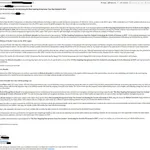
A few days ago I was scanning my spam folder, making sure nothing important had been accidentally classified as spam, when I noticed a cryptic email: