All tags

Articles tagged with "charity"

Saeed Writes Back

Saeed Writes Back

In September 2024 I wrote a short article, titled Saeed's Millions, describing an email exchange I had with a man named Saeed. He'd emailed me asking if our communication was private, and when I responded he followed up by offering me millions of dollars to give to charities, with 30% of the money going to me in exchange for doing the work.

Making Cents of Charity: Admin costs - Is 30% too much, or not enough?

Making Cents of Charity: Admin costs - Is 30% too much, or not enough?

For every dollar you donate to charities, a portion is usually directed towards covering administrative and fundraising costs. What is the maximum percentage that is acceptable to you? The rule of thumb is a fundraising efficiency ratio of 30:70 - 70% to programming, and 30% to overheads (including fundraising, management, and other general costs). However, amongst charity watchdogs and monitors such as CharityWatch, Charity Intelligence Canada, and the Charities Review Council, a charity is considered financially efficient, or at least performing satisfactorily, if overhead spending is between 20 and 35%, with between 65 and 80% distributed to programmes. Some charities and non-profit trade organisations argue that excessive focus on financial overhead can cause harm, and can actually have an overall detrimental effect on programme investment. However, how overhead spending is calculated and communicated varies, and from some charities the amount deducted from donations for admin and fundraising is less than their true costs.


Making cents of charity: Child Sponsorship, Part 2

Making cents of charity: Child Sponsorship, Part 2

At the end of part one, charities that used child sponsorship were facing a period of transition, both at home and in the countries they served. Conflicts throughout Asia during this time obviously hampered child charity operations, regardless of their fundraising model: World Vision had to abandon operations in Vietnam and Cambodia, and SOS Children's Villages had two of their villages taken over by the Vietnamese government in 1976. The retreat from parts of Asia experiencing war or other conflicts would be a boon for other countries, although World Vision described having to abandon 23,000 sponsored children with their retreat. By the 1980s child sponsorship would surge again, as millions of dollars in humanitarian aid was sent to anyone and everyone working in, or singing about, Ethiopia during the famines of the early-to-mid 1980s.

Making cents of charity: Child Sponsorship

Making cents of charity: Child Sponsorship

Many of us who grew up with access to a TV may remember long ads that flashed through scenes of shanty towns, dirt roads, dishevelled children, and emaciated infants too exhausted to respond to the flies landing on their faces. These edits are followed by a B- or C-list celebrity exhorting viewers to sponsor a child for as little as $1 a day. Sally Struthers' long partnerships with the Christian Children's Fund (formerly China's Child Fund, now just ChildFund) and Save The Children (which officially discontinued their sponsorship programme in January 2026) come to mind:

Saeed's Millions

A few days ago I was scanning my spam folder, making sure nothing important had been accidentally classified as spam, when I noticed a cryptic email:

NZ lightworkers can save the world

NZ lightworkers can save the world

This is the cover image of one of NZ's own lightworkers, J. Lee Frisbee. He works at “Explore Daydreaming Inc”, and describes himself as “Multidimensional Navigator - I Am Light Zen Master”.

Q: When is a charity not a charity?

Q: When is a charity not a charity?

One of the ways that I monitor unskeptical groups is by signing up for their newsletters - at the moment I receive regular emails from Voices for Freedom, Scientology, Eckankar, Freedom Village, Transformation Into The New Paradigm and more. The titles of some of the recent emails I've received include such gems as:

What a difference a word makes

What a difference a word makes

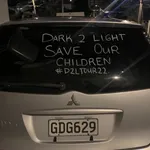
On Friday night just over a week ago I went to a Save Our Children meeting. Now, most people will read that and think I've been a civic-minded citizen, going along to a charity meeting. Save Our Children is a good thing, right? To which the answer is no, because Save OUR Children is not the same thing as the established charity “Save THE Children”.

Oh god, not another Convoy

Today's newsletter includes a fun evening myself and some other skeptics spent meditating, a rant about my junk email, and the daft convoy that's on its way to Marsden Point. I take a deep dive into Arise church, looking at their preaching of horrible prosperity gospel nonsense, and the horrific way they treat their interns. Also Bronwyn Rideout has written about a UK charity promoting the discredited CEASE therapy for “treating” autistic people, and finally I ask you all for help with finding skeptical dates in New Zealand history.

Why does Destiny Church have a tax free status?

Why does Destiny Church have a tax free status?

The church was irresponsible with their recent protest, held during a level 3 lockdown in Auckland. The majority of those attending were without masks, and were not following physical distancing guidelines. When the media pointed out that most people were not wearing masks, the church's leader, Brian Tamaki, said: "I saw everyone wearing masks."

Humanist Conference

This weekend was the Humanist Conference in Auckland, with some great international and local speakers.

News Front

Where: www.stuff.co.nz

Free Effective Altruism book

The Effective Altruism movement is becoming popular in New Zealand. The basic idea is that logic and critical thinking can be applied to charity giving, and that charities range from being great at helping people to being as good as useless, or even detrimental.

Family First vows to fight move to de-register it as charity

Family First may be de-registered as a charity soon. They have been sent a notice of de-registration from Charities Services, but plan to fight it in court. They have previously defended against an attempt to be de-registered last year.

Skeptical Thinking About Charity

How the standards of skeptical thinking can be used to reject ineffective charities in favour of effective charities.