Making cents of charity: Child Sponsorship, Part 2
Bronwyn Rideout - 14th September 2026
1970s-80s: Transitioning from orphanages to family support and adapting to conflict
At the end of part one, charities that used child sponsorship were facing a period of transition, both at home and in the countries they served. Conflicts throughout Asia during this time obviously hampered child charity operations, regardless of their fundraising model: World Vision had to abandon operations in Vietnam and Cambodia, and SOS Children’s Villages had two of their villages taken over by the Vietnamese government in 1976. The retreat from parts of Asia experiencing war or other conflicts would be a boon for other countries, although World Vision described having to abandon 23,000 sponsored children with their retreat. By the 1980s child sponsorship would surge again, as millions of dollars in humanitarian aid was sent to anyone and everyone working in, or singing about, Ethiopia during the famines of the early-to-mid 1980s.
Most charities were partnered with orphanages, which were already a dying institution in most Western countries, and were difficult to maintain oversight of from overseas. According to Brad Watson, Harwood Lockton, and Manohar Pawar, Compassion International and ChildFund were just two charities that discovered many of the orphans they cared for were not truly orphans; families were simply so impoverished that orphanages were seen as the best option in a terrible situation, although that doesn’t negate claims that some families placed their children in these institutions under duress. As mentioned in the brief discussion regarding ChildFund in Part 1, there was growing interest in keeping children with their families, or at least in some kind of kinship relationship, and charities like Child Fund and World Vision experimented with direct-to-family donation transfer and community development as supportive ways to keep children out of orphanages, and get them out of poverty.
The move away from orphanages also coincided with another cultural change. Watson et al. summarise the source thusly: “However, the rise of secularism, postmodernism and material definitions of poverty in the Global North have, by and large combined to alter perceptions of the legitimacy of CS INGOs [Child Sponsorship International Non-Governmental Organizations] formerly involved in direct evangelism“. In Part 1, Hillary Kaell points out that secularism within the bubble of Christian charities merely refers to organisations that are not under the supervision of any particular denomination. Hence why an interdenominational charity like World Vision could be considered “secular”, despite having heavily evangelical roots. Nevertheless, donors were becoming increasingly secular too, as well as savvier about what their money was being used for, how much of it was being used for that purpose, and whether their donations had any impact. The next few sections address some of the most common critiques leveled at child sponsorship, and whether or not these programmes can at least learn from these complaints.
The sponsored children don’t really exist
This question is more than justified given the historical manufactured orphan crisis described above, but while it is more than likely that your sponsored child is a real, living human being who has been signed up for the programme by their church or parents, this is a concern based in reality. Correspondence between donor and child is encouraged, and acknowledged for its power in building a connection between the two. Every now and then, an anecdote will appear on a Reddit thread (here, here) or Facebook page where a family member or friend of the poster discovered that their foster child wasn’t real - either by receiving a letter meant for someone else, or the same letter multiple times.
But reports by The New York Times and the Chicago Tribune in the late 1990s demonstrated to many unaware donors that child sponsorship was more of a fundraising strategy to support a community rather than an individual child. While the deception of there being a genuine relationship with a child is a serious violation of trust, that the money is being used far more effectively to help multiple children and their families would still be a new positive outcome that has some logical appeal.
The extent of some instances of deception stops any attempt at logical rationalisation in its tracks. Between 1996 and 1998, reporters and editors of The Chicago Tribune sponsored 12 children across 4 of the most popular child sponsorship programmes in the US - Children International, Childreach, the Christian Children’s Fund, and Save the Children. They sent money and letters for two years before reporters went out to find these children, and discovered that at least two of them were dead before the sponsorship even started, and those that were given sizable donations for scholarships, birthdays, and other items did not receive the gifts as expected by the donors. Save the Children responded with their own investigation, and found an additional 22 deceased children who still had active sponsors; reprimands were issued to staff who failed to inform donors about the deaths, and for fabricating letters to the donors after one of the children died. They also admitted that they pooled the donated money, so they could not confirm how much went to the child it was intended for.
One would think that after this level of public exposure, other programmes would want to fly straight too. And to a degree it has, but donors still find themselves on the back foot. In 2016, The New York Times found a Palestinian boy who was sponsored by an Australian police officer; the boy and his family had no idea that their son and nephew was in the programme. The officer, on the other hand, had sent $1,100 over five years and received updates from World Vision indicating that his donations were improving the boy’s personal quality of life. In 2022, World Vision was brought to task for the same thing in Canada. A couple, The Mendises, had sponsored a child in Sri Lanka for several years, and decided that they wanted to meet him. After receiving no assistance from World Vision, they had a friend track the teenager down, only to find out that he had never received any money. World Vision did confirm that the money went to the community instead, and while the couple were satisfied that the money did do something good, they were disappointed in the lack of honesty. However, a representative of Charity Intelligence Canada was restrained in their sympathy. While World Vision and other charities needed to be more transparent, the rep also opined that donors really had to read the fine print - something that wasn’t commented on two decades prior.
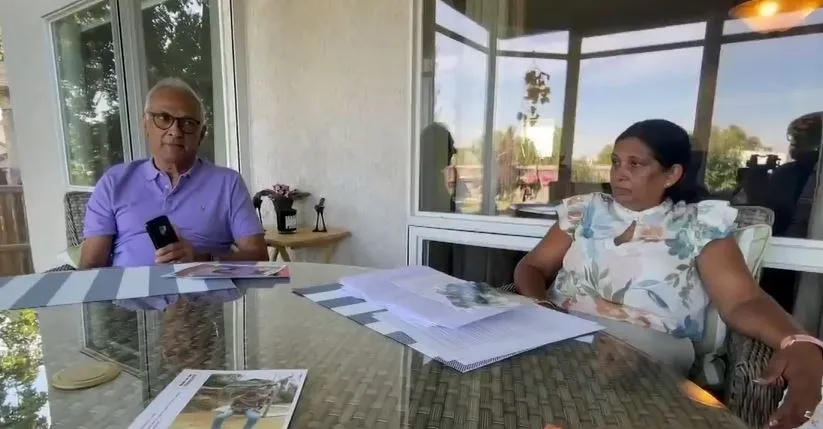
Source - The Mendis family
Inefficient and ineffective at resolving global inequities
One of the best-known articles on this topic was published in The New Internationalist in 1982. Peter Stalker’s “Please do not sponsor this child” outlines a multitude of reasons why child sponsorship is an inefficient and ineffective way to put your dollars to good humanitarian use. Included on his list of detractions is that the model is too expensive, due to the administrative costs of processing photos, translating letters, and tracking families. Given what was revealed by The Chicago Tribune in 1998, that comes across as quaint - optimistic, even. Another objection is that a model based on helping the individual already has the odds stacked against it, and is unlikely to succeed. Stalker also makes a point that donor families risk being insensitive when sharing about their day-to-day lives with children who may lack shelter or food security, as well as risk inadvertently creating the expectation that an adoption might be possible.
Stalker has wondered whether the donor gets anything out of their meagre correspondence with the sponsor child, but I think this is the most cynical of Stalker’s takes, as many sponsors (like the Canadian couple discussed above) are content knowing that they are making a difference, regardless of where the information comes from. Within the same section is the allegation that the letters are censored, to remove any criticism. Again, considering that one of the allegations made in the Tribune investigation was that correspondence was fabricated, this fear may be the least likely thing to happen. But this is followed with considerations that money will be mismanaged, and that employees who are administering the programme or dispersing funds may play favourites or misuse monies some other way, which over the course of the history of child sponsorship has been an issue. The final nail in the coffin is that the charities distributing the aid risk stagnating in regions, and engaging in projects that are uneconomical or even detrimental to the locals because their strategy is to be inoffensive to local leadership structures.
In 2022, Kathleen Nolan revisited Stalker’s article for The New Internationalist, finding that while some aspects of the models have changed, the critiques have not. The exploitation of images of children living in poverty being used to pull at your heart-strings is still rampant, and choosing a sponsor child is no different than an online dating profile - you can choose your sponsor child either by reviewing their individual profile, or by literally selecting a desired age/sex/location, and seeing what name pops up. What has changed is the acknowledgement of colonialism, the role the global north plays in contributing to the causes of child poverty, and the fabrication behind asking impoverished children to write letters of gratitude. Nolan’s argument is that child sponsorship survives on ignoring imbalances of power, and bypassing the reckoning of one’s privilege. This does allow Nolan to suggest some alternatives, which Stalker lacks (i.e. vote with a global citizenship lens, participate in divestment actions, and hold companies that exploit populations and environments accountable). But, in today’s environment of purity politics, this can be more difficult to engage with than said.
Child Protection - an emerging consideration
While the Mendises had good intentions with their desire to visit their sponsored child, there is little said outright about child protection in these scenarios. Indeed, there are many heartwarming ads and articles about donors visiting their sponsor child, so no one can blame the Mendises for thinking this was a reasonable ask. But missing from those adverts are uncensored clips where the children or families are asked about their feelings for the intrusion, and of course no charity would admit that there are any donors who would have dubious intentions with their sponsorship of a vulnerable child. I don’t know what the situation was like back in 2022, but in 2026 many charities have a webpage on visiting your sponsor child. It is noticeable that the website doesn’t outright say “Yes! We can make this happen”. Potential travellers have to submit to a police check, and register their interest at least 3 months in advance, so that things can be arranged with the appropriate local office.
Social media has put a new spanner in the works. For those who might have stopped their sponsorship, or their sponsor child left the programme, social media provides the perfect temptation to try and cyberstalk the child and/or their family. In this Reddit post, a redditor is taken aback by the state of dress and tidy appearance of his former sponsee and her family. While other commenters tried to reassure the original poster that there was likely nothing untowards happening given the cultural values of the sponsee’s cultural background, at least one pushed back on using the information provided by World Vision in this way. Some charities, like Tearfund, are proactive in explicitly prohibiting unmonitored communication via email or social media, whereas the New Zealand World Vision FAQ simply discourages that behaviour. It’s a different perspective to Stalker’s concerns about censorship, but it is a far more salient issue today than the possibility of a child whistleblower that was envisioned in 1982 ever was.
Wes Campbell’s Lawsuit and the Contemporary Christian Music Industry
In my opinion, the source of the newest controversy for child sponsorship programmes is the closest one could get to a real-life version of a call coming from inside the house. The financial partnership between contemporary Christian music and charities is a long one. Compassion International tends to be credited for being the first to partner with Christian musicians to promote child sponsorship during concerts, and in the liner notes, back in 1977 (or 1978 or 1979). Further, concerts aren’t the only venue where charities will pay for sponsorships. In 2015, a failing Michigan Christian bookstore called Family Christian was reported to have received a $150 fee from World Vision for each customer enrolled and paying a monthly fee (it is not clear if this was for the child sponsorship programme, or a different initiative to secure unrestricted monthly donations), with another $35 forthcoming if the customer enrolled for automatic payments.
On April 20th, New Zealand-born Wes Campbell, manager of the NewsBoys and son of Nancy Campbell (who is something of a spiritual and cultural grandmother to the tradwives of today), filed a $50 million lawsuit against 34 defendants, including Word Vision. In the filing, it is argued that the publication of a 2025 investigation into allegations of rape and sexual assault by NewsBoys frontman Michael Tait by Christian news outlet The Roys Report was part of corporate intrigue against Campbell and his business interests:
“But in short summary, as this Complaint alleges, the “non-story” of Nicole’s consensual liaison in 2014 that had 11 years later morphed into a story of rape, cannot be understood apart from the anticompetitive battle that was going on between on the one hand, Wes Campbell and his companies and on the other Waterland, a Dutch venture capital hedge fund. Solving the mystery starts and ends there.”
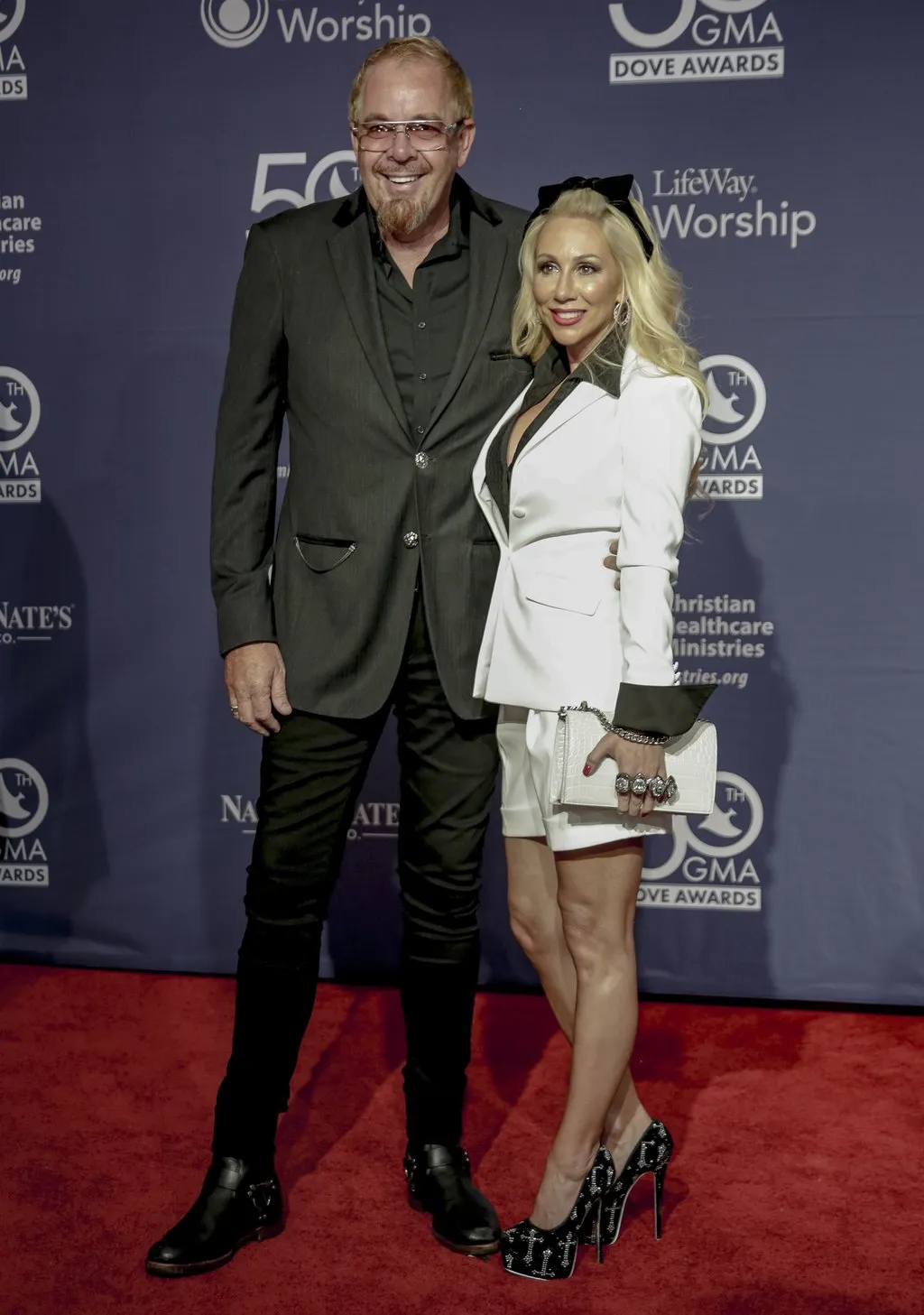
Source - Wes Campbell with wife Tracey
In the lawsuit, Waterland is described as having recently acquired three Christian music promoters, which gave Waterland a monopoly over Christian music touring promotion with an 80% market share. Where World Vision (as well as many other Christian charities) come into the picture is that, in exchange for a flat fee or a commission, the charity could promote their charity and pitch their child sponsorship programme to attendees (a recent article from The Roys Report notes that commissions could be between $200 and 500 per sponsorship). Kim Roberts for Ministry Watch/Religion Unplugged was able to source some payouts; World Vision, for example, paid bands between $50,000 and $140,000 in 2021. Compassion International does not make that information public.
Campbell also had a stake in the industry. His company, Thriving Children Advocates (TCA), was an intermediary that brought charities and Christian musicians together. According to Roberts, the charity ChildFund paid TCA millions of dollars; in 2022, filings to the US Internal Revenue Agency indicated that TCA raised almost $9.8 million, which was split with Childfund - with the former receiving nearly $3.3 million, and the latter retaining just shy of $6.5 million, which is about 66% of $9.8 million (keep that amount in mind for later). Waterland had first approached Campbell with an offer to buy TCA, and once they had access to information outlining the total scope of TCA’s operations, they offered Campbell $50 million. It is explained in the filing that concert promoters were often left out of the sponsorship model, and the acquisition of TCA would enable them to finally get some cut of the payments. But things took a turn over the next few days:
“A few days later, however, the Waterland Defendants told TCA they needed to postpone closing to allow them to raise more capital. That was not true. In truth they realized that they had actually formed a monopoly of America’s top concert promoters with control of over 80% of the domestic CCM touring market. With this newly created monopoly they now had collective power none of them had had before. They realized they could now dictate the terms on which CCM Touring occurred. And as a result of that control, they realized they had created a new “Platform” of their own which they could now market to nonprofits for sponsorship payments that would come directly to them, bypassing the artists. If artists did not like it, the artists had nowhere else to go. The monopoly they had created had turned the tables”
Why the about turn?
“As certain of the Waterland Defendants would later admit to TCA, they had struck a secret deal with World Vision, the world’s largest charity, who had agreed to pay the Waterland Defendants an astounding $500 (or more) for each sponsorship generated at concerts promoted by the Waterland Defendants, in exchange for exclusive or near exclusive rights.”
The math behind this new client was staggering:
“… applying it to a mega group with a large Platform like MercyMe (“MM”) – a group then under contract with TCA — is instructive. Such a group may have 60 concerts a year, with average attendance at around 4000 people per concert or 240,000 total annual concert attendees. If 6% of those attendees, or 14,400 people, became donors, with payments to the Waterland Defendants at $500 per donor, the annual payment the Waterland Defendants would receive would be $7,200,000. And that was just for one artist for one year. With Waterland promoting as many as 1000 concerts and selling as many as 2,000,000 tickets a year, as their website boasts, revenue from their annual ticket sales would be around $80,000,000. But a payment of $500 per sponsorship would add for Waterland an additional $60,000,000 annually to their top line – almost a 75% increase in revenue at little to no extra expense”
With a big fish for a client and TCA’s information in hand, TCA wasn’t needed anymore.
Spending money to make money may appear counterintuitive to most, especially if the organisation in question is a charity or non-profit. However, it is not unusual, and generally is a net positive financially. In this instance, World Vision’s child sponsorships are $39/month; it would take 13 months of consistent donations for the charity to break even on each $500 commission or fee. Admittedly, this is a risky proposition, given the unfavourable statistics regarding attrition in the first year (possibly 50% between the first and second donation for annual donors) and then retention over subsequent years. However, if the payout is much smaller, say $230/sponsor (which was in TCA’s contract with the band MercyMe, on behalf of Children International), then for a charity with a $39/month programme the breakeven point will be within 6 months. In the particular case of MercyMe, an advance of $1 million was given in return for a commitment to secure 22,500 sponsors - which the band did achieve, according to a September 3rd update by Jessica Morris for The Roys Report, followed by an additional $4 million in profit. It is unclear from the contract if a donor had to stay engaged for a specific duration to be counted as a confirmed donor.
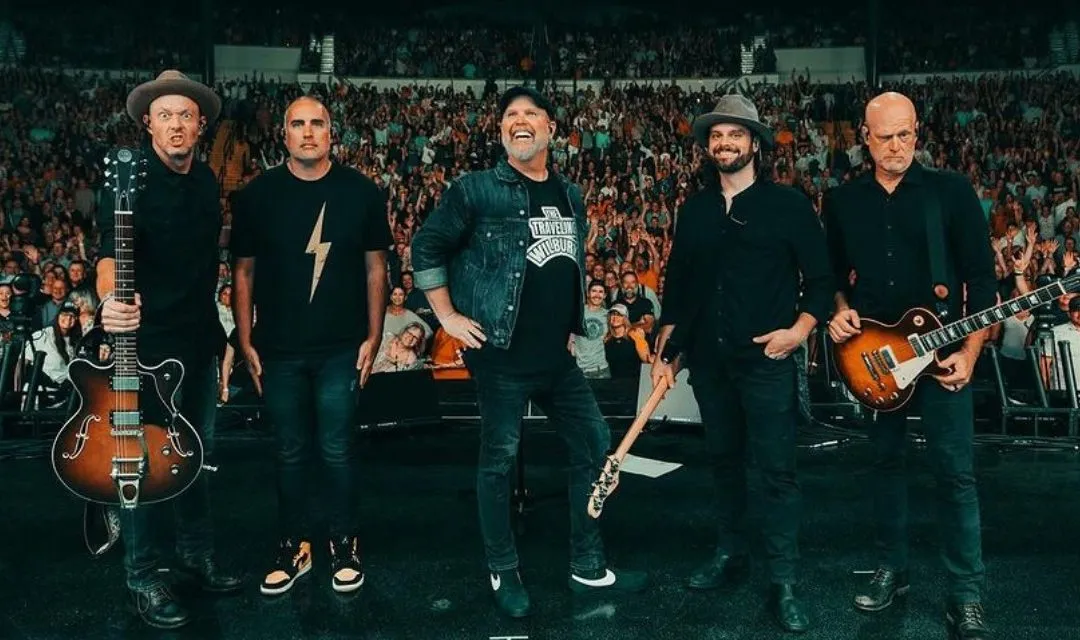
Source - Contemporary Christian band MercyMe, who were named in Campbell’s lawsuit
Christian YouTuber Jonathan Allen Wright explains how this would appear in the real world, and what one musician actually thinks of the arrangement (from 22 minutes in - use this link to jump to the correct timestamp):
Anyhoo… the lawsuit ties the accusations against Tait with the music business by claiming that Waterland and associated defendants had hired “Nicole”, who reported to Fargo, North Dakota police that Tait was involved in giving her a date rape drug and watching an assault occur without intervening. The filing argued that this never happened. Waterland and associates are accused of propagating the false rape claim, and using it to convince musicians to break their contracts with the TCA. The story is still unfolding but, no matter the outcome, child sponsorship is likely to continue unabated.
In the next part of Making Cents, I’ll demystify the monthly donations and how much should actually go to administration.
Tags: child, charities, sponsorship, world, children