Bronwyn Rideout

176 articles
327,062 words
(1858 words per article)
Years Published: 2021 - 2026
Bronwyn Rideout is a registered midwife and the current chair of the NZ Skeptics.
176 articles
327,062 words
(1858 words per article)
Years Published: 2021 - 2026
Bronwyn Rideout is a registered midwife and the current chair of the NZ Skeptics.
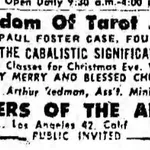
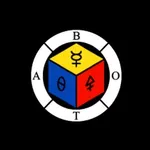
Since publishing Part 1 last week, I've had the opportunity to do further investigating into the backgrounds of Paul Foster Case and Ann Davies. Some parts became verifiable facts, while other elements of their lives remained obscured. So, before heading into the kiwi-side of the Builders of the Adytum (BOTA) story, let's confirm and correct some of the aspects of their biographies.
The perfect group for total introverts.

It has been a while since I wrote about an MLM properly and, in some ways, Prüvit is both the best and worst MLM to dip into. The health and wellness claims it makes are of great interest to Skeptics, but despite the social media and YouTube furor that the organisation and its distributors create, Prüvit doesn't have a Wikipedia page. It can take a bit of work to get a sense of its history.
Ray Comfort's life seems quite blessed. His office in Regent Street survived a fire; footage confiscated from Comfort was not only returned but the police were happy to participate in a dramatic reshoot; and a job in America came the very same day he was fired from his pastoring job.
Finally, we've reached the end of this series profiling major evangelical and fundamentalist Christians and their connection to New Zealand, whether they are home grown (like Nancy Campbell) or viewed New Zealand as an ideal place to extend their reach (like Gothard and Botkin). While I still stand by my claim that Nancy Campbell is one of, if not the most, influential New Zealand writer, Ray Comfort is without a doubt the most influential Kiwi connected Christian. Ever.
Due to circumstances outside of my control, the edition of the newsletter in which Part 1 was published had to be removed from MailChimp - there were issues with a different article in that edition. If you were unable to read/access Part 1, send us an email (at newsletter@skeptics.nz) and we'll either send you a copy or find an alternative format to share it.

When we started the NZ Skeptics Calendar project last year, the first place Mark Honeychurch and I turned to was our own archive. Unfortunately, it wasn't nearly as fruitful as it could have been, as editors past had removed all references to dates and newspapers from the clippings published. Still, there was one story that intrigued me…
Due to a special request by chair Craig, I have delayed part 2 of my article on Geoff Botkin to write about a member of the Duggar family. I previously referenced the Duggar family in my article about Bill Gothard and the Institute in Basic Life Principles. They are an ultra-conservative, super-sized Christian family with 19 children that were z-grade reality television celebrities. But nowadays? They are best known for the notoriety of their eldest son, Josh Duggar.

First, a disclaimer. The Church of Almighty God (全能神教会) aka Eastern Lightning (东方闪电; EL) has made a big enemy out of the Chinese Communist Party (CCP).While it initially avoided the official xiéjiào/邪教/cults list, EL was identified as a heterodox teaching organisation in 1995 before receiving its official designation as a dangerous organisation in 2017.

Geoff Botkin is a man with many titles, labels, and accolades you could attach to his name. With a significant portion of his career lost to the pre- and early-internet times, his various biographies have, strangely enough, become more vague and even benign with time compared to the increasingly conservative and right-wing projects he either develops or becomes involved in.

If you listened to the February 8th episode of the Yeah…Nah Podcast, then this profile should not come as a surprise.

I was in 9th grade in Canada when Columbine occurred, and alongside that tragedy came a burst of energy in Christian youth culture that arrived to save us poor sinners and goths. It also meant an uptick in documentaries that examined this modern iteration of the youth counter-counter culture (leaving us to perpetually wonder what the kids of Jesus Camp are doing). I missed out on youth group hijinx, as the lure of Christian rock and rounds of chubby bunny was not that strong, and I was that sort of teenage atheist jerk that even my most devoted Sally Anne friends knew I was a lost cause.

As Mark and I continue to chip away at the NZ Skeptical Calendar project, my search for fringe groups in the Papers Past database introduced me to Ānanda Mārga (The Path of Bliss or officially,Ānanda Mārga Pracāraka Saṃgha). The groups had an absolutely wild time in New Zealand and Australia throughout the 1970s before they disappeared from the archives, resurfacing intermittently when their humanitarian efforts were being promoted. Ānanda Mārga came to New Zealand in 1974 and soon there were groups in each major New Zealand city; they even operated a health food shop in Nelson.
Our year in NZ Skeptical History is still moving along, with the goal of getting it finished (or as close as possible) by the end of 2022. December 5th to December 11th is surprisingly full of interesting skeptical events.

Back in the distant past of … *checks calendar*… March 2022, I first wrote of a long running scheme of Scottish souvenir plots. In brief, you pay a bit of cash for a square-foot of land, and in return you get a certificate declaring you a laird or lady and the dubious privilege of buying branded kitsch. You can read more about the loopholes that companies that sell souvenir plots exploit in that original newsletter.
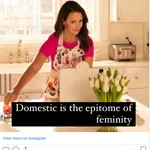
In her “purest form”, a traditional wife (or the more hashtaggable Tradwife) is a woman who takes a traditional gender role in their marriage and household, and forgoes a career to focus on their family and raising children. One could be forgiven for wondering what makes tradwives different from housewives, for which the answer is the emphasis placed by tradwives on submission to their husband, as well as a heavy dose of 1950s aesthetics or rural landscapes, along with a variety of homey and benign hashtags like #homemaker or #cooking, and the occasional scripture if Jesus is on your speed dial.

As I am in the early- to middle-part of my COVID infection, I've decided that my contribution this week is essentially a redirection to a New York Times Opinion piece by Dr. Elisabeth Bik. Dr. Bik is a microbiologist at Stanford University and the Dutch National Institute for Health with a better-than-average ability to detect patterns. While the NYT article makes it seem that she is the sort who reads scientific papers for fun, her special talent has not made her popular with some of her peers. Her particular skill is identifying image manipulation, whereby photos of blots, agar plates, bacteria from one experiment are flipped, stretched, or cropped to give the appearance of a proven hypothesis or novel finding. Admittedly, Bik doesn't just rely on her eyes for this task. Like other sleuths she utilises software to do some of the work for her, specifically the freely available 29a.ch, but argues that human eyes are still needed to weed out the false positives.

In Part 1, I hoped to have painted a picture of Dr. Bronner as an Ideas man above all else. Sure, he had the skills necessary to make a decent soap product but it was secondary to his message. His family came a distant third to that same message while operational requirements of running the whole Dr. Bronner's magic soap outfit came fourth.

Newsletter readers and podcast listeners have probably picked up by now that my errand run takes me into stores and up aisles that many skeptics wouldn't tread (unless you are Mark Honeychurch). For every bit of silliness, such as ceremonial cacao and at-home hormonal tests, the local organic shop has also been a reliable stockist of feminine hygiene products and long-lasting cleaning products that, until recently, were unavailable in normie New Zealand supermarkets. One such product that I've always kept under the bathroom sink is a bottle of Dr. Bronner's Peppermint Soap. If the name doesn't sound familiar, then maybe you know its infamous blue and white label:

In October 2021 Monat launched in Australia, to much internal fanfare and not much else. Engagement on their facebook page is meagre, and their Instagram is only marginally better. One of the incentives offered to potential distributors (or market partners, in Monat parlance), if they registered early, was a chance to earn shares through the Asia Pacific Founders Pool. The company had been incorporated in NZ as a branch of Monat Australia, and I was curious if anything would come of it.

At-home testing is not a new concept. More than likely you or someone you know tests their blood sugar levels regularly and needs to treat a low blood sugar at some point. Home pregnancy and ovulation tests are also ubiquitous.
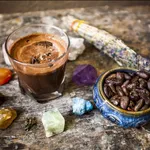
How much would you pay to be led in a chant before drinking a bitter cup of cacao?
Back in the March 21, 2022 edition of the Skeptics Newsletter, I wrote about the scheme/scam of becoming a fake Scottish Lord (or Laird as the case may be). One of the new sales tactics is to take on a conservation mission to your purchase, the promise that you are saving some wildcats, creating a nature reserve, or having a tree dedicated in your honour. The impact of these add-ons is questionable, subject to lawsuits and allegation of funny financial dealings. Even more concerning is the lack of transparency about who is advising these companies about the reintroduction of nativa trees and the deforestation of invasive ones.
Stuff.co.nz: The Tupperware Party is over
Work on the NZ Skeptical calendar (our attempt to find a New Zealand skeptical event for every day of the year) continues apace, with 346 individual events recorded and now only 140 days remaining to be filled. This month has been especially busy, with Brian Tamaki and the rest of the anti-mandate, anti-vax pundits making headlines with one debacle or another.

I know my contributions tend to call back to the prehistoric time of 2002 to 2006, when I was completing my first of three (and in three years, fingers crossed, four) degrees. This time, rather than being a ploy to justify my continuing procrastination on the next instalment of the MLM series, my inspiration came from the recent skeptics in cyberspace meetup. Discussion arose around Mensa and whether they were a viable, alternative audience for persons unsuccessful in promoting their pseudoscience via NZ Skeptics. As with any topic where I have a personal stake and Mark Honeychurch, like a moth to a flame, is drawn to its more absurdist elements, anyone on that Zoom call was treated to an awkward, albeit brief, verbal tussle about who was going to write about what.

Has anyone noticed that NZ stoner supplies mainstay, Cosmic Corner, has been taking a more witchy route as of late? Increasing its stores of tarot cards, smudge sticks, and crystals? The answer for why may lie in how magic and witchcraft have rapidly dominated TikTok, currently one of the world's most popular social media platforms.
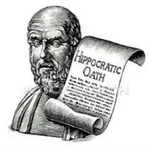
As one of the oldest treatises on medical ethics, The Hippocratic Oath is understood to be a reflection of the beliefs and practices of the ancient Greek physicians for whom it was intended. The attention that the Oath has gained over the centuries has allowed it to assume a sort of authority in today's ethical debates and amongst modern doctors. However, the contradictions that arise between the oath and the remainder of the corpus show that the oath brings into question the appropriateness of that authority; its principles are presented as being based on ancient societal norms rather than fringe beliefs. It may be that the oath was as inapplicable and irrelevant to the lives of the ancient Greeks as it is today but you wouldn't know it from social media outrage.

Warning: The subject matter of this article may be distressing to some due to discussions about children, death, and handling of dead bodies.
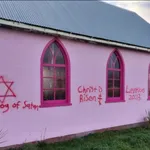
On Friday, June 2nd 2022, homophobic and antisemetic slurs were grafittied on both sides of Glora of Greymouth, with a burned rainbow flagged staked to the ground out front while the owner/operator slept inside. The deconsecrated church is a performing arts venue/arts project which hosts events for the rainbow community.

Country of Origin: Doral, Florida, United States

Founded by: Bjørn Nicolaisen

The Ishango Bone - photo by Joeykentin

Country of Origin: Gilbert, Arizona, United States

On May 17th, 1894, news of an arrest made in Petone the previous night hit the broadsheets and started spreading across the country and even over the ditch. While it wasn't a case of murder, there was certainly no small amount of mayhem and mystery which left reporters hoping for some scandalous revelations to be made.

Country of Origin: Michigan, United States

Country of Origin: Orem, Utah, United States

Country of Origin: Pleasant Grove, Utah, United States

Trigger warnings: Mentions of Suicide and infant death

April is Autism acceptance month, and amidst the annual articles reminding everyone that lack of eye contact and an inclination for stimming isn't the worst thing in the world, the ghost of Andrew Wakefield's deception rears its head again.
What do Avon, Tupperware, Doterra, and Arbonne have in common? They are all businesses in New Zealand that utilise multi-level marketing (MLM) strategies. If you aren't familiar with the names or the products, ranging from hair care and makeup to herbal supplements, you might at least have come across the sales and recruitment gimmicks they employ. Maybe your Mom was a frequent invitee or hostess for a friend's sex toy party (Pure Romance) or cooking utensil business (Pampered Chef); maybe your favourite Uncle loved to talk about the conventions and seminars he was attending (Amway). Regardless, the fact remains that they are a controversial marketing model that exploits millions of people worldwide with promises of financial freedom that are only available to those who are placed at the tippy top of the MLMs' pyramid-like structures.
While current geopolitical matters might have some Finns wishing they were a tad more invisible, at first pass this is hardly a skeptical topic. But this modern conspiracy is worth a chuckle, especially given the exasperated sighs you'll get from that one friend who has more than a passing knowledge of statistics.
No true Scotsman…buys souvenir plots
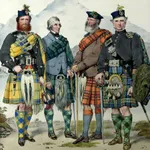
There are several key provisions which allow Kiwi's to determine whether the claim one makes to being a health care practitioner is valid.
On March 13th Dr. Darren Saunders (Associate Professor of Medicine at UNSW, Cancer Biologist) made international headlines for his takedown of a new trend hitting social media: Methylene Blue.

Despite the impromptu music festival happening on its front lawn, the New Zealand Parliament passed The Conversion Practices Prohibition Legislation Bill, colloquially known as the Conversion Therapy Bill, on its final reading on February 15th. This occurred with 112 voices in favour across all parties - and with the exception of just 8 National MPs:
What do the Brontosaurus, Harry Houdini, and a phrenology bust have in common?

The 96-hour fireworks industry is both a source of joy and dread for New Zealanders nationwide. Fireworks can only be sold privately in this country between November 2nd and November 5th, and while this period is an ideal lead-in to Guy Fawkes Night, those of us living near pyrotechnic enthusiasts know all too well that amateur backyard displays will be a feature of our lives until late into the summer.
I was scrolling through my Instagram feed when a post by a favourite local café stopped me mid-swipe. The words “Christmas” and “shoebox” in the same sentence caused a brief moment of dread to call upon me because, while I loved their date scones, I was not going to support a business that championed Operation Christmas Child (OCC).