“You can't give someone insight, you have to let them come to the realisation themself”
Lisa Ryan - 17th August 2026
A couple of weeks ago the annual NZ Skeptics Conference was held in Christchurch, and my husband Dan, his mum and I flew down from Taranaki to attend.
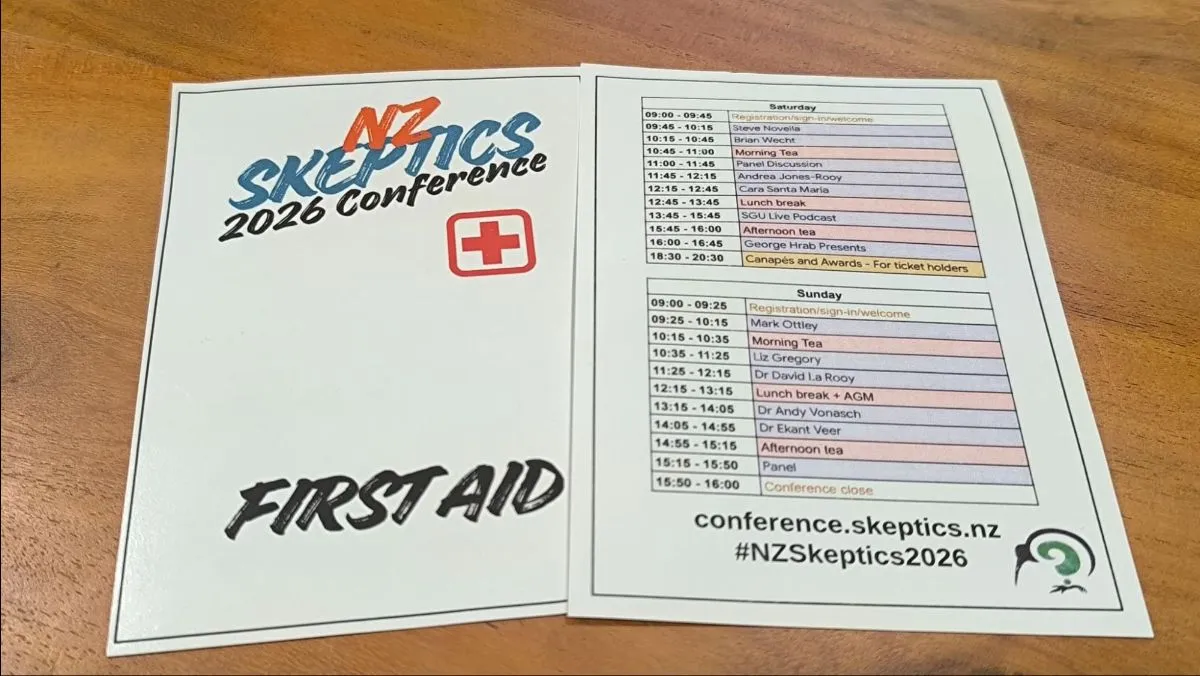
Saturday was an extravaganza of SGU and American speakers, or was that “we have got to tell people that we’re Canadian, eh?!”
Dr. Steve Novella opened the conference with the topic: Why Skeptics Disagree. Semantics and a lack of topic knowledge were raised as frequent contention points when skeptics argue.
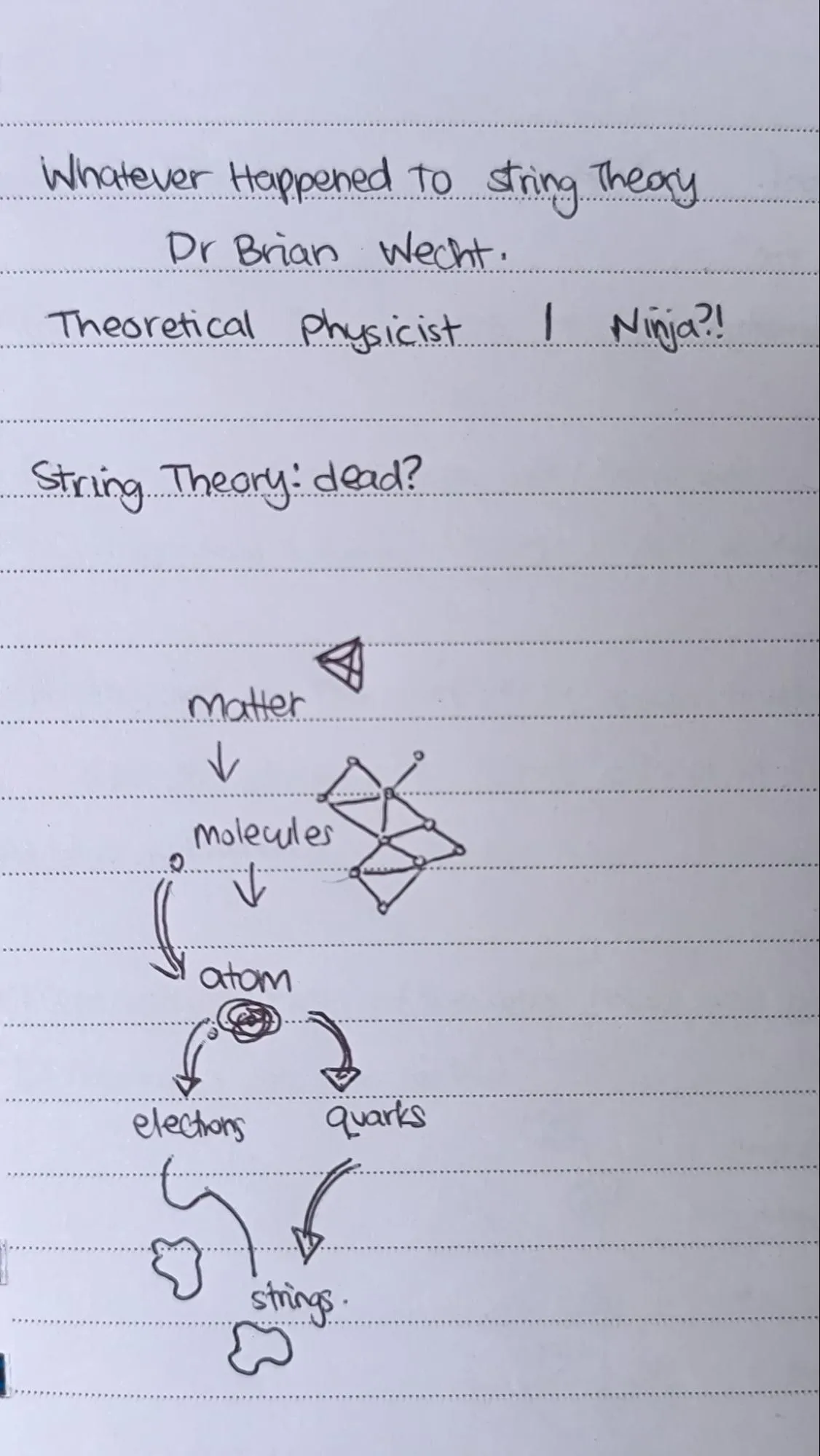
Brian Wecht asked what happened to String Theory? To be honest, I can’t tell you. I don’t even know. Maybe multi-verses exist? Maybe we don’t quite have all the tools to measure things in 9 space, 1 time, extra dimensions?
A panel discussion talked about a variety of topics, from glimmers of joy and pearls of happiness to people wanting to scream instead of hold calm, rational debate about politics. The ways in which everyone holds onto unseen things which shape their worldview and existence was discussed - if others knew what someone was carrying, perhaps there would be more kindness, love and joy in the world. There was a lot of love of Aotearoa, and talk of how our democracy can be a beacon of light in a world of MAGA hatred.
Speaker Andrea Jones-Rooy is using science to understand society, and dared to suggest that although politics is not science, it might be a soft science. There was a lot of interesting discussion here about American politics and a shift in the USA, with right wing parties becoming more right wing quickly, while the left wing political parties have tended to shift to the left at a more gradual rate. The split is not symmetrical, as many had expected. In the USA, like Aotearoa, the parties were divided most widely on topics such as abortion, gun control and climate change.
Andrea pointed out that all parties had a low trust in government. There are a number of podcasters who talk about this, and here are three websites for further reading and info:
Cara Santa Maria and Jay Novella talked about American mental health therapy, and some of the differences between the specialists who can assist patients. In Aotearoa some of these roles are different - we can often see a GP who refers us to hospital-based specialists if needed for further help. In America patients self-refer directly to the specialist within their health insurance network. Cara had a beautiful quote, “you may pay me to be here, but not to care” - referencing that mental health professionals are human too, and when there’s a rapport between patient and specialist that’s special and it’s hard to turn off empathy. Boundaries were also discussed, about feeling like you’re friends with your therapist, and how real friendship is actually not possible with professional boundaries in play.
The SGU Live Podcast is always a heap of fun to be part of - and the recording at the conference, episode 1100, included the message that everyone needs to watch the movie Wall-E.
On Sunday we had a whole lot of homegrown talent on stage.
Mark Ottley opened the day with a conundrum - what happens when we over-medicalise common life experiences? The ways we label and interpret human experience shape diagnoses of mental illness within the DSM-5 and ICD-II frameworks. DSM-5 asks for specific criteria to be met for a set period of time, such as 5+ symptoms from a list for a period of 2+ weeks. This means a patient can have a few severe symptoms, and on paper appear not to be needing interventions, yet specialists can diagnose without fitting the full DSM-5 diagnostic criteria being met by recognising the severity of symptoms.
Next up we had Liz Gregory from the Gloriavale Support Leavers Trust and the Cult Chat podcast walking us through what happens when someone wants to leave Gloriavale - a day in the life of Liz was insightful:
- Time with family and working on her home property,
- A phone call from a leaver needing help with mental health support, from someone inside where girls are battling eating disorders.
- Helping set up a transition home in Timaru with all the furnishings and things the family would need - including groceries.
- Setting up WINZ appointments, meetings with lawyers for leavers to get support.
- Preparing educational materials for groups like Police, local universities, and Oranga Tamariki social workers.
- A group of recent leavers is sick, so a care pack is quickly put together. Things like cough lozenges are not offered in Gloriavale, so some more education and support comes along with the gifts of things to help them get better.
There are currently 550 Gloriavale members. By March the Support Leavers Trust had already met their expected quota of 2026 leavers, with more still leaving. They had already helped over 300 leavers by the end of March 2026.
Gloriavale’s businesses have not been too successful: Its aviation business closed down, and the planes have been sold off. The honey business has closed down. The hunting lodge, which gave members “too much freedom”, was closed down too. The Gloriavale School is in the process of being closed down, after many investigations.
After the recent court cases ruling that women at Gloriavale are employees and not volunteers, the laundry and dinners were moved into hostel spaces, with people cooking and cleaning for just their own family - so that the group could avoid paying wages. Breakfast is still shared in the main dining room. Most families live in small 5m by 5m hostel rooms although, with more leaving, some families are able to have two rooms.
In good news, some members of the Gloriavale group sent to India are now back in NZ. Check out the Victoria Enquiry (Australia) for the latest law changes there around coercive control:
https://www.abc.net.au/news/2026-07-29/cult-inquiry-recommendations-victoria-fringe-groups/106971052
Dr David La Rooy was called up next, exploring a long list of child sexual abuse cases with the well-known local case of Peter Ellis mentioned, along with a range of American cases. The 1983 McMartin Preschool case (Manhattan Beach, California) caused mass panic when 200 letters were sent to current and ex students’ families of the preschool (asking if their child had been inappropriately touched by Ray Buckey). This case formed the basis of how modern day questioning of child victims is done. David suggested watching the Netflix documentary “Kidnapped: Elizabeth Smart” (R16, runtime 1 hour 31 min) for more on that case.
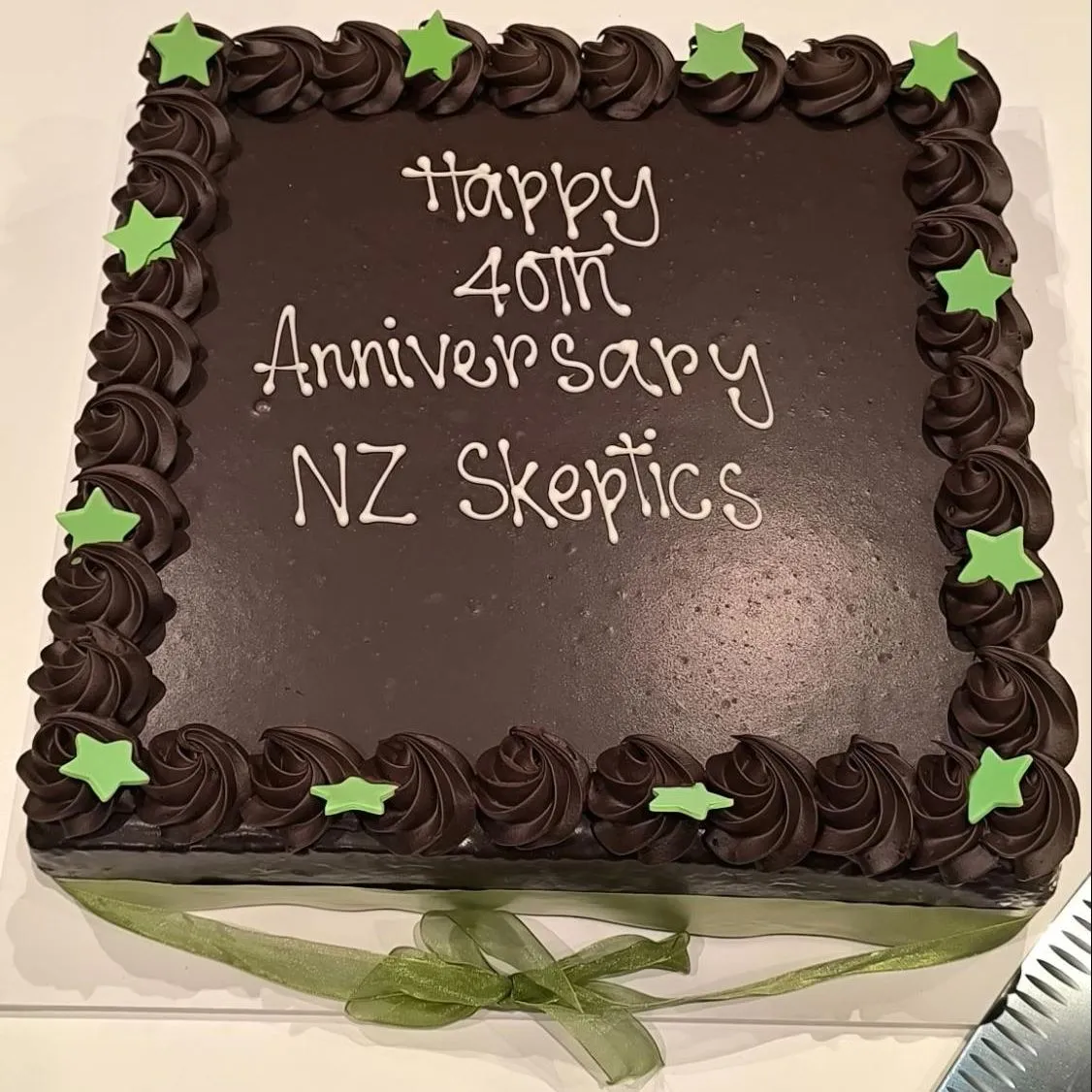
Lunchtime was a welcome break, with cake to celebrate the NZ Skeptics’ 40th Anniversary.
After lunch Dr Andy Vonash tried to tempt us with cookies, with a very interactive talk around the science of ulterior motive perceptions. Dr Vonash is a social scientist who does actual experiments such as seeing if discounted services can tempt people. He found the sweet spot with deals and sales being 30% to 50% off for things like haircuts, but for something like a tattoo at 100% off you can end up wondering if you’ll get infected or have something else go horribly wrong.
Check out Andy’s Youtube account Moralsaurus, a moral dinosaur teaching moral psychology:
https://www.youtube.com/@moralsaurus
Dr Ekant Veer, professor of Marketing and MBA director at the Business faculty at the University of Canterbury talked about how “What we value isn’t always what customers value”. The lesson here was all about thinking about our target audience.
Ekant pointed out that politics divides, and that doesn’t work when you want communities working together. He was part of the “All Right?” mental health campaign after the Christchurch earthquake. Intention behind action to support the wellbeing of individuals and the society they are a part of.
He suggested that If you’re after some fun, try the Bad News Game - which Katrina has written about in a previous newsletter article. When you play the game, perhaps you’ll fight disinformation, find the misinformation, or even become a cult leader? I played and got 15.336, and learned all 6 skills. Can you score more than me?
Tags: gloriavale, leavers, cases, things, support