Devotion: Obedience or Betrayal - The most frustrating Gloriavale documentary
Bronwyn Rideout - 6th July 2026
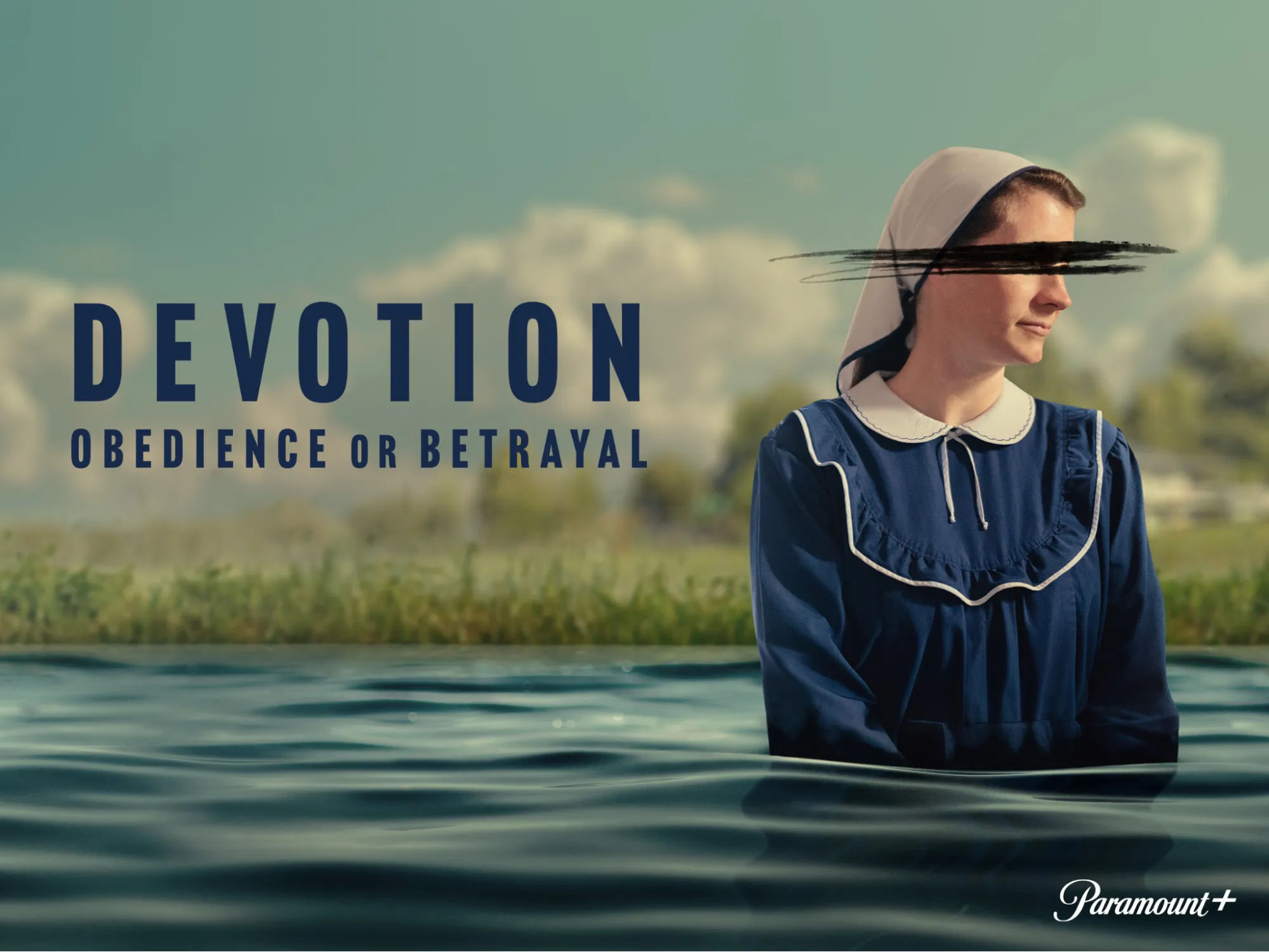
Devotion: Obedience or Betrayal is the newest entry in what could legitimately be considered a world-famous-in-New-Zealand subgenre of Gloriavale documentaries. The three-part series directed by Nicole Rittenmeyer, and executive produced by Dame Julie Christie, is frustrating to watch, and overall is a boring mess. Some producers live by the adage of “all attention is good attention”, but when the subject is a religious community in which children were sexually abused, that is a stance that commits a real disservice to the survivors.
I watched all three parts, and would attest that if you are someone who is well-versed in the Gloriavale story, there are only 51 minutes in the entire series (the last 5 minutes of episode 2 and all of episode 3) that will reveal anything new or of substance regarding the attitudes of the community today. The first two episodes are poorly laid out filler that glosses over the extent of offending and death at Gloriavale that was explored in the 2022 Gloriavale film, and the 2024 TV docuseries Escaping Utopia. There are brief interludes where it feels like the documentary takes the occasional inspiration from its far superior cousins. For example, Lilia Tarawa and Cherish Cooper’s comments about feeling left behind were presented with more dramatic flair in Escaping Utopia. The evolution of womenswear in the cult is also fairly old hat by now.
It is unsurprising that the residents are advocating and are fiercely protective of their way of life, but I came away with a distinct uneasiness with their approach to abuse and how it was embedded into their foundations. In the closing scene of the second episode, the new overseer shepherd, Stephen Standfast, takes the crew on a tour of their cemetery. Despite it being there since 1991, only 20 people have been buried there. This is possibly indicative of the relative youth of the current elders members when they joined in the 70s and 80s, but it can also be a result of the number of families that have left over the years. When Standfast reaches Hopeful’s grave, he admits that while they try to learn and honour deceased community members, they don’t talk about Hopeful’s history because many of today’s residents either weren’t there or don’t know about it. A startling admission that may foretell a scenario in 20-30 years, should the community persevere, where ex-members only find out about Neville Cooper and his offending if they leave.
Noah Hopewell, another senior Shepherd, lamented how the counselling instituted by the police caused more harm than good. In his words, counselling made people think they were victims, whereas in their system it was understood that circumstances happen to you in life and you overcome them through your faith in Christ. Given that the individuals receiving counselling were harmed as minors, the application of anti-victimhood is especially insidious. Peter Righteous is candid that not only did they misjudge the degree to which abuse could traumatise a victim, the senior leadership’s cover-up of offending was such that wives and children of the perpetrator were never informed of their headship’s crime, even by other members of the community. It’s one of many dark truths that makes Cheerful Stedfast’s confidence that being amongst her family in Gloriavale is safer than being outside it incredibly tragic; she may not know that the very people she loves, or will love, are not safe for her or her potential children.
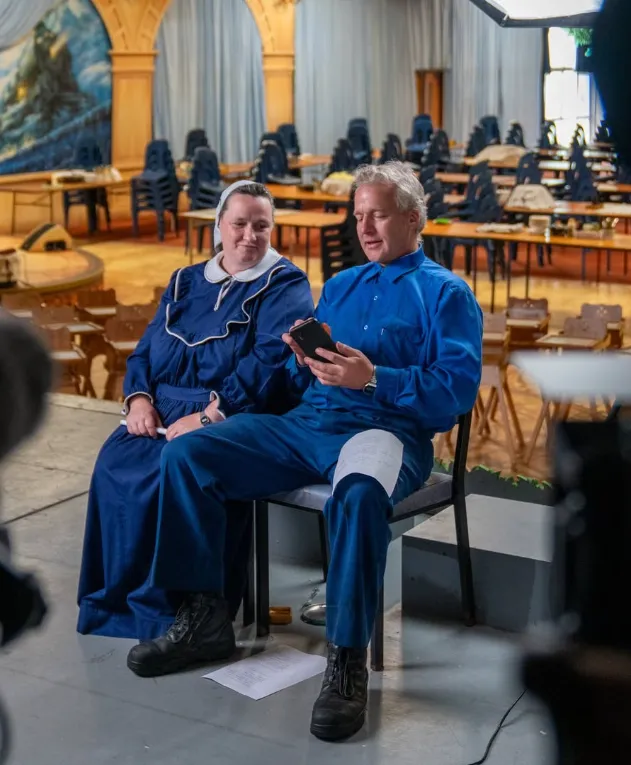
Angel and Luke Valor
Admittedly, I struggled to identify who this documentary was for at first. I felt there were too many corners cut in the historical portions for many kiwis to take this seriously, and I was heartened to see several comments across social media where people were inquiring about the women who were essentially trafficked to India. Still, it has been successful in convincing overseas viewers (and some local ones) that it is a balanced look into the community, and that Gloriavale members have free choice. The introductory scenes, where the community is described as being under siege, set a sympathetic tone that is hard to shake off through the entire series, even when there is evidence to the contrary.
The interviewers really only push back on Brian Henry, a lawyer who is committed to shutting the community down for good, telling him that he sounds like a zealot. Gloriavale residents, on the other hand, are not directly criticised, but no matter how much they smile it’s hard to trust any of them. I suspect that after years of defections, many New Zealanders are suspicious of whoever Gloriavale chooses to use as their poster children, especially when they are literal children. While many of the Gloriavale talking heads are well-spoken, they do not always speak well, and it’s at these times that the documentary feels exploitative. Luke Valor makes his share of gaffs. In episode 1, he states something along the lines of If you take away our religion and the weird way we live, we are normal people; If those things were taken away, he wouldn’t be at Gloriavale and wouldn’t be part of the documentary in the first place. Similar holes can be poked anytime someone makes an argument that they, especially the women of Gloriavale, have made a choice - again, given how much of Gloriavale’s operations are now in the open, there will forever be questions as to the authenticity of that choice.
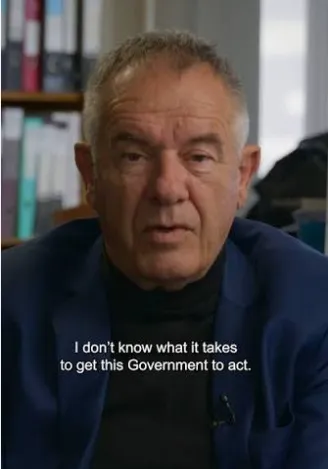
Brian Henry
I’m undecided if the production team intended to let Gloriavale residents reveal their misguided actions and contradictory beliefs. Far too much time was spent allowing its leadership to argue that the mistakes of the past will never recur, and that things have changed. The question of the documentary is whether Gloriavale should continue as a community or be dismantled, and is weighted in favour of keeping the community going from current and ex-members alike. Opinions vary, from either letting it fade away naturally, to the community having a chance at redemption and reconciliation. In New Zealand, there is no surefire blueprint for how to disestablish a community the size of Gloriavale: Centrepoint was disestablished by court order, while the Full Gospel Mission faded away, for the most part, once the revelations of their leader’s offending spread through their membership. The followers of Neville Cooper have been here longer than either of those groups, and have surpassed them by nearly three decades. However, they confess that the various successful lawsuits have made a dent in their coffers. After all this time, it could be that their willingness to fight in court could be what ultimately undermines their survival into the 2030s.
Tags: gloriavale, community, episode, documentary, people