Should We Be Worried About Microplastics?
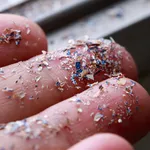
Tiny microplastics are making big headlines. Are they a ticking time bomb for human health, or just another overblown environmental scare?
Tiny microplastics are making big headlines. Are they a ticking time bomb for human health, or just another overblown environmental scare?
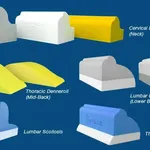
A recent paper on the overuse of spinal imaging (usually X-rays), titled “_An investigation into the chiropractic practice and communication of routine repetitive radiographic imaging for the location of postural misalignments_” and led by New Zealand researcher Brogan Williams (in collaboration with others from Australia and the US), has criticised the distributor of a chiropractic product called Denneroll. Denneroll is a US company, but their products are distributed in New Zealand and the contact given for distribution here is a Hawke's Bay Chiropractor – Rosina Walker.
In February it was announced by researchers that non-verified cell lines and misidentified nucleotide sequences were cited in hundreds of papers. This got picked up by the media in May:
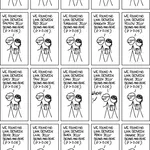
P-hacking is a data analysis technique that can be used to present patterns as statistically significant when there is really no underlying effect. It is a misuse of statistics and a misrepresentation, plain and simple, and disappointingly it's usually perpetrated by scientists.
Amidst a global pandemic it's sometimes easy to miss science news. But this one really piqued my interest.
Growing old is a bummer. At age 70, I am supposed to have gained more wisdom, but I really cannot say I have noticed. But there are certain physical attributes that are definitely not as good as when I was 20. Among them is healing. Once, cuts and abrasions would be gone in a week. No more. Sometimes it takes a month or more. Bummer!
Retraction Watch is a great website. As the name implies, it focuses on a key aspect of quality control in science: the retraction of scientific papers that have already passed peer-review and were published when serious concerns about those papers come to light.
Dane Wigington, lead researcher for GeoEngineering Watch says:

Pheromones. I'll admit that when I hear the word, I immediately think of sex. That's probably because the first pheromone ever discovered, in 1959, was the chemical that female silkworm moths use to attract a mate. Since then, sex pheromones have been identified in many species, from insects to fungi to birds.

Researchers from Switzerland and Germany have just published a paper in which they describe using brain imaging and a cool way of looking at sound, called the modulation power spectrum (MPS) to understand just why screams are so alarming. Rather than looking at the amplitude and frequency of sounds over time, the MPS plots the modulation frequency against the number of cycles per octave, shown as a kind of heat map. On this kind of spectrum, there is a clear zone that gives clues to the gender of the speaker, and another distinct zone that gives information about meaning. But there is also a zone that until now hadn't been associated with any function. In fact, it has been thought to be irrelevant to human communication. This region corresponds to a perception of sound called roughness, which is thought to be unpleasant.
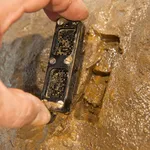
Researchers in Germany and the USA have just published a paper in the journal Nature describing a new antibiotic they have called Teixobactin. This study is good news: the World Health Organization warned last year that cancer chemotherapy and routine surgery will soon become life-threateningly risky because of the worldwide rise in antibiotic-resistant superbugs.
The Word-based submission to the CAM discussion document which was sent out in our (NZCSICOP) name is now available for you to read at http://skeptics.org.nz/cam
Taking a leaf from the UK Skeptic, we're turning our news clippings into a column. Which means I get to read them - never used to before! Many thanks to all those who've sent in material, and please keep it coming.
I'm pleased to report that after 10 years of waiting with bated breath, the New Zealand Skeptics now has its very own leaflet-cum-application form for handing out to the uninitiated. We've bemoaned the lack of these for some time -- particularly those of us doing public presentations where we've often been asked for further information, contact details and the like. It should make it considerably easier for prospective Skeptics to find out about us and join the ranks. Bernard Howard, our ever-faithful Secretary, tells me that he has been getting in application forms from the new material, and we anticipate seeing lots more.
Post-mortem on the autopsy or autopsy on the post-mortem?
An abridged version of the Skeptical Enquirer's report of the session dealing with "alien abductions" at the Seattle CSICOP Conference on "The Psychology of Belief"
Irreproducible achievements finally get what they deserve
There is something in the German psyche which has a peculiar fascination for the medieval...
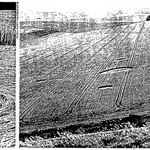
Who or what is responsible for those puzzling crop-field rings?