30 March 2026 - Approx. 12 min read
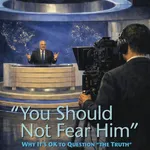
My friend Aaron messaged me the other day and let me know about a pamphlet that's recently been released by prominent ex Jehovah's Witness Lloyd Evans. The pamphlet, available both digitally and in printed form, is titled “You Should Not Fear Him” - Why It's OK to Question “The Truth”, and is a counter-argument to JW arguments for the existence of their particular version of God.
16 November 2020 - Approx. 1 min read
It was show weekend here in Canterbury. Another long weekend to squander in the garden and pottering about the house. I've also been thinking about why on the Xbox game Assassin's Creed Valhalla my son chose to stand up for the seemingly uninformed and offended peasant, rather than the man of medicine (aka warlock) who was bemoaning the general distrust in knowledge. Perhaps it was the jaunty animal skull head-piece the warlock was wearing that made him look more like the bad guy, or perhaps it was just the promise of better loot...
1 May 2020 - Approx. 2 min read
Take this questionnaire if you enjoy critical thinking and have a high tolerance for nonsense.
1 February 2020 - Approx. 6 min read
As a secondary school history teacher, I'm about to embark on the altogether outrageous exercise of asserting that science education in New Zealand needs a fundamental rethink. That the blatant misuse and mistrust of science evidenced across society must be dealt with by a more dynamic and comprehensive approach to science in the classroom.
1 August 2014 - Approx. 2 min read
Late in his life, in answer to a question, Freud compared the human condition approximately to the contents of a baby's nappy. When I first heard this story, it seemed to mark a bitter old man. That was when I was in high school in the late 1950s. Higher education was spreading in the world's democracies. Ignorance and superstition, the plague of the human species since the caves, were on the way out. Reason, knowledge and tolerance would rule the future of the world. Or so it seemed. Does it look like that today, even to high school students? A few news items:
1 August 2013 - Approx. 3 min read
Stuart Landsborough conducts a small experiment which may land him in big trouble.
1 May 2012 - Approx. 5 min read
Alison Campbell considers the current state of tertiary education.
1 May 2012 - Approx. 2 min read
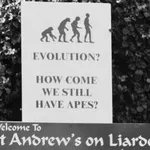
On a recent visit to New Plymouth I was rather taken aback to see a billboard outside a central city church posing the question: "Evolution? How come we still have apes?" It wasn't so much surprise that someone could know so little about evolutionary theory that they would think this was a persuasive argument - versions of this are often to be seen in the less sophisticated creationist publications - it was more that they should feel the urge to display their ignorance on a busy street corner.
1 August 2004 - Approx. 4 min read
The Enlightenment -- a period of intellectual progress in Europe and North America during the eighteenth century -- saw superstition, dogma and ignorance lose ground to reason, science and freedom of inquiry. Enlightenment thinkers questioned received ideas and used rational methods to explore new possibilities in many fields. Despite persecution by government and church, the enormous increase in the publication of newspapers and books spread ideas widely. The result was an outpouring of knowledge and understanding about the way the world works. Western civilisation's high standard of living and openness today stem from the Enlightenment.
1 November 2003 - Approx. 4 min read
Environmental issues have played an increasing role in skeptical subject matter over recent years, ranging from calls for biodynamic possum peppering earning Jeanette Fitzsimons the Bent Spoon last year, to skepticism about global warming, from pooh-poohing of environmental impacts on taniwha habitat to wondering just how much paranoia and hypochondria is at the root of the health issues of moth-ridden Aucklanders in the infamous spray zone.
1 November 2003 - Approx. 6 min read
The Parliamentary Commissioner for the Environment is calling for submissions on the role of science in environmental policy and decision-making. This article is based on a paper presented at the 2003 New Zealand Skeptics' Conference in Wellington.
1 November 1996 - Approx. 2 min read
One of the interesting things about the Skeptics is the wide range of opinions that can be found in our group -- not to mention the ever-readiness to express them. So I was interested to read Frank Haden's column on the conference and how he found it.
1 November 1995 - Approx. 2 min read
Post-mortem on the autopsy or autopsy on the post-mortem?
1 August 1994 - Approx. 9 min read
Can traditional Maori knowledge be considered scientific?
1 August 1994 - Approx. 3 min read
Late in his life, in answer to a question, Freud compared the human condition approximately to the contents of a baby's nappy. When I first heard this story, it seemed to mark a bitter old man. That was when I was in high school in the late 1950s. Higher education was spreading in the world's democracies. Ignorance and superstition, the plague of the human species since the caves, were on the way out. Reason, knowledge and tolerance would rule the future of the world. Or so it seemed. Does it look like that today, even to high school students? A few news items:
1 August 1993 - Approx. 2 min read
The British Independent recently ran an editorial not worth reproducing in the Skeptic. The editorial did, however, generate a vigorous response from Richard Dawkins which is worth thinking about.
1 August 1993 - Approx. 11 min read
This article is an abridged version of the fourth article in a series on philosophy and the paranormal. Here Dr Grey discusses David Hume's analysis of miracles and his view that belief in miraculous events is always unjustified. He also investigates the nature, virtues and dangers of different skeptical viewpoints.
1 August 1990 - Approx. 3 min read
While critical thinking is an essential part of the defence against pseudo-science, general knowledge also has an important role. The more knowledge you have about more things, the better equipped you are to detect the propagation of nonsense. However, the authorities may not be so concerned. > > The following item is based on a broadcast on National Radio's Sunday Supplement on 13 August 1989.
1 August 1989 - Approx. 11 min read
Reprinted from the British and Irish Skeptic.
1 November 1988 - Approx. 2 min read
In your November 1987 issue, Dennis Dutton (page 3) asks whether it matters that sick people, especially cancer sufferers, are not discouraged from using "alternative" or "complementary" treatments, The answer of course is the one that he himself has given: it does and it doesn't.