Everything I know about Skepticism I learned from the Bible
Mark Honeychurch - 30th March 2026
My friend Aaron messaged me the other day and let me know about a pamphlet that’s recently been released by prominent ex Jehovah’s Witness Lloyd Evans. The pamphlet, available both digitally and in printed form, is titled “You Should Not Fear Him” - Why It’s OK to Question “The Truth”, and is a counter-argument to JW arguments for the existence of their particular version of God.
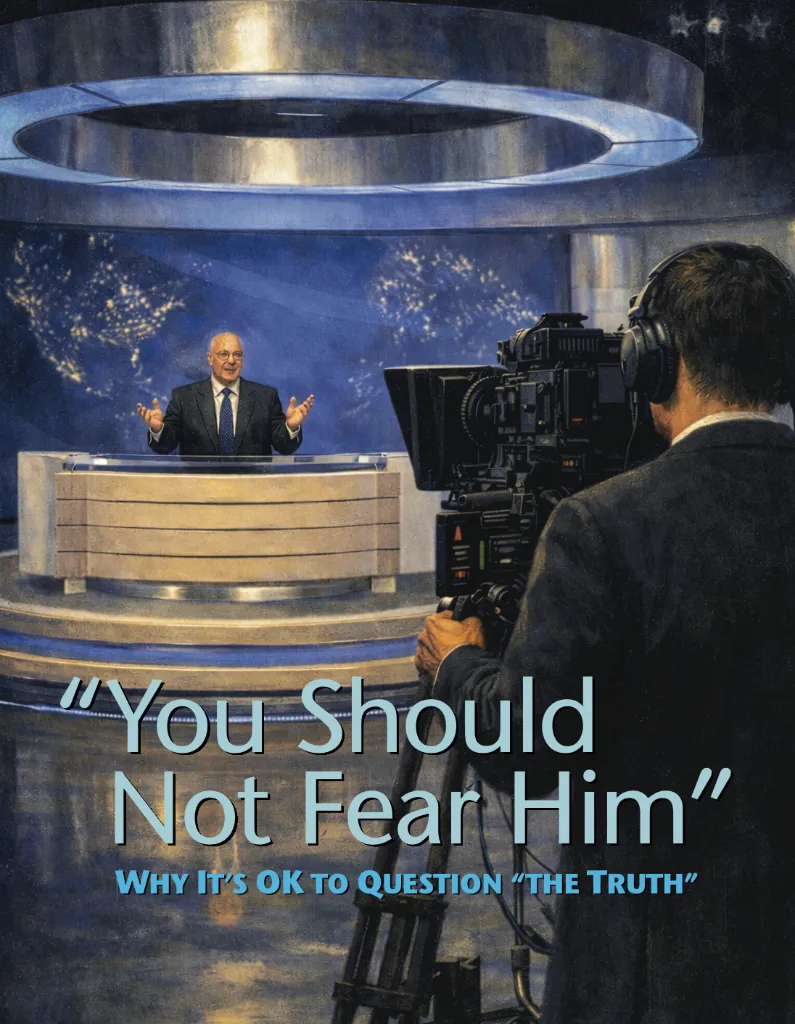
One of the first things that struck me about the text was that Lloyd has wisely chosen to fight fire with fire, with a brochure that is not just designed to look a lot like the Watchtower and other JW publications, but which also uses quotes from scripture to challenge many of the worst parts of the Jehovah’s Witnesses’ beliefs. The introduction to Lloyd’s pamphlet starts with a quote from Deuteronomy:
“When the prophet speaks in the name of Jehovah and the word is not fulfilled or does not come true, then Jehovah did not speak that word. The prophet spoke it presumptuously. You should not fear him.”
- DEUTERONOMY 18:22
Does truth really matter to you? If you’re reading this brochure, hopefully the answer is a solid “yes.” Nobody appreciates being lied to, or having their trust exploited by hoaxes or scams that make absolute, black-and-white claims. Some groups pride themselves on having an exclusively true set of beliefs, even to the point of labeling themselves as “the truth.”
If you’re familiar with the Bible, the above quoted scripture will be of interest - it is the theme text for this brochure. The Israelites were given clear, logical guidance on how to identify a false prophet, or an impostor posing as a representative of God. Put simply, if the presumed prophet made a prediction “in the name of Jehovah” that did not come true, they were to be condemned as false.
Can you think of a group of men who have made bold predictions of future events in Jehovah’s name, and when proven wrong, they have either subtly adjusted their predictions or quietly abandoned them?
The brochure goes on to use a mixture of bible verses and external evidence to show that the foundations of Jehovah’s Witnesses’ beliefs are built on claims and ideas that have since been shown to be false, and at times dangerous and damaging.
One of the most worrying quotes in the text is not from the bible, but from a 2013 issue of the JW’s Watchtower magazine:
“At that time, the life-saving direction that we receive from Jehovah’s organization may not appear practical from a human standpoint. All of us must be ready to obey any instructions we may receive, whether these appear sound from a strategic or human standpoint or not.”
This command seems to be a recipe for disaster, telling the membership to unquestioningly follow instructions no matter how wrong they seem. Is that the taste of Kool Aid in my mouth?
Lloyd’s use of bible verses to show why the JWs may not have figured out the secret to eternal life made me think about other ways that bible verses could be used to convince people to act in a more rational way. For example, what are the most skeptic-friendly passages in the bible? I decided to see if I could find any verses that sounded like they were promoting a skeptical or doubting worldview.
It turns out that there were quite a few passages that looked good at first, just as long as I didn’t pay too much attention to their context:
1 Thessalonians 5: test them all; hold on to what is good
1 John 4: test the spirits… because many false prophets have gone out into the world.
Proverbs 2: you will understand what is right and just and fair - every good path. For wisdom will enter your heart, and knowledge will be pleasant to your soul. Discretion will protect you, and understanding will guard you.
Proverbs 14: The wisdom of the prudent is to give thought to their ways, but the folly of fools is deception… The simple believe anything, but the prudent give thought to their steps.
Proverbs 15: The tongue of the wise adorns knowledge, but the mouth of the fool gushes folly… The lips of the wise spread knowledge, but the hearts of fools are not upright… Mockers resent correction, so they avoid the wise… The discerning heart seeks knowledge, but the mouth of a fool feeds on folly.
John 20: Now Thomas, one of the Twelve, was not with the disciples when Jesus came. So the other disciples told him, “We have seen the Lord!” But he said to them, “Unless I see the nail marks in his hands and put my finger where the nails were, and put my hand into his side, I will not believe.”
Colossians 2: See to it that no one takes you captive through hollow and deceptive philosophy
2 Timothy 2: Don’t have anything to do with foolish and stupid arguments
Romans 12: Do not conform to the pattern of this world, but be transformed by the renewing of your mind. Then you will be able to test and approve
Philippians 1: And this is my prayer: that your love may abound more and more in knowledge and depth of insight
Ephesians 5: Be very careful, then, how you live - not as unwise but as wise, making the most of every opportunity, because the days are evil. Therefore do not be foolish
Revelation 2: I know your deeds, your hard work and your perseverance. I know that you cannot tolerate wicked people, that you have tested those who claim to be apostles but are not, and have found them false.
Job 34: Hear my words, you wise men; listen to me, you men of learning. For the ear tests words as the tongue tastes food. Let us discern for ourselves what is right; let us learn together what is good.
Ecclesiastes 1: I applied myself to the understanding of wisdom, and also of madness and folly
Ecclesiastes 7: So I turned my mind to understand, to investigate and to search out wisdom and the scheme of things and to understand the stupidity of wickedness and the madness of folly.
When considered in the context of the text around them, pretty much all of these verses turned out to not be very skeptical after all.
The text from 1 Thessalonians, for example, when talking about testing prophecies, also talks about the existence of Spirit and evil:
Do not quench the Spirit. Do not treat prophecies with contempt but test them all; hold on to what is good, reject every kind of evil.
1 John, in context, ruins the idea of testing false prophets when it claims that the best test is to ask them if they believe that Jesus came to earth in a human body - and that if they do, you should trust them:
Dear friends, do not believe every spirit, but test the spirits to see whether they are from God, because many false prophets have gone out into the world. This is how you can recognize the Spirit of God: Every spirit that acknowledges that Jesus Christ has come in the flesh is from God, but every spirit that does not acknowledge Jesus is not from God.
The text from 1 Thessalonians, for example, when talking about testing prophecies, also talks about the existence of Spirit and evil:
Do not quench the Spirit. Do not treat prophecies with contempt but test them all; hold on to what is good, reject every kind of evil.
1 John, in context, ruins the idea of testing false prophets when it claims that the best test is to ask them if they believe that Jesus came to earth in a human body - and that if they do, you should trust them:
Dear friends, do not believe every spirit, but test the spirits to see whether they are from God, because many false prophets have gone out into the world. This is how you can recognize the Spirit of God: Every spirit that acknowledges that Jesus Christ has come in the flesh is from God, but every spirit that does not acknowledge Jesus is not from God.
Proverbs 2 says that wisdom comes from “the Lord”:
For the Lord gives wisdom; from his mouth come knowledge and understanding. He holds success in store for the upright, he is a shield to those whose walk is blameless, for he guards the course of the just and protects the way of his faithful ones. Then you will understand what is right and just and fair - every good path. For wisdom will enter your heart, and knowledge will be pleasant to your soul. Discretion will protect you, and understanding will guard you.
Proverbs 14 may have had some good ideas, but they’re interspersed with some more stupid ideas about having faith and fearing God:
The faithless will be fully repaid for their ways, and the good rewarded for theirs… Whoever fears the Lord has a secure fortress, and for their children it will be a refuge.
Similarly, Proverbs 15 has some creepy ideas about God watching over us all:
The eyes of the Lord are everywhere, keeping watch on the wicked and the good… Stern discipline awaits anyone who leaves the path; the one who hates correction will die… Better a little with the fear of the Lord than great wealth with turmoil… The Lord detests the thoughts of the wicked, but gracious words are pure in his sight… Wisdom’s instruction is to fear the Lord, and humility comes before honor.
Sadly, the story of Doubting Thomas in John 20 doesn’t stop at Thomas’ skepticism, but ends with Jesus telling everyone that people will be blessed if they trust that he has risen from the dead without seeing the evidence first:
Though the doors were locked, Jesus came and stood among them and said, “Peace be with you!” Then he said to Thomas, “Put your finger here; see my hands. Reach out your hand and put it into my side. Stop doubting and believe.” Thomas said to him, “My Lord and my God!” Then Jesus told him, “Because you have seen me, you have believed; blessed are those who have not seen and yet have believed.”
Colossians tells people to depend on Jesus, not rationality:
See to it that no one takes you captive through hollow and deceptive philosophy, which depends on human tradition and the elemental spiritual forces of this world rather than on Christ. For in Christ all the fullness of the Deity lives in bodily form, and in Christ you have been brought to fullness.
2 Timothy talks of the devil trying to trap people, and how repentance will save them:
Don’t have anything to do with foolish and stupid arguments, because you know they produce quarrels. And the Lord’s servant must not be quarrelsome but must be kind to everyone, able to teach, not resentful. Opponents must be gently instructed, in the hope that God will grant them repentance leading them to a knowledge of the truth, and that they will come to their senses and escape from the trap of the devil, who has taken them captive to do his will.
Romans 12’s testing and approval is in the context of discerning God’s will, not truth from falsehood:
Do not conform to the pattern of this world, but be transformed by the renewing of your mind. Then you will be able to test and approve what God’s will is—his good, pleasing and perfect will.
Philippians 1 is all about preparing for Christ’s return, and presumably the end of the world:
And this is my prayer: that your love may abound more and more in knowledge and depth of insight, so that you may be able to discern what is best and may be pure and blameless for the day of Christ, filled with the fruit of righteousness that comes through Jesus Christ—to the glory and praise of God.
Ephesians 5 tells people to constantly thank the Lord for everything in their lives:
Be very careful, then, how you live - not as unwise but as wise, making the most of every opportunity, because the days are evil. Therefore do not be foolish, but understand what the Lord’s will is. Do not get drunk on wine, which leads to debauchery. Instead, be filled with the Spirit, speaking to one another with psalms, hymns, and songs from the Spirit. Sing and make music from your heart to the Lord, always giving thanks to God the Father for everything, in the name of our Lord Jesus Christ.
Revelation 2 is addressing the Church in Ephesus, and tells them that hard work and perseverance and testing people isn’t enough - they also need to repent of their sins:
I know your deeds, your hard work and your perseverance. I know that you cannot tolerate wicked people, that you have tested those who claim to be apostles but are not, and have found them false. You have persevered and have endured hardships for my name, and have not grown weary. Yet I hold this against you: You have forsaken the love you had at first. Consider how far you have fallen! Repent and do the things you did at first. If you do not repent, I will come to you and remove your lampstand from its place. But you have this in your favor: You hate the practices of the Nicolaitans, which I also hate. Whoever has ears, let them hear what the Spirit says to the churches. To the one who is victorious, I will give the right to eat from the tree of life, which is in the paradise of God.
Later in Job 34 it talks about God’s justice, and how he could kill everyone at a moment’s notice:
So listen to me, you men of understanding. Far be it from God to do evil, from the Almighty to do wrong. He repays everyone for what they have done; he brings on them what their conduct deserves. It is unthinkable that God would do wrong, that the Almighty would pervert justice. Who appointed him over the earth? Who put him in charge of the whole world? If it were his intention and he withdrew his spirit[a] and breath, all humanity would perish together and mankind would return to the dust.
Ecclesiastes 1, far from extolling the virtue of wisdom, tells readers that knowledge comes with sorrow and grief:
I applied myself to the understanding of wisdom, and also of madness and folly, but I learned that this, too, is a chasing after the wind. For with much wisdom comes much sorrow; the more knowledge, the more grief.
Finally Ecclesiastes 7, despite looking a lot like Ecclesiastes 1 in some parts, goes off on a tangential misogynistic rant about how awful women apparently are:
So I turned my mind to understand, to investigate and to search out wisdom and the scheme of things and to understand the stupidity of wickedness and the madness of folly. I find more bitter than death the woman who is a snare, whose heart is a trap and whose hands are chains. The man who pleases God will escape her, but the sinner she will ensnare. “Look,” says the Teacher, “this is what I have discovered: “Adding one thing to another to discover the scheme of things - while I was still searching but not finding - I found one upright man among a thousand, but not one upright woman among them all. This only have I found: God created mankind upright, but they have gone in search of many schemes.”
In summary, although you can quote mine the bible for passages that appear to support critical thinking and skepticism, none of them when taken in context ends up being very skeptical at all. I know that many church leaders consider it acceptable to use bible verses out of context to shepherd their flocks, but as skeptics we hold ourselves to a higher standard and so none of these verses really appears to be very useful when talking with Christians. At least internally I think we’re better off quoting Carl Sagan, James Randi or skeptical luminaries who were much less likely to ruin a pithy quote by talking about God or faith.