22 June 2026 - Approx. 12 min read
Are you too old to be an indigo child, and too human to be a starseed? Did you grow up in the 80s and 90s and have vague memories of being pulled out of class for special tests or activities? If so, then you might have been part of a secret CIA programme. In this edition of “The Strange Gifts That Social Media Algorithms Give Me”, I will provide a primer on the G.A.T.E. conspiracy, and how its current iteration is informed by pop culture and analog horror like The Backrooms.
8 June 2026 - Approx. 1 min read
…if you're a student. Come on, you knew there was going to be a catch! But, if you are a student or know one who might be keen, please check out Lee Traynor's article below where he explains a little about his very generous offer of covering the ticket costs for up to 20 students coming to our conference. Lee's been to some of our conferences in the past, visited us at the Wellington Skeptics in the Pub, and also helped out with our still-to-be-finished-off (and the fault here lies entirely with me) plagiarism project.
8 June 2026 - Approx. 1 min read
This year the NZ Skeptics will be offering 20 full scholarships to attend the 2026 New Zealand Skeptics Conference in Christchurch. The scholarships cover the full cost of conference admission for one person each (but no travel, accommodation, or meals outside of the conference event). Scholarships are available to students enrolled in any secondary or tertiary educational institution in Aotearoa/New Zealand.
30 March 2026 - Approx. 20 min read
Since 2019, the Korean-based Christian sect of Shincheonji has repeatedly landed itself in news headlines for its recruitment on university campuses in New Zealand and Australia. The most recent of these stories was published in February 2026, when a chaplain at the University of Canterbury (UC) in Christchurch raised an alarm about the group's “dodgy practices”. This made me reflect on my own time at UC as an international postgraduate student, and what I observed in relation to religion-based student groups in universities and polytechnics across New Zealand.
2 October 2023 - Approx. 9 min read
Crybully: “A person who engages in intimidation, harassment, or other abusive behaviour while claiming to be a victim” - Wiktionary
4 September 2023 - Approx. 11 min read
Back in June I wrote about the sojourn Mark and I took to Prayers @ Parliament. With election season in full swing, I thought it would be a good time to return to the topic of Naisi Chen, Labour List MP. In my original editorial, it was clear Chen made an impression of sorts on us. Mark and I were both surprised and impressed with Chen's careful phrasing regarding the responsibility of religious leaders and representatives to repent on behalf of Christian brothers and sisters who harmed children; a positively ballsy move that appeared to be received well by the crowd.
19 June 2023 - Approx. 18 min read
In last week's newsletter, I set as best of a scene as I could with regards to who John Dalhoff/Ultimate was up to the early years of ZAP. In short, Dalhoff was the only son in a very wealthy immigrant family. He went to Massey University in Palmerston North, and did a lot of work with their student publication Chaff. In his 20s Dalhoff joined Scientology, and allegedly was involved in coordinating the gathering of information against enemies of Scientology until 1972, when he himself was kicked out for “ethics violations”.
1 November 2018 - Approx. 12 min read
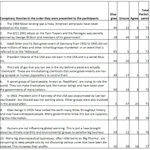
Highlights and reflections on Mark Fletcher's Survey: “The Critical Thinking Skills of Curriculum Level 8 Students” By Editor
1 November 2018 - Approx. 6 min read
There's a lot of rhetoric these days around educating students 'for the 21st century', and the need for '21st century skills', while (not always but often) disparaging what is currently taught & how it's delivered. Catherine Kelsey has a good op-ed. on this https://educationcentral.co.nz/response-catherine-kelsey-21st-century-skills-debate-unhelpful/ on the Education Central site, https://educationcentral.co.nz/ in which she comments on two other opinion pieces that I - like her - had found somewhat polarising in their approaches (see here https://educationcentral.co.nz/opinion-briar-lipson-could-the-route-to-skills-be-counterintuitive/ and here https://educationcentral.co.nz/response-steve-morris-in-defence-of-21st-century-skills-hogwash/), and says:
1 May 2014 - Approx. 3 min read
Alison Campbell looks at the Accelerated Christian Education curriculum.
1 August 2012 - Approx. 8 min read
There may indeed be a place for creationism in the science classroom, but not the way the creationists want. This article is based on a presentation to the 2011 NZ Skeptics Conference.
1 May 2012 - Approx. 5 min read
Alison Campbell considers the current state of tertiary education.
1 May 2012 - Approx. 8 min read
Adam van Langenberg gives practical suggestions on how to run a high school skeptical society, based on his own successful experience.
1 February 2009 - Approx. 1 min read
In an initiative intended to encourage critical thinking among students, the NZ Skeptics have donated copies of Vicki Hyde's book, Oddzone, to schools around the country.
1 November 2008 - Approx. 2 min read
Another annual conference has come and gone, with the usual collection of thought-provoking presentations. This issue we present two highlights, from Waikato University biology lecturer and science communicator Alison Campbell, and Greek Honorary Consul Nikos Petousis.
1 November 2008 - Approx. 16 min read
If students are to pursue careers in science, they need to be able to see themselves in that role. One way to encourage this may be through the telling of stories. This article is based on a presentation to the 2008 NZ Skeptics Conference in Hamilton.
1 August 2008 - Approx. 2 min read
Mike Palin queries the judging criteria in a recent high school science video competition.
1 February 2008 - Approx. 14 min read
In NZ Skeptic 82, John Welch wrote that there was something about general practice which attracts an interest in complementary and alternative medicine (CAM). Is it acceptable for medical graduates with a science degree to be allowed to carry on in this manner? Should we amend the medical registration so they can't? Is legislation needed to alter the culture-of doctors and society generally? This article is based on a presentation to the 2007 NZ Skeptics Conference.
1 August 2007 - Approx. 6 min read
After years of planning and fund-raising among the faithful, the Creation Museum has finally opened in Kentucky (Los Angeles Times, May 31).
1 February 2007 - Approx. 1 min read
The New Zealand Skeptics have launched a competition to encourage critical thinking among Auckland high school students. Entrants are to submit a 100-word summary outlining their proposal for a 10-12 minute presentation on some topic relevant to skeptical inquiry. Suggested topics include:
1 November 2006 - Approx. 1 min read
Canterbury University will next year be offering a Stage I course on critical thinking, to be called Science: Good, Bad, and Bogus. Named after a classic book by Martin Gardner, the course, Philosophy 110, will be headed by founding member of the NZ Skeptics, Denis Dutton. Prof Dutton says it will fulfill a demand for a sharp, smart course in critical thinking from a standpoint quite different from that offered by traditional logic and philosophy.
1 May 2005 - Approx. 4 min read
1 May 2004 - Approx. 1 min read
A Pakeha student whose necklace was forcibly removed by a teacher -- even though Maori students are allowed to wear their taonga (treasures) -- has quit school over the incident. Megan Church complained to the Human Rights Commission about the Marlborough Girls College dress code.
1 May 2001 - Approx. 1 min read
Aoraki Polytechnic has paid former naturopathy students $515 000 for falsely advertising their course had degree status. The students were seeking $4 million in compensation.
1 November 2000 - Approx. 5 min read
Taking a leaf from the UK Skeptic, we're turning our news clippings into a column. Which means I get to read them - never used to before! Many thanks to all those who've sent in material, and please keep it coming.
1 August 2000 - Approx. 2 min read
Many moons ago I packed into a dimmed lecture theatre along with 400 other keen-eyed stage I psych students to listen to a presentation on psychic ability.
1 November 1997 - Approx. 4 min read
WE WERE skeptical. We demanded you respond to our clarion call for pithy pieces -- but only a few of you pithed on us. For this we are grateful and we have sent suitable telepathic gifts to all of you, for which you should be grateful. But seriously, a couple of readers have queried our policy on the format of submissions which they've interpreted as meaning we don't accept handwritten copy. Wrong. Our eyesight is sometimes challenged by the individualistic handwriting styles we sometimes see, so we prefer typed or disc-supplied copy because we can then guarantee accuracy. But above all, we encourage you enthusiastically to send interesting forum pieces in whatever format you have available. The only criteria we use in selecting pieces for the forum is their value and interest to readers. The writer of the best piece published in the next issue will receive the definitive volume on proven homeopathic remedies.
1 November 1996 - Approx. 2 min read
One of the interesting things about the Skeptics is the wide range of opinions that can be found in our group -- not to mention the ever-readiness to express them. So I was interested to read Frank Haden's column on the conference and how he found it.
1 November 1996 - Approx. 4 min read
The organisation responsible for setting exams for New Zealand secondary students receives the Skeptics' annual rap on the knuckles for bad science.
1 August 1995 - Approx. 4 min read
Recent issues of the Skeptic have contained expressions of puzzlement at some subjects being taught to tertiary students in New Zealand. The worst example is the Degree in Naturopathy planned for Aoraki Polytechnic. But is this really all that surprising?
1 November 1994 - Approx. 21 min read
One of the perpetrators told the story behind the Grand Interplanetary Hoax of 1952 to the 1994 Skeptics' Conference.
1 May 1991 - Approx. 5 min read
Calls for Maori input in the science classroom are fine for encouraging students in the belief that science is relevant to their lives, but could also be used to cut them off from the international scientific community.
1 May 1990 - Approx. 10 min read
Dr Campbell's lecture at the 1989 Conference was an excellent piece of science education. The following article has a little physics, but is mainly a behind-the-scenes exposé of scientific show biz. It was prepared for The New Zealand Physicist.
1 February 1988 - Approx. 2 min read
Sir, — I share Colin Bell's concern about what goes on in our universities and what sort of watching brief the university councils keep on their tutors (March 2).