11 May 2026 - Approx. 2 min read
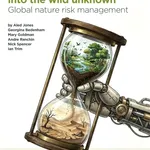
A report was released recently from the Institute and Faculty of Actuaries from the United Kingdom, in collaboration with Anglia Ruskin University (April 2026). Actuaries are responsible for assessing and quantifying risk management, and are used extensively by insurance providers. These people are not “woke scientists” or “woke climate change believers”. They are schooled in mathematics and systems analysis, and should be believed.
29 September 2025 - Approx. 6 min read
Some recent research has pointed to some potential health impacts for those on the keto diet long-term. I wrote about the keto diet in the newsletter in May 2023, so I was interested to see this update as we are sorely lacking long term data on the impacts of this diet on healthy people. Although the diet has been used since the 1920s as an intervention for some specific health conditions such as epilepsy, I am more interested in whether it is an unnecessary risk for those who do not have a specific medical condition.
17 March 2025 - Approx. 4 min read
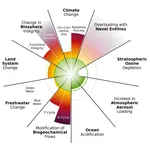
This week I will comment on two articles. The first is an article from Science Advances by Richardson et al. 9 from 13 September 2023. This is a research article with the title “Earth beyond six of nine planetary boundaries”. This article is a collaboration between multiple climate scientists, including those from the renowned Potsdam Institute (Rockstrom et al).
3 February 2025 - Approx. 16 min read
There is wide acceptance that the evidence provided by randomised controlled trials (RCTs) that are conducted to high standards is at the top of a hierarchy of evidence. Some web sources are listed below that, because they base their advice on careful and transparent evaluations of the available evidence, can be trusted.
31 July 2023 - Approx. 3 min read
Recently on facebook a friend posted “Kambo, My first ceremony…” or some such, with an attached photo. Until then I'd not heard of this thing, but it seems it's been around in NZ at least since 2016. It's claimed to be at practice from Amazonian tribes (that's their feeble attempt at an appeal to antiquity). Although no doubt there's truth in that, Brazil banned the sale/marketing of the substance in 2004 so, if you have used genuine Amazonian giant monkey frog poison (yes that's what it is) just know that someone may have committed a crime in Brazil so you could poison yourself and purge though multiple orifaces…you're welcome.
17 July 2023 - Approx. 3 min read
So, I'm a Diet Coke drinker. I don't drink hot drinks, and never have for my whole life. At least from my teenage years, when hot drinks were introduced in the form of tea, I always found them too hot and would burn my mouth. So, at least for the past few decades, I've consumed a reasonable* amount of Diet Coke.
28 October 2018 - Approx. 2 min read
Herbal remedies are very popular these days, with many pharmacies in New Zealand happy to promote products that don't work as treatments for medical conditions, or even just as a preventative measure - a way of keeping healthy.
4 June 2017 - Approx. 1 min read
A new alternative therapy has become popular recently - grinding up oak galls and putting the paste in your vagina. Oak galls are woody balls created when a wasp larva grows inside an oak tree's leaf bud. It is being claimed by sellers of this remedy that it can tighten and clean your vagina and improve your sex life.
1 August 2013 - Approx. 4 min read
Hormone supplements derived from plants are widely promoted as more 'natural' than hormones from horses, but they carry the same risks - and some more of their own.
1 November 2007 - Approx. 11 min read
Some risks in life are distributed throughout a population, others are all-or-nothing. There's a big difference. This article is based on a presentation to last year's Skeptics Conference.
1 February 2005 - Approx. 1 min read
A Christchurch mother who fed her five-year-old son raw beans was surprised when he fell ill. Because they had not been sprayed, she reasoned they should be a natural, healthy snack. But natural, as Jay Mann makes clear in this highly entertaining guide to the contents of your dinner plate, doesn't necessarily mean safe. Beans for example contain lectins, which have no bad taste to warn unwary consumers, but destroy the lining of your small intestine. Alfalfa contains canavanine, which disrupts DNA and RNA metabolism, though you would need to eat a lot of alfalfa to be poisoned by it. Lots of common foods are laden with poisons, all perfectly natural of course, but best consumed in small doses only.
1 February 2005 - Approx. 16 min read
The battle between the Enlightenment and Romantic traditions is far from over, though it has taken on new forms. This article is abridged from a presentation to the NZ Skeptics Conference, 2004.
1 May 2004 - Approx. 7 min read
Consumer response to the outbreak of Bovine Spongiform Encephalopathy has involved a complex balancing of risk and price
1 November 2002 - Approx. 2 min read
Mind the Gap! The book title is intended to remind all who have waited on curved London Underground railway platforms of the risk a careless step poses. The risks Dr Trask warns of are those which can label the writer as illiterate, ignorant of the nuances of English usage, or at least possessed of cloth ears. In offering this review to New Zealand Skeptic I do not imply that readers are particularly in need of the author's advice; rather, his comments have a distinctly skeptical slant, which should be music to skeptical ears (see entry: cliches). Consider the following entries in his alphabetical list.
1 August 2000 - Approx. 14 min read
The risks of third-generation contraceptive pills have been much in the news. But assessing risk can be a tricky business.
1 August 1998 - Approx. 4 min read
Chances are, you're worried about all the wrong things.
1 February 1998 - Approx. 3 min read
Some problems cannot be resolved by just "getting it all out of your system", reports Nigel Hawkes.
1 November 1997 - Approx. 6 min read
In the first of a new series, Tauranga GP Neil McKenzie comments on recent examples of pseudoscience relating to medicine.
1 August 1994 - Approx. 12 min read
What is the link between chemicals and cancer?
1 November 1991 - Approx. 5 min read
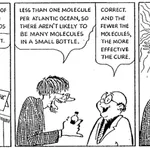
Most people have great difficulty in conceptualising low frequencies and low concentrations. Pesticide concentrations are reported in parts per million (ppm), parts per billion (ppb) and parts per trillion (ppt). One television personality accused an industrial spokesman of releasing effluent with "15 parts per trillion" (his emphasis, implying a very large, rather than a very small concentration).
1 May 1991 - Approx. 14 min read
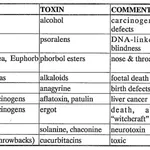
Despite recent claims that "natural" foods are safer, there is evidence that "natural" pesticides can be present at much higher concentrations than residues from synthetic pesticides. These "natural" chemicals are often untested and of unknown toxicity, with little evidence of health benefits.