Not so much Angry as Disappointed and Disillusioned

Mark Honeychurch said that "I may risk another angry email from Lance." He is partly right. But I am not so much angry as disappointed and disillusioned.
Mark Honeychurch said that "I may risk another angry email from Lance." He is partly right. But I am not so much angry as disappointed and disillusioned.
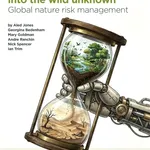
A report was released recently from the Institute and Faculty of Actuaries from the United Kingdom, in collaboration with Anglia Ruskin University (April 2026). Actuaries are responsible for assessing and quantifying risk management, and are used extensively by insurance providers. These people are not “woke scientists” or “woke climate change believers”. They are schooled in mathematics and systems analysis, and should be believed.
I intend this episode to comment on several issues.

The IPCC (Intergovernmental Panel on Climate Change) published the AR6 Synthesis Report: Climate Change 2023 in 2023, which summarises five years of reports on global temperature changes, fossil fuel use and likely climate impacts.
As it's an election year this year, there's been no lack of misinformation and nonsense being pushed at New Zealanders. Our runner up for the Bent Spoon award this year decided, apparently reluctantly, to start a new political party, called NZ Loyal. Liz Gunn, once a high-profile TV presenter, turned herself into a political leader and asked the conspiracy theorists of New Zealand to vote for her. Worryingly, given some of her extreme views, she received 1.2% of all votes, and she's already preparing her party for the next election. Next time round she might actually manage to submit the paperwork properly and have more than two candidates standing for election. We will be keeping a close eye on her.
Back in April's newsletter, Craig talked about David Farrier's investigative work uncovering alleged harms that happened within Arise Church.
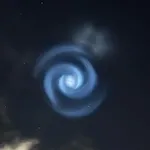
I once met Katherine Smith, the Editor of the New Zealand Journal of Natural Medicine (not a magazine I'd recommend reading - it'll make you angry!). We had an enjoyable chat, and as we were at a wellness and spiritual festival, WellFest, she had no idea I was a skeptic. She showed me her folder of photos and cuttings about the “synchronicity” she'd experienced in her life - a series of spirals, stretching from a spiral painting she made as a young child, through to photos she'd taken in the '80s with faint spirals in the background, and a recent picture of a weird glowing spiral in the sky she'd cut out from a newspaper. I told her that I recognised the sky spiral, that it was a picture from Norway of a Russian rocket booster. Of course she was having none of it - the spiral in the sky was a sign for her, part of a message the universe was sending her through a series of events too unlikely to be coincidence. And of course she wasn't interested in reading into this phenomenon any further - she'd decided what it was, and what it meant to her, and that was enough.
NZ Skeptics occasionally received email asking about skeptical topics:

This past week has seen the release of the IPCC's 6th assessment report on climate change. The report is issued every seven years. It's become increasingly obvious with successive reports, that the world is in danger of severe consequences of climate change, and it's increasingly certain (to the point of virtual certainty) that humans are the cause of it.
This past week saw the release of a report on misinformation, on research conducted by the Classification Office Te Mana Whakaatu. The Classification Office is traditionally responsible for classifying media, such as films and assessing whether material may need to be restricted.

Welcome to the NZ Skeptics newsletter.
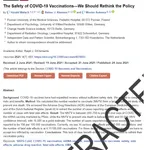
There's been a lot of talk recently in "alternative" circles about vaccine deaths. This has been prompted by the massive global rollout of several different types of COVID vaccines - mRNA (Pfizer, Moderna), Viral Vector (AstraZeneca, Johnson & Johnson), Inactivated (CoronaVac, Covaxin), and others.
Research by the American Center for Countering Digital Hate has revealed that almost two-thirds of all misinformation about vaccines being spread on social media platforms such as Facebook and Twitter arose from just twelve individuals and their associated organisations. And on Facebook they account for 73% of all anti-vax content.
There is now a second panel that has been convened to review Christchurch Council's "Tonkin Taylor" coastal erosion report. The panel has been instructed to:
Last year professor Paul Glasziou from Bond University in Australia headed up a team that wrote a systematic review of systematic reviews on homeopathy as part of a report for Australia's National Health and Medical Research Council (NHMRC).
Houses can sell for up to 20% less than market value, and twice as hard to sell, if they're thought to be haunted. I wonder how much less it can be when they're not haunted?
It is difficult to know where to begin in response to Jim Ring's letter (NZ Skeptic 110), but somewhat reluctantly, here goes.
I'm a men's health promoter working out of Christchurch and have some reflections after reading the discussions about the Cartwright report.
Another annual conference has come and gone, with the usual collection of thought-provoking presentations. This issue we present two highlights, from Waikato University biology lecturer and science communicator Alison Campbell, and Greek Honorary Consul Nikos Petousis.
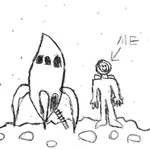
One possible source of the outlandish reports given by children in cases such as the Christchurch Civic Creche affair was described at the 2003 Skeptics' Conference.
A Hamilton doctor is facing two charges of professional misconduct and one of disgraceful conduct after one of his patients was left looking "like something out of a horror movie". The Marlborough Express (August 21) reports Yvonne Short had gone to Dr Richard Gorringe in 1998 looking for a cure for her skin problems.
Singaporean ghostbusters are turning to hi-tech equipment as they search for paranormal phenomena, reports the Evening Post (September 9).
Despite being clairvoyant Angel Destiny admits she was taken by surprise when her 1920s house collapsed around her as she soaked in the bath.
Readers of NZ Skeptic will have seen R.E. Bartholomew's article "The Great Zeppelin Scare of 1909" in last autumn's issue, no 47. This covered the same event as one of the chapters in this book. Several other chapters describe similar episodes which occurred in other times and other places, and in a final section all these are woven into a coherent story. Each chapter is supported by a copious list of references, most of them newspaper reports pubished during the development and decay of the case concerned.
READERS of NZ Skeptic will have seen R.E. Bartholomew's article "The Great Zeppelin Scare of 1909" in last autumn's issue (No. 47). This covered the same event as one of the chapters in this book. Several other chapters describe similar episodes which occurred in other times and other places, and in a final section all these are woven into a coherent story.
Some problems cannot be resolved by just "getting it all out of your system", reports Nigel Hawkes.
A ban on using any method to recover memories of child abuse has been imposed on members of the Royal College of Psychiatrists. They face a series of sanctions if they persist in using the controversial techniques to treat their patients.
THE world was 2.9% weirder in 1996 than in 1995, according to the Fortean Times, and weirdness is likely to increase up to 2000 with "pre-millennial tension".
Since the call for responses to the awarding of the Bent Spoon to the Justice Department's Hitting Home report, we've received responses from 16 people, some of which of which have been published in this and the previous Skeptic. Others were in the form of private commentaries or conversations. One member contacted the authors of the report directly for clarification and further comment, and passed on the correspondence that ensued.
Walter C Clark, Chuck Bird and Nicky McLean criticise Hitting Home for not investigating women's violence towards men, that is, for not being another piece of research altogether. When biologists can produce papers about the hairs on the legs of one species of fruit-flies, this does not seem excessively specialised. One reason that that was not done is simply money. To have achieved the same accuracy would have required interviewing 2,000 women, doubling the cost.
We have made a big mistake. Hitting Home is careful, thorough, mainstream scientific research. It may be alarming, but it is not, as we said, "alarmist". It is a serious attempt to measure men's attitudes towards, and the extent of, their violence. It is social science, not "hard" science, but it has done its best to attach figures to subjective psychological statements. If it can be criticised, it is for accepting the men's reports of their own violence at face value, when the biggest problem associated with men's violence is men's denial. ("I just gave her a bit of a tap" -- and she spent three weeks in hospital.)
My feeling after having read the report is that when it was ready for the printer, the authors had in fact reached the point where they were about ready to consult with people experienced in such research, as a necessary preliminary to the main investigation. I would have suggested a smaller pilot sample. This should have disclosed the pitfalls that lay in wait for them. By taking such steps they could have avoided the traps that they later fell into.
For those of you who have not been involved in selection of a Bent Spoon, here's how it is generally done and how this year's selection was made. Throughout the year, people propose likely candidates -- suggestions are passed on in the form of newspaper clippings, phone-calls, letters, email or, occasionally, videotape. Denis coordinates the discussion, which involves the Skeptic's executive officers and often members of the committee and members with appropriate expertise.
This year's Bent Spoon Award has ruffled a few feathers. In a controversial decision, what the Skeptics described as an "alarmist" Justice Department report on domestic violence in New Zealand has received the award.
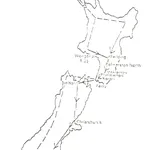
One of the perpetrators told the story behind the Grand Interplanetary Hoax of 1952 to the 1994 Skeptics' Conference.
The media were quick to cry "Wolf" when concerns were raised about the fungicide Benlate.
That arbitrary slice of the continuum of time known as 1993 has been a busy one for the New Zealand Skeptics. High spot of the year was the visit of James Randi in early July. Unfortunately, his timetable allowed only four public appearances, one each in Christchurch and Auckland and two in Wellington.
No doubt the dates for the 1988 conference were selected after consultation with the noted Christchurch psychic Omniscia. The vibes clearly showed 20/21 August to be good for discussing paranormality: that same weekend was chosen for a Psychic Fair in Dunedin and for the Theosophists' Festival of Life—"An open day for alternative spiritualities in Auckland". Conspiracy theorists, however, will see these latter events as attempts to derail the Skeptics' publicity machine.
Our NZCSICOP archivist, Phil Bradley, continues to build our Archive. Phil needs from members cuttings appropriate for the collection.. Please keep your scissors handy and send Phil reports of paranormal claims which appear in your newspaper. We depend on our members for this. His address is:
The Health Department was planning a study of pesticides and other Chemicals which New Zealanders might be consuming In food and water, said the acting departmental press officer, Mr John Boyd, yesterday.
Readers are invited to submit nominations for the following awards.