10 November 2025 - Approx. 4 min read
If you are sick of being the skeptical 'voice of reason' in arguments, perhaps as an alternative to engaging in a proper discussion you could try using some logical fallacies, humor, or psychological tricks to confuse, disarm, or simply shut down your opponent.
1 September 2025 - Approx. 6 min read
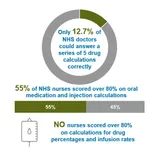
On a recent American Psychological Association podcast the hosts interviewed Dr Ellen Peters, author of Innumeracy in the Wild: Misunderstanding and Misusing Numbers. Her book discusses how numeracy affects people's health, financial security, and other life outcomes. She is also the author of some interesting papers in the same field, including this one that sets out a framework for interventions to improve the situation.
30 September 2024 - Approx. 6 min read
As part of my postgraduate Psychology course, I had to take a course called Multivariate Data Analysis.
1 May 2023 - Approx. 5 min read
Curiosity is part of the human condition, and we are always seeking out information. We devour it. But the world is overflowing with information, and it is really hard to work out what is worth spending our time on and what is not.
5 May 2021 - Approx. 2 min read
A recent article from Radio NZ did a great job of pointing out just how useless online polls are, and raising concerns about how often New Zealand media outlets, including Newshub, the AM Show and the Herald, rely on them as source material for news articles.
2 December 2018 - Approx. 3 min read
The Ministry of Education are finally getting close to publishing guidelines for schools about allowing Religious Instruction classes.
1 August 2014 - Approx. 8 min read
Matthew Willey has a series of discussions about big questions.
1 November 2011 - Approx. 12 min read
Having a basic knowledge of the principles of chemistry can help one evade the pitfalls of many pseudosciences - but it's not infallible. This article is based on a presentation to the 2011 NZ Skeptics Conference.
1 May 2009 - Approx. 2 min read
Evolution - What the Fossils Say and Why It Matters. Donald R Prothero, Columbia University Press. Reviewed by Louette McInnes.
1 May 2006 - Approx. 2 min read
Debunked! by G Charpak & H Broch, translator BK Holland. Johns Hopkins University Press, Reviewed by Bernard Howard.
1 May 2006 - Approx. 2 min read
"There are three hundred and sixty-four days when you might get un-birthday presents and only one for birthday presents, you know."
1 February 2005 - Approx. 1 min read
A Christchurch mother who fed her five-year-old son raw beans was surprised when he fell ill. Because they had not been sprayed, she reasoned they should be a natural, healthy snack. But natural, as Jay Mann makes clear in this highly entertaining guide to the contents of your dinner plate, doesn't necessarily mean safe. Beans for example contain lectins, which have no bad taste to warn unwary consumers, but destroy the lining of your small intestine. Alfalfa contains canavanine, which disrupts DNA and RNA metabolism, though you would need to eat a lot of alfalfa to be poisoned by it. Lots of common foods are laden with poisons, all perfectly natural of course, but best consumed in small doses only.
1 November 2004 - Approx. 2 min read
Don't judge them by their demeanour. The vast majority of people in this business are sincere, well-meaning individuals, and they are very hard to distinguish from the con artists. They might well be honest, but this doesn't mean they can do what they think they are doing 2. Record, Rewind, Review. It's very easy to interpret something as far more accurate or amazing than it actually is (ie to remember more "hits" than "misses"). Record your interview and listen carefully to the actual words used, how much information is given to the psychic/medium, and how often they reflect that back in a positive way to make it sound as if they knew it all along. If you can, transcribe audio to paper, as this can make what is happening much more obvious. 3. Listen for open-ended questions or ones asking for agreement. These phrases are designed to encourage you to hunt for a connection, even highly obscure ones, and to respond positively. They are common throughout the industry (sometimes deliberately taught) as they boost the chances of a positive response and give the impression that the performer is doing well.
1 November 2002 - Approx. 2 min read
Mind the Gap! The book title is intended to remind all who have waited on curved London Underground railway platforms of the risk a careless step poses. The risks Dr Trask warns of are those which can label the writer as illiterate, ignorant of the nuances of English usage, or at least possessed of cloth ears. In offering this review to New Zealand Skeptic I do not imply that readers are particularly in need of the author's advice; rather, his comments have a distinctly skeptical slant, which should be music to skeptical ears (see entry: cliches). Consider the following entries in his alphabetical list.
1 November 2000 - Approx. 13 min read
Presenting the evidence just isn't enough
1 November 1998 - Approx. 1 min read
If you're a fan of oddities such as those showcased in Ripley's Believe It or Not, you'll love the Museum of Questionable Medical Devices. This home of quackery features some amazing fraudulent gadgets. Learn, for example, about prostate cures like the light-bulbed prostate gland warmer or the frighteningly named recto rotor. These delights and more await you at http://www.mtn.org/quack/
1 August 1997 - Approx. 4 min read
LET us be clear. We think skeptics are the most witty, pithy and intelligent of people. The type who can get their profound insights across in 300 lively, well-chosen words. We insist you prove us right by flooding us with splendid examples of the genre. The author of the best contribution in each issue will receive a suitable telepathic gift. The worst example will earn an unsuitable telepathic gift. Here are the rules
1 May 1994 - Approx. 9 min read
In Skeptic 30, John Britten outlined the tragic results which can occur when patients fall into the clutches of quacks. In this case, a man with rheumatoid arthritis was not only starved but ended up paying for expensive and useless medications. Most doctors can relate similar examples.
1 August 1993 - Approx. 1 min read
John Cole, editor of Creation/Evolution, recently wrote of his tendency toward hair-pulling, in the National Centre for Science Education Reports, Vol 12 No 2 (Summer 1992).
1 August 1989 - Approx. 11 min read
Reprinted from the British and Irish Skeptic.
1 August 1988 - Approx. 1 min read
Do you have any small quotations or one-liners (even two-liners) that you think other members might appreciate—send them to the editor.
1 February 1988 - Approx. 2 min read
Sir, — I share Colin Bell's concern about what goes on in our universities and what sort of watching brief the university councils keep on their tutors (March 2).
1 May 1987 - Approx. 4 min read
This tape was very intermittent and parts of this account will seem disconnected and bitty. In addition, Gordon had some excellent slides and diagrams which obviously we can not reproduce here.