21 July 2025 - Approx. 4 min read
According to Life Extension, a website selling brain-boosting supplements called nootropics, our brains can be hacked (known as “neurohacking”) through “a variety of complementary strategies, including dietary and lifestyle changes and the use of nootropic drugs and supplements, brain-training activities and games, and neurotechnologies (e.g. electrical stimulation devices) designed to increase brain fitness”. Their Australian branch will sell you 30 pills for about AU$30. The pills contain gotu kola, bacopa, and marigold extract.
7 July 2025 - Approx. 20 min read
While I remain unconvinced by the premise of cryonics, I've come away with the impression that most cryonics companies currently in operation have protocols that enable the ethical treatment of family members caught unawares by their loved one's unorthodox final wishes. In one Alcor case study, staff were reported as telling one family that the condition of their daughter's body made it hard to justify proceeding with suspension, as the cooling and freezing process would exacerbate the damage to the brain caused by autopsy and transport delays. While this should be a given, I think many skeptics will agree that when it comes to fringe and pseudoscientific enterprises, the bar for decency is all too often on the floor. However, the aftermath of the Chatsworth incident (in which 9 patients thawed out) revealed that such protocols really benefit the companies. It ensures that the majority of their customers are prepared, true believers.
19 February 2024 - Approx. 4 min read
You may or may not have heard the term “crank magnetism”. I had heard of the term, but I'd completely misunderstood its meaning. Yes, this item is going to be a bit of a laugh at myself as much as anything!
5 February 2024 - Approx. 6 min read
Making the news this past week was Elon Musk's announcement that his company, Neuralink, has performed its first implantation of their experimental Brain Computer Interface device (BCI) into a human.
25 September 2023 - Approx. 7 min read
There was a recent RNZ interview done as part of their Expert Feature series, which runs on Monday afternoons with host Jesse Mulligan.
3 July 2023 - Approx. 6 min read
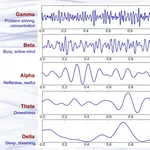
About 10 years ago a friend asked me about binaural beats. I had to admit at the time that I was oblivious, and had never heard of them. He proceeded to describe a fun audio effect, one that only works through a pair of headphones. If you play an audio tone (frequency) in each ear, and make the tone in each ear a little different, the difference between the frequencies of these two tones - their interference pattern - can be heard as a third audio tone that sounds like it's originating from somewhere between your ears. So, if you play a 550Hz tone in your left ear, and a 500Hz tone in your right ear, you will also “hear” a 50Hz tone between your ears: 550 - 500 = 50.
19 June 2023 - Approx. 4 min read
Bronwyn suggested I do a bit of psychology myth-busting. So here goes. There are so many I could write a book, so I've picked five. You will notice I haven't included any that relate to actual mental health disorders, I will leave that to the professionals.
6 June 2023 - Approx. 8 min read
On the 26th of May Elon Musk's brain chip firm, Neuralink, announced that they had received FDA approval to launch their first in-human clinical study of a brain implanted device.
21 February 2022 - Approx. 3 min read
Adventures of a Psychologist by Michael Corballis 2021 published by Routledge. Available on Amazon.
18 August 2020 - Approx. 8 min read
Here are some common medical myths that are easy to dispel:
1 February 2020 - Approx. 8 min read
The NZ Skeptics Conference 2019 was held over three days from 29th November in Christchurch and boasted some gorgeous venues (the historic Riccarton House and the Arts Centre's Great Hall). We had a fantastic turnout with 154 attendees, and 10 very high calibre local and international speakers. Here is a summary to whet your appetite for 2020's conference in Wellington.
25 February 2018 - Approx. 1 min read
The UK Mirror recently carried a weird story claiming that there are numbers so big that they would create a black hole in your brain if you could memorise them. The title of the article is:
1 August 2017 - Approx. 8 min read
iSynchrony has put together a plausible-sounding bit of bafflegab to justify what it sells. The reality of neurology is against their claims.
27 September 2015 - Approx. 1 min read
Stuff published an article last week about Tamaha McDonald, from Blenheim, who is currently living in Mexico. Tamaha's wife, Jennifer, suffers from a lung condition which means that she needs a double lung transplant. They are currently raising money to help with this.
1 August 2015 - Approx. 2 min read
Researchers from Switzerland and Germany have just published a paper in which they describe using brain imaging and a cool way of looking at sound, called the modulation power spectrum (MPS) to understand just why screams are so alarming. Rather than looking at the amplitude and frequency of sounds over time, the MPS plots the modulation frequency against the number of cycles per octave, shown as a kind of heat map. On this kind of spectrum, there is a clear zone that gives clues to the gender of the speaker, and another distinct zone that gives information about meaning. But there is also a zone that until now hadn't been associated with any function. In fact, it has been thought to be irrelevant to human communication. This region corresponds to a perception of sound called roughness, which is thought to be unpleasant.
1 November 2013 - Approx. 7 min read
A best-selling book claiming to present evidence of life after death may not be all it's cracked up to be.
1 November 2013 - Approx. 3 min read
Matthew Willey recalls the days before the internet, and an old friend
1 May 2011 - Approx. 2 min read
The Moral Landscape: How Science can Determine Human Values. Sam Harris. 2010. Free Press, New York. ISBN 978-1-4391-7121-9 Reviewed by Martin Wallace.
1 May 2008 - Approx. 3 min read
John Welch seems to think that knee-jerk name-calling and immediate dismissal equates to scientific consideration. His constant ridiculing of many conditions with psychological components amounts to narrow-minded materialism. For those of us who have worked with severe cases of Post-traumatic Stress Disorder (PTSD) it seems bizarre to deny that the symptoms reflect a real underlying pathology of brain and emotional functioning. And of course, shell shock has been described since early in human recorded history. Denying its reality as a condition and disputing any need for treatment simply relegates those affected to ongoing suffering, but will not cause the condition to evaporate.
1 August 2003 - Approx. 2 min read
Should we trust psychologists and psychiatrists, especially as expert witnesses in court cases?
1 August 1999 - Approx. 5 min read
John Riddell looks at a costly alternative to glue sniffing.
1 August 1997 - Approx. 11 min read
THE line which sharply demarks mainstream medicine from alternative medicine is the line of science. It is possible to cross that line, however. Any alternative treatment which is tested in a rigorous scientific manner and found to be safe and effective will be incorporated into mainstream medicine; it will have crossed the line.
1 August 1992 - Approx. 2 min read
It's a mindbending situation, but I guess you'd have to call me a skeptical believer. Like parapsychologist Susan Blackmore, personal experience inclined me towards the idea that supernatural events really happen.
1 February 1991 - Approx. 1 min read
E. Frenkel, the Russian who late last year undertook the ultimate test of his ability to stop on-coming trains using only his brain power, was a hit with NZ Skeptics too. Members have sent in eight clippings relating to the incident—an all-time record by a long way.
1 February 1989 - Approx. 5 min read
Several members have kindly sent in a copy of Irene's advertisement in the Listener. We have decided not to reproduce it because it will be familiar to many. However, member DJ. Ibell of Birkenhead followed up the advertisement, writing for details of Irene's abilities as a crime sleuth. We are very grateful for this kind of follow-up, it is just the sort of thing needed to keep the society vigorous and challenging. He has kindly sent me the results of his letter.