The Psychosocial Hypothesis for UFO origins
Hamish Dickson - 31st August 2026
Most unidentified flying object (UFO) reports have mundane explanations. Celestial objects such as Venus or Jupiter, aircraft lights, balloons, and a host of other misperceived things seen in the sky. These stimuli, seen through a society’s cultural and psychological lenses, suggest the presence of an unusual emotional climate which distorts perceptions and the perceived significance of merely terrestrial phenomena. Through time we have observed many different explanations for lights in the sky. In the late 1890s, hot air balloons were often sighted, and in the early 1900s airships were the go-to explanations. Numerous sightings in Australia and New Zealand were explained away as airships in the article Crowded skies by New Zealand Geographic, including a famous one in the then small Otago town of Kelso, in 1909.
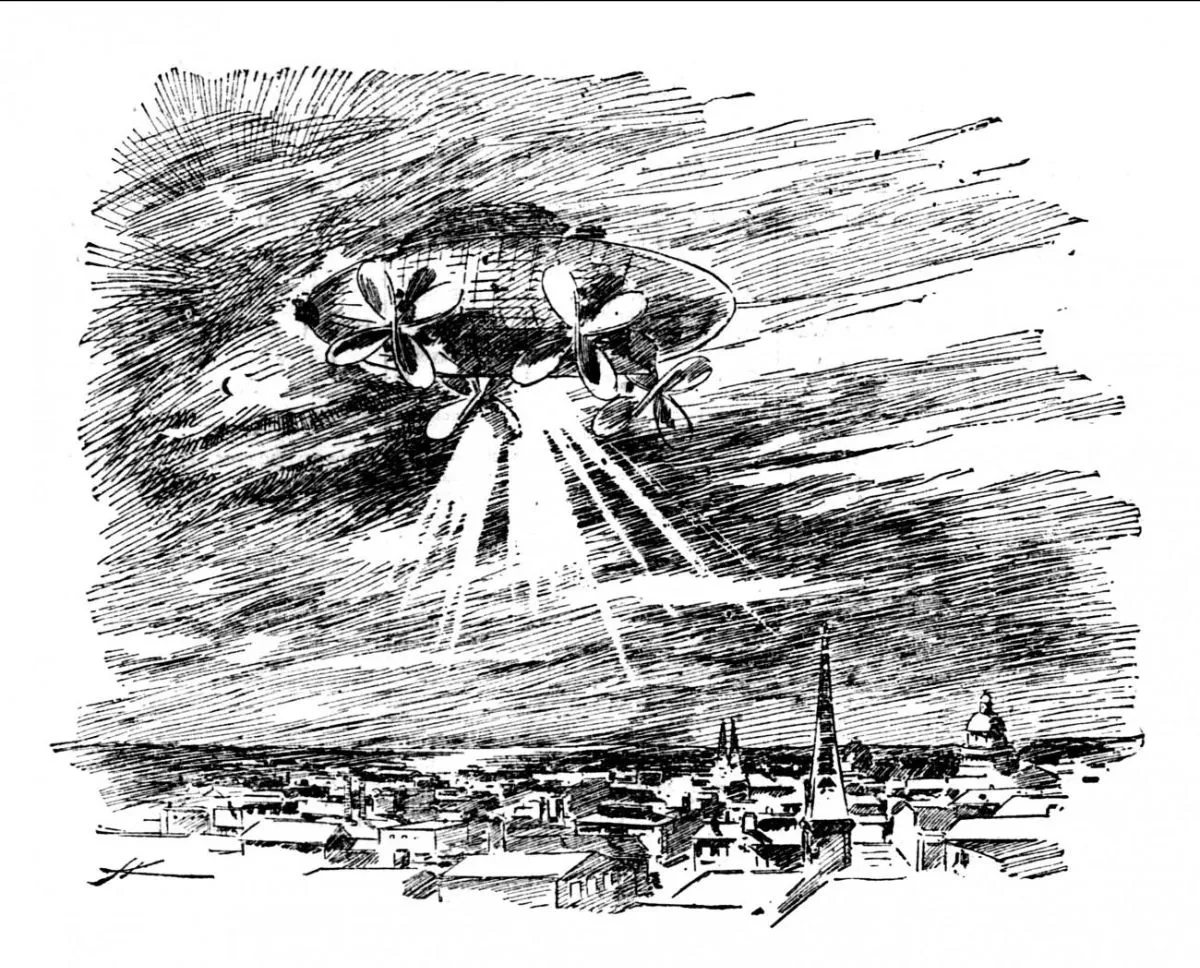
Later these were explained away as aircraft, and in the last 80 odd years as visitors from other worlds. The “visitors from other worlds” explanation is known as the Extraterrestrial Hypothesis. The change in explanations over time is known as the Psychosocial UFO hypothesis. In this article I will explain in more detail how this hypothesis was derived, and what it means for UFO identification.
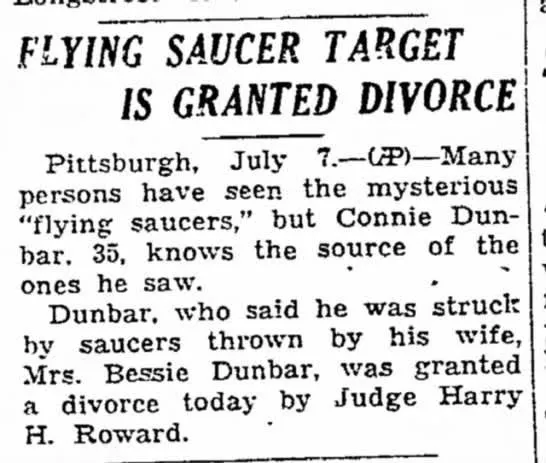
It wasn’t until 1947 that unexplained lights in the sky took on an extraterrestrial explanation as the cause. On June 24th of that year, private pilot Kenneth Arnold believed he saw objects flying in formation near Mt Rainier, in the US State of Washington. He noticed in the distance nine lights in a line, flashing as if “sunlight was reflecting off a mirror”. He estimated these objects were around 30-40 kms away, and moving up to 1,800 km/h. Arnold would later state they moved like saucers skipping on water, without comparing their actual shapes to saucers. Initial quotes from him in the media do indeed have him comparing their shape to a “saucer”, “disc”, “pie pan”, or “half moon”, or generally convex and thin, even though he never described their shape as such. Just those misunderstood words “saucers skipping on water”, which were turned into headlines featuring “flying saucers” that then started a frenzy.
From June of that year to mid-July, over 800 reports of flying saucers hit the media in the US. These reports, throughout the US, peaked on July 4th, and subsided over the subsequent weeks amid numerous hoaxes, pranks, and mistaken identifications. At the beginning of this brief media craze, explanations for these craft were that they were of terrestrial origin and thought to be advanced Russian technology. It wasn’t long after this time that flying saucers piloted by alien lifeforms from another planet took hold, and this “explanation” has since remained. Explanations for what Kenneth Arnold most likely saw ranged from P-80 fighters, which were in the area at that time, to mirages of several snow-capped peaks in the Cascade Range.
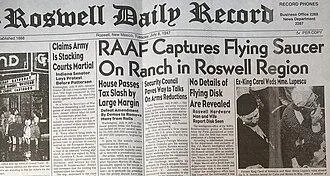
Only a few days after Arnold’s flying saucer headlines, rancher William “Mac” Brazel discovered strange debris on his ranch near Roswell, New Mexico. It was reported to the local Air Force as the crash of one of those “flying saucer” objects. The story was largely forgotten until the 1970s, when it was revived and expanded into claims about grey aliens and a hidden craft at “Area 51”. The debris were identified as part of Project Mogul, a secret spy-balloon programme, although that explanation did not become public until it was declassified in the 1980s.
Historical close encounters with alleged alien life can also have a Psychosocial explanation. As the Extraterrestrial hypotheses firmly took hold, reports of close encounters with alien life were reported. In the 1950s and 60s, there were at least 70 claims of people meeting Venusians, and at least 50 claims of people meeting Martians. Both worlds are now known to be uninhabitable and devoid of any advanced civilisation. Hoaxing seems to explain some of these close encounter claims, but visionary dreams, hallucinations, and other mental processes are clearly implicated in such myth-based material. More modern depictions typically describe aliens as being small humanoids with smooth grey skin, disproportionately large bald heads, and large black almond-shaped eyes. These creatures were first mentioned in 1961 by alleged abductees Barney and Betty Hill, from New Hampshire in the US, and now make up the majority of alien depictions, including aliens allegedly held in Area 51. Neurologist Steven Novella proposes that Grey aliens are a byproduct of the human imagination, with the Greys’ most distinctive features representing everything that modern humans traditionally link with intelligence. “The aliens, however, do not just appear as humans, they appear like humans with those traits we psychologically associate with intelligence”. Novella refers to the explanation for “Grays” as psychocultural, but it is the same explanation as the psychosocial described in this article - just with a slightly different title:
The NESS » UFOs: The Psychocultural Hypothesis
The idea of the government covering up UFOs is widespread among the public in the US. The Trump administration, through the Pentagon, has attempted to declassify all UFO documents in an attempt to say “Hey look, we can release files. See”. However, after reviewing many of these, there is no credible evidence for aliens visiting earth. The declassified files included photos from NASA, showing flashes on photos taken during the moon landings and other Apollo missions. Two things are imported here. One is that these flashes are most likely cosmic rays hitting the film in the camera. These rays are everywhere in the universe, but the magnetic field around the earth blocks most of them out. NASA knew what they were in the 1960s - there was nothing to classify. Secondly, NASA never classified any of their documents. Other images released include this one. It depicts an alleged alien from a crashed flying saucer. It was published in a German magazine in 1950, as an April fool’s joke. It was later reprinted in 1954 by an American newsletter known as Saucer News, but this time reported as real. How it became declassified is beyond me. It’s as if the whole releasing of these files is in lieu of something else.

https://www.ibtimes.co.uk/debunking-myth-famous-alien-photo-1795923
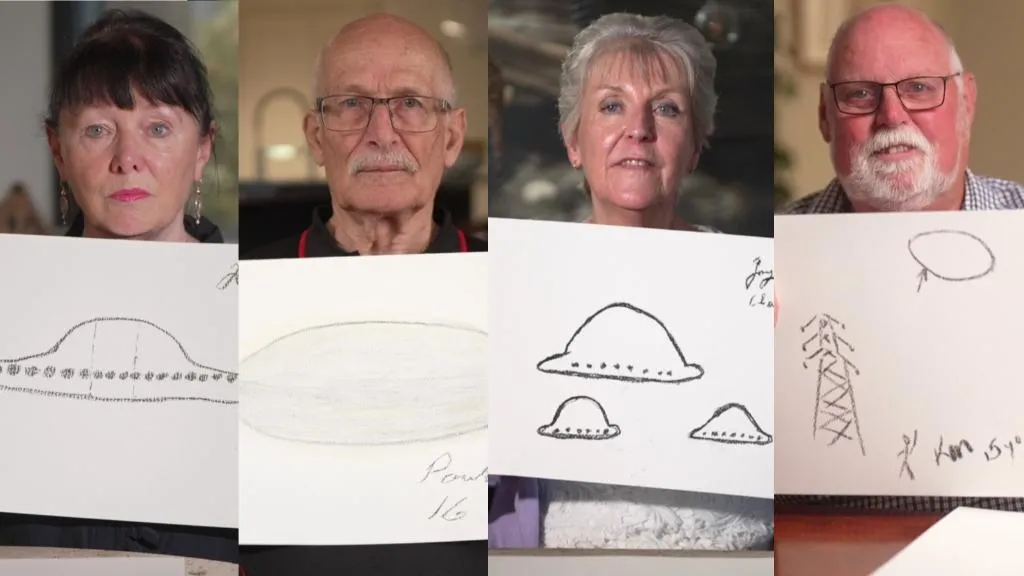
In 1966, over 200 students and teachers from Westall High School reported they had seen an object in the sky that was reported in the media as a UFO. Reports by the children said that they were silenced by officials who said they were not to talk about what they saw to anyone. One nine year old claimed the object he saw was clearly a weather balloon. The weather balloon theory has been the standard explanation in lieu of the more popular one of it being a flying saucer from another planet.
Richard Saunders, from the Australian Skeptics, put it well when interviewed for the ABC’s Australian Story for the 60 anniversary of the Westall sighting: “They definitely saw something, but it is best to come to the most reasonable answer rather than jumping to fantasy”. He also added that human memory can be influenced by people talking about an event later, forming memories that may change when recalled years later. To date there is no formal explanation for this sighting, but it is not inconsistent with a weather balloon which was launched some 35kms away.
https://www.abc.net.au/news/2026-04-06/westall-ufo-mystery-witnesses-want-answers/106126614
In our more scientifically literate era, more down-to-earth explanations are often sought by mainstream media. In April of this year, Kiwis throughout the country had reported strange lights in the sky. It wasn’t long before the media began to buzz with an explanation, not a flying saucer or alien invasion, but a Chinese rocket exhaust bloom creating a visible haze in the sky giving the illusion of something from out of this world. Unlike the 1970s and 80s, whose media were in a UFO frenzy, most contemporary media outlets contacted local scientists who gave a more down-to-earth explanation. The bloom of a Chinese rocket being launched - ‘Unexpected and unnatural’ light linked to Chinese rocket, not a UFO. More fringe media outlets in New Zealand, such as Reality Check Radio, still gravitate towards an extraterrestrial craft as an explanation.
https://rcr.media/episodes/the-brennan-barometer-the-kaikoura-lights-and-beyond
The increase in attribution of unidentified lights in the sky to alien life forms visiting earth appears to have a symbiotic relationship with the media – a film depicting flying saucers increases the reported sightings of flying saucers. The same phenomena can also result in a scientific explanation gaining prominence, if scientists are interviewed before an extraterrestrial explanation is posited. The recent change in approach may be why we are seeing fewer reports of flying saucers, even with most people now carrying high-definition cameras, rather than the poor blurry ones used during UFO crazes. The psychosocial hypothesis does not rule out the extraterrestrial hypothesis, but looks at the cultural environment and historically understood sources. The outcome reinforces the proposition that the extraterrestrial hypothesis is unnecessary and, by Occam’s Razor, probably incorrect.
Tags: explanations, saucers, ufo, media, new