The ancient amphitheatre that has stood for… decades
Katrina Borthwick - 31st August 2026
I was fascinated recently to read about an ancient classical archaeological attraction, known variously as the Berico Amphitheatre, Anfiteatro Berico, Anfiteatro Marittimo Berico, Anfiteatro Porta degli Angeli, and Porto degli Angeli. It is located on a scenic hillside near Arcugnano, in the province of Vicenza in Italy’s northern Veneto region. Verona’s amphitheatre is just 64 km to the west. This massive site has been marketed to tourists as dating from around 393 AD, with Neolithic, Greek and Roman artefacts. Franco Molasso claims he discovered it in 2005 following a landslide. But none of this is the reason I am writing about it. Because it turns out… it’s totally fake.
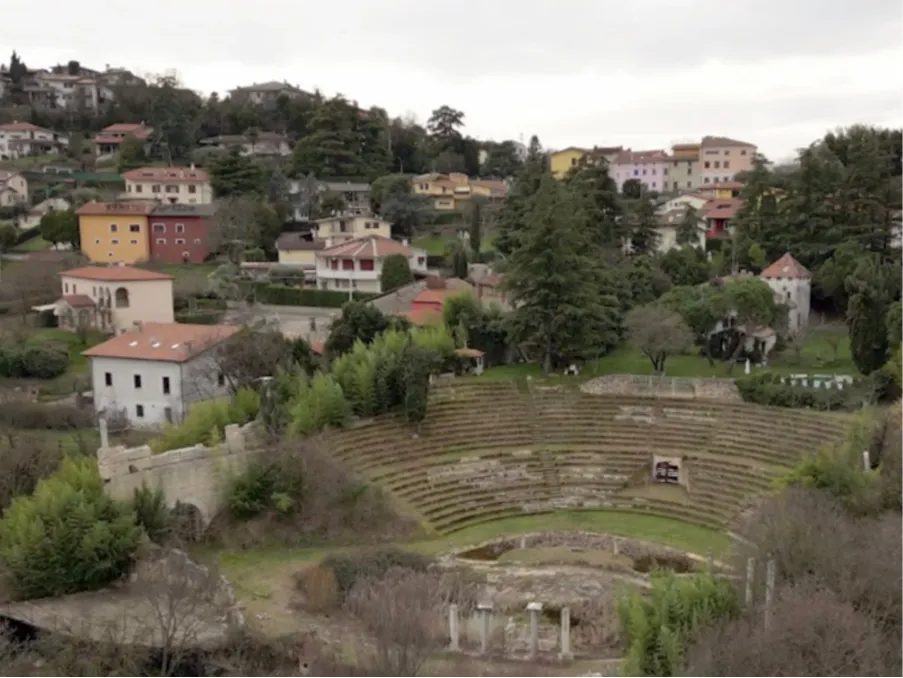
Not even an ‘old’ fake. This thing was constructed right next to the town which can be seen in the background from around the year 2000, and first advertised for visitors in 2014. Added to this, the surrounding Berlici Hills landscape is protected woodland and designated as culturally sensitive terrain. So this modern fake is not only a case of archaeological fraud, but also the destruction of a protected landscape.
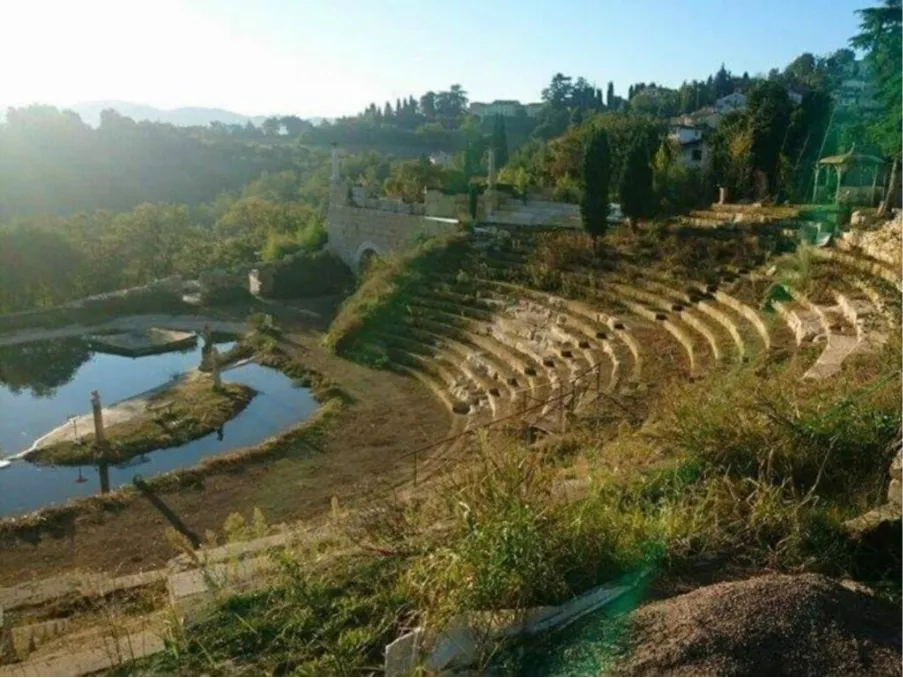
I am floored that the person responsible for building this, Franco Malosso, managed to pull this off. It is clearly in full view of a number of buildings in the township, and was built from scratch using a local construction firm and modern machinery. The builders said they were told to make it “look old”, and used newly quarried stone, cement, concrete pillars, plaster statues, polystyrene, papier maché, fibreglass, putty, paints, coloured earths, pigments, organic substances and acids to create an aged “archaeological” appearance. The tiered seating was made from recent stone blocks whose edges were deliberately worked to imitate centuries of foot traffic. The columns are modern cement structures, treated with pitting and dark patinas to suggest ancient marble and long exposure. The artificial lake, which is located where you would expect to find a stage, helped to generate aging effects through moss and lichen. It’s hard to believe that the township wasn’t willfully ignoring this.
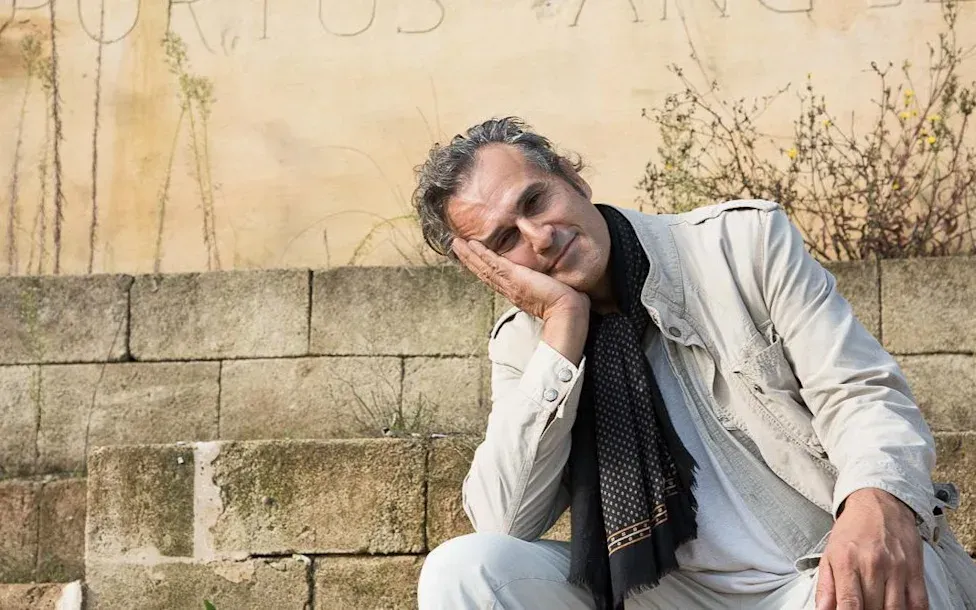
Franco Malosso (aka Molosso or Von Rosenfranz) is the owner and creator/‘discoverer’ of the attraction. One source describes him as a building contractor, another as simply a 69 year old resident of the province. Since ‘discovering’ the site, he has presented himself as the guardian and narrator of its ancient history. He has also reportedly claimed to be the legal representative of the landowner, a business based in the British Virgin Islands. Some visitors praised his guidance around the site, and commented on him being a “kind custodian” and “more or less a historian, and an excellent narrator”. To me he sounds like a great storyteller.
The evidence for this site being fake is blatant. Some experts, including the Carabinieri Cultural Heritage Protection Unit (aka the “art squad”) and heritage authorities, describe how they knew it was fake as soon as they entered the site. But let’s break it down a bit.
As you would have guessed, the use of modern materials is a huge giveaway. The modern construction methods, using 21st century machinery, is also a huge tell. If it was as old as claimed, then the construction would have been by hand.
Added to this, satellite images suggest the hillside has been levelled and the structure newly built, not uncovered by a landslide. Investigators found no evidence that a landslide had revealed an ancient site. Archaeologists have also commented that the excavation of such a site is an incredibly slow process, and they would have expected perhaps one row of seats per year might get uncovered, with each step being planned and monitored.
The provenance is also completely whacked. The site was described as “maritime”, but Arcugnano is around 80 km from the coast. This made the sea-related description suspect. The ruins also are out of place for a Greek origin to be plausible. Northern Italy has Roman remains, but the Greeks did not colonize Vicenza.
The design is also inconsistent with what we see elsewhere. Fan shaped amphitheatres aren’t a thing in this architecture style, they are usually oval. The absence of a stage, and having a pond in its place, is just weird. What would such an amphitheater be used for?
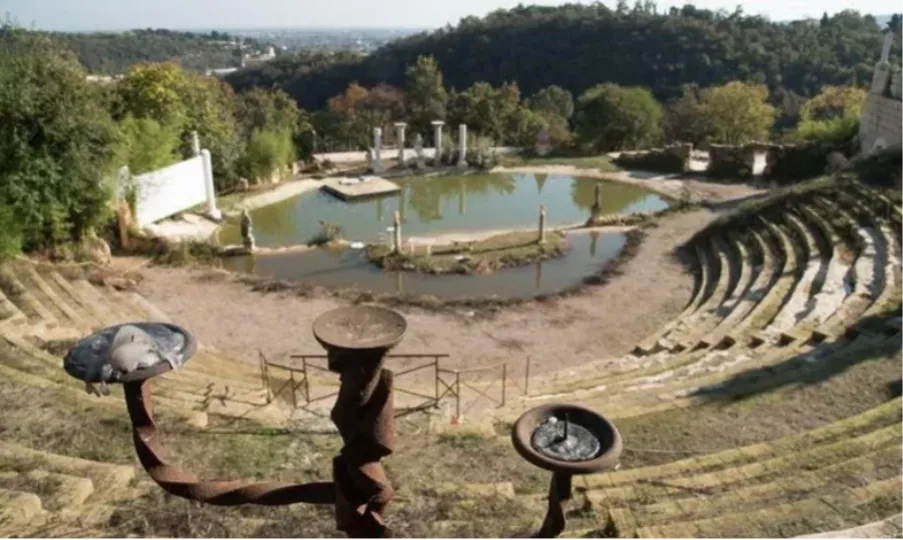
This case has understandably scandalised Italy, a country that prides itself for its authentic UNESCO-recognised cultural assets. Despite being built over the course of 14 years in full view of the town, having had a number of different contractors involved in its construction, and it being opened for visitors since 2014 and charging up to €40 euros, the site wasn’t discovered by local law enforcement and referred for attention until October 2016. But, again, I suspect willful ignorance must have played a part here.
Charges and findings in 2019 included art forgery (or forgery of antiquities), illegal construction, destruction of a protected landscape, and fraud-related allegations connected to the visitor fee. Specifically Malosso made claims the site was visited by Julius Caesar, as well as Shakespeare’s fictional Juliet Capulet, and has charged unsuspecting tourists money under the guise of an “upkeep fee”. He appealed this, but the Supreme Court dismissed his final appeal in 2021. Malosso was convicted and received a two year, four month sentence, plus he was fined €3,000 and ordered to pay €3,500 in court fees. He was also ordered to both dismantle the structure and restore the site. He tried to defend himself in court by arguing that the forgery was so obvious that nobody could reasonably have believed it, but that argument didn’t fly. As a result he started serving his prison sentence this year, hence the fact that media coverage is surfacing now.
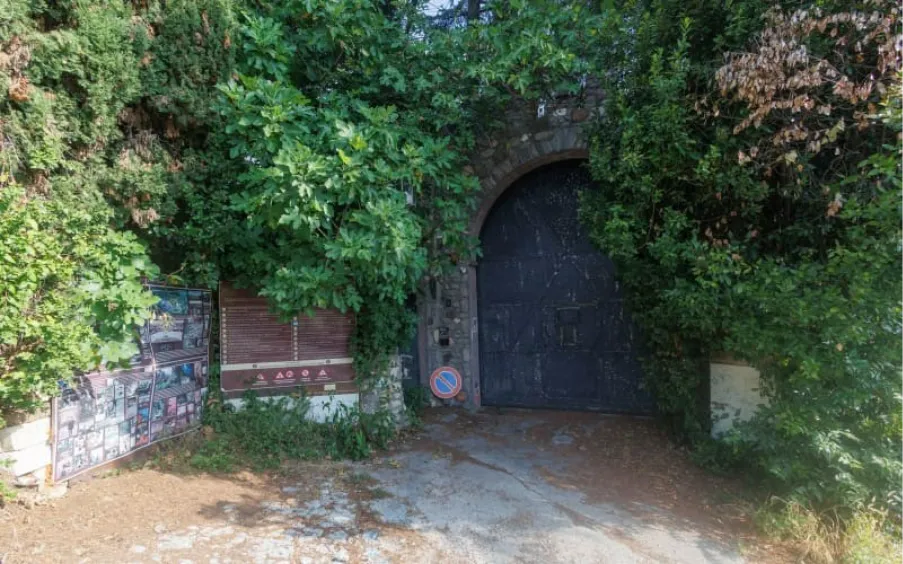
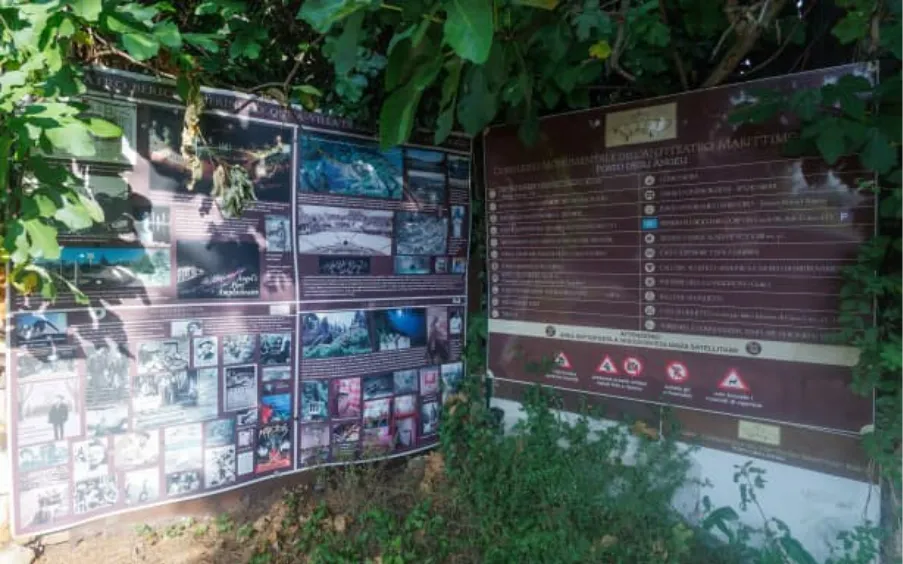
Today the site still exists. It has been under judicial seal since 2016, and has become quite overgrown. The entrance is reportedly still visible in Arcugnano, with a modern stone wall, metal gate and signs describing the supposed history of the complex. To date the court order to restore the site hasn’t yet been carried out - that would be a massive project, as Malosso would need to excavate the site to remove the structure. Unsurprisingly local officials are absolutely not interested in picking up the bill for that.
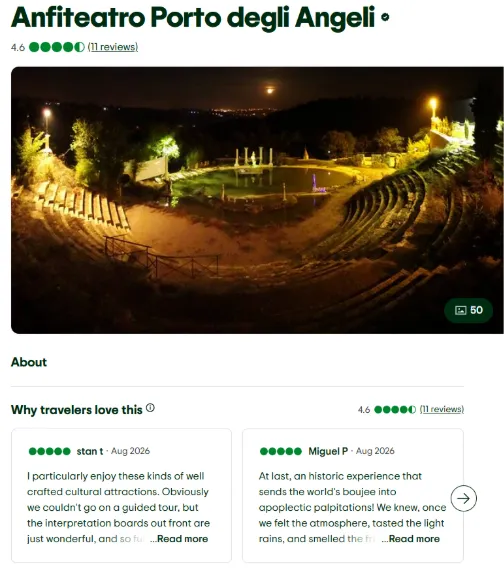
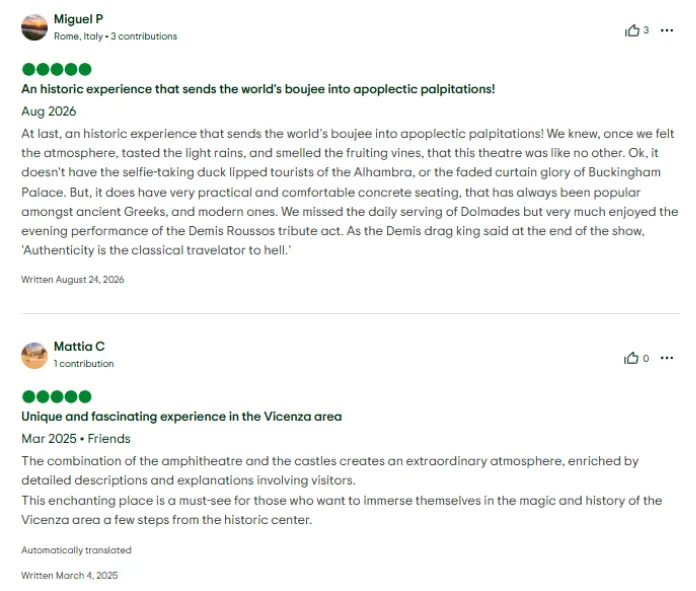
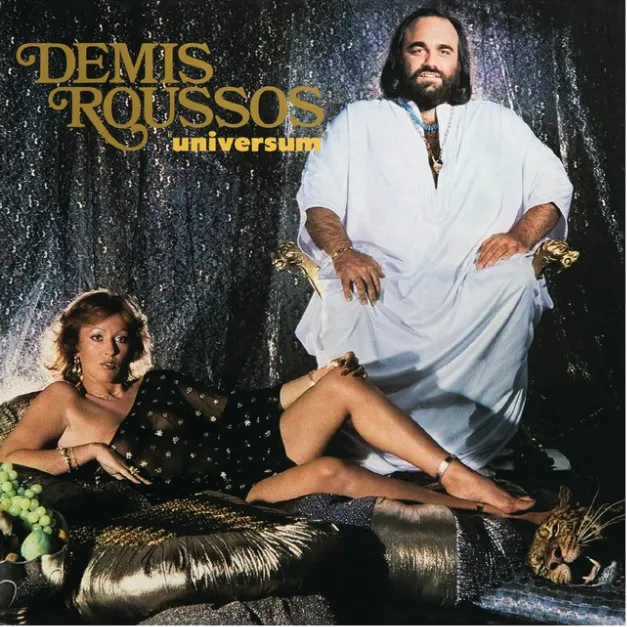
The site is still up on Trip Advisor, and there are many glowing reviews on there, as well as a few that are clearly tongue in cheek. I was wondering about the first review in the screenshot above, as it seemed like it must be making fun, and my suspicions were confirmed when I followed up on the reference to a ‘Demis Roussos’ tribute band, with absolutely glorious results. You can read more about that kaftan wearing, larger-than-life figure here.
Fraud aside, there are some that laud Malosso’s achievement in his attempt to recreate an ancient site. One writer asks that the President of the Council of Ministers of Italy, Matteo Salvini, visit Malosso and call for Malosso’s immediate release and “give him the appropriate act of clemency “for theatrical merit” for the creators of this ambitious project; the awarding to the team of all live-performance prizes (Ubu Prize, Critics’ Prize, Maschere del Teatro Award, Hystrio Prize, and so on) for “best special project,” “best stage design,” and “new dramaturgy.” As the site is in Italian, I am struggling to work out if this is satire, but some of the comments about other cultural organisations routinely committing ‘irregularities’ when making grant applications lead me to believe it’s serious in its intent.
“Above all, the whole operation is in itself a research theatre project, both in terms of dramaturgy (a participatory project that interweaves fiction and reality), and as an ambitious scenic blockbuster reminiscent of certain land-art experiments (levelling an entire hill, cutting down a wood, theatre in the landscape).”
I will admit, if he hadn’t deceived anyone or violated a site of significance, then perhaps this would be regarded as a contemporary work of art, and certainly a monument to the significant effort involved in building it. But, as it is, it seems vanity won out, and now Malosso is in prison.
Tags: site, images, import, newsletter, malosso