AG1: The Lazarus of supplements, part 1
Bronwyn Rideout - 11th May 2026
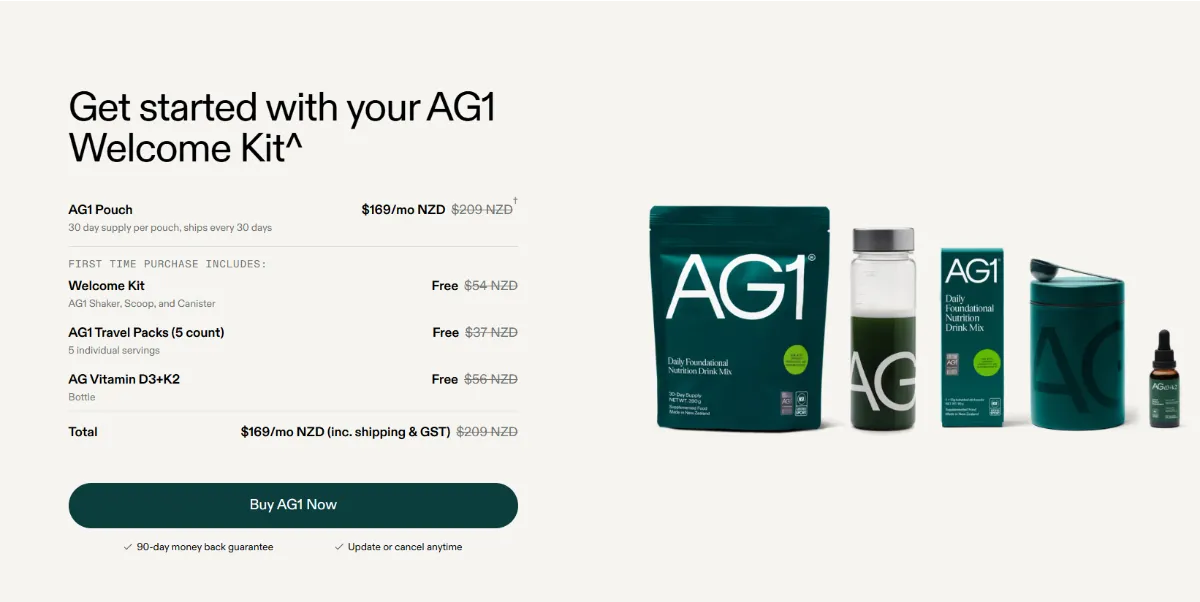
AG1, formerly Athletic Greens, is a dietary supplement brand launched by an ex-cop from New Zealand. Their flagship product is a green powder that, when mixed with water and taken daily, creates a nutrient-dense drink.
(Some of you may think that stating that a powder must be mixed with water is redundant; in that case you’ve never heard of dry-scooping)
Depending on where you spend much of your time on the internet (social media, YouTube, etc.), you may have come across one of the many celebrity endorsements or YouTube sponsorships for AG1, or you caught Scott Carney’s mini-expose or Jonathan Milne’s 2024 explosive investigation on his Powder Keg podcast with newsroom.
Admittedly, I had my nose stuck into my postgraduate research during this time, but it felt like AG1 was being promoted quite heavily before disappearing, and at that time competitor Bloom muscled in to fill the void. It has only been in this past week that I’ve seen fresh sponsorships for AG1, now that Bloom has eased off.

So, I thought it was time for the Skeptics to get acquainted (or reacquainted) with AG1 and its various controversies.
Who is Chris Ashenden?
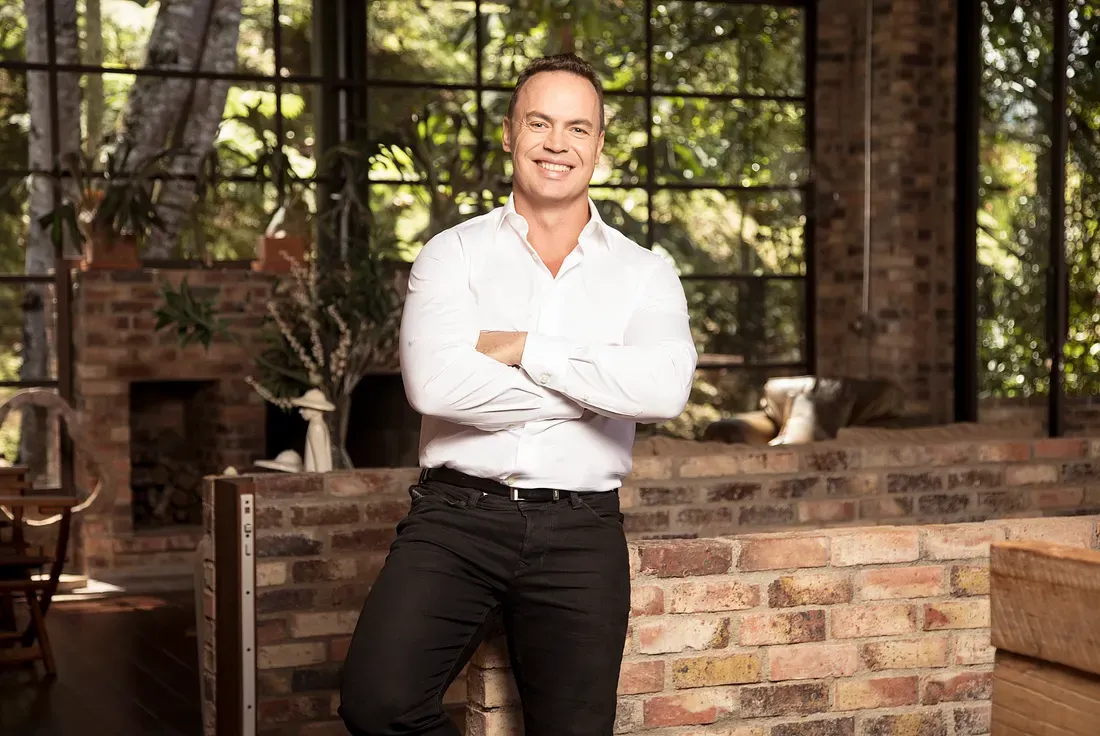
Christopher Mark Ashenden has at least three dead blogs:
- https://chrisashendenkiwi.wordpress.com/
- https://about.me/chrisashenden
- https://web.archive.org/web/20110925232221/http://christhekiwi.com/
Chris shares a fairly similar story in his bio across all three blogs. He played rugby at an elite level as a youngster in New Zealand, and had a family that loved to travel, enabling him to see 43 countries by the age of 13. He was educated in Sports Science at the University of Auckland. In 2009, Chris claims on his online CV that he started working for Human Performance Specialists as their Director of Marketing, while also beginning a relationship with Athletic Greens as an official spokesperson.
In a 2021 interview with Dana Cavalea, Ashenden shared that he actually dropped out of his Sport Sciences degree before graduation to start his first company, which was also a nutritional supplement company that failed. The loss of this first company knocked his confidence a bit, and he held numerous odd jobs in sales and in the labour market, including a stint selling used cars to used car dealers. An older friend from his sports days, who had been a cop for 27 years, advised him to take a more secure job to pay off his debts from the failed supplement business. This led Ashenden into the police force, where he worked for three years in what he described as the busiest part of New Zealand. After reading books like Rich Dad Poor Dad, Ashenden left the Police and got into the real estate market by flipping and selling houses.
In this same interview, Chris flippantly glosses over what happened to him during the 2008-2011 period, stating that everything he built with his real estate and finance companies was wiped out with the global financial crisis, and that he had some pretty dark times with litigation and bankruptcy. Not only did he lose money, he lost his parents’ money, their house, and that of other investors. In all he estimated that he lost nearly $5 million of other people’s money.
Rent-to-not-own
But the real story is much worse.
In 2010, Ashenden had interests (often sole interests) in at least 34 companies and trusts in NZ, Australia, and the US. Relevant to this story was his role in a rent-to-own property scheme. He had three companies (The Home Finance Company Limited, Meguro Limited, and CMA Property Investments) that purchased residential properties in South Auckland. The promise to house hunters was that they could get on the property ladder with a low deposit, and pay a set amount weekly for 30 years to clear the purchase price. One family profiled by the NZ Herald put down a $2,000 deposit, and agreed to pay $370/week for 30 years to clear the $180,000 purchase price of a weatherboard home in Otara. Jonathan Milne and Mike Wesley-Smith reported that the subsequent interest rate (10.3%) was more than the family would have paid in rent or on a mortgage.
These kinds of schemes are not illegal or unlawful, but they are far more risky than traditional home loans and tend to target vulnerable individuals who are more likely to be excluded from conventional home-ownership. This vulnerability may include poor financial literacy and limited access to independent legal counsel. The rug pull in this instance is that the purchasers were not listed as legal owners of their homes, but were only granted the right to occupy, and the responsibility to maintain and repair, the property until the 30-year contract completed. At that point they would be the homeowners. Until then, the mortgages/titles were registered with one of Ashenden’s investment companies. Additionally, potential purchasers would be referred to a “…”tame” solicitor who could be relied upon not to fully and properly explain the many disadvantageous features of the scheme and the risks which purchasers were subjected…”
Anyone who tried to exit this scheme early was hit with a $10,000 fee, plus there was a 16-page instalment payment schedule of conditions, which modified the so-called purchase agreement:
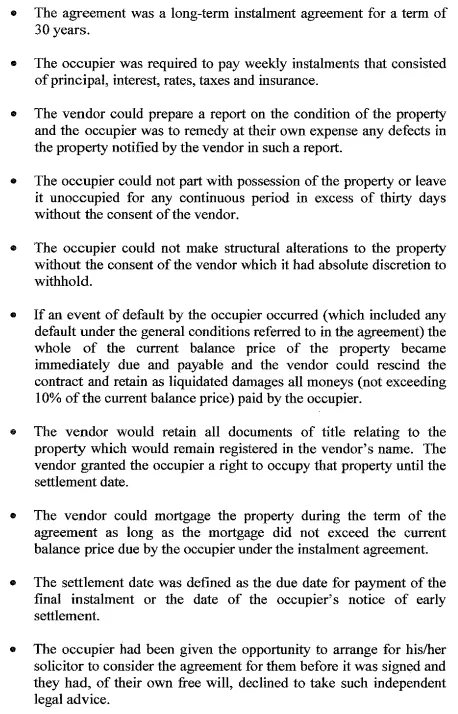
Through such agreements, it can be easy for families to fall behind on their payments, be evicted, or leave the transaction with nothing (or even less) despite the value of the property improving due to market shifts or improvements made by the purchaser (either by choice or by the agreement).
In total, 15 victims were identified who had purchased homes whose prices (as of 2004) ranged from $169,000 to $280,900 before fees. Court documents noted that at that time in Auckland, these homes were at the bottom end of the market. While reparations were ordered, Ashenden’s business structure was labyrinthine, and it is unclear what happened with the reparations. In October 2024, Milne and Wesley-Smith reported that victims did not receive the $182,000 in fines that both the Auckland and Invercargill courts had ordered; Scott Carney was advised by AG1 that Ashenden had paid all reparations by 2014. One victim received $5000 Ashenden was personally ordered to pay, but she did not receive the other $5000 reparation ordered from one of his companies, Meguro.
Ashenden declared bankruptcy in 2010, but insolvency reports showed that three of the creditors were companies in which Ashenden was the sole director and secretary. The bankruptcy was viewed cynically, and not as a true picture of what Ashenden was worth. Ultimately, Ashenden was charged with 43 criminal breaches of the Fair Trading Act, but by then he had moved over to the United States, allegedly dismissed his legal team, and was able to avoid an arrest warrant. He also started selling a supplement called Brainquicken, which was owned by Tim Ferris.
The origins of AG1
Back to the Dana Cavalea interview…
Around the time of the 2008 financial crisis, and the collapse of his business empire, Ashenden was struggling with his health, and eventually ended up at an unnamed clinic in Phoenix. While he doesn’t give the name of the condition, Ashenden describes the diagnosis as his body not absorbing nutrients correctly, with the clinic offering a 100$/day customised supplement regimen. This sticker shock is what led him to seek a more cost-effective way to address his health problems.
The resulting product, the AG1 powder, is a blend of 75 ingredients. While each individual ingredient may be backed by science, the use of the term “proprietary blends” is controversial. Companies use the term proprietary blends to protect their intellectual property, but it can also obfuscate the actual dosage of ingredients and their resulting macros - critical information for the audience AG1 targets. It can also be a means to include large amounts of filler ingredients, something the current CEO denies. What is listed on the label is described as a combination of vitamins and minerals in nominal quantities, and others that are 100 to 1000% the daily recommended dosage. Fortunately, these excessive amounts are not dangerous.
Like most supplements, you will just pee them out.
In Part 2, we will look deeper into AG1, how the company sold influencers on selling their product, and how a New Zealand reporter helped to make it fall apart in 2024.