Not so much Angry as Disappointed and Disillusioned
Mark Honeychurch said that "I may risk another angry email from Lance." He is partly right. But I am not so much angry as disappointed and disillusioned.
Mark Honeychurch said that "I may risk another angry email from Lance." He is partly right. But I am not so much angry as disappointed and disillusioned.
I've just spent a few days away with my family, enjoying being in the middle of nowhere and ignoring my emails - I took my laptop with me, but it stayed in its bag for the entire trip. Now I'm back to reality, and sending this newsletter out a couple of days late as a result of my absence.
In the beginning of May, media outlets were reporting some very alarming news: more newborns were dying from bleeding, often internal. The suspected cause, however, wasn't birth trauma, Covid, infection, or a tragic uptick in infanticide. Instead, it was due to Vitamin K Deficiency Bleeding (VKDB), formerly haemorrhagic disease of the newborn. Fortunately, it is preventable via an injection of synthetic vitamin K called Phytomenadione (or by its brand name, Konakion). The injection is given soon after birth, or the medication can be administered orally with three staggered doses over three weeks. However parental refusal has been a perennial issue with the vitamin K shot since the 1990s and, for this brief piece, I will do my best to provide an overview of the issue. Rest assured, there is no evidence of an increase in VKDB deaths in New Zealand and, in fact, there may not have been any at all. Still, parental refusal of vitamin K can contribute to declining vaccinations, a trend that was studied a decade ago and is in need of an update.
This week I cover the sad news that a local psychic challenge has ended, but with some hope for the future. And last week, the Georgia Guidestones ended their existence after one of them was destroyed by explosives. Thanks to Mark Honeychurch for additional contributions for these items.
I got into a conversation with some people on Twitter over this past weekend, after commenting on an article about people overdosing on vitamin D.
Here are some common medical myths that are easy to dispel:
Can an online quiz give good recommendations for taking supplements? Stuff today published an article about two New Zealand companies that launched recently, Vitally and Wondermins, which each use online quizzes to sell “personalised vitamins”.
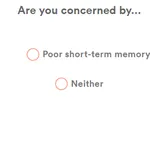
Stuff had an article this week about personalised vitamins. Companies who require you to talk to a dietician before being recommended vitamins have been around in NZ for a while, but two companies have started up in New Zealand recently that recommend which of their vitamins you should take based on online questionnaires.
I'm hoping that the anti-GMO crowd don't sink the new GMO banana before it has a chance to be properly tested. The banana has had genes inserted that allow it to create alpha and beta carotenes, which allow our bodies to create vitamin A, which should help some of the quarter of a million children who die every year due to a lack of the vitamin.
https://www.washingtonpost.com/news/speaking-of-science/wp/2016/06/29/more-than-100-nobel-laureates-take-on-greenpeace-over-gmo-stance/ - http://www.greenpeace.org/international/en/campaigns/agriculture/problem/Greenpeace-and-Golden-Rice/ - http://supportprecisionagriculture.org/
A Southern Cross survey suggested some 1.56m New Zealanders regularly took the products. About 750,000 had done so for at least five years.
Ahh, winter. The season when I stare forlornly out the window, looking at the rain and wind, my pockets filled to the brim with tissues, wondering how it can be that there are so many brainy people in the world and we still haven't found a cure for the common cold.
Vitamin C is essential to human health, but our understanding of its role has been perverted by practitioners of 'alternative' medicine.
The NZ Herald (10-14 January) must have been having trouble filling its pages during the silly season, looking at its recent series on alternative therapies.
Spoiler alert: Don't read if you haven't seen the film Contagion (which I highly recommend) but want to.
Extravagant claims are often made for the health-giving effects of anti-oxidants in the foods we eat. But sorting out the truth from the hype is not at all easy.
I recently spent several weeks motorcycling around southern India and was on the lookout for interesting examples of folk remedies and frauds. Ayurvedic medicine is popular because the remedies are cheap and have a long history of acceptance by ignorant and poor Indians. Middle-class Indians tend to be dismissive of 'Godmen' and Fakirs who can be found near every temple or religious institution but gullible western tourists provide rich pickings. An Austrian woman paid 34,000 Euros for Ayurvedic treatment of her memory loss. It transpired that she suffered from bipolar disorder and after an altercation in a temple she was sent home to Austria and subsequently sued over her unsuccessful treatment. The New Sunday Express Kochi 4 Feb 2007

A drug company has been perplexed at a shortage of Vitamin B12 created by a surge in use. A spokesman for the company said "doctors had so far failed to come up with a convincing explanation" and "Vitamin B12 was also used to treat chronic fatigue syndrome (CFS) and as a vitamin booster."
On Thursday, 19 August 1993, the Christchurch Press carried a full-page advertisement for the initial New Zealand opening of the "Matrol Opportunity".
One of the techniques used by quacks is to attack conventional medicine as being a conspiracy against the laiety.
Is a high-fibre, cholesterol-free, non-dairy diet the answer to one's health problems? It may be for some, but for others it can pose a downright danger.