“You can't give someone insight, you have to let them come to the realisation themself”
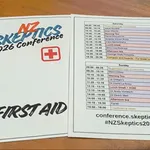
A couple of weeks ago the annual NZ Skeptics Conference was held in Christchurch, and my husband Dan, his mum and I flew down from Taranaki to attend.
A couple of weeks ago the annual NZ Skeptics Conference was held in Christchurch, and my husband Dan, his mum and I flew down from Taranaki to attend.
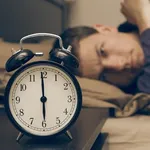
A while ago a work colleague told me that she had a strange connection with a friend of hers, where they had been talking late into the night and found out that both of them would sometimes wake up just before their alarm goes off in the morning, especially if there's something important happening that morning. When I told her that I also have this ability, she was surprised - there were three people all with the same unusual ability. At this point I let her know that this, like many of the quirky things in her life, is likely to not actually be very rare at all - it's just that we don't often talk about these odd everyday things that happen to us.
Ok, the title doesn't really reflect this article as you think it does…
Ending on a positive note (no pun intended) this week, NZ Skeptics committee member Brad MacClure was featured in an article on Stuff about piano tuning, and skepticism. There's a nice write-up and associated video.
Interview with Dr Jane Millichamp, Registered Psychologist and Professional Practice Fellow at the Dunedin School of Medicine, University of Otago
I'm Sheree McNatty, Secretary of NZ Skeptics. I've just been asked by a teen about how Skeptics disprove psychics, paranormal activity and the afterlife. When I was a teen I was interested in finding proof of paranormal and the afterlife. I told enquiring Aunts that I wanted to be a Parapsychologist when I left school. I found the thought of people I had known who have died being somewhere else comforting and I wanted to experience it and prove it. Friends and I had seances, I did Tarot and tea leaf reading and tried mind reading. There had to be something after this left and I wanted it to be real. However, it led me to become a Skeptic as no matter what we tried it wasn't convincing. I also found out there was no point being a Parapsychologist as nobody is going to fund repeated experiments that have failed every time.
How to be a positively skeptically active person, some suggestions
I enjoy a good coffee, a bit of light astrophysics chat with Neil de Grasse Tyson, and spring with its blossoms and daffodils.
Michael Edmonds' article in the latest issue (NZ Skeptic 101) was very interesting, especially laying out the groundwork for non-chemists. If I still had science classes, I would have them all read it and may pass it on to some friends to use.
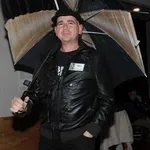
His name is Gold, he describes himself as a post- goth Discordian web developer, and one day soon he hopes to be homeless. He' s also the new chair entity of NZ Skeptics. Annette Taylor finds out more.
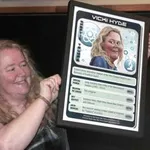
After 17 years as chair-entity of the NZ Skeptics, Vicki Hyde has stepped down. Annette Taylor talks to her about life, the universe and taniwhas.
Gold gives the inside story of the beginnings of Skeptics in the Pub meetings in New Zealand.
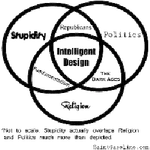
There is no point in being gullible. What is so special about believing things that it is more righteous than questioning things?
Another year, another millennium. We saw the old century out in a very quiet manner, watching Stanley Kubrick's 2001 with friends in Auckland. A few fireworks exploded from the top of the Sky Tower -- and then it was bed time. Given that this was the day when the old century really ticked over, there was far less hooplah this time -- the cockroaches were especially quiet.
There are plenty of things which are better to drink than distilled water, says John Riddell. But then, most of you probably knew that anyway.
That was never six months just then -- it felt much longer. Banised to the depths of New Zealand, in Tuatapere (almost as far south west as you can get in the South Island), life took on a gentler pace. Momentous things did happen -- the stoat population declined by 300 around where we were, and the yellowheads had a successful breeding season.
A respected member of Skeptics passed away at the Hampton Court Rest Home at Taradale, napier, on 29 September last year.
There are three types of people in this country. Those that can count and those that can't. It is common to blame the education system for this.
Winter is here, and it's time for all good skeptics to heed the call and flock to Auckland for the annual conference, where illuminating conversation and inspired addresses await. And then the same good skeptics can generate battle strategies to cope with all the fuss about the Millennium and the imminent end of the world. In the meantime, here's a copy of the Skeptic to read while making these important plans.
A lucrative new career option!
EVERYTHING was roses and buttercups until that fateful day. An omen, it was, for sure. In July, on Friday, only 17 days before the 13th, we had born on our humble dairy farm a calfie. She had four legs, nice black and white patches, a cute butt and two heads, four eyes, four ears and two tongues.
IT'S a damned rotten trick, I know, but I rang up my mum and asked her a simple question, does the Earth go round the Sun, or is it the other way around? She wasn't sure, but felt the most obvious, correct answer was that the Sun orbits the Earth.
One of the interesting things about the Skeptics is the wide range of opinions that can be found in our group -- not to mention the ever-readiness to express them. So I was interested to read Frank Haden's column on the conference and how he found it.
Back in March, when the police seemed to be making no progress in hunting down South Auckland's serial rapist, a community newspaper ran a story effectively chiding the police in general and Detective Inspector John Manning in particular for taking no notice of the advice being given him by one of Auckland's leading clairvoyants, Ms Margaret Birkin, who has her own programme on Radio Pacific.
This is a Feynman Commencement Address given by Richard Feynman at Caltech in 1974. This message is as relevant today as it was 20 years ago, especially for those who add their committed "science" to the cause of apocalyptic environmentalism.
While critical thinking is an essential part of the defence against pseudo-science, general knowledge also has an important role. The more knowledge you have about more things, the better equipped you are to detect the propagation of nonsense. However, the authorities may not be so concerned. > > The following item is based on a broadcast on National Radio's Sunday Supplement on 13 August 1989.
MAGNETIC HEALING AND OTHER REALITIES, by Colin Lambert (Moana Press, $24. 35), Reviewed by David Riddell.