All tags

Articles tagged with "explanation"

The Psychosocial Hypothesis for UFO origins
The Psychosocial Hypothesis for UFO origins

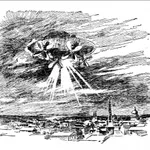
Most unidentified flying object (UFO) reports have mundane explanations. Celestial objects such as Venus or Jupiter, aircraft lights, balloons, and a host of other misperceived things seen in the sky. These stimuli, seen through a society's cultural and psychological lenses, suggest the presence of an unusual emotional climate which distorts perceptions and the perceived significance of merely terrestrial phenomena. Through time we have observed many different explanations for lights in the sky. In the late 1890s, hot air balloons were often sighted, and in the early 1900s airships were the go-to explanations. Numerous sightings in Australia and New Zealand were explained away as airships in the article Crowded skies by New Zealand Geographic, including a famous one in the then small Otago town of Kelso, in 1909.
South Island UFO

South Island UFO

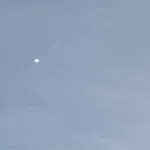
Jonny Grady, a long-time committee member, sent an image he'd taken of a “UFO” to the committee last week:

UFOs and the Pentagon

UFOs and the Pentagon

NZ Skeptics occasionally received email asking about skeptical topics:

Triangular UFO “mystery” solved

Triangular UFO “mystery” solved

An interesting video has appeared on YouTube which gives a rational explanation for a UFO video taken by US Navy personnel.

UFOs over Melbourne?

Disappointingly, despite the excitement, I'm sure many listeners will already have figured out what the rational explanation for this string of lights in the sky over Melbourne was: Elon Musk's Starlink, a company that is providing satellite based internet - with a few tens of thousands of satellites planned to be deployed over the next few years. There are valid questions about whether these devices are damaging to astronomy, and have the potential to clutter earth's orbit, but they're definitely not visiting aliens. If you are able to get out and see these satellites as they maneuver themselves into their operational orbits, I'd definitely recommend it. I saw them late last year, and it was an impressive sight - a real testament to modern technology.

Spontaneous Human Combustion in London

In September, a 70 year old man apparently burst into flames in London. It's a sad event, and a horrible way to die. The press have started calling it a case of Spontaneous Human Combustion - the idea that people sometimes just randomly burn.

Resistance to science

Alison Campbell reviews a study of why so many struggle with scientific concepts.

Basket Case, or The Affair of the Disembodied Head

Basket Case, or The Affair of the Disembodied Head

EARLY in 1996 Mrs Carol McDonald and her family of Halswell, near Christchurch, were party to an apparent supernatural event, an event that became quite topical at Mrs McDonald's workplace, the Canterbury Agriculture and Science Centre at Lincoln. This centre is home to a number of Crown Research Institutes, including the home offices of Landcare Research Ltd. and Crop and Food Research Ltd., branches of AgResearch and HortResearch, and a number of smaller organisations.

Comets

THE other day I was doing a spot of painting with the help of a friend. She was telling me about a fancy dress party she'd gone to, and how some friends had dressed up all in green, as aliens.

Playing with Fire

AROUND 40 years ago, at Hull Fair in England, I saw a man dip his fingers in molten lead. He also poured it into his palm and ran it through his fingers. He seemed to suffer no harm although it was real lead; I found a solidified splash and checked. In my vacations I used to work for one of the showmen at the fair, so I found my boss. "That fellow with the molten lead, why doesn't he burn his hands?"

Helping Students Understand

Malcolm Carr, from Waikato University's Centre For Science, Mathematics & Technology Education Research, talks to Annette Taylor about the nature of science education and the new science curriculum following his address at this years' conference.

The Forest of Flying Sheep

It is rare that Nelson interests the world's news media. The "sheep suspended from pine trees" story was sufficiently bizarre to get their attention.

Magician Appears

On 8 February 1994, Professor Clyde F. Herreid, Department of Biological Sciences, University of Buffalo, gave a talk in the Department of Zoology, University of Otago entitled "The Magician as Skeptic". Notices were circulated to zoology staff and senior students, other university departments, and to local skeptics. Some 40 people thoroughly enjoyed the talk. Professor Herreid demonstrated, using a variety of magical tricks, how important it is that a natural explanation should always be sought for an apparently paranormal phenomenon. If such is not immediately forthcoming, any attempt at an explanation should be held in abeyance.

Fossil Man Tracks in Texas Officially Rebuked

The Creationists' tactics in getting their ideas accepted are not to promote their own (the biblical) version of creation but to attack the "orthodox" scientific view. A constant barrage of criticism of evolutionary theory and of geological theories on age and origin of the earth (and universe) is levelled with the aim of discrediting the theory or theories. Then, with a nimble leap sideways, it is concluded that "The Alternative" explanation is just as likely to be true, "the alternative" being of course the Genesis account. This ploy cleverly presents the biblical account as a viable alternative to an existing scientific theory thereby conferring upon the account the status of an "alternative scientific theory" and obscuring its real nature—that of a religious notion. This constant attack forces scientists into a defensive position—defending their theories by rebutting the creationist arguments.

Statement of Aims

The New Zealand Committee for the Scientific Investigation of Claims of the Paranormal (inc.)

Aims of the New Zealand C.S.I.C.O.P.

To investigate scientifically and with an open mind, claims and events of an apparently paranormal nature. 2. To report the results of these investigations and where possible, to provide rational, scientific explanations. 3. To provide reliable information about paranormal claims. 4. To encourage a more critical attitude to pseudoscience and to bogus paranormal claims, and to alert people to the dangers of uncritical acceptance. 5. To increase public awareness of the difference between legitimate science and pseudoscience. 6. To investigate the psychological, social, and ideological factors behind belief in the paranormal.