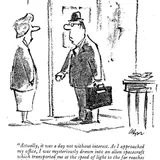
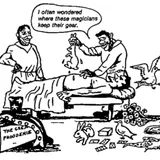
The abuse of the Skeptics as "arrogant, narrow-minded bigots" by defenders of Consumer is annoying, but it doesn't yet surpass an art teacher who wrote an article for a Wellington paper in 1986. Overseas -- or rather underseas -- skeptics, he warned, had once tried to disprove ESP by going down in two submarines. In one, skeptics rushed baby rabbits to death, while in the other submarine skeptics measured the reactions of their mother to see if she was getting the terrible psychic vibes. Despite her pathetic shudders, delivered on cue, those awful skeptics still wouldn't believe in ESP!
I was struggling with the vacuum hose to reach an awkward corner of the kitchen.
Simon Upton, the Minister of Health, recalls a childhood and adolescence without television, and warmly welcomes the "Great New Zealand Television Turn-Off"
Fundamentalists suffer contortions in trying to make their assumptions fit Biblical accounts.
…
In August 1989, the Christchurch Press published two articles from The Economist which were highly critical of "scientific" creationists and their "discipline". The articles sparked a correspondence under the heading "Evolution", which attained Guinness Record proportions — 118 letters, involving 52 correspondents over 86 days.
The Lancet article on survival of patients with breast cancer attending the Bristol Cancer Help Centre (BCHC) has provoked widespread comment and badly shaken the confidence of those who believed that, at the very least, complementary therapies in cancer couldn't do any harm.
On Thursday evening, 26 June 1990, a large number of members and friends gathered at the University of Canterbury Staff Club in Christchurch, to hear Prof. T.W. Walker, late of Lincoln University, talk on Organic Gardening.
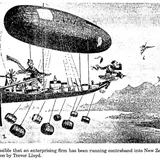
An intention to celebrate the New Zealand Sesquicentennial with a series "Great Paranormal Moments in New Zealand History" has been abandoned. Readers may, however, be interested in the following item from "100 Years of News', a publication of the New Zealand Herald on the occasion of its centennial in 1963.
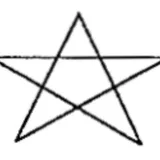
The above is a suggested logo for NZCSICOP. It was designed by a Wellington Skeptic, Hugh Young. Hugh has provided the following commentary:
The 1989 Annual General Meeting of NZCSICOP was held at the Science Lecture Theatre, University of Canterbury, Christchurch, on 3 September 1989.
This will be the last editorial that I write as in September, my wife and I will leave for Thailand, where we shall be doing voluntary work. The first issue of the Newsletter went to 80 members, the last one went to 180 (with another 55 going in bulk to the U.S.A.). Such growth in just over 3 years is very gratifying and the credit for that belongs to our members who have so faithfully sent in articles and cuttings. (Especial thanks to Malcolm McCleary who has just sent me more material on the infamous Time Life series of loony books. $35 a throw). I am not naturally efficient, and if I have failed to use your contribution, I apologise. It was my policy to use everything sent to me and if I failed in this it was not intentionally. Thanks are also due to Mark Davies and his gang at Vic who, apart from the first few issues, typed out the material, duplicated it and stapled it together. If you look back over the past issues, you can immediately tell when Mark took over by the startling improvement in the layout and appearance of the newsletter.
Thanks again to members who have sent me material. I now have so much, that for the first time, I shall have to hold some over until the next issue. Thanks to H. Ruis of Tokoroa who kindly sent me the reply from Irene F. Hughes. It now appears that the psychic never visited N.Z. at all and her facilities are only available from her Chicago office and not from Auckland. She was not willing to send out copies of her citations for crime busting.
THE Lotteries Commission has been accused of tacitly supporting crackpot lucky number schemes to boost the sales of Lotto tickets.
Book Review of “Astrology; The Evidence of Science”, by Percy Seymour (Lennard Publishing, £12.95).
Extract From Act of God by F. Tennyson Jesse, a novel published in the 1930's.
We recently received through the kindness of skeptic Malcolm McCleary information on the thought of Barry Long. It comes from the "Barry Long Centre (NZ)" in Auckland. Mr. Long is an Australian who left his career in journalism and PR "when he started to question the purpose of his life. He was made aware that the truth or spirit was entering him and directing his life."
I had intended to make this issue one devoted to the conference and was going to reprint all the talks and discussions there. However the conference was such an overwhelming success and there was such a fine attendance, that it would be a waste to reprint what so many had heard in person. I therefore asked all those who spoke to give me their second thoughts on their talks, the things they meant to say but forgot, the replies they would like to have made in the discussions, the witty rejoinders that came to them in the middle of the night after we had all gone home. Most of the speakers have had nothing to add but I should like to make a correction to the impression left with my hearers.
You know those little white areas you don't see at the bottom of newspaper columns, it would be nice if we could avoid them here too. Were it not for this message you would be looking at a blank (possibly shaded) space. In order that this catastrophe be avoided in future issues we make the following appeals:
Peter Dady, MD, MRCP, Director, Oncology Department, Wellington Hospital.
Since ancient times, alternative healing methods have been used by medical practitioners and spiritual adepts to soothe the irritation of body and soul. Many people today are drawn towards the mystical and transcendental as alternatives to orthodox methods. Before people condemn these alternatives, they must look carefully at them, not shutting their eyes to the unsatisfactory and disastrous results that happen when they have ignorantly employed. For those wanting to channel their research into the area of alternative medicine, I give a list of practices currently being carried on in New Zealand.
Faith healing, like the fundamentalism it is often associated with, is a generic term, rather than a specific one. The New Guinea tribesman consulting a witch doctor for a potent spell to cure him, the quiet prayer meeting for a friend in hospital, the Indian girl who immerses herself in the waters of the Ganges to aid her infertility are all exercising faith healing. The oft- reported efficacy of placebos on people suffering from chronic pain serves as a reminder that the power of faith may sometimes outdo rational, modern medicine.
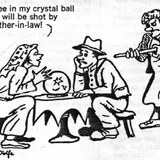
An Auckland astrologer who predicted the space shuttle accident says the American space shuttle accident says the American space programme will face further disasters this year.
A Christchurch doctor, Dr Robert Blackmore, who uses the same diagnostic method for alleged chemical poisoning as Dr Tizard, would like the method to be scientifically validated.
To investigate scientifically and with an open mind, claims and events of an apparently paranormal nature. 2. To report the results of these investigations and where possible, to provide rational, scientific explanations. 3. To provide reliable information about paranormal claims. 4. To encourage a more critical attitude to pseudoscience and to bogus paranormal claims, and to alert people to the dangers of uncritical acceptance. 5. To increase public awareness of the difference between legitimate science and pseudoscience. 6. To investigate the psychological, social, and ideological factors behind belief in the paranormal.