Alison Campbell
37 articles
29,946 words
(809 words per article)
Years Published: 2005 - 2020
Alison Campbell is a lecturer in the Biological Sciences Department at Waikato University. She writes Bioblog as a way of encouraging critical thinking, looking at scientific papers that are relevant to the Level 3 curriculum and Scholarship, and fielding questions from readers.
1 May 2020 - Approx. 5 min read
In the last couple of days I've seen a lot of individuals and pages share links to a trailer for “Plandemic”. And I've had friends ask me what I think of it. They've commented that it looks and sounds pretty 'sciencey' but wanted another opinion. So, I had a look, and here goes.
1 November 2019 - Approx. 3 min read
Recently I came across the claim that cystic fibrosis (CF) can be cured by diet.
1 August 2019 - Approx. 4 min read
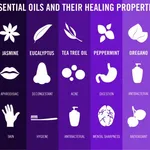
A story about essential oils being used in classrooms https://tinyurl.com/y5vs9pvo hit the headlines on 30th March.
1 May 2019 - Approx. 3 min read
One of the myths (and there are a lot of them) continually pushed by those opposed to vaccination, is that “the MMR vaccine causes autism” – often coupled with claims that “there are no studies comparing the health of vaccinated & unvaccinated children”. (That's another myth, by the way.)
1 November 2018 - Approx. 6 min read
There's a lot of rhetoric these days around educating students 'for the 21st century', and the need for '21st century skills', while (not always but often) disparaging what is currently taught & how it's delivered. Catherine Kelsey has a good op-ed. on this https://educationcentral.co.nz/response-catherine-kelsey-21st-century-skills-debate-unhelpful/ on the Education Central site, https://educationcentral.co.nz/ in which she comments on two other opinion pieces that I - like her - had found somewhat polarising in their approaches (see here https://educationcentral.co.nz/opinion-briar-lipson-could-the-route-to-skills-be-counterintuitive/ and here https://educationcentral.co.nz/response-steve-morris-in-defence-of-21st-century-skills-hogwash/), and says:
1 August 2018 - Approx. 4 min read
I've written about MMS - the "Miracle Mineral Supplement" - several times beforeA (here *and here*, for example). I guess it's a useful thing to hold up to show how something can clearly be woo - eg claims that it kills/cures practically everythingB under the sun - and yet people still buy the stuff. Buy it, and potentially do real harm using it. Because MMS is essentially bleach: 28% sodium chlorite in distilled water. Those using it typically 'activate' it by mixing it with lemon or orange juice, which gives the strong bleach, chlorine dioxide. And then they drink it, or - even worse - feed it to their children...
1 February 2018 - Approx. 3 min read
Raw water - the latest foolish fad to hit people's screens, pockets, and in some instances I'd guess their toilet paper expenditure as well.
1 November 2017 - Approx. 3 min read
I rather like our local supermarket. Lovely staff, generally excellent products, and close to home as well.
1 February 2016 - Approx. 3 min read
A friend recently pointed me at a post on healthnutnews (which reads a bit like an offshoot of mercola.com – this, it turns out, is hardly surprising). It's been a while since I've read anything so full of total nonsense – well, a few days, anyway!
1 November 2015 - Approx. 3 min read
The internet is a seething pool of 'stuff ', and one of the challenges faced by those using it is to distinguish useful information from foolish fantasy. And there surely is a lot of the latter! Thus we find that...
1 August 2015 - Approx. 2 min read
Pheromones. I'll admit that when I hear the word, I immediately think of sex. That's probably because the first pheromone ever discovered, in 1959, was the chemical that female silkworm moths use to attract a mate. Since then, sex pheromones have been identified in many species, from insects to fungi to birds.
1 August 2015 - Approx. 1 min read
I've heard it said more than once that complementary and alternative medicine (CAM) 'does no harm'. I suppose that could be true of a healthy person using something like homeopathy, where the only harm is likely to be to their wallet. But time and again, forms of CAM have been shown to do harm, and now we hear of another tragic, and fatal, case.
1 May 2015 - Approx. 2 min read
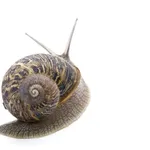
Sunday 26 April's Life/Style section in the NZ Herald (see Newsfront p6) brings us the latest 'beauty trend' to hit our shores: the snail facial.
1 February 2015 - Approx. 3 min read
Apparently 80% of people in the USA think so, according to a Washington Post article that's been all over Facebook in the last few days. That is, 80% of those polled in the regular Food Demand Survey (by Oklahoma State University's Department of Agricultural Economics) agreed with the proposition that all food containing DNA should be labelled. (To put this in context, there is currently a heated debate in the US – driven by those opposing the incorporation of material from genetically-modified organisms into the food chain – over whether such foods should be labelled as such.)
1 November 2014 - Approx. 4 min read
The discovery of how the stomach bacterium Helicobacter pylori was found to be responsible for gastric ulcers is a classic tale of revolution in scientific understanding. But the full story is far more complex - and only part of an emerging appreciation of the role played by our microbial fellow-travellers. Alison Campbell explains.
1 May 2014 - Approx. 3 min read
Alison Campbell looks at the Accelerated Christian Education curriculum.
1 February 2014 - Approx. 3 min read
Alison Campbell learns some interesting facts about water chemistry
1 November 2013 - Approx. 3 min read
Alison Campbell reviews Charlatan: America's Most Dangerous Huckster, the Man Who Pursued Him, and the Age of Flimflam, by Pope Brock. Three Rivers Press, New York.
1 August 2013 - Approx. 3 min read
Alison Campbell thinks there are better ways to lose weight than one recently touted option.
1 May 2013 - Approx. 2 min read
Alison Campbell has been spending time on Facebook recently.
1 November 2012 - Approx. 2 min read
… then there's little hope for the world, says Alison Campbell, who attends far too many meetings. Fortunately however, that may not be the case.
1 August 2012 - Approx. 8 min read
There may indeed be a place for creationism in the science classroom, but not the way the creationists want. This article is based on a presentation to the 2011 NZ Skeptics Conference.
1 May 2012 - Approx. 5 min read
Alison Campbell considers the current state of tertiary education.
1 February 2012 - Approx. 3 min read
Alison Campbell learns how to fine-tune the universe with a didgeridoo.
1 November 2011 - Approx. 4 min read
Alison Campbell investigates alarming reports on what is living in our dishwashers.
1 August 2011 - Approx. 2 min read
Alison Campbell looks at a new 'resource' for New Zealand schools, helpfully provided by the creationist movement.
1 May 2011 - Approx. 4 min read
Alison Campbell reviews a study of why so many struggle with scientific concepts.
1 February 2011 - Approx. 3 min read
Alison Campbell finds the creationists are still trying to get into our schools.
1 November 2010 - Approx. 3 min read
Alison Campbell finds some claims about raw foods hard to swallow.
1 August 2010 - Approx. 3 min read
While in the gym, Alison Campbell considers some health issues.
1 May 2010 - Approx. 3 min read
Alison Campbell looks at some words that cause scientific misunderstandings.
1 February 2010 - Approx. 2 min read
Alison Campbell ponders the evolutionary significance of lolcats.
1 November 2009 - Approx. 2 min read
Alison Campbell considers the evidence for the efficacy of parachutes.
1 August 2009 - Approx. 2 min read
Waikato University biological sciences lecturer Alison Campbell posts a regular blog on matters biological (sci.waikato.ac.nz/bioblog/). Her aim is to encourage critical thinking among secondary students. We think these need sharing.
1 November 2008 - Approx. 16 min read
If students are to pursue careers in science, they need to be able to see themselves in that role. One way to encourage this may be through the telling of stories. This article is based on a presentation to the 2008 NZ Skeptics Conference in Hamilton.
1 November 2007 - Approx. 7 min read
The teaching of evolution in New Zealand schools may seem secure, but it has faced many challenges, and these appear to be on the increase. This article is based on a presentation at the Evolution 2007 Conference, Christchurch.
1 May 2005 - Approx. 4 min read