Grey Matters: The myth of frontal lobe maturation
Bronwyn Rideout - 23rd November 2026
The past few years have seen the debunking of a popular myth about the maturation of the brain, particularly the frontal cortex, stopping at the age of 25. You would have definitely heard it in various popular media (especially in relation to Leonardo DiCaprio’s roster of younger girlfriends), and maybe in your high school science class. My preliminary research indicates that this is a new myth (with caveats), but its application by society, the justice system, and other public institutions requires reevaluation.
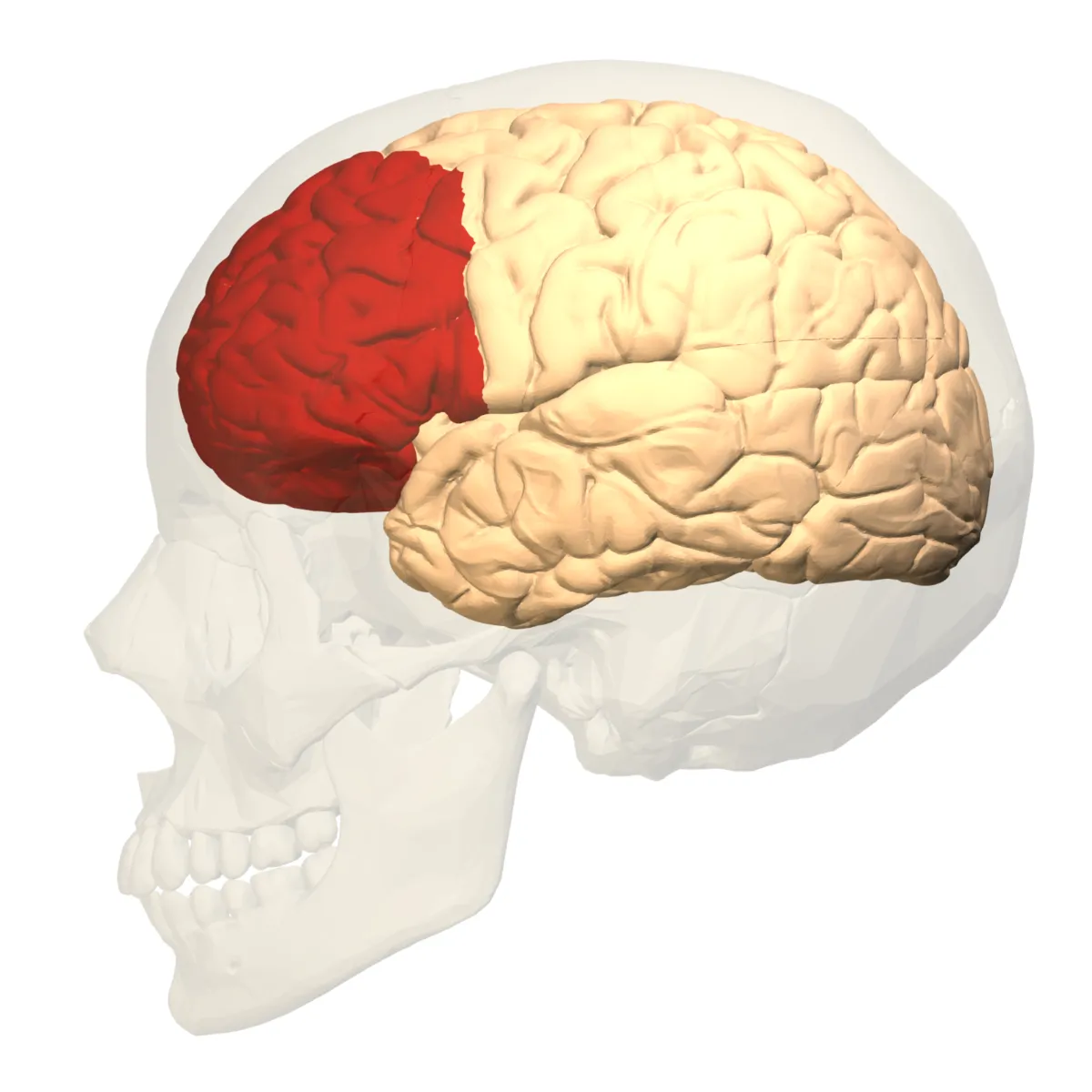
The myth is surprisingly recent, with supporters and debunkers amalgamating neuroscience research from the early 2000s. The first study that is commonly mentioned is a 1999 publication by Jay Giedd that analysed nearly 250 MRI scans from 145 participants between the ages of 4.2 and 21.6 years of age. The study found that grey matter in the parietal lobe peaked between the ages of 10-11, the frontal lobe likely peaked around ages 11-12, and 16 years for the temporal lobe; the occipital lobe was the standout, as grey matter continues to grow there through a person’s 20s. The reduction of grey matter is called synaptic pruning, and is a process that occurs at multiple points in the first 3 decades of life, not just in post-adolescence. The second study noted was led by Nitin Gogtay, and looked at a subset of 13 children from Giedd’s study. The children were scanned every 2 years from 1994 to 2004. Gogtay found that while the frontal and occipital poles matured first, the “…remainder of the cortex developing in a parietal-to-frontal (back-to-front) direction…” with the superior temporal cortex maturing last. However, a hard line of maturation finishing at age 25 is not mentioned in either article, and the research design does not support such an inference. Editors of the respective Wikipedia page suggest that it might have emerged from an interview Giedd did for the 2004 Time Magazine piece What makes teens tick, in which Giedd contemplates that if he were to repeat the study, he would follow study participants to the age of 25 rather than 18 or 20; 25 was always just an estimation, not an evidence-based fact, but this explanation feels quite weak.
I skimmed through some high school health textbooks and texts regarding the health of high schoolers, to see if there was some historical precedent that had been overlooked. Certainly my search was not exhaustive, but the timeframes and geographical regions I drew from so far support the implication that the myth came to be in the early 2000s, as biological mechanisms for maturity and decision-making were not presented. What I instead saw were applications of theories of identity development, like Donald Super, where the ages of 24-25 appear to be an arbitrary demarcation for achieving social and economic stability after some attainment of vocational status or tertiary success. Maybe I am barking up the wrong tree; I should take a page from the American College of Pediatricians and give credit to Shakespeare’s deft eye for the failings of man:
“I would there were no age between ten and three and twenty… For there is nothing in the between but getting wenches with child, wronging the ancientry, stealing, fighting.” (The Winter’s Tale, Act III, Sc. iii)
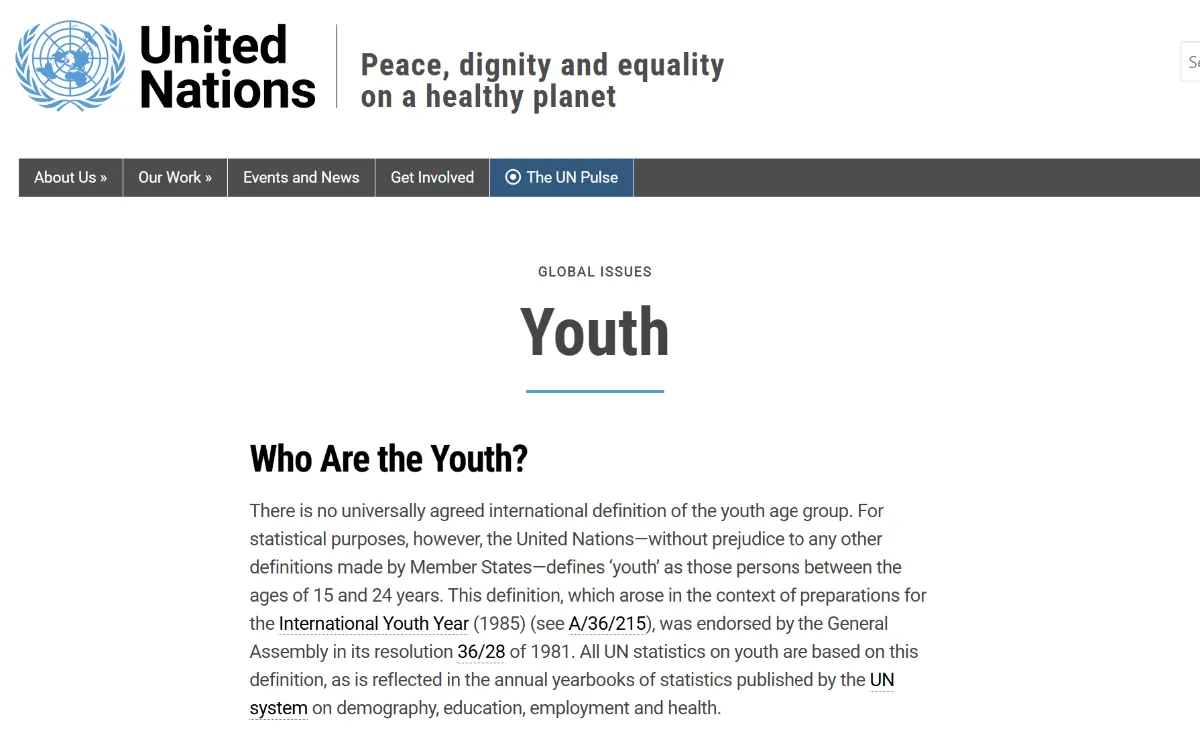
The controversy around brain maturity is, in the end, entangled with the nebulous concept of ‘youth’ as a demographic, statistical category and social concept. I won’t delve into that debate/history in this article, but I will note that the governments of New Zealand, the United States, the UK, and Australia, as well as the UN, define youth or young people as between the ages of either 12 or 15 and 24. It is certainly possible that the concept of brain maturity happening at approximately age 25 is a natural melding of when one has to check a new box on government forms.
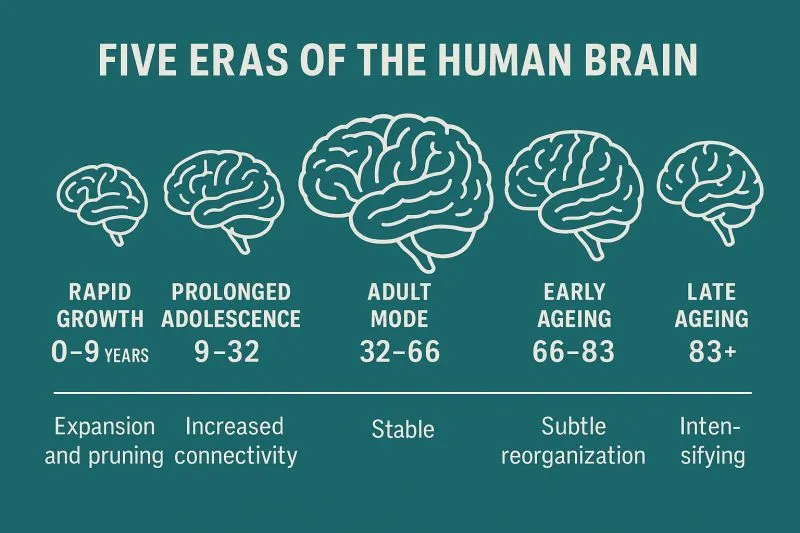
This myth was further scrutinised in 2025. A far more substantial study published by Mousley et al. which scanned 4,200 brains of people ages 0-99, found 4 major topological turning points, or maturation points, across the lifespan at ages 9, 32, 66, and 83 years old. The epoch that begins at age 32 is believed by researchers to continue through to the next epoch at 66, and is characterised by slower white matter maturation and less complex topological changes than previous epochs, “… with clear increases in segregation and decreases in efficiency”.
So, what’s the big deal? The preoccupation with brain maturation is due to the role of the prefrontal cortex - it drives higher-level thinking skills like planning, decision-making, impulse control, problem-solving, and emotional regulation. It sounds logical to make this the scapegoat for every bad decision you made on Courtney Place or the Strip in pre-earthquake Christchurch. The belief in this myth has permeated into unexpected corners. The Wikipedia page for this myth notes Laurence Steinberg, a developmental psychologist, for his related work. While Steinberg believes maturity is somewhere between the ages of 15-22, he still advocates for reasonable sentencing for young people in both the juvenile and adult justice system, on the basis of their immaturity and under-developed sense of self-control; Similar arguments are also made in New Zealand-based reports. Brain maturity is also brought up in debates about voting, although the argument at hand is whether the voting age should be lowered. At times, I’m reminded of this classic sketch from The Young Ones.
But it’s not all jokes. On the darker side of things, Jane Hu, writing for Slate, points out that the myth is also being used to deny gender affirming care.
Despite the debunking, social media users (Gen Z in particular) are being blamed for reinvigorating the myth. Sophie Pellar, writing for McGill’s Office of Science and Society, surmises that the oldest of GenZ might find comfort in this myth as a means to make sense of today’s economic and political turmoil, and to justify a bit of retail therapy. An unnamed writer for the blog NSSG Club pushes this narrative further by suggesting that the myth provides a new, but also comforting, goal post for the young adults who missed key milestones or social development opportunities due to COVID. Here’s to hoping that emerging neuroscience continues to reveal more fascinating truths about the brain, and continues to dispel this myth.
2026-11-23