The Fun Police: Light Party haters
Bronwyn Rideout - 27th October 2026
In 2023 I wrote a gentle ribbing of New Zealand’s annual transformation into Halloween grinches. At the time, I was surprised to discover that Light Parties were likely a New Zealand invention. For the uninitiated, Light Parties are promoted as a more positive, Christian alternative to their obnoxious, American cousin. They’re like a Sunday School session with more candy: they’re held in the daytime, scary costumes are discouraged, and there may be a Christian crossword or two involved.
Three years later, no one else has staked a claim as the inventor of the Light Party beyond Wendy Reid. Looks like we have another world first - up there with number 8 wire, Pavlova, and summiting Mount Everest.
But, finally, at least one Christian organisation in New Zealand is pushing back against Light Parties - for being unchristian:
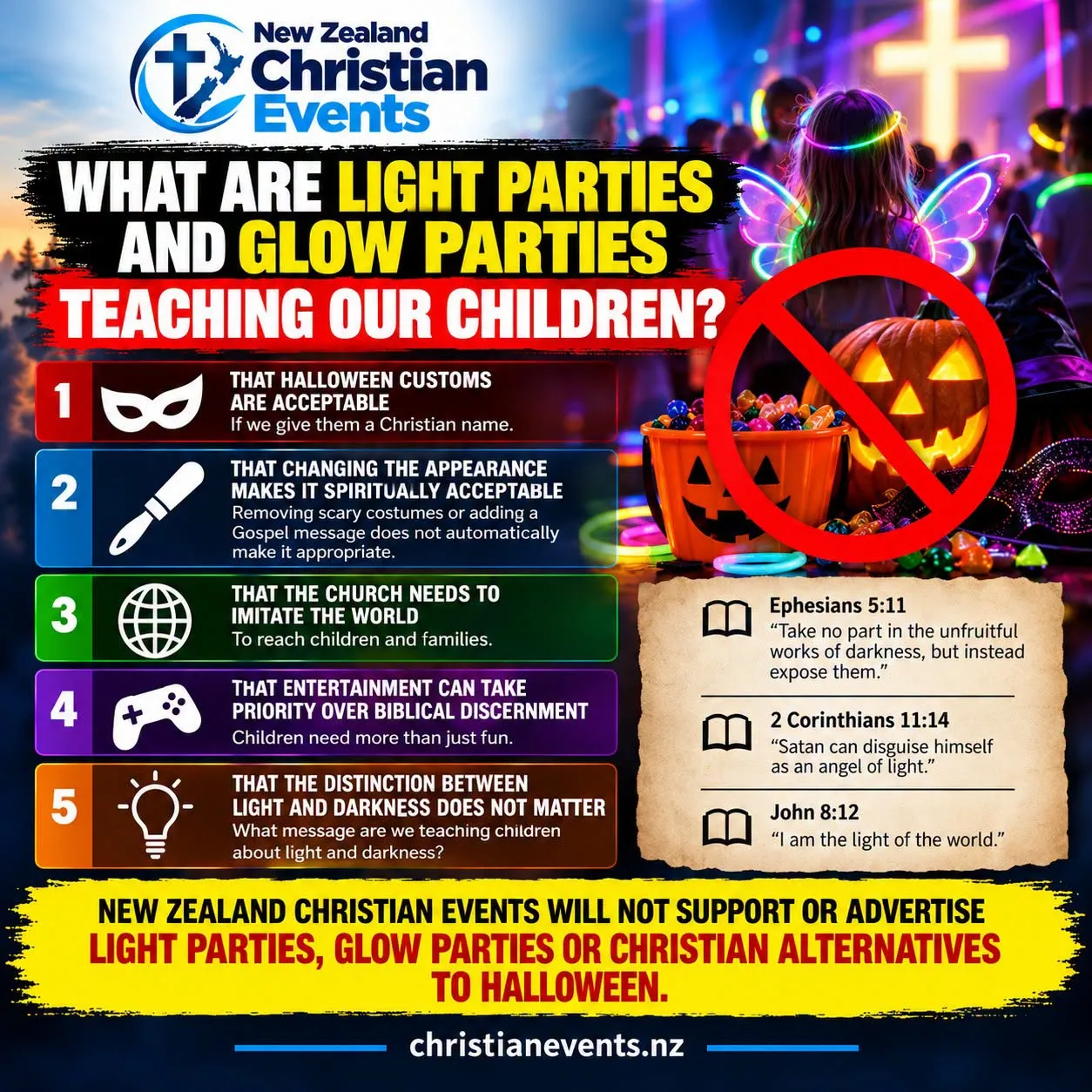
Source - Christian Events NZ, putting the Funeral in Fun.
Given some of those bible quotes, I wonder if Christian Events took inspiration from the NZ Skeptics:
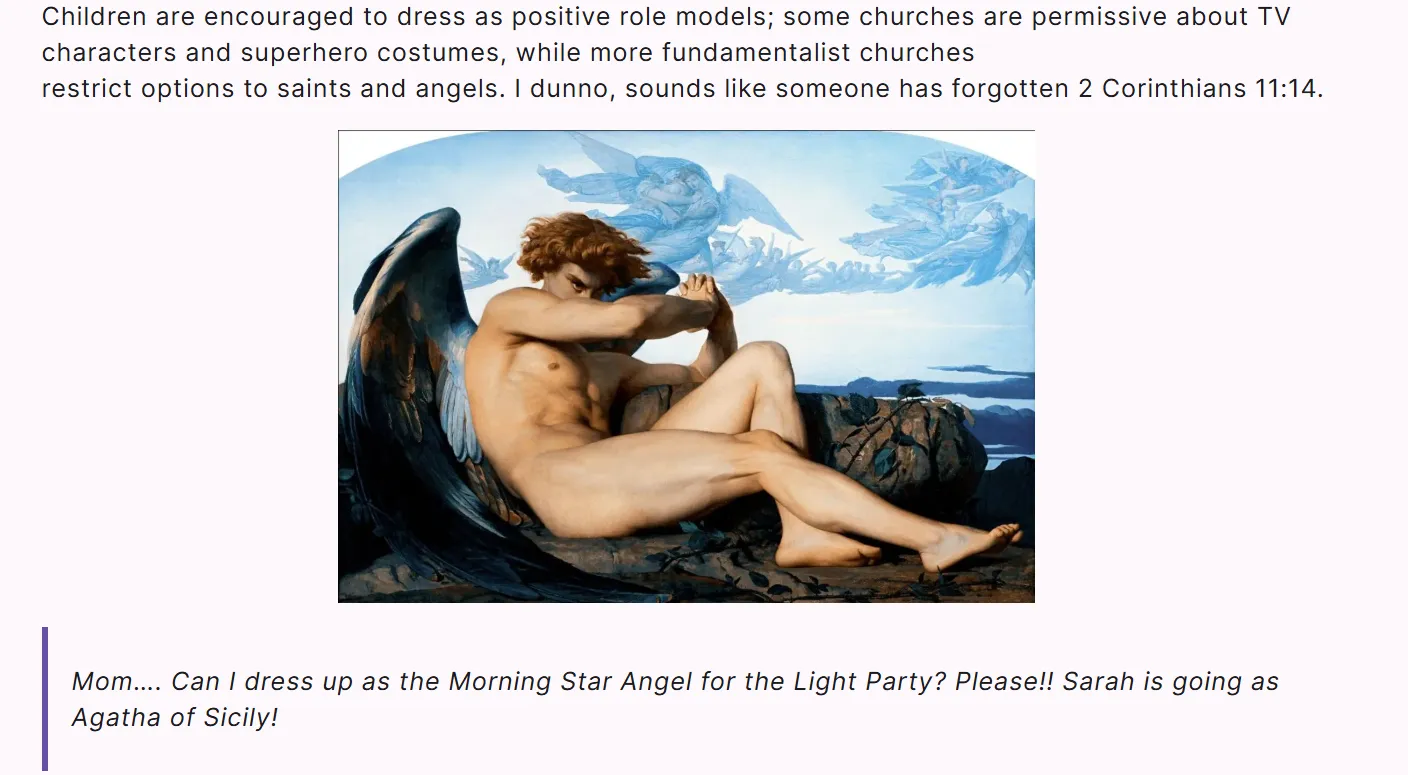
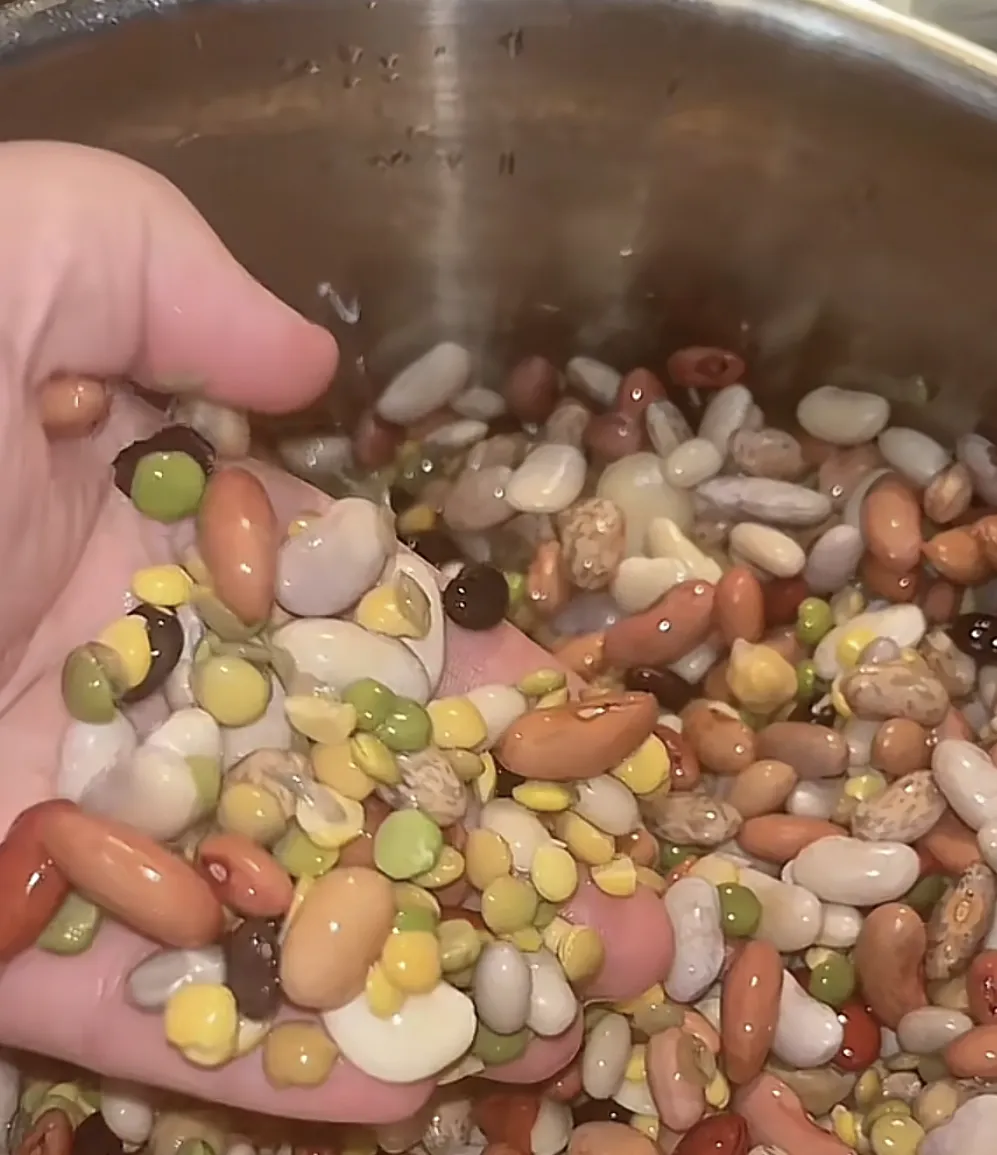
Their concerns that Light Parties flanderise Halloween for Christian palates, while masking the holiday’s darker elements, are not unique concerns. But it has been interesting to watch some debates unfold in the comments across two Christian Events posts, because some of the comments remind me of The Bean Soup Theory, albeit in reverse. For readers not familiar with this idea, The Bean Soup Theory is a social media phenomenon in which the original context of a social media post is ignored, with commenters steering the conversation to their own interests or needs. The incident from which the phenomenon gains its name involved a TikTok video featuring a vegan bean soup recipe that was high in iron:
https://www.tiktok.com/@vibingranolamom/video/7268790997948124458
The audience’s demand for increasingly obscure dietary accommodations from the content creator inevitably led to someone asking, “What if I don’t like beans?”. Given the amount of beans in that soup, it’s unsurprising that the near universal response has been that the commenter may want to find a different soup recipe.
In the case of Christian Events, the organisation makes it clear that churches shouldn’t need to replicate the real world by using Light Parties as a means to bring families into their congregations; apparently a Light Party does not accurately reflect the teachings of the church and of Jesus Christ.
Would you be surprised if I told you that, despite such a clear stance, the comments sections of the Christian Events still attracted people who could not keep their “Yeah, buts…” and whataboutisms to themselves. As a skeptic, I’m not complaining about the content of these counterarguments, but the critique is valid.
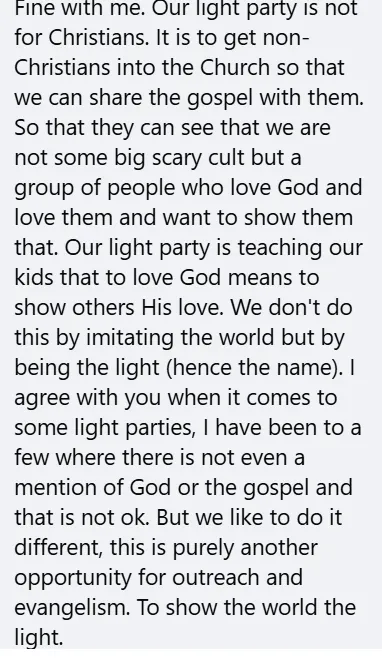
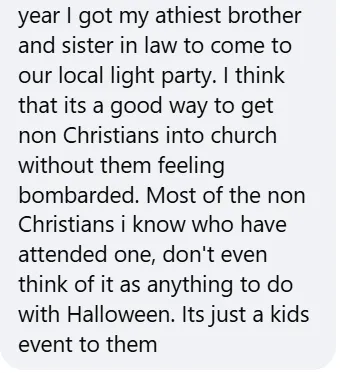
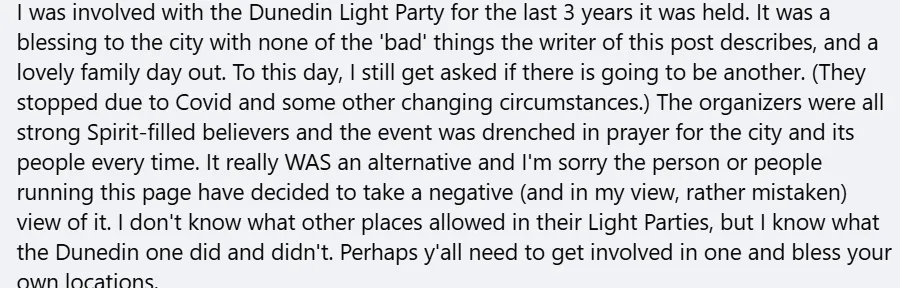
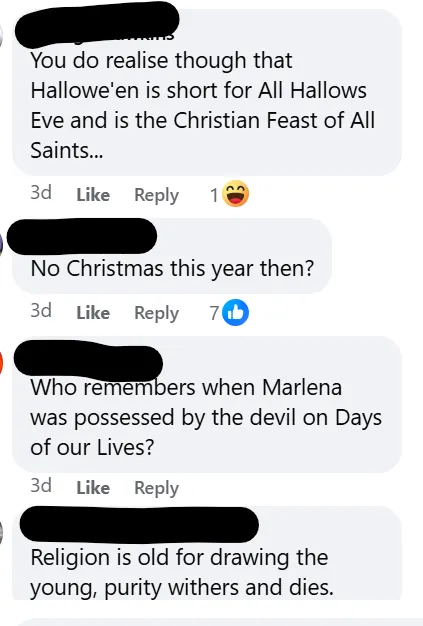
Other commenters quickly reminded Christian Events that even the presumably “lighter” Christian holidays have pagan origins. I’d argue that there is also something dark about celebrating a crucifixion, but to each their own…
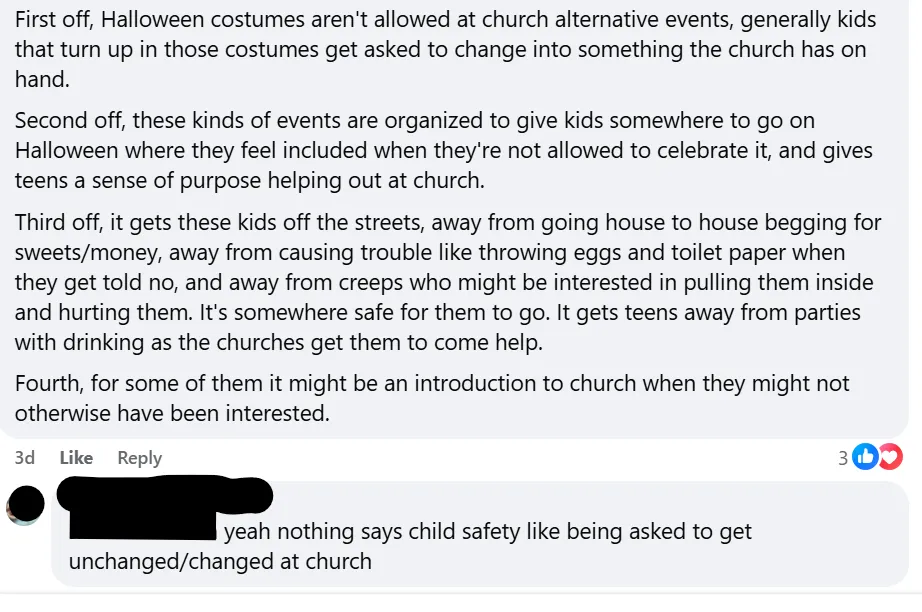
For all the fun and chuckles we can have at the expense of others, there is some evidence of the “in the world, not of the world” rhetoric that is rife in some corners of Christian culture. It is a worldview that frames anyone and any society outside the confines of the church as a threat, while being woefully 20+ years out of date and even inaccurate for New Zealand.
An analysis of child sex crimes in the United States published in 2009 looked at 67,045 nonfamilial sex crimes against children aged 12 years and younger between 1997 and 2005. Halloween rates were “…compared with expectations based on time, seasonality, and weekday periodicity”. Researchers found there was no increased rate just before or on Halloween, nor did assaults on Halloween have unusual characteristics. These findings led the authors to question the logic behind diverting police resources to monitor or prevent a problem that does not exist.
I had a North American upbringing, and I actually see great value in police resources being invested this way, but not for the reasons some might presume. The pre-Halloween school assembly on safety during the prime trick-or-treating years was the only time the Police were visibly present in schools until High School, when they were trying to get us to say “No” to drugs. To be fair, a portion of these assemblies were about letting mom and dad check your candy first (something which Katrina is exploring elsewhere in this newsletter), but it was also about appropriate costume choices to ensure that we could see properly, and didn’t fall on our faces or suffocate to death. Stranger danger was also addressed, and the expectation was that either we were travelling in packs, or with a trusted adult. That’s a pretty hefty safety message to push onto 5-6 years olds, alongside memos to parents about safe trick-or-treating. It’s a merger of community and civic expectations about child safety on Halloween that is really underappreciated by anti-Halloween New Zealanders, in my less than humble opinion.
The real risk to child safety on Halloween is traffic. A 2018 study looked at 42-years of National Highway Traffic Safety Administration data from 1975-2016, comparing Halloween to two control days before and after October 31st. Researchers reached the following conclusions:
Subgroup analysis revealed the highest relative risk increase was among children, with pedestrians aged 4 to 8 years exhibiting a 10-fold increase in pedestrian fatality risk on Halloween (odds ratio, 10.00 [95% CI, 5.23-19.11]; P < .001; Figure 1). Relative risks remained stable throughout the study interval, but the absolute risk per 100 million Americans was small and declined from 4.9 to 2.5 between the first and final study decades. Risks were highest around 6 pm (Figure 2). Sensitivity analyses adjusting for annual variability in the end date of Daylight Saving Time yielded similar results. Driver demographics, crash location, vehicle size, precrash maneuver, and police-reported alcohol involvement or excess speed did not differ between Halloween and control days.
Identified contributors to fatalities included the nighttime setting, restriction of vision (due to masks or costumes), unsafe behaviours on the street, and impaired driving. Researchers suggested that mitigating factors over the past four decades include “…broad public awareness of Halloween, widespread parental supervision of younger children, and the potential for improved safety as pedestrian numbers increase”. It’s kind of funny, and kind of sad, that children may be at more risk of death from walking to church on Halloween than they are from predation while trick-or-treating.
It’s a situation in which everyone is right, and everyone is wrong, at the same time. Light Parties are a pretty goofy concept; but it is also highly ironic to be so against Halloween that you won’t engage with it as a community celebration, while also being so sensitive to losing the hearts and minds of children that reskinning Halloween is the spiritual compromise.