Poisoned Candy
Katrina Borthwick - 27th October 2026
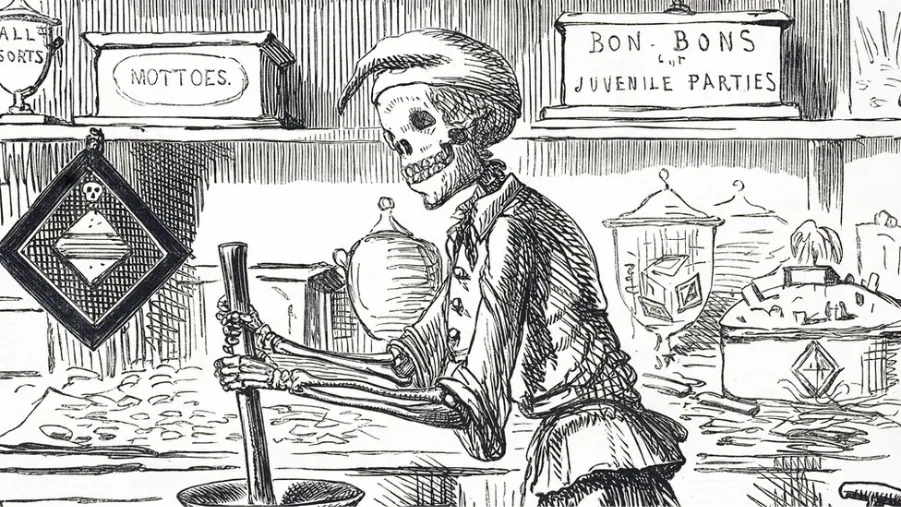
It’s about to be Halloween - an imported celebration of sorts that has creeped its way over to New Zealand. I have written about the pagan origins of Halloween before, but if I was to talk about the modern version of All Hallows Eve then I guess I would only need to say “costumes and candy” and you would know exactly what day I’m referring to.
That word ‘candy’ is another imported term for which Halloween seems at least partly responsible. When I was a kid, we called them ‘lollies’. I have been blaming America for the invasion of the word ‘candy’, but it turns out the etymology of the word actually goes back to French ‘çucre candi’, meaning ‘sugar candy’, and before that Arabic ‘sukkar quandi’, the Persian ‘quand’ and Sanskrit ‘khanda’ being various names for sugar pieces or confections. ‘Lollies’ when referring to all sweets is really just an NZ and Australia thing. In the UK a ‘lolly’ is a lollipop, and they use ‘sweets’ for everything else. So that’s one myth firmly busted. But that’s not what I am writing about. Today I’m interested in scary Halloween poisoned candy. The myths, urban legends, the true happenings and, believe it or not… the research.
The premise is basically that strangers are giving out candy that contains either poison or harmful materials such as razor blades, especially during Halloween trick or treating.
In my travels on this topic, blow me down if I didn’t discover a man described as a sociologist who is described as specialising in the study of candy-tampering legends, Joel Best. I did a bit of digging and found that he’s researched a few other things too, including important topics like student loans, wild teens, regulation of brothels, fads, the stupidity epidemic, random violence, critical thinking, and bad statistics used by the media, politicians and activists. He actually sounds like a good skeptical thinking kind of person.
Best looked into the reports in the media from 1958 to 1983, and found fewer than 90 cases that could have qualified as actual tampering. Most were people just trying to get compensation, rather than malevolence towards kids. Some were just kids copying what they’d heard in the media, and adding things to their own candy for dramatic effect. In most cases these kids were smart enough not to then eat the candy they had adulterated, so they were unharmed.
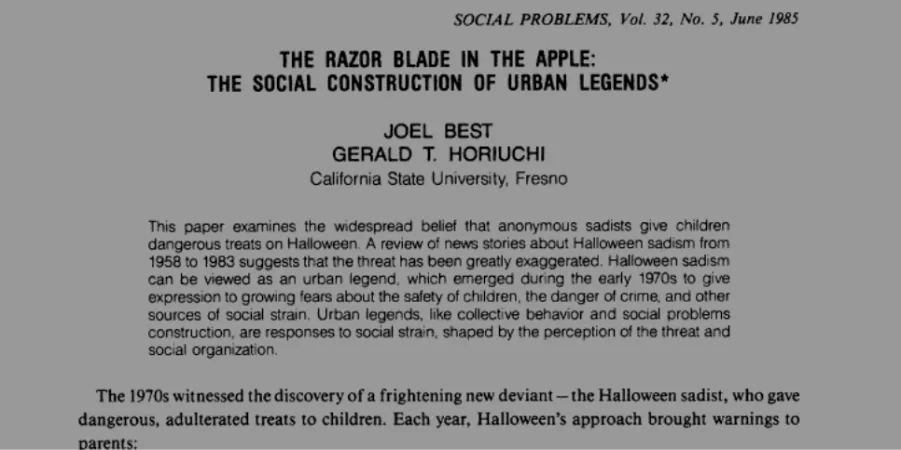
Some of the myths started as a reaction to ‘big candy’ in the industrial revolution, with people saying these products must be tainted to deter sales. And there were definitely cases where the candies were tainted by chemicals or copper in manufacturing, but not at a level where acute poisoning would be a concern. Other myths were generated by children having adverse reactions to how much candy they were eating. I wonder if perhaps these kids were being a little bit dishonest about how much they had actually scoffed while they were walking between houses on their trick or treats. Plus, of course, homemade treats can lead to unintentional food poisoning when not prepared properly.
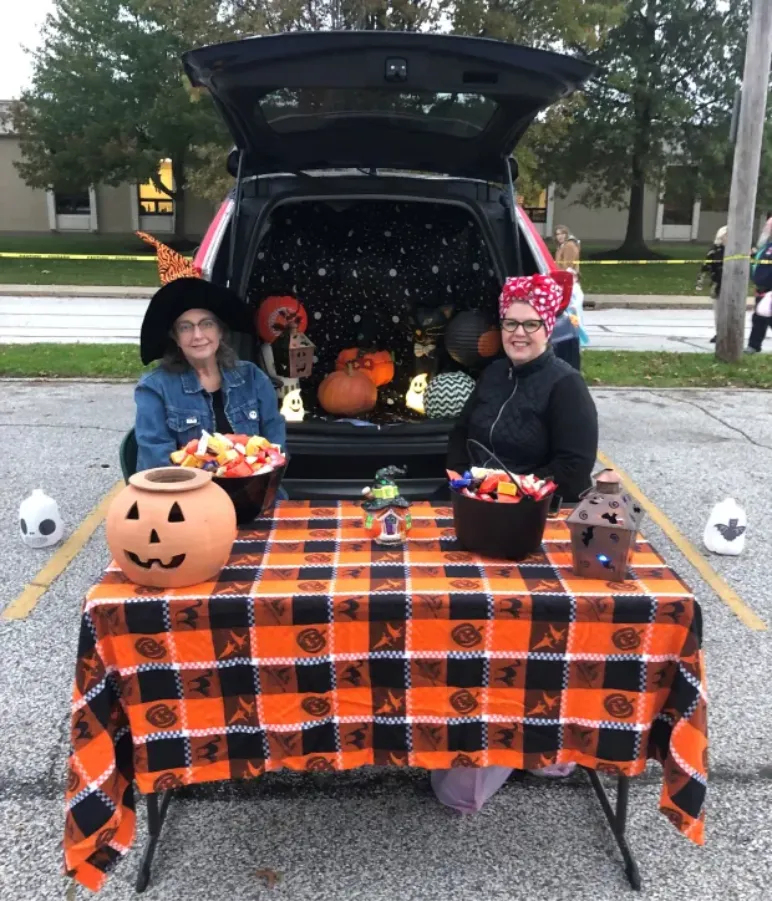
The fear generated by the mythic poisoned candy did have real-world consequences, leading to some restriction of practices around trick or treating, and a push towards commercially made and individually wrapped candy. There has also been a trend toward safe trick or treating zones, such as ‘trunk or treat’ events from car boots.
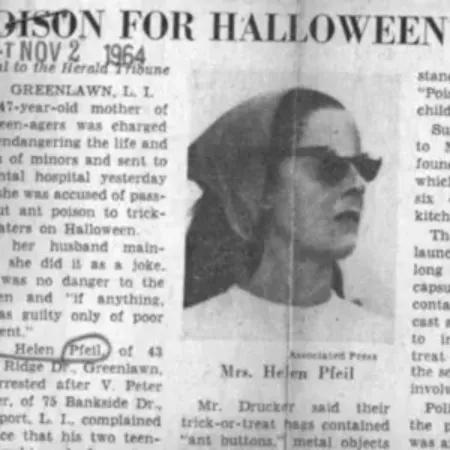
There have been some famous incidents of poisoned or tainted candy, but they are very rare and we have to wind the clock back a bit to see the more famous ones. In 1964, Helen Pfeil was arrested for handing out ant poison and dog biscuits to kids, because she felt they were too old to be trick or treating. She later said it was a joke. Fortunately, no children were harmed.
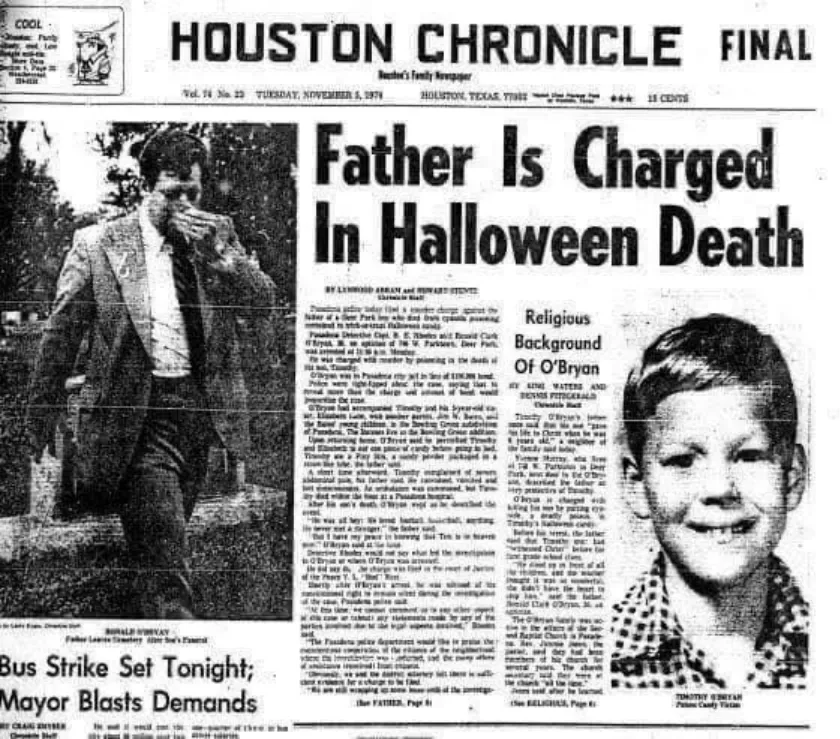
In 1974, Ronald O’Bryan from Texas gave cyanide-laced pixie sticks to five children, including his son. The other children never ate the candy, but his eight-year-old son did eat it and died soon after. O’Bryan had not long taken out life insurance policies on his children, and it is believed he gave the poison to the other children as cover for his crime.
The 1982 Tylenol murders in Chicago, although nothing to do with Halloween, also inadvertently fed the Halloween candy panic. After a spate of Tylenol poisonings in which cyanide laced paracetamol (acetaminophen) was sold, child-proof containers and drug tampering laws followed, and warnings about adulterated Halloween candy increased.
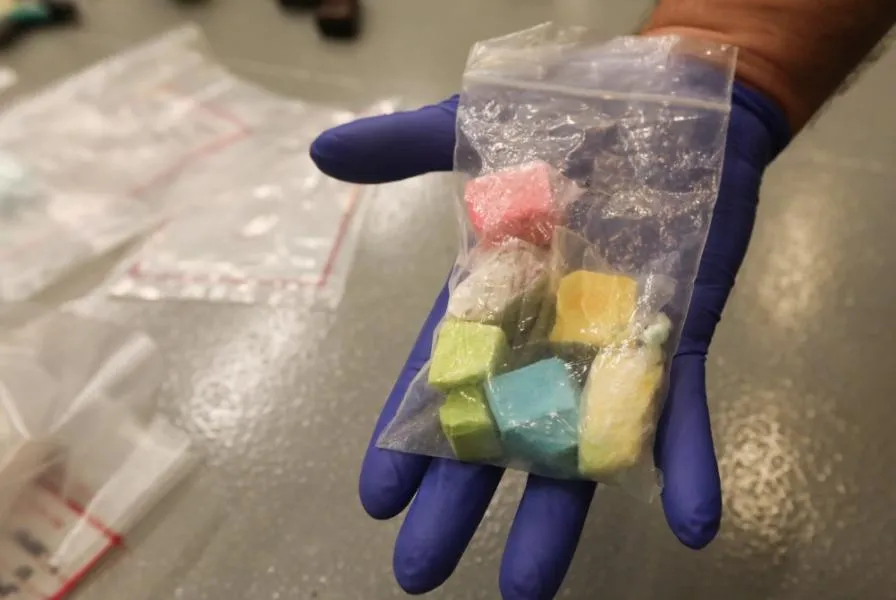
In August 2022, the DEA released a warning about brightly coloured fentanyl flooding the market, with pills that looked like candy. Fentanyl is unsafe even in tiny doses. But, thankfully, so far no child has died of fentanyl linked to Halloween trick or treating.
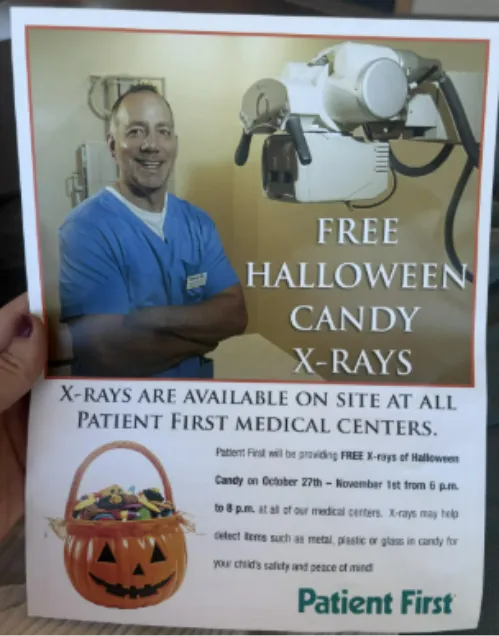
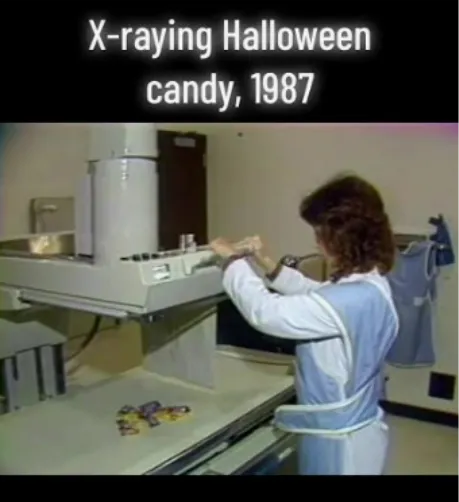
There have been instances of pins, razor blades and steel wool in candy, but most of this wasn’t eaten, or was placed there by cheeky children. But the fear of metal in treats became so widespread that some hospitals offered free X-ray screening of Halloween candy to look for razor blades, needles, and other hidden objects. Despite their efforts, discoveries were extremely rare.
The truth is that kids are far more likely to be hurt or killed by a car on Halloween while trick or treating than by the candy. So, I think it is more a case of this particular topic picking up unwarranted momentum in the media. It could probably even be considered an example of moral panic.
The enduring image of strangers handing out poisoned or tampered Halloween candy has become a persistent urban legend. Despite decades of parental concern, verified cases of children being seriously harmed by maliciously altered candy from unknown trick or treaters are extraordinarily rare. In most widely cited incidents, investigations uncovered misunderstandings, hoaxes, accidents, coincidence or circumstances involving someone known to the victim rather than a random stranger.