Decult 2026
Mark Honeychurch - 27th October 2026
I’ve just returned from this year’s Decult, the conference run by journalist Anke Richter that focuses on cults and cult survivors. I figured I’d write a quick review of the talks I attended, along with my 19 year old daughter who also has an interest in cults. Like at the inaugural Decult two years ago, there were two rooms for the talks - one mainly focusing on panel discussions, and the other, smaller room mainly for solo talks. We found ourselves in the smaller room for most of the weekend, as I tend to find that giving people the space to give their personal stories, or focus on a topic for an extended period, is more engaging than the back-and-forth of panel discussions.
The weekend started with a few welcomes, from our MC, Anke and Anglican Bishop Susan Wallace. Then Rachel Bernstein from the US gave Saturday’s keynote address, discussing how cults can quietly flip the tables on you, promising enlightenment and fulfillment, but then delivering abuse and exploitation. The talk was pretty good, especially when Rachel went off-script and talked about her personal experience helping those who were leaving cults.
After the keynote the second room opened up, and we moved there to listen to Aaron Sharp from Australia talk about his time in Potter’s House, and how the group touched all aspects of his life. Without going into details, his story was one of the most heart-wrenching I heard all weekend, and I admired his bravery speaking about some of the tragedy he’s faced in his life.
Following Aaron was a talk given by Beth St Claire and Ingrid Campbell about family cults. This was a topic that audience members had requested at the 2024 conference, so it was great to see it being addressed this time round. Beth, a psychotherapist who generously donates her time to run a cult leavers’ support group in Rationalist House in Auckland, did a great job of breaking down how small cults involving a family, sometimes with a few extra members such as extended family, or adopted or fostered children, can often fly under the radar. She detailed some well-known historical family cults, such as The Family in Australia, and described where a family cult can be similar to larger cult groups, as well as the ways that these groups often differ. Ingrid talked about her personal experience inside a family cult, helping to put Beth’s descriptions in context.
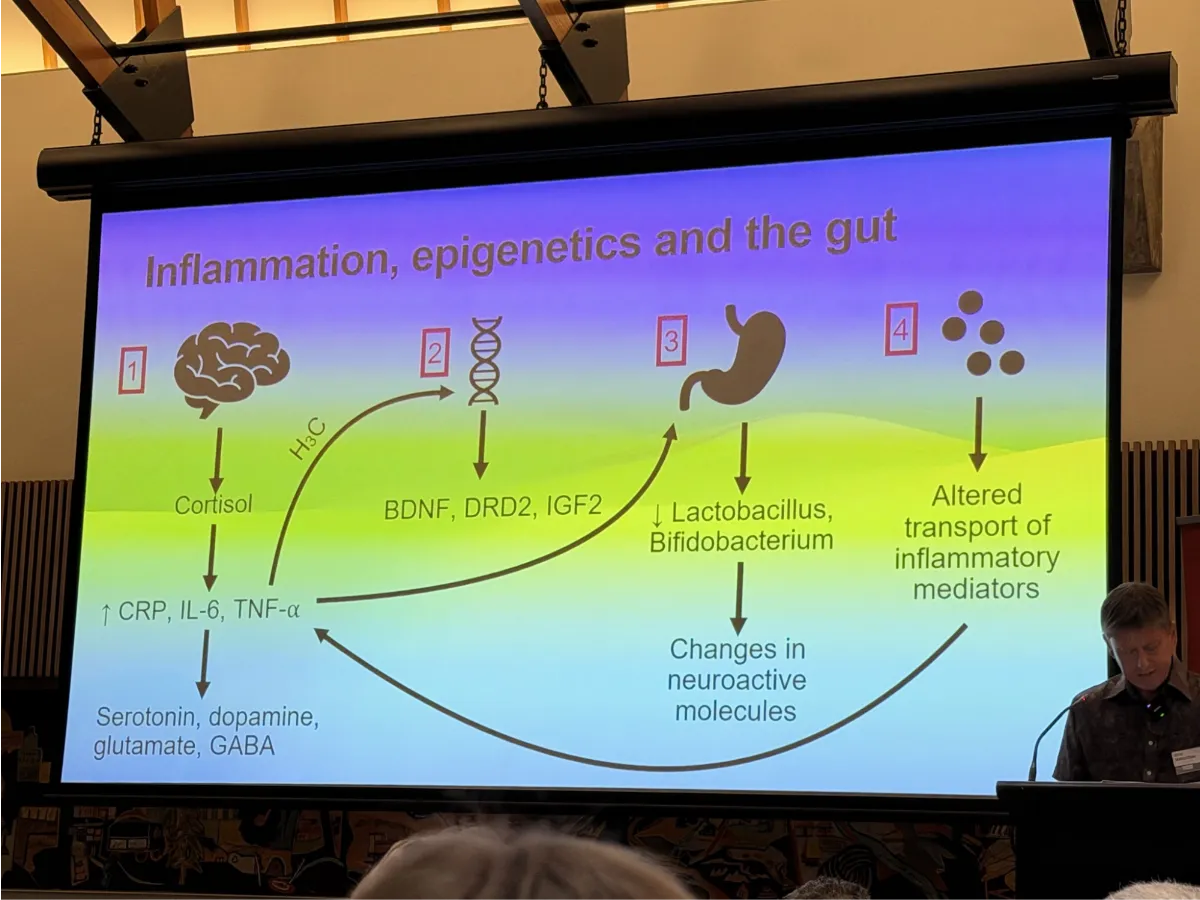
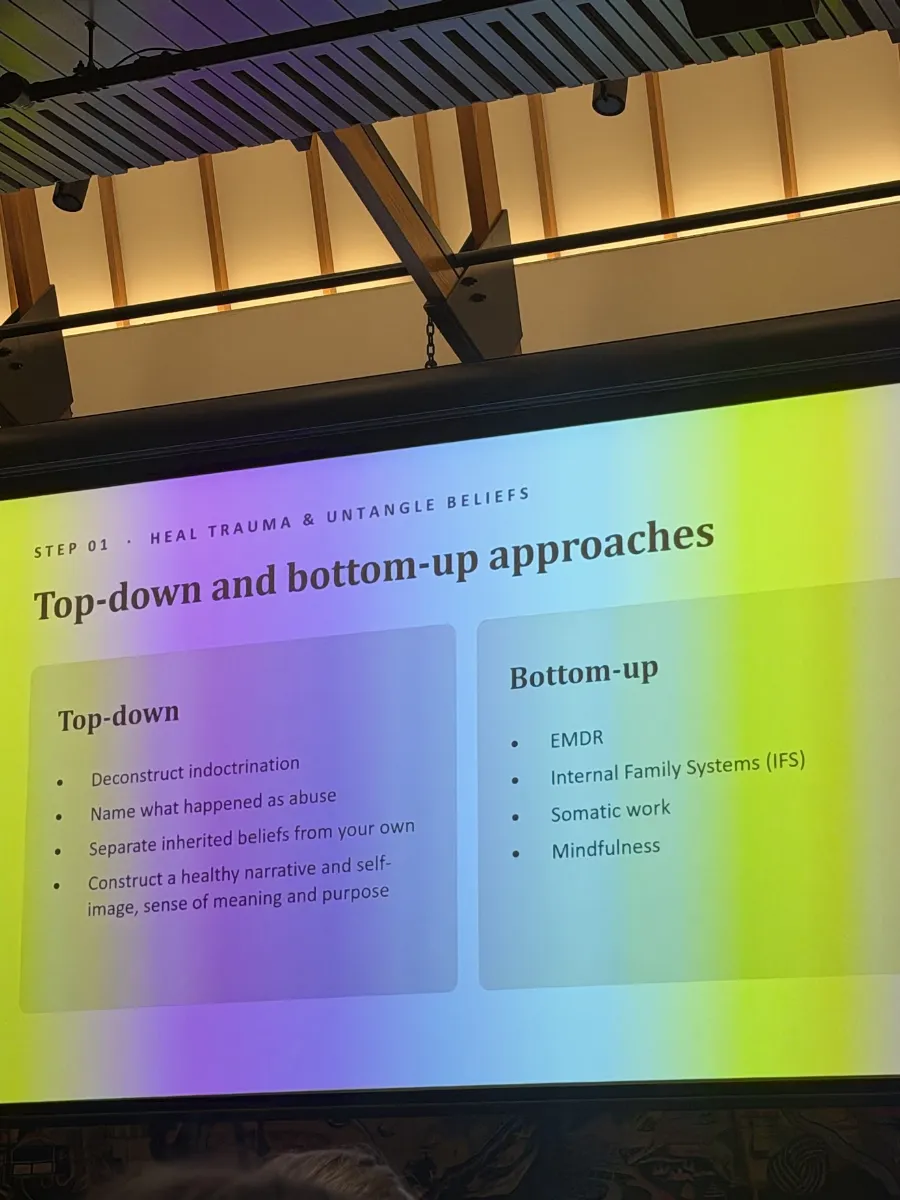
After lunch Dr Kyle Eggleton from Waipu spoke about cults and suicide, followed by Andrew Jasko from the US talking on religious trauma. Although I felt both of these talks had some utility, both felt set off my skeptical radar, and I felt they strayed into the territory of offering treatment suggestions that were not evidence based - such as faecal transplants, epigenetics, EMDR, chanting Om (to activate the Vagus Nerve) and Breath Work. This is not to say that those therapies/mechanisms are definitely ineffective. But for the conditions these treatments were being touted for, I’m pretty sure any evidence for their efficacy is only preliminary and tentative, certainly not enough to warrant recommending them to a room full of lay people.
After these talks we moved to the main room to hear a panel on Sexuality in cults. The conversation was fascinating, featuring both panel members for whom sex was considered taboo within their cults, and one from Austria for whom sexual liberation and free sex was the norm, Angèle Tremsal. Angèle’s story of how the Friedrichshof commune operated in the 1970s and 80s was so similar to our own Centrepoint cult that it was uncanny and unnerving. For the other three, coming from Gloriavale, the JWs and the Brethren, it was great to hear that they had reclaimed their sexuality after having been repressed for so many years.
Finally for the first day, Ganesh from Wellington hosted the Story Jam, an event that I’d really enjoyed at the 2024 conference. Once again cult survivors took the stage for a few minutes to talk about their experiences, with several reading poems. Many of the participants of this event are people who are not in a position to speak for half an hour about their experiences - they may have just recently left a cult group, or might be nervous or unused to public speaking. But once again their five minute stories were some of the most powerful and emotional of the weekend.
On day two, Dr Christine Marie, star of the Netflix documentary series Trust Me: The False Prophet, spoke about her history. The talk was a little disconnected at times, but thankfully most of the audience had seen the Netflix show (as evidenced by a show of hands at the end of the talk), so they would have understood a lot of the context behind her images and her talk. There were some really insightful questions, and it was great to both be able to celebrate the amazing work she’s done, and learn more about what motivates her.
Next up we stayed in the main room to hear about the journey out of cults. Liz Cameron talked about her experience of being “deprogrammed” - a controversial, intense practice where a “professional” attempts to convince a cult member to leave the group. Historically this has often involved parents kidnapping their child and holding them against their will while the deprogrammer does their thing. Rachel Bernstein was on this panel and had strong words to say about the practice, and Liz also warned that it’s a risky endeavour, but she also spoke about how, in her case, it worked. Her parents had paid to fly the famous deprogrammer Rick Ross over from the US. Over the course of three days, while Liz was recovering at her parents’ house after being hospitalised, Rick talked to Liz about how problematic the cult (the Jesus Morning Star movement) was, and how concerned her parents were about how she was being mistreated.
Next in the main room was a conversation about meditation and self-improvement as a gateway to joining cults. This panel was hosted by Phil Vine, who made the excellent podcast series The Lodge about a South island cult run by a Chinese woman called Aiping Wang. Half way through we left to hear Elise Heerde, who used to be a member of Hillsong church, speaking about how megachurches operate, and how they manipulate their members. This talk really hit home, as there were many parallels to Arise church here in NZ - and my wife used to be a member of Arise church over 20 years ago, when we first arrived in New Zealand. Some of the tactics Elise described for capturing and controlling members were very familiar to me, either from the way the church “handled” my wife, or how it treated friends of hers who were members. It was great to see the tactics these churches use laid bare.
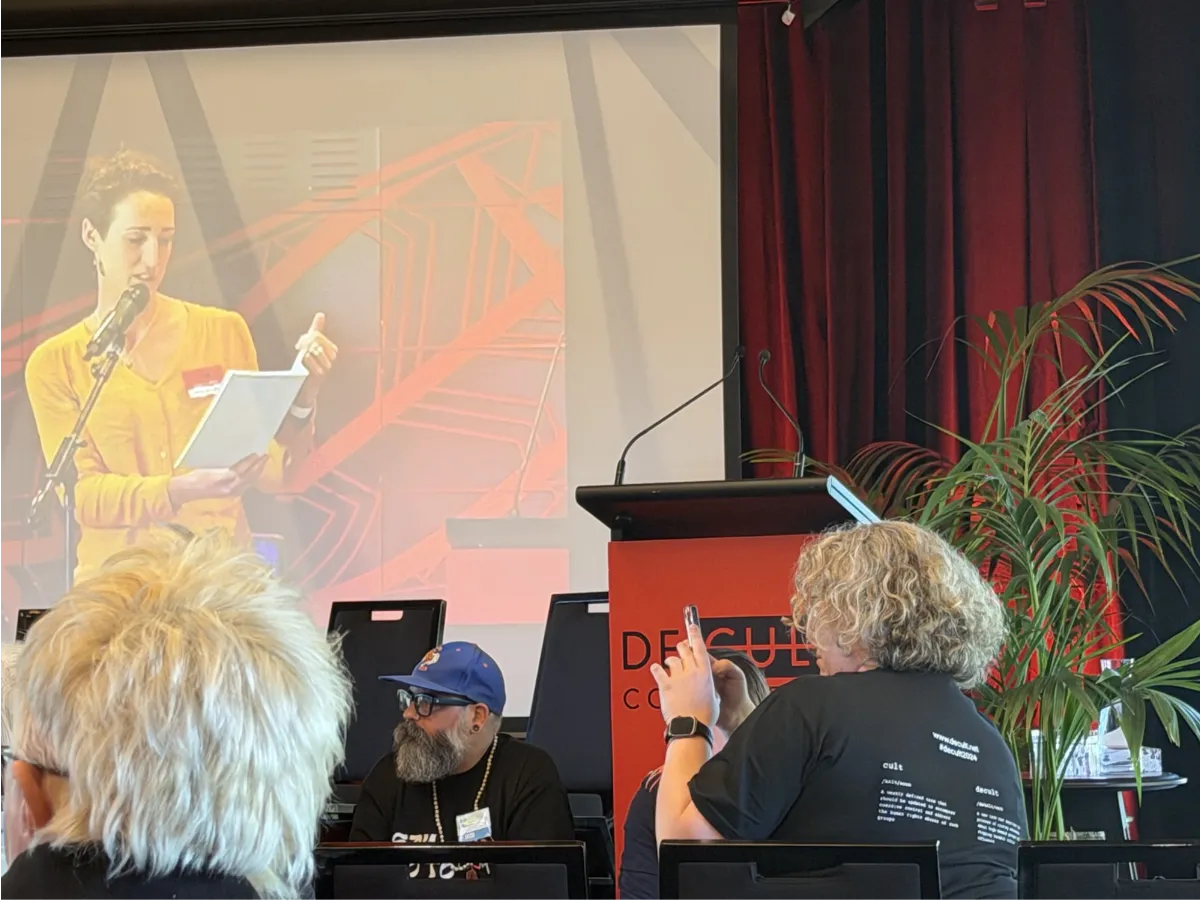
During lunch there was a panel on podcasts, and it was surprising to hear how many cult podcasts there are in New Zealand. There was some great advice, with some of the most obvious but useful suggestions including the idea that you really need to read up on someone’s background before you interview them. Here’s a picture I took of Bronwyn taking a picture of the podcast hosts:
After lunch, Christopher Longhurst talked about a Catholic sect in Christchurch, the Sons of the Most Holy Redeemer, who have been in the news in the last few years for their abusive practices. The talk was quite dry, but it’s obvious that Christopher has a lot of passion for ensuring justice is served, and that the Catholic Church doesn’t just try to shirk its responsibility by disowning the sect after the abuse has already happened.
Liz Sallows from Canada spoke next, about grief. This was a much wider topic than I’d envisaged it being, with Liz talking about how ex cult members can grieve for a range of things in their life. They may grieve for the things they’ve lost, such as friends, a sense of being important, etc. They can also grieve for the everyday things they were unable to do while they were in the cult, and under a set of strict rules governing every part of their lives. And they can grieve for the bad things they did while they were a member, such as recruiting new members. This last one is especially interesting to me, as many cult leavers have to face not just the abuse they suffered, but also the abuse they either directly or indirectly caused others to suffer - and the more successful someone is at recruiting while they’re in a cult, the more damage they’re likely to have caused. I can’t help but think that this issue must keep many cult survivors up at night.
Back in the main room, there was a final panel on Christian Nationalism and the Tradwives movement. This panel included some interesting information about the history of the Seven Mountains Mandate, as well as the panelists’ personal stories. But at times I felt like people were relying a little too heavily on their printed questions and answers, and as a result some of the conversation felt a little flat.
After the final panel, Anke closed the weekend, thanking everyone involved. The NZ Skeptics were even mentioned in Anke’s thank you slide:
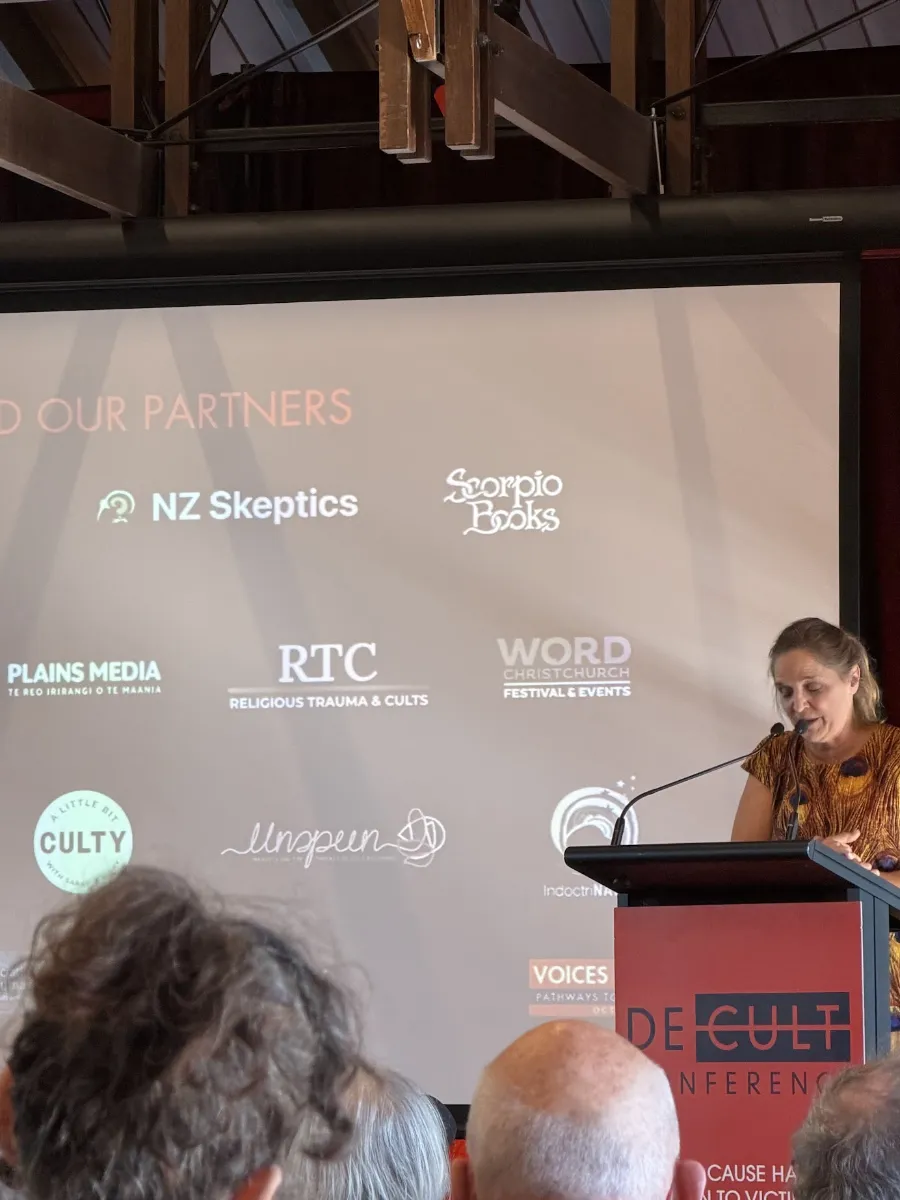
Anke talked about her hope for future conferences, using the analogy that she sees herself as having lit a signal fire with the hope that others will follow her lead. She really sounded like she wants to step back and have others take on the mantle of organising the Decult conference, but I wonder whether in a year’s time, when she’s wearing rose-tinted spectacles, she’ll get back up on that horse and take the reins for Decult 2028. However it happens, big or small, I suspect I’ll be there.