Our Submission on the Legislation (Definitions of Woman and Man) Amendment Bill
Mark Honeychurch - 6th July 2026
It feels like the new National/Act/NZ First coalition government has been pushing through a lot of changes to legislation in their first term, and much of it has been done through Urgency - a way of fast-tracking important, time-sensitive legislation.
Urgency was used by the recent Labour government during the COVID pandemic to rush through legislation around lockdowns, vaccine passes, border shutdown, etc, as well as after Cyclone Gabrielle to speed up recovery efforts. But it was also more controversially used by Labour for infrastructure projects that don’t appear to have been in need of Urgency, such as Three Waters and the dissolution of District Health Boards (DHBs).
Following on from these uses and abuses of Urgency, the new coalition government has managed to break records (and not in a good way) by passing more Bills under urgency than any other modern government since the introduction of MMP. Of particular concern to many is the number of Bills that the current coalition has used Urgency for, to skip the Select Committee part of the process of turning a Bill into an Act. Select Committees are a subset of MPs who solicit feedback from the public on proposed new legislation, and help both as a bellwether of prevailing public opinion on the new law and a way to crowdsource changes to it that help make it better fit for purpose. So skipping this part of the process, when there’s no actual need to make a law change quickly, often appears like it’s a way of avoiding oversight.
This abuse is not new - every government has been accused of misuse of Urgency to push through controversial legislation without oversight, and this paper from 2011 does a good job of describing the extent of the issue as it was a decade and a half ago. Former PM Sir Geoffrey Palmer once said of the use of Urgency:
“What is the hurry? Legislation is lawmaking. You want to get it right. You have to analyse it, you have to do proper research, you don’t bang it through because a minister has an idea.”
Thankfully as well as all of the legislation that avoids public feedback, there are also a raft of changes to our laws that we do get to comment on. Some of these changes are purely or majorly political in nature, and so the NZ Skeptics often don’t feel that there is a place for us to comment on them. But others leave us scratching our heads and wondering if the people behind them bothered to do any kind of background reading before forging ahead.
Some of these upcoming pieces of legislation are listed on the “yeah, nah Bills” website (no relation to our own Yeah… Nah! podcast), where you can even get help writing a submission. I’m not sure the way the website does this is the best solution, as I think it’s generally more impactful to hand-write a submission - but there are some efforts made on the website to ensure your submission looks different enough to other submissions the site generates that it may end up being treated as a unique submission (rather than being bundled together, like traditional copy/paste submissions are) - although, interestingly, it doesn’t use AI to do this.
Of course, using a website to create a submission for you could be seen as cheating the system, but I guess some people are comfortable with the idea of not having to put in much effort and pretending that they’ve written something they haven’t. I suppose that many people these days will end up just using AI to generate their submissions anyway, so I guess that horse has bolted already.
And so we come to the “Legislation (Definitions of Woman and Man) Amendment Bill 2026”, a piece of legislation that amends the Legislation Act. This new Bill is written by NZ First MP Jenny Marcroft.

This is not Jenny’s first piece of legislation. This new Definitions of Woman and Man Bill replaced a previous Bill she had waiting in the “biscuit tin” (the collection of Private Member’s Bills that is regularly pulled from for new legislation). The Bill that she abandoned was the “Fluoridation (Referendum) Legislation Bill”, an attempt to weaken the government’s stance on fluoridating our water supply by undoing parts of the recent “Health (Fluoridation of Drinking Water) Amendment Act 2021” and moving fluoride decision-making back to local councils, who would then be required to run binding referenda.
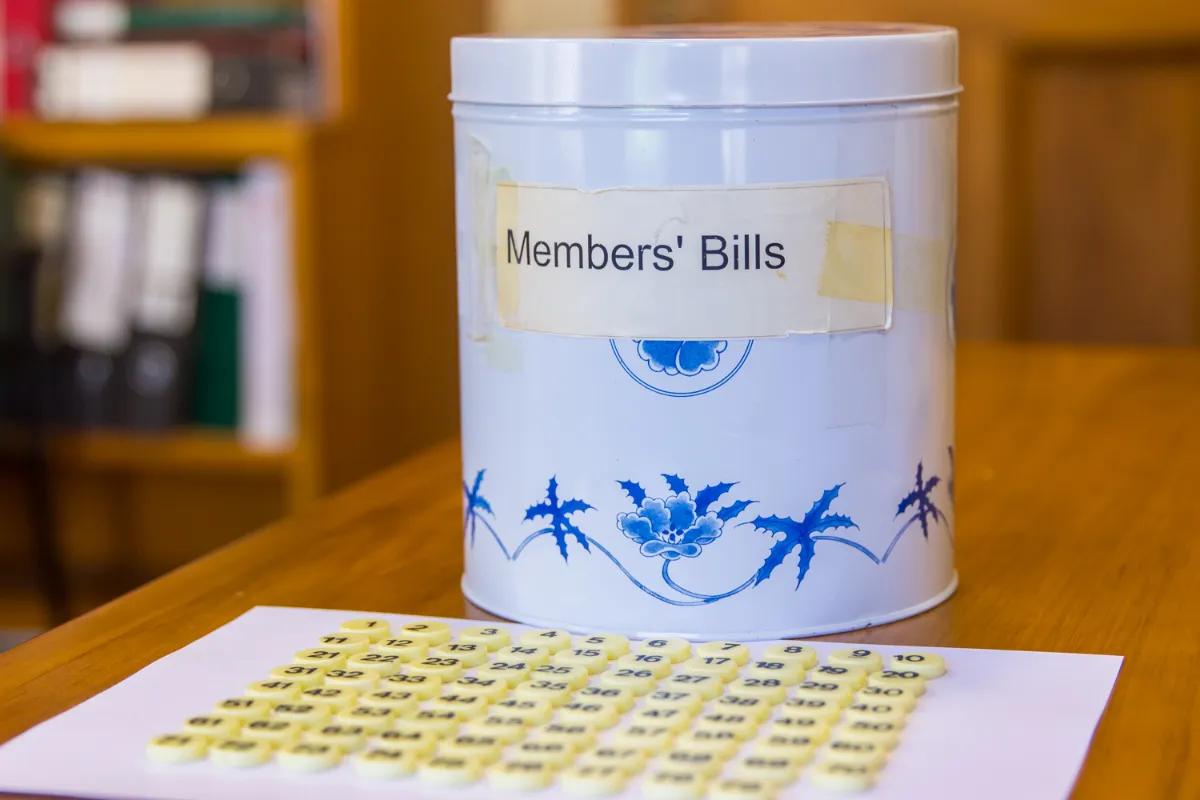
I’ll reproduce the text of Jenny’s new Bill in its entirety here, because it’s only a small change:
- Title
This Act is the Legislation (Definitions of Woman and Man) Amendment Act 2026.
- Commencement
This Act comes into force on the day after the date of Royal assent.
- Principal Act
This Act amends the Legislation Act 2019.
- New section 13A inserted (Meaning of woman or female)
After section 13, insert:
13A Meaning of woman or female
In any legislation, regardless of gender identity,—
woman means an adult human biological female; and
female means a human biological female.
13B Meaning of man or male
In any legislation, regardless of gender identity,—
man means an adult human biological male; and
male means a human biological male.
The legislation also came with a short “general policy statement”, intended to explain the rationale behind the changes:
This Bill ensures clarity and consistency in New Zealand law by defining “woman” as “an adult human biological female” and “man” as “an adult human biological male”, with corresponding definitions for “male” and “female”. By establishing these definitions in the Legislation Act 2019, the Bill provides a clear and biologically grounded meaning of “woman” and “man” across legislation.
The purpose of this amendment is to uphold legal certainty, protect the integrity of sex-based rights, and ensure that language in law reflects biological reality. This definition will apply in all contexts where the terms “woman” and “man” are used, unless explicitly stated otherwise in specific legislation.
I’ll admit that the current NZ Skeptics committee is somewhat progressive in our politics, which is not surprising given that many skeptics are proactive in thinking about social issues and would consider themselves to be humanists. But, as I said before, we try not to use the organisation to give opinions where they’re not warranted. But this piece of legislation felt to us like it crossed far enough into our remit that we should comment on it, given that it appeals to science.
Bronwyn and I hope to give an Oral presentation accompanying our submissions to the Select Committee at some point in the near future, and that presentation will likely cover a bit more detail about the science of sex and gender, and why these reductive definitions don’t make much sense. If you’re interested in what we put together for our written submission, here’s the text we sent to the Select Committee a few days ago:
The Legislation (Definitions of Woman and Man) Amendment Bill purports to define “a clear and biologically grounded meaning of “woman” and “man””, but the legislation doesn’t appear to manage this very well at all. The Bill is very short, and the definitions seem not only reductive, but also practically useless.
For example, the following two definitions are given for woman and female (and are mirrored for man/male):
woman means an adult human biological female
female means a human biological female
A “female” in this definition is defined as someone who is biologically female, which is a case of circular reasoning. Legislation should always aim to be clear, concise and unambiguous, but in this instance it’s confusing and self-referential.
We would recommend that, if a biological definition of woman or female is needed (and we’re not convinced that it is), the select committee first consults with a range of biologists, health experts and legal advisers, to ensure that the definitions are both accurate and useful for legislation. The current definitions seem to be neither of these.
The general policy statement of this Bill says that it aims to “uphold legal certainty”, “protect the integrity of sex-based rights”, and “ensure that language in law reflects biological reality”. From our reading of the Bill, it does none of these.
Legal Certainty
When it comes to legal certainty, this Bill is likely to offer the opposite - confusion and uncertainty.
For example, the Age of Majority Act says that, unless otherwise stated, adulthood is reached at 20 years old in our country. Is the government sure that if, as a consequence of this Bill, they define a woman as someone 20 years or older, every piece of legislation which uses the word “woman” makes sense under this new legal legislation? From what we’ve seen in other submissions, it appears that there are several instances where young women, between 16 and 19, will see their rights needlessly curtailed.
The reductive nature of these definitions is likely to have ripple effects across much of New Zealand’s legislation, and it seems unlikely that the authors of this piece of legislation have considered any of these repercussions.
Protecting Sex-based Rights
For protecting sex-based rights, we consider that New Zealand already has appropriate legislation (e.g. the Human Rights Act) to offer protection where it’s needed, and that this new legislation is likely to make things worse by tying the court’s hands and making it harder for them to make nuanced case-by-case decisions.
In addition, the exclusion of thousands of intersex people in New Zealand from these definitions means that a segment of our country that has historically been overlooked will likely have even fewer rights as a result of this legislation.
Reflecting Biological Reality
Regarding the idea that this Bill reflects biological reality and provides a “clear and biologically grounded meaning”, this is where this piece of legislation fails badly. From a skeptical and scientific perspective, the Bill does not reflect biological reality at all; instead it reflects a reductive oversimplification of human biology, one that ignores the last fifty years of genetic and endocrine research.
We could lecture the select committee on what an actual science-based view of biological sex looks like, but this material has already been written and made publicly available by others who do a good job of explaining the complexities involved. We would recommend that MPs read some evidence-based articles on the topic, such as this one by Dr Steven Novella in the US:
https://sciencebasedmedicine.org/the-science-of-biological-sex/
The idea that the government might institute some kind of test to assess someone’s biological sex (an idea which has been publicly floated), seems fraught with danger, and likely to do much more harm than good.
Recommendation
Given these definitions’ lack of utility, their scientific inaccuracy, and their confusing recursive language, we do have to wonder whether there is an ideological driving force behind this Bill, rather than the stated purposes of offering legal certainty, protecting sex-based rights, and reflecting biological reality - purposes that this Bill is ill-equipped to deliver.
As such, we recommend the Bill not proceed.
Tags: legislation, bills, definitions, woman, act