The (Hyper)Loop: Monorail, Monorail, Monorail…
Mark Honeychurch - 22nd June 2026
HyperLoop
The hyperloop, one of Elon Musk’s grand ideas, was slated back in 2013 as a way to beat traffic in heavily congested areas, with the first planned route being from Los Angeles to San Francisco. This plan was documented in the 2013 document Hyperloop Alpha, which is still available on the Tesla website and was written by Musk and some of the engineers he employed.
The original plan called for a pair of elevated steel tubes propped up by concrete pylons. These would follow the interstate highway where possible, and deviate where needed. Deviations were required to allow for high speed travel, as tight turns (both vertical and horizontal) would create G-forces that are too high for passengers to endure and needed to be avoided. Where the hyperloop left the highway (the I-5 and the I-580), Musk envisaged removing small hills, tunneling through larger hills and building taller pylons as necessary.
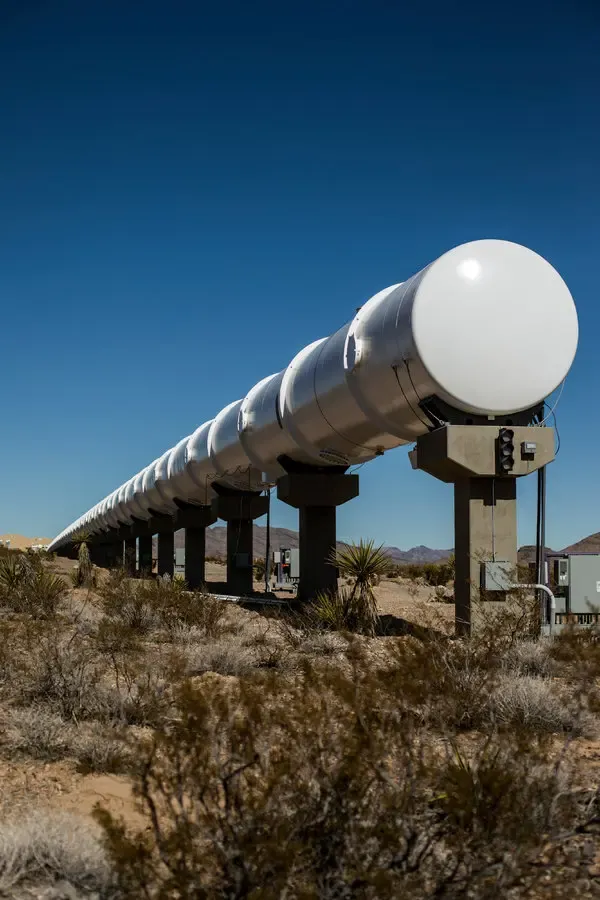
So, what kind of speeds are we talking about? Most of the journey was envisaged to be at 760mph, or about 1,200 kilometres an hour, with some sections at ~900 and ~500 km/h. The paper claims that at top speed the radius of any turns would have to be around 25km - a much longer turn than highways usually take when they follow the easiest path around the landscape. There would also be massive problems with air inside the tubes at these speeds, so the plan was to use air pumps to turn the tubes into a near vacuum.
This design would have delivered a journey time of 35 minutes from LA to California (or vice versa), which compares favourably to the (still unbuilt) California High Speed Rail, which would take nearly three hours for the same journey, a car journey of five and a half hours, or a flight time of an hour and quarter.
Despite some interest in the idea, including from Richard Branson - who created a company called Hyperloop One specifically for this project - it was eventually realised that there were many technical issues that were unlikely to be overcome. These included safety issues (especially given the required near-vacuum), skyrocketing estimated costs, a low passenger carrying capacity, and problems with motion sickness.
It turns out that the engineers had severely underestimated the radius of the curve that would be needed for a ride to be comfortable for passengers. The 25 kilometer radius was chosen because it would create a G-force of 0.5g, but in reality a sustained lateral (sideways) G-force of even 0.2G is enough to make people queasy, and so the real radius of any turns would need to be closer to 100km.
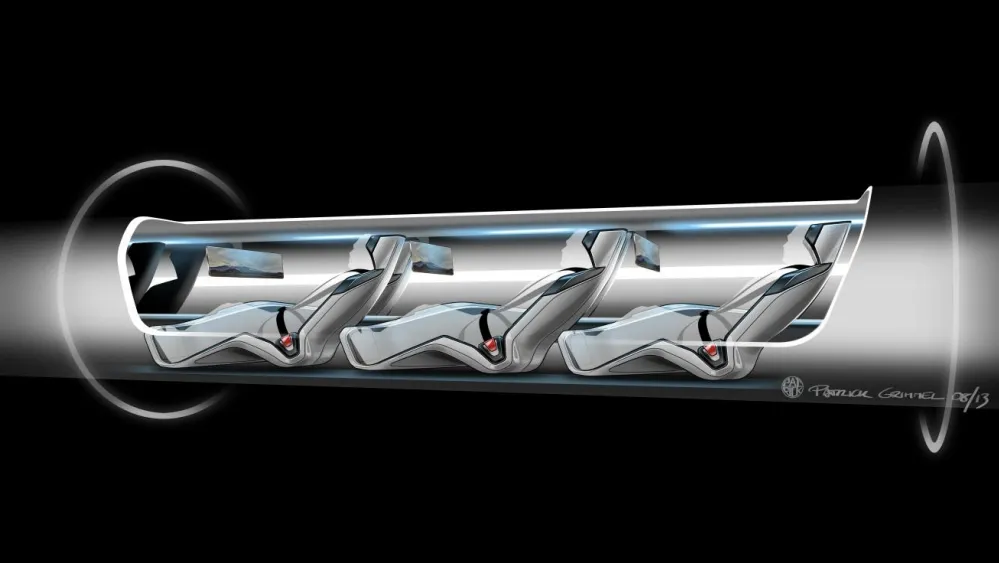
Even with a very large turn radius to minimise G-forces, passengers would have found themselves in a small enclosed tube, with no view of the outside world, being alternately pushed to the left and then the right. This sounds like the kind of ride that would induce vomiting in even the most travelled seaman, and it’s no surprise that the idea ended up going nowhere.
UrbanLoop
In 2016, Elon Musk’s idea morphed when he decided he’d had enough of being stuck in traffic, and needed to do something about it. He tweeted:
“Traffic is driving me nuts. Am going to build a tunnel boring machine and just start digging…”
“I am actually going to do this.”
At first read it seemed like an interesting idea, making a tube underground instead of up in the air - He started the Boring Company, a joke company name but at the same time a serious idea to revolutionise boring by designing modern, automated, reusable drilling machines that could make tunnels quicker and cheaper than any existing machinery.
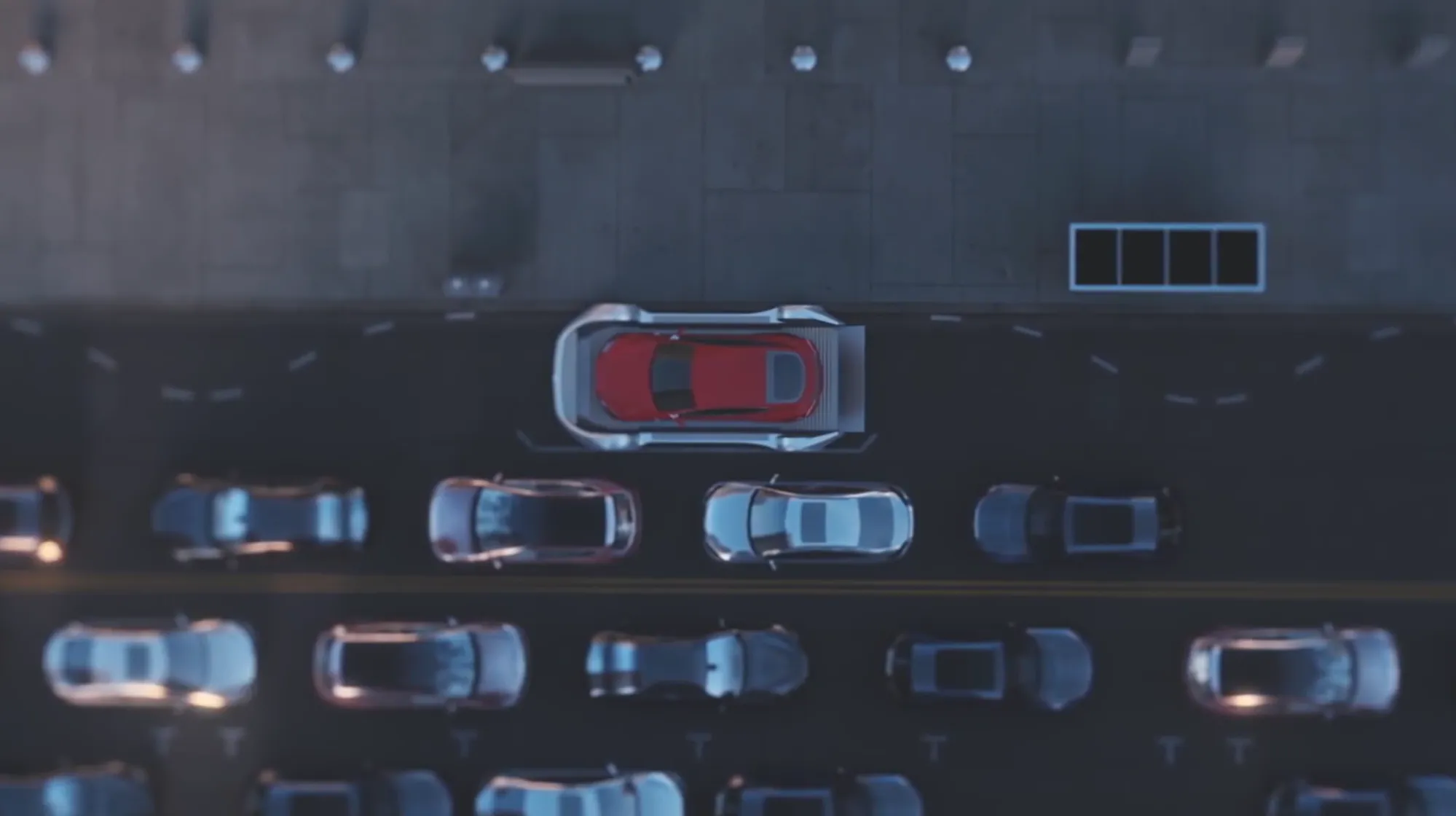
The tunnels were planned to use sleds that people would drive their cars onto, and these sleds would accelerate on side tunnels until they matched the speed of the main transport tunnel, around 250km/h, at which point the sleds would merge into a space between other travelling sleds. At the other end the same thing would happen in reverse, with cars exiting the main tunnel and being delivered to one of hundreds of small stations along the route. He imagined the stations being no bigger than a parking space, in fact they were going to look just like parking spaces, on the side of the road, but would vertically lower a car once it came to a stop on the street-level platform.
As Musk claimed:
“It’s not that hard, but if you have tunnels in cities, it would massively alleviate congestion. You could have tunnels at all different levels, you could have 30 layers of tunnels, and completely relieve the congestion problem in high-density cities. So, I highly suggest tunnels.”
Following these ideas, a test tunnel was dug in Los Angeles, complete with a ground level lift to lower a car, and was featured in a Boring Company video - although the car in the video appeared to be going a lot slower than 250km/h, and even at a slower speed the journey looked bumpy:
Vegas Loop
Las Vegas then signed up for the first production loop, initially paying around US$50 million for a three station, three kilometre long dual tunnel - although it’s since been expanded to about 10 stations, and is planned to eventually link casinos and convention centres with around 100 stations, at a cost of upwards of US$1 billion.
What has materialised is a lot less futuristic, and a lot more tacky, than what was promised. The Vegas Loop features RGB LED lit tunnels that Tesla cars are driven through by human taxi drivers at a maximum of 60 kilometres an hour.
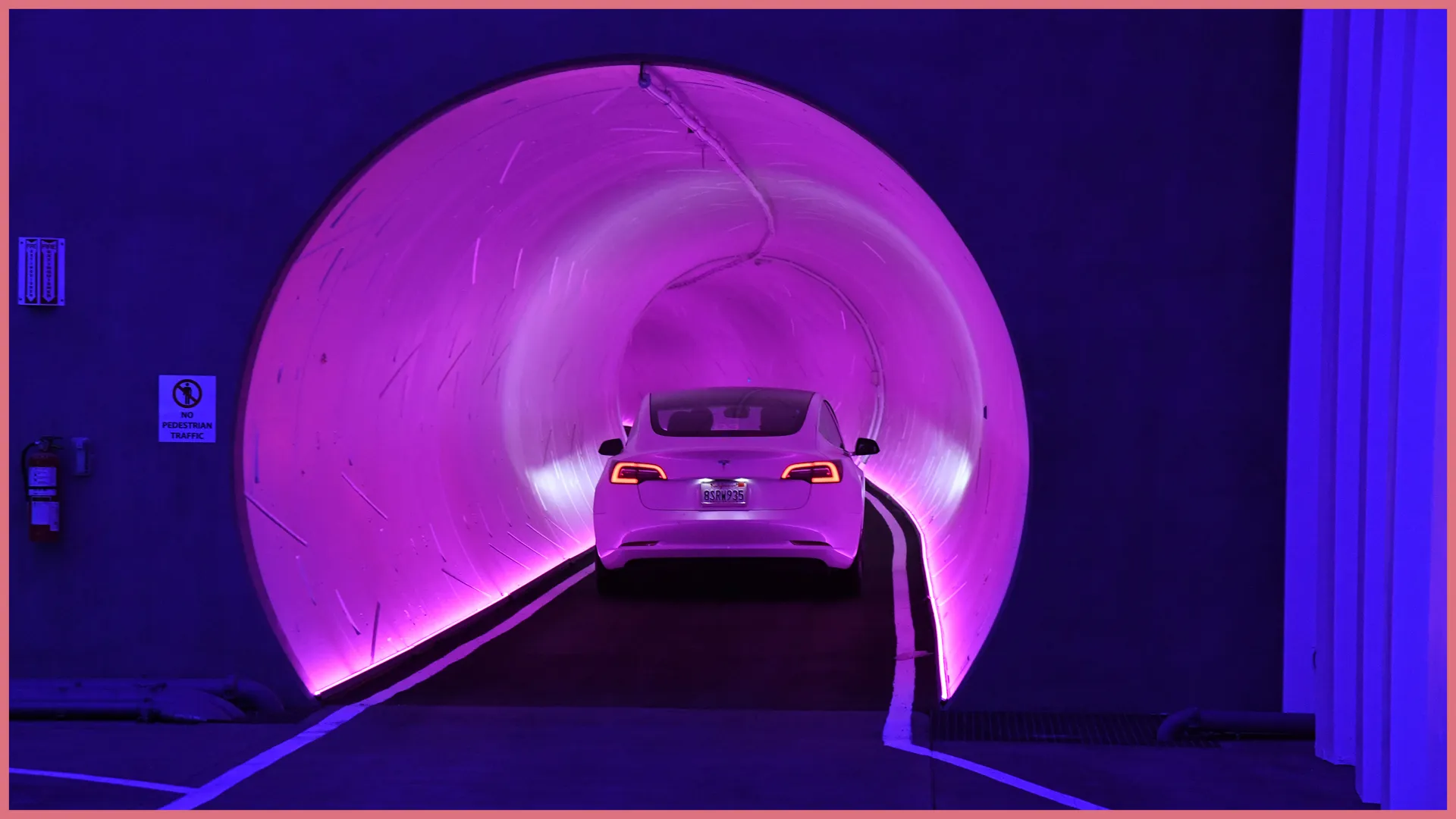
Early videos of the Loop in action, taken by passengers, show just how slow the cars are - with the ride being somewhat bumpy even at low speeds, and congestion occurring even with a low volume of cars on the loop.
More recent videos show some of the new stations looking empty, with hardly any passengers, not all stations being open every day, a lack of available cars, and running hours (10am - 9pm) that seem antithetical to the whole idea of Las Vegas as a 24 hour party town. Additionally, some of the stations are only served by a single tunnel, so cars have to wait until the tunnel is clear of traffic coming in the opposite direction before they can drive to their destination. Some of the newer stations are inconvenient to access on foot, and others don’t have anywhere to sit or shelter from the sun while you’re waiting for your Tesla taxi to arrive.
Music City Loop
Sadly, the sorry state of the Vegas Loop doesn’t seem to be deterring other US cities. As the video above mentions, Nashville is set to greenlight the “Music City Loop”, connecting the airport to the city centre. The Wikipedia page for the project lays out some of the concerns about this new project:
“The State of Tennessee’s apparent pre-approval of the project created outrage among community members who have serious doubts as to the safety of burrowing in the limestone beneath the flood-prone city of Nashville and the impact construction will have on the surrounding communities, especially in light of the environmental impacts of the construction of The Boring Company’s other project, the Las Vegas Loop.”
Monorail
This whole thing reminds me of the Simpsons episode where a shyster sells the town a monorail, impressing everyone with a fancy model and a catchy song that assuages people’s fears - “monorail, monorail, monorail”. Marge’s concerns that money should be spent on fixing the town’s existing problems are roundly ignored:
Eventually, when the monorail is delivered, it turns out to be shoddily engineered and unsafe, nearly killing Leonard Nimoy and the other passengers:
Thankfully when it comes to Musk’s urban loops, so far at least cooler heads have prevailed, and his vision of 250km/h cars whizzing through tunnels has come up against the cold hard reality of local government restrictions, safety requirements, and common sense measures. I can’t help but think that laying tracks down in the tunnels and replacing the low-density queue of Tesla cars with automated electric carriages would probably make a lot more sense, and maybe if the Boring Company ever goes bust this might be the best way to make the most of a bad situation.