Egg or Chicken
Katrina Borthwick - 25th May 2026
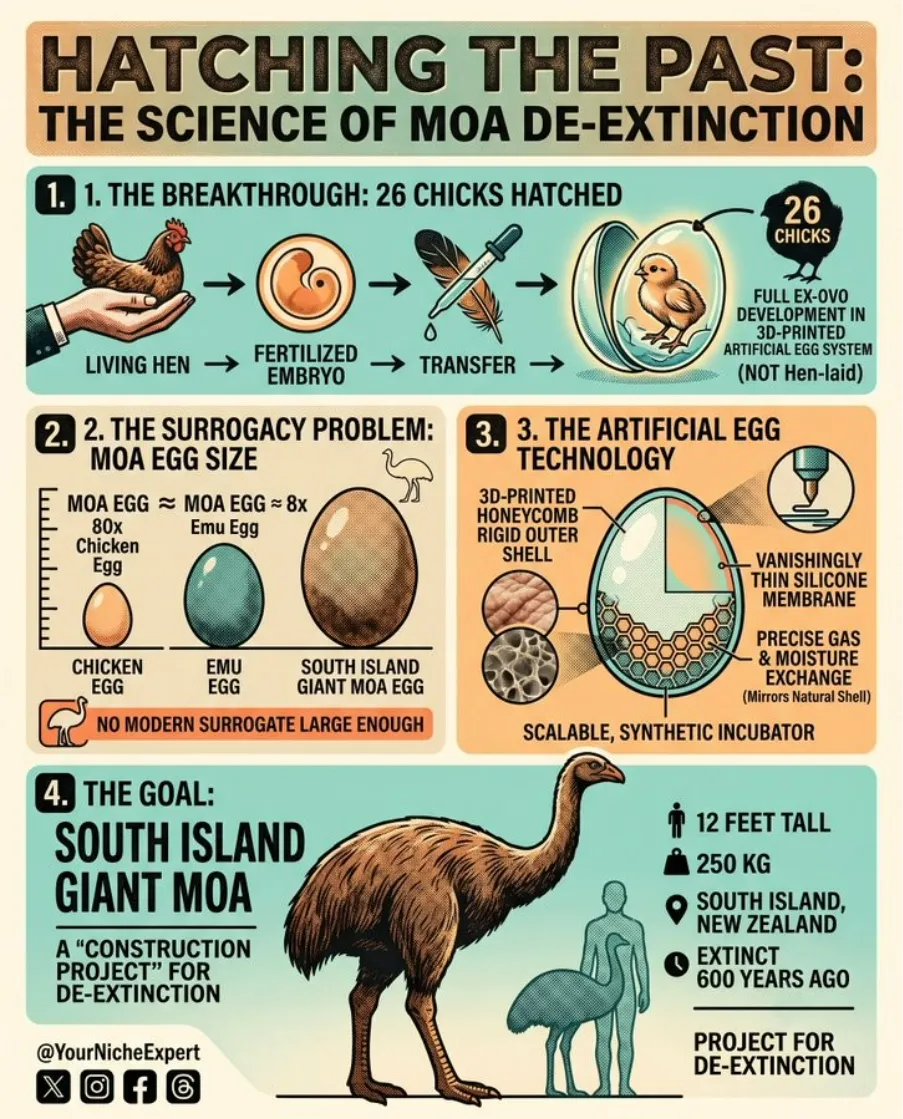
I was excited to read about a bit of a home-grown science breakthrough this month. An artificial egg made of a silicone membrane lattice has been used to hatch 26 chickens.
This is trickier than you might think, as eggs need to breathe. That means, the egg needs to allow gas exchange. The membrane they came up with that allows this exchange to occur is the key breakthrough here. The egg itself looks really sci-fi – like some sort of space grenade.
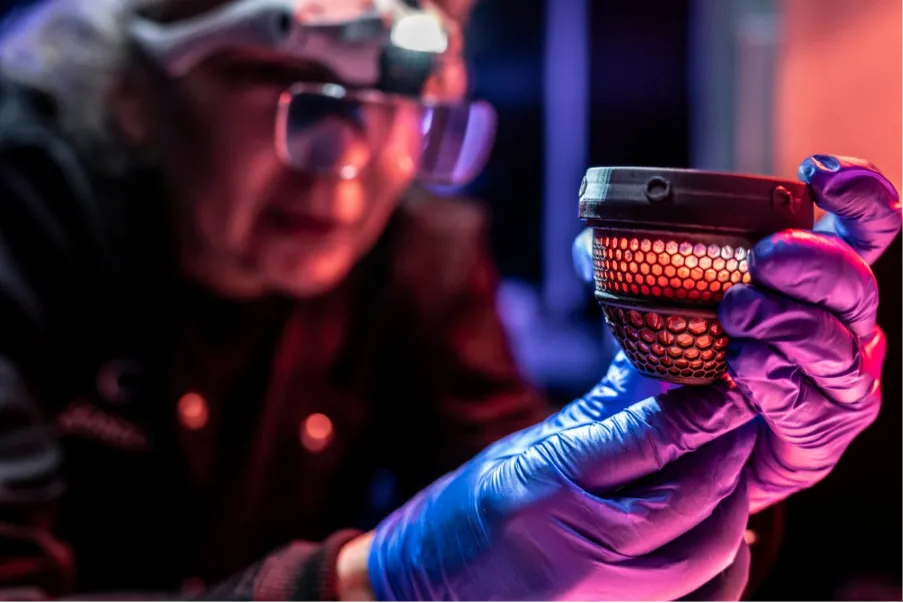
So, what’s the goal here? Well, not chickens, as we already have plenty of chickens and they are pretty easy to make the old fashioned way. Instead, the aim of this research is to bring back extinct species, such as the South Island giant moa that died out 500 years or so ago. Without eggs, bringing back species that grow in eggs is a bit of a ‘chicken and egg’ problem, so to speak. Added to this, there is no bird big enough to carry a moa egg as a surrogate. Emu eggs are 12 times bigger than a chicken egg, but a moa egg is up to 80 times bigger – the size of a rugby ball. An emu cannot carry a moa egg, and there is no other bird on earth that can.
The researchers
Australian based Colossal Biosciences Chief Biological Officer Andrew Pask and his team achieved this feat, backed by filmmaker Sir Peter Jackson, and in partnership with the Ngāi Tahu Research Centre and Canterbury Museum.
Colossal Biosciences is a US (Texas) based genetic engineering and biotechnology company, famous for its efforts to resurrect extinct animals (de-extinction) and develop advanced tools for endangered species conservation. It was founded in 2021 by tech billionaire Ben Lamm and Harvard geneticist Dr George Church.
The initial concerns
But, of course no breakthrough can come without the critics. Some were fast to point out that no peer-reviewed paper accompanied this announcement. Pask says the data on the technology would go through a peer review process, but given the implications for conservation, they felt the announcement should go ahead now. Their aim is to make this technology freely available down the track. And look, I am not a big fan of pre-publishing, but in this case there are 26 live chicks to account for, so it’s a bit hard not to draw the conclusion that there was some degree of success here.
Another concern that has also haunted Colossal’s previous work is that this success should not replace the hard work that needs to be done for the conservation of species. According to Pask, though, de-extinction projects attract more funding than regular conservation, and do not compete for funding sources.
How close are we to having a moa?
Well, it’s not imminent, as they need to get a moa embryo and enough yolk in there to support the embryo inside the egg. At 80 times the size of a chicken egg, that’s a lot of yolk. Added to that we actually need the bird – the embryo. And that’s where it gets even more tricky. To truly bring an extinct species back to life, we need a source of DNA and a living direct descendant. DNA decays, and fossil half life means that by 1-2 million years we can’t get any usable DNA at all – so we can’t get dinosaur DNA – and there will be no Jurassic Park.
Scientists have successfully extracted and sequenced ancient DNA from well-preserved subfossil moa bones found in New Zealand museum collections and caves. But the DNA recovered exists in small, damaged fragments, meaning the genome is incomplete. That means we are left with trying to patch it together from the DNA of other closely-related living species.
If we do this, it is not possible to avoid the whole debate around whether we are truly de-extincting something, or if we’re just making a new species (of emu, for example) that is genetically modified to look like a moa. This debate has already been had with woolly mammoths. Is an elephant genetically modified to have the traits of a woolly mammoth actually a woolly mammoth, or is it an asian elephant that is ‘woolly’? Colossal’s approach to date has been pretty much down this ‘look alike’ route.
What do we mean by de-extinction?
Beth Shapiro, the Chief Science Officer of Colossal Biosciences, speaking on the OER Project gives some good insights into what Colossal is aiming for with de-extinction.
She says:
“So to me when I talk about de-extinction, I’m talking about the traits, the ability to go back into that ecosystem, the ability to refill some of the lost interactions between organisms that live together in a community to make that ecosystem robust”
Colossal have been the main player in the highly publicised de-extinction efforts, and we see Pask pop up a few times too. For example, Pask was involved with the de-extinction of the Tasmanian Tiger out of Melbourne University, and Colossal hit the headlines with the woolly mammoth project. And let’s not forget the dodo and the dire wolves, both being Colossal projects. But they weren’t the first. The Pyrenean ibex, which went extinct in 2000, was brought back using clones from saved tissue samples in 2003.
Listening to Dr Helen Pilcher speak on Chris Morgan’s ‘The Wild’ podcast (Back to the future: Genetically modified wildlife) is illuminating. She puts it plainly. The wolves created by Colossal are not dire wolves. They are genetically modified grey wolves with about 20 genes edited on 14 strands. And this is out of a total of tens of thousands of genes.
Role in conservation
Pilcher talks about the role ‘genetic rescue’ could play in conservation. She boils it down to three techniques. Cloning, using genetic editing (specifically CRISPR Cas9), and gene drive - the latter being when breeds make as many of their offspring as possible have the beneficial change, thus affecting the genetics of entire populations.
An example of conservation is action is red wolves. Red wolves are not extinct, but they have a very limited population, descended from just a few wolves. They were inbred, and there just were not enough of them, not enough genetic diversity, to be viable. So scientists used DNA that had been saved to increase the ‘ancestral’ population by three wolves through cloning, thus reducing the risk of inbreeding-related side effects.
Gene editing can also potentially be used to help animals survive. For example, helping marine life have traits to survive in warming waters, or helping fish resist pollution in rivers. Basically, it can be seen as giving species traits that may have evolved anyway over a much longer period of time, but with a hurry-up to keep with the pace of environmental change.
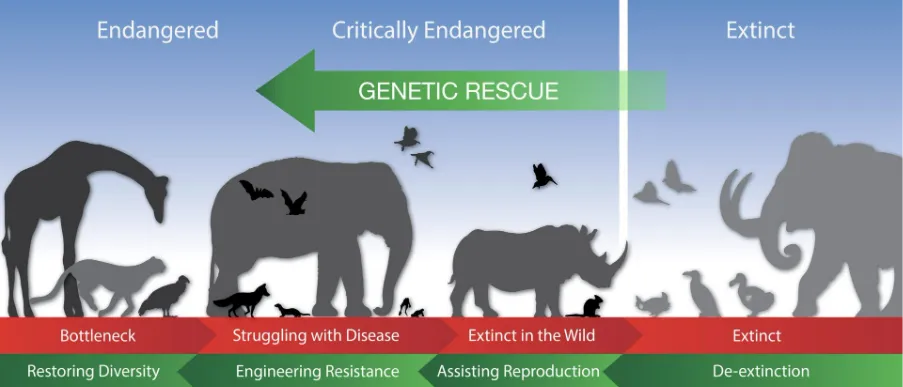
There is a great example of Colossal’s technology that was developed for the woolly mammoth project being used alongside other techniques in an effort to save the northern white rhino. There are only two northern white rhinos left, a mother and daughter in Kenya. Two females, so with no males this species is effectively extinct already.
Colossal has been taking museum specimens and working out the genetic sequence of the woolly mammoth from them. The rhino project has been raising test tube rhino eggs from the last two rhinos that have been fertilised with frozen sperm from the last two males (may they rest in peace). This has resulted in thirty test tube rhinos ready to be implanted in a surrogate rhino mother. The problem is they only have eggs from one mother, and so this population, if raised, would be inbred. That’s where the woolly mammoth techniques come in. Colossal can use CRISPR to edit in some genetic diversity in the test tube.
There is definitely some potential to similarly rescue some very endangered New Zealand birds, such as the kākāpō and kakī (black stilt) for which we have good genetic material. This could introduce some genetic variation, as these populations are currently down to just a few hundred.
Ethical and cultural concerns
Bringing back species comes with cultural concerns, and Colossal go to lengths to say how they are working with indigenous peoples in the counties they are operating in. In New Zealand that means working with the Ngāi Tahu Research Centre. It is clear that not all Māori iwi in New Zealand want to see these species brought back from the dead, or mimicked. And, if you have a spiritual relationship with the land and animals, it does feel a bit ‘pet cemetery’ kind of wrong. Also, somewhat understandably, iwi want moa bone samples and all DNA extracts and sequence data to stay in New Zealand. Bear in mind this comes from a long history of taonga being exported without permission, including ancestral remains. There are lots of individual iwi and rūnanga, and it’s important to remember that Māori cannot be treated as a homogenous group. So, bringing something as important as the moa back would need to be navigated very carefully.
There are also animal welfare concerns, as obviously this involves experimentation on birds. In the Colossal video at the start of this article, they make a big show of how well the chickens are treated.
But, importantly, if a species was de-extincted, would we be able to put it back into the environment? This is a debate already happening around the potential release of a de-extinct Tasmanian Tiger. Releasing anything raises ecological concerns. Even if a population of moa were kept penned, there would need to be at least 500 birds to maintain viable genetic diversity and so avoid inbreeding. All this would be at a cost, and there is always a risk of escape.
The gene drive strategy is really exciting, but it’s also the strategy that gets people really worried. If we engineer a creature to pass on modifications to all its young, it has the ability to wipe out entire invasive species, but this could also cause extinction in species we want to keep around. This can have a knock-on effect on entire ecosystems. There is no ‘off switch’ once it is started. Concerns have led over 90 non-governmental organisations (NGOs) to sign a call for a moratorium on releasing genetically engineered creatures into the wild.
Scientists have used the gene drive technique with one species of mosquito that carries malaria. They modified it so that it can no longer transmit malaria, and this trait would pass on to the next generation with 100% efficiency (instead of the usual 50%). They released ~1000 into a lab environment. Mosquitos have a 3 week breeding cycle, and within a couple of months’ the whole population crashed, as they could not reproduce anymore. So there’s a risk that gene drive alterations can render a species infertile.
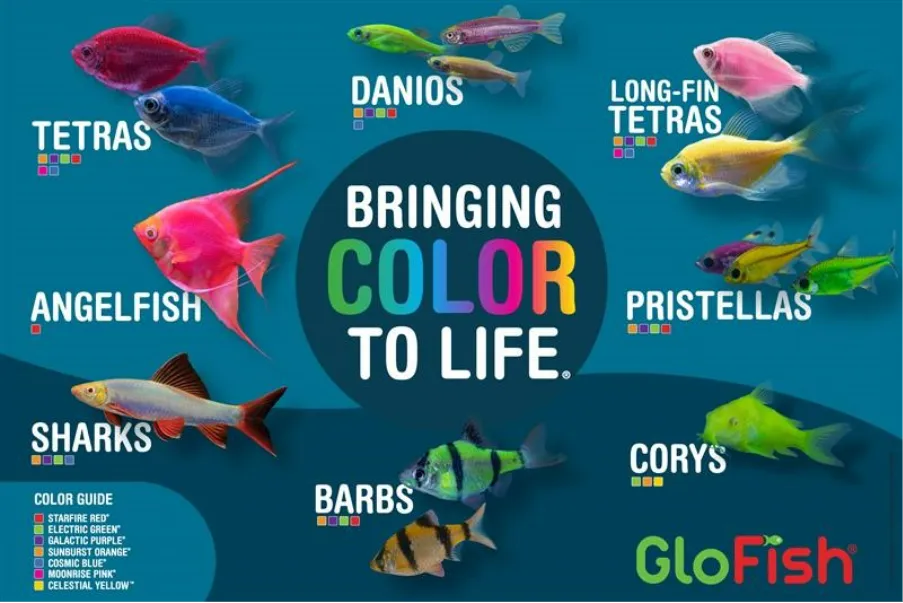
There is also an example of a genetically modified species getting out. Twenty years ago zebrafish, a favourite lab creature alongside rats, were modified to include coral and jellyfish genes, resulting in brightly coloured fish. The idea was that they would change colour with pollution, so they could act a bit like a swimming litmus test for pollution. But the fish were too pretty and the ‘glofish’ ended up getting bred and sold commercially as pets. They got out of a commercial breeding facility in Brazil into ponds that fed into waterways. In 2022 these transgenic fish were spotted in Brazil’s massive Atlantic Forest waterways. They are an invasive species that breeds faster than regular zebrafish. It is hard to know if they will die out because their colours make them easier for predators to spot, if they will breed to create something new, take over or just die out naturally.
There is also the question of whether we should just standby and let species go, or remain, extinct. Are we morally obligated to de-extinct species? There are whole philosophical debates on this. Nothing is simple.
Ultimately all this work is generating useful information, even if the de-extinction projects are a bit questionable in terms of what they are creating. The key is ensuring that information is shared, so we can get good cross pollination into conversation efforts like we have seen with the rhinos. And, getting back to the artificial egg, I think that it’s looking like a pretty great development - we just need to figure out how best to use it.
Tags: species, egg, colossal, moa, de-extinction