Tukdam
Katrina Borthwick - 11th May 2026
This article is inspired by reading Nexus, a science fiction thriller by Douglas E. Richards and Joshua Calvert. I won’t ruin the story, but it’s a page turner for sure, and draws on a bunch of dubious pseudoscience including the origin of the pyramids, near death experience (particularly the well-known Pam Reynolds case), and something called ‘tukdam’.
‘Tukdam’ refers to a state entered into by advanced Tibetan Buddhist practitioners after death. Reports are of monks with no breath or heartbeat, still sitting in a meditative position and showing unusually slow body decay. By western standards we would consider these people to be clinically dead, but for practitioners this ‘resting in tukdam’ is considered to be ‘still in the state of dying’. Normal colour, some warmth around the heart and the person remaining sitting upright for more than a day after death is not normal. The thinking goes that consciousness lingers with the body after death, and only when it departs does the body start to decay precipitously. This intrigued me enough to do a bit of poking around, and it turns out it’s not completely made up.
The research
Research led by Dr Richard Davidson over a decade was published by the Center for Healthy Minds, and this has been picked up by scientific peer reviewed papers – mainly with a cross-cultural focus. The Center is part of the University of Wisconsin, and is known for its research on consciousness, mindfulness and mediation. Beyond this research done by the Center, and supported by the Dalai Lama, most of their research is ethnographic in nature. The documentary Tukdam – The Point of Death (also known as Tukdam: Between Worlds) follows the researchers.
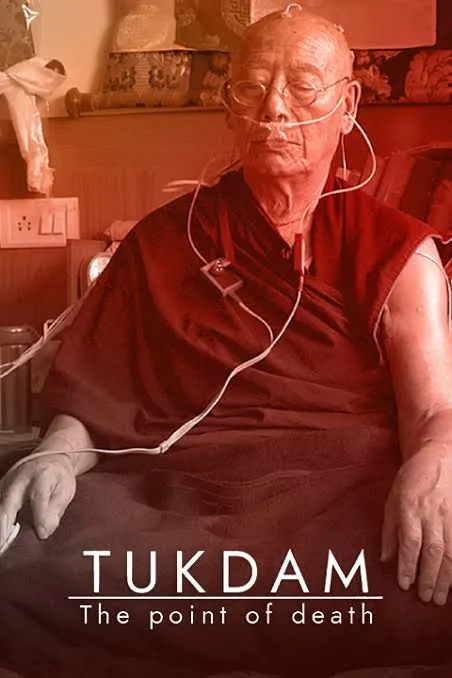
The whole one-hour documentary is available online:
There is also a dedicated website for the Tukdam Project. Just be warned, if you watch the video you will see dead bodies. I have not included any of those photos in my article, so I will leave it up to you to google them if you want to see them.
This is the first time the Dalai Lama has allowed tukdam to be the subject of scientific research. In the documentary, the Dalai Lama explains that the mediation entered into in tukdam is the deepest level of consciousness, far deeper than dreaming, dreamless sleep or even a faint. According to him, it is ‘the deepest level of subtle energy’. Later we hear it explained that someone who is in tukdam was doing very deep and very profound meditation practice all their life to recognise the nature of mind, until they become the mediation. It is explained that at that moment the body remains in a very unusual state just like life, and the mind goes into a perfect state of meditation.
Limitations
The scientists were hampered by the distances they needed to go, and the fact the deaths occurred in remote areas, often reaching them days after death. Added to this, within the Tibetan tradition it is customary to wait three days to rule out tukdam before moving ahead with cremation, so often people wouldn’t reach out until the third day. All this meant that the post- mortem brain activity was being read quite late. Critics say it should be collected within 6 hours, not several days later.
The other factor frustrating the research was the fact that scientists in the study couldn’t get blood and tissue samples, due to concerns about disturbing the sacred state.
There is evidence, in other research, of some residual brain activity right after death. As well as post-mortem measures, the researchers were wanting to get information on subjects before death, to see whether there were any differences between those that entered tukdam and those that didn’t.
The researchers found that these subjects had no detectable breathing or heart rate, but it was not initially known if there was some brain function persisting. The peer reviewed study completed in 2021, and published in Frontiers in Psychology, also reported that no brainwaves were showing up on EEG or auditory brainstem responses in the tukdam cases they investigated. This study does not support the idea that the brain is still functioning in any detectable way after death during tukdam.
Sadly here is only the one study available, because of the restrictions around access to tukdam subjects. But I suspect that western scientists may also be a bit reluctant to get on the ‘consciousness after death’ bandwagon. The sample size is small, and there’s a certain selection bias. For example, for any cases where decay is reported that does not reflect tukdam, they are said to not be in a tukdam state. That means they are only looking at cases where the indicators are already positive.
The whole study raises questions around whether the scientists might just be picking up on a natural variability in decay. Decay can be impacted by many factors, including temperature, humidity, infection, handling, diet (including herbs), body makeup and airflow. This variability is mentioned in the documentary, and they say that what they are seeing is “unusual, but also that they can’t say whether it is in the normal range or not at this point in time”. It also occurs to me that if this was the extreme end of a normal variation in body decomposition, then we may be less likely to see it in western culture, as often we don’t leave a dead body out for 3 days to see what happens.
Imagine a meditative temple room with open doors in a Buddhist monastery on a dry cold mountain, where the body is essentially left untouched in a meditative position. I wondered if that might be all there is to it. However, in the documentary they show one monk who had died in hospital and was taken back to the monastery where it’s very humid - in the hills above Dharamshala where the Dalai Lama’s temple is. At day 11 there was reportedly no smell and he looked healthy, like he was meditating. They talked about how he was checked daily to confirm he was still in tukdam – mainly by pinching his skin. If it stays pinched, then he’s considered to have left tukdam, but if his flesh springs back, then he is still in tukdam. The documentary mentioned that there were 12 cases that lasted for a good number of days. However later on they mentioned that three days is a common duration for tukdam, although in rare cases it can go on for weeks. In some cases this is in tropical temperatures.
Curiously, there was frequent mention of the bodies staying warm, but thermal imaging cameras showed the bodies to be stone cold, the same temperature as a nearby wall. But, regardless, the monks were “experiencing” the subjects being warmer. When the 16th Karmapa died in the Zion hospital, the surgeon/oncologist and the ICU director both recounted the same experience of warmth. The ICU director even said that the body started to look better - that his face was filled out and he looked more vibrant.
David M Perlman, a neuroscientist and engineer on the study, said “People experience tukdam exactly the way that the tradition says that they experience tukdam”. And further “as soon as you bring the equipment in and start to nail everything down by taking a bunch of physical measurements, then it all falls apart”. He went on to talk about how different views of medicine, and how they relate to the mind, are deeply culturally different, and that a lot of the cultural differences are things that underpin western science. He said that “the whole thing about cultural constructions is you can’t understand them from inside of them… It’s more an anthropology project with a neuroscience component, rather than a neuroscience project. Period”.
But, wait, earlier in the documentary I’m sure I’d heard the word ‘oncologist’? This prompted me to have a look as to whether some cancer treatments could delay body decomposition. And guess what? It turns out that high dose chemical treatments, particularly chemotherapy and certain medications used in cancer treatments, can have a preserving effect on the body by acting as toxins to the microbes responsible for decomposition. Further studies from the University of Tennessee ‘Body Farm’ found that cancer itself, along with neurological diseases, is also associated with a slower microbial respiration rate compared to other causes of death. Did I just solve the mystery?
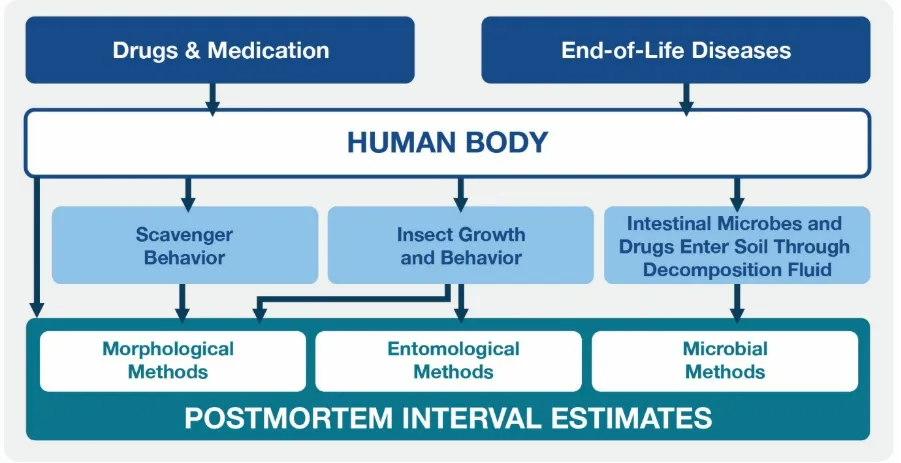
A mortician from New York City, Vanessa Lopez, checked the bodies in tukdam. She was convinced the state was not normal. When tukdam is ending, if the body is sitting, it slumps and normal signs of decay and discolouration start to appear. When Ms Lopez was called to see a subject at the end of tukdam, she noticed his blood was flowing free and was the reddish, normal colour of blood - which she did not expect. But note that she is a mortician (her title is given as embalmer), not a medical examiner or coroner. If you were going to select an expert to speak on a documentary about this topic, would it be your local funeral director?
Oh, and in case you are wondering, the sitting position doesn’t delay decay, but perhaps it does affect where discolouration or blood pooling occurs. I didn’t dig too far into that, as I don’t particularly want to look at pictures of dead bodies. Also, at this point my internet search history was starting to look like a crime scene, and I’m desperately hoping nobody nearby carks it any time soon, as there may be an awkward conversation with the Police.
The findings
In terms of consciousness? Well, there is no evidence from this study of consciousness existing without the brain. This is just another drop in the long running debate around the mind-brain (or mind-body) duality, which I won’t get bogged down in. There is an observed delay in decay in some cases, which is interesting. But it’s a leap of logic to get from that to ‘consciousness surviving death’. However that very concept is absolutely central to the Buddhist belief. If consciousness exists outside of the physical brain, then you can see why the Dalai Lama may be motivated to produce evidence of this.
The research shows no evidence of ongoing consciousness, or metabolism sufficient to imply awareness, or of reproducible physiological effects that are unique to tukdam. Near the end of the documentary, the Dalai Lama’s physician expresses his disappointment in the project, as the Dalai Lama was looking for some proof that consciousness continued after death. The researcher responded really clearly, saying “We cannot prove rebirth. We cannot prove mind. We cannot prove subtle mind. What we can do is look at the effects of those practices on the body that are unusual, and that western science doesn’t have a good explanation for.” He then talked about the fact they were getting to the EEGs too late. The physician responded that it wouldn’t make any difference, as “the subtle mind is so deep down” and a machine won’t be able to pinpoint it. Gosh, that sounds like a familiar religious argument through and through.
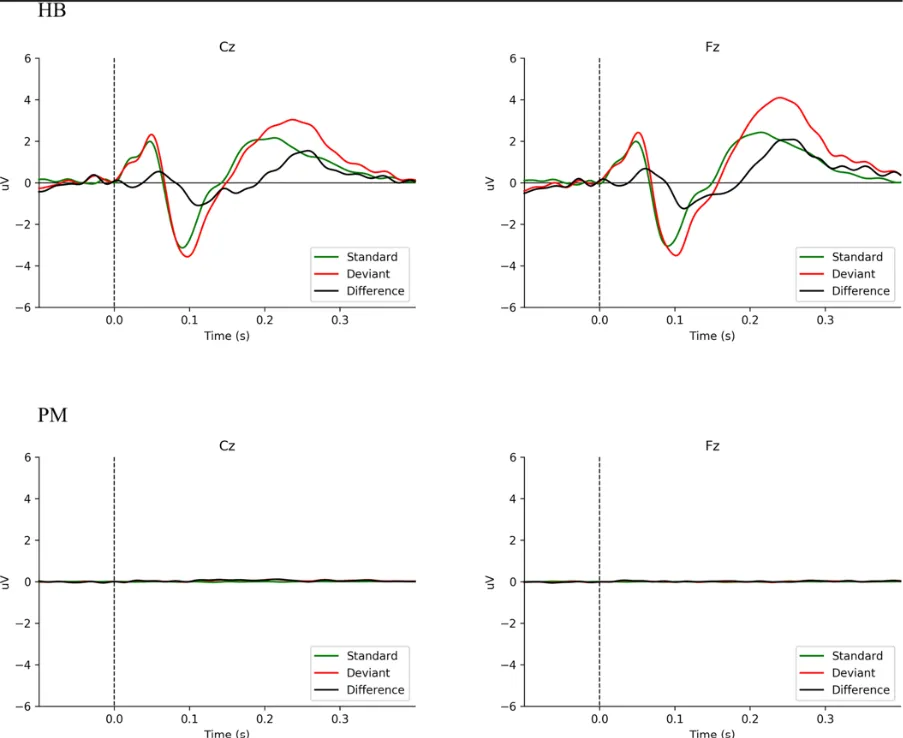
Comparison of averaged MMN wave forms for all Living Subjects (HB) and Postmortem Subjects (PM).
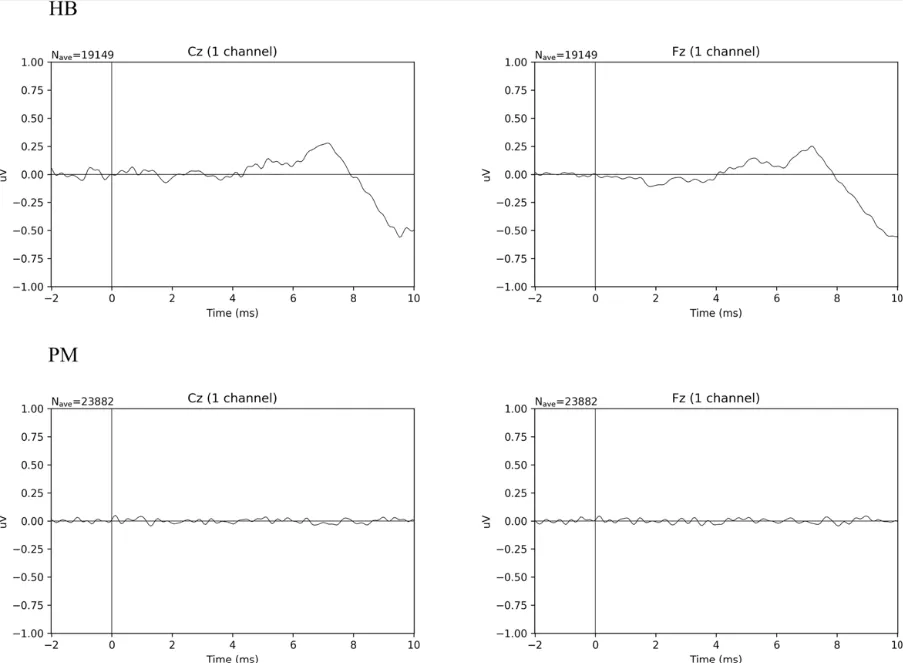
Auditory brainstem response: Comparison of averaged ABR wave forms for all Living Subjects (HB) and Postmortem Subjects (PM).
It’s worth noting that this is not a Buddhist specific, or even non-western phenomenon. In western culture, ‘incorrupt saints’ are Catholic figures whose bodies did not undergo natural decomposition, often remaining lifelike or emitting a “sweet smell” for years or centuries after death. They include St. Bernadette, St. Teresa of Ávila, St. Vincent de Paul, and St. Catherine Labouré. These cases are viewed by the Church as miraculous, with many bodies preserved intact for veneration. Sadly there are no recent cases, as far as I’m aware, for scientists to involve themselves in.
The study featured in the documentary does continue, though, and a research team form Moscow State University have now also started studying tukdam, and are collaborating with Davidson.
Conclusion
My reading of this topic is that this is a cultural phenomenon, rather than any kind of proof of post-mortem consciousness. A 2025 paper by Tenzin Namdul from the Center for Spirituality & Healing talks about tukdam in Buddhist practice being one facet of the way death and dying is approached, being a cultural model for an “ideal” death that guides approaches to dying for oneself and others. I tend to agree that this adds more to the field of anthropology than medical science, but I’m still fascinated as to what exactly is going on. We need more information.
The research isn’t the only thing I will be keeping a close eye on - I’ll never be able to look at a room of meditating monks again without checking that they’re all alive.