When it's not okay to Givealittle
Daniel Ryan, Mark Honeychurch - 28th April 2026
A few years ago at the Society for Science Based Healthcare, we attempted to tackle what we saw as a problem with the fundraising website Givealittle.
Obviously Givealittle does a lot of good work allowing people to fundraise, taking away a lot of the administration overhead involved with setting up a website, online payments, advertising, etc. But it also allows people to raise money for unproven treatments, often the kinds of pseudo-medical interventions that are obviously a scam. So we sent our first email, outlining our concerns:
To whom it may concern,
We at The Society for Science Based Healthcare (SBH) applaud the hard work your charity has undertaken helping people to fundraise for worthy causes - especially in the case of medical causes, where novel treatments are often so expensive that they are often out of reach of the general public, and where our public health system sometimes doesn’t stretch to covering all the costs involved with the day to day process of caring for someone during the course of their illness. However, we have recently been concerned by the number of causes on your website where money is being requested to fund a wide variety of pseudoscientific, often dangerous, medical treatments.
It would be great to see Givealittle do more to protect both donors and recipients, and to reduce the amount of money being donated to fundraisers where the funds will be spent on unproven therapies. Has Givealittle considered putting safeguards in place such as:
- Not allowing pseudoscientific treatment claims to be made by users of the website.
- Making it clear to donors that for certain causes their money will go towards funding non evidence-based treatments.
- Not allowing fundraising for treatments that are not evidence based.
In case it’s not clear what we mean when we talk about non evidence based treatments, here are some examples of fundraising drives on the Givealittle website:
The case of an infertile couple who, after the trauma of an ectopic pregnancy and six miscarriages, fell under the influence of a “doctor” of acupuncture, Vitalis Skiauteris. This practitioner has unfortunately convinced the couple that “fertility acupuncture” is their “only hope,” and has persuaded them to undergo three sessions a week, at an expensive $75 per session. There is a lack of evidence that it works. Preying on the despair of this couple is a sad thing to see. Your company’s platform should protect donors and recipients alike against such swindles.
Searching the Givealittle website with the keyword “cancer” brings up many heartbreaking cases where desperate people with serious medical issues are wasting their scarce resources on ineffective treatments.
A case from 2018, where a total of $2,186 was donated so that a person could attempt to treat cancer with an intravenous Vitamin C treatment. Vitamin C has not been proven to work against cancer.
Or a case from 2015, in which a total of $7,802 was donated so that a person could attempt to treat cancer with intravenous Vitamin C treatment, “magnet therapy,” and dietary supplements; and supplements are not without risks. None of these treatments have been shown to work against cancer.
Or a more recent case from 2020. During the middle of the pandemic, $1,250 was donated so that a person could attempt to treat cancer with “Vitamin C injections from a local doctor, Osteopathy, Acupuncture, superfoods, detoxes, cleanses and even a full on session with a local Shaman” It goes without saying those shaman sessions are not an effective cancer treatment.
People are genuinely harmed when money is spent on pseudoscientific fraud, when those same funds might have been spent on treatments with proven effectiveness, such as chemotherapy or radiology.
Given the lack of efficacy for alternative therapies, and the extreme situation these unfortunate, very sick people find themselves in, there appear to be definite winners and losers with this category of fundraising drive. The losers are both those who are sick, often terminally, and those who donate their money to fund treatments that don’t work. The winners are the alternative medicine practitioners, who are selling their expensive unproven treatments to the unwary, and Givealittle, who take a flat 5% fee from all donations. We understand that Givealittle is non-profit, and that donation fees don’t cover running costs, but it’s still the case that some money given to fund ineffective medical treatments ends up paying for the salaries of Givealittle staff.
SBH hopes that you would take some time to consider the damage to people’s health and wellbeing that your platform appears to be facilitating, and look into ways that your organisation could act to minimise this damage.
Thank you,
Daniel Ryan
The Society for Science Based Healthcare
Mel Steel, the General Manager from Givealittle, responded. Sadly it felt like she failed to engage with many of the points that we had made:
Hi Daniel
Thank you for your patience and apologies for not responding sooner - it becomes a busy time of year leading up to Christmas.
Firstly thanks for getting in touch with us and sharing your concerns.
It would be good to explain our moderation process. Every page set up on Givealittle is reviewed by one of our team to ensure a page does not breach our terms. We take great care when a page is set up to fund treatments to see if 1. it is publicly funded or 2. if it makes claims that the treatment is scientifically proven when it is not as this could potentially be misleading to donors. We also have a Report this Page function that can be used by anyone in the public to raise concerns regarding a page, including misleading claims.
Whilst we do not allow pseudoscientific treatment claims to be made on a Givealittle page, we will not restrict fundraising for pages for treatments that are not evidence based. For example one of the pages you referenced: https://givealittle.co.nz/cause/her-battle-with-cancer-naturally . They have stated that they are not opting for conventional treatments and have not stated that vitamin c is an evidence based treatment. Donors are aware of this and have chosen to help regardless. Whilst you say that funds might be spent on treatments with proven effectiveness, such as chemotherapy or radiology, both these treatments are publicly funded in NZ. We believe in the donors right to choose to support the people and causes they deem worthy.
Givealittle is a neutral platform and we are guided by our Terms, part of our content management policy is for these not misleading content on a page. We also want transparency to donors - if funds are going to be put towards a treatment of some sort, evidenced based or not, we would prefer this was listed on the page so the donors can make informed decisions to donate and the general public then has the ability to raise concerns via our report this page function or ask a page owner a general question on the Givealittle page.
We do have our 5% fee however that has no bearing on what pages we allow or not - it is our Philosophy and Terms that guide us and our neutrality and donors right to choose are key in this.
We have shared your concerns with our team as we think it is important for us all to be aware. This is something that has been discussed previously hence why it feeds into our moderation process. It is also something we will continue to be aware of and give consideration to.
We appreciate you taking the time to contact us and Merry Christmas.
Many Thanks
Mel
Customer Care
Mel had tried to argue that the donors have a right to support who they want to. Of course we weren’t saying that people shouldn’t have the right to give money to anyone they choose to, but what we were arguing was that Givealittle could and should choose to not facilitate the giving of money to charlatans via their website. This would not stop people from being able to solicit donations outside of the Givealittle website, and would not stop others from donating to them - it would simply make sure that Givealittle isn’t facilitating the enrichment of snake oil salesmen, and personally profiting themselves off of these transactions. We figured that this would be an obvious ethical stance that Givealittle could take that could do something to restrict the amount of money made by obvious charlatans. So we wrote back, addressing the points that Mel had made, and doubling down by showing that Givealittle claimed it was already fact-checking all fundraising pages, even though it was obvious that this wasn’t happening (or at least wasn’t being done effectively):
Dear Mel,
Thank you for taking the time to reply to our concerns. It’s great to hear that there are some checks and balances in place before a campaign goes live, but it’s also sad to read that you consider that neutrality is an acceptable position to take when it comes to the serious topic of people’s health, often including terminal illness, and the raising of money to pay unscrupulous alternative medicine practitioners for unproven, frequently dangerous, treatments. As such, we would like to follow up on some of the points you have made, as we remain concerned about Givealittle’s potential to cause real harm.
Although Givealittle’s philosophy page (https://givealittle.co.nz/content/howgivealittleworks/the-givealittle-philosophy) mentions that Givealittle is an “open access platform”, the page also goes on to say that “We ensure a trusted and safe environment - we moderate all pages created on Givealittle to ensure that they are not false… We also require that pages are clear in purpose, and factually true in content.” It is this part of the philosophy that we are concerned Givealittle is not adhering to, despite any checks the organisation may currently have in place.
We all know that in New Zealand, there are evidence-based medicines for life-threatening conditions that are not funded, or poorly funded, and it makes sense for Givealittle’s customers to be able to fundraise for those kinds of treatments. We are not asking for Givealittle to refuse service to those seeking to buy unfunded medicines, visit overseas clinics to receive evidence-based treatment or risk novel therapies that are new to the market.
However, we have seen claims made on fundraising campaign pages on Givealittle stating that acupuncture, colloidal silver, turmeric, cannabis and vitamin C are “treatments” for cancer. These claims are patently false - the therapies being listed are not treatments of any kind, rather they are the tools of predators preying on vulnerable victims who are desperate to try anything. The “treatments” are a scam, pure and simple - and Givealittle is enabling the people who perpetrate these scams, helping to put money in their pockets.
Recent examples of this issue include a 2021 cancer fundraiser that has raised $4,590 so far:
“Funds are required for: IV Vitamin C Infusions x2 weekly =$488 p/wk, Supplementation =$150 p/wk, Weekly Colonics =$100 p/wk, Flow $80/fortnight, Organic Foods and Juicing, Infrared Sauna =$3879, Kangen Machine K8 =$6635.50, Ozone Mat =$735, RIFE Machine $4500, Lymphaciser =$595”
And another 2021 cancer case that has raised $16,940:
“Donations received will be used to pay for the IV Vitamin C and the other therapies Anne is using e.g. probiotics, ‘green shots’ (whole nutrition supplement), detox products, bilberry juice, Hoxsey treatment (Mexico), etc.”
We believe that Givealittle has a responsibility to proactively reduce the severe possible harm caused by these fundraising campaigns - whether or not the causes are reported to you by the public. In fact, we doubt that many of the people giving money for these pseudo-scientific treatments will even be aware that they don’t actually work - most people simply do not have the time or expertise to understand the science involved in evaluating these kinds of treatments. We think that more transparency needs to be given by Givealittle, so that donors know more about what they are putting their money towards - and that for egregious examples like the ones we have shown above, steps are taken to ensure that Givealittle isn’t complicit in raising money that ends up in the pockets of dangerous scammers.
In this day and age, it’s not acceptable for online services to claim that they are not responsible for the content posted on their platforms. Neutrality in these matters does not work, and is not an acceptable stance to take in the face of dangerous misinformation. We have recently seen both Twitter and Facebook come to the understanding that active policing of the content posted to their platforms is needed. It’s worrying that Givealittle appears to think that this responsibility does not extend to them.
We hope that Givealittle takes our concerns seriously and welcome any steps taken to clean up the problematic campaigns hosted on the Givealittle platform. Givealittle does a great job of helping those in need to access funds, and we applaud this work, but it’s obvious that more could be done to protect users of the site.
Please do not hesitate to let us know if you need any more information from us or anything we can do to help.
Regards,
Daniel Ryan
Society for Science Based Healthcare
Sadly Givealittle never responded to our second email, but it’s obvious from a quick browse of Givealittle that people are still fundraising for unproven therapies:
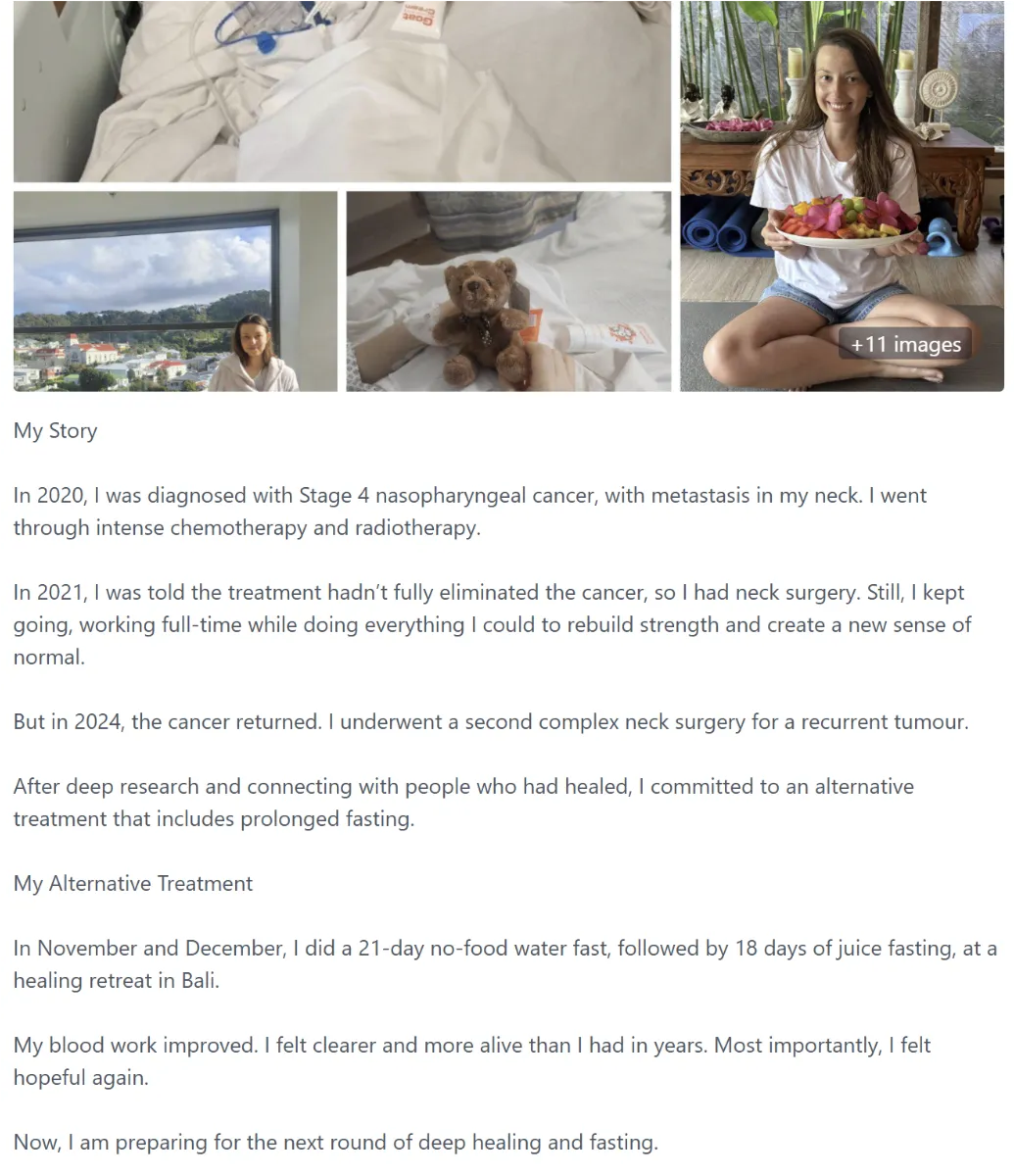
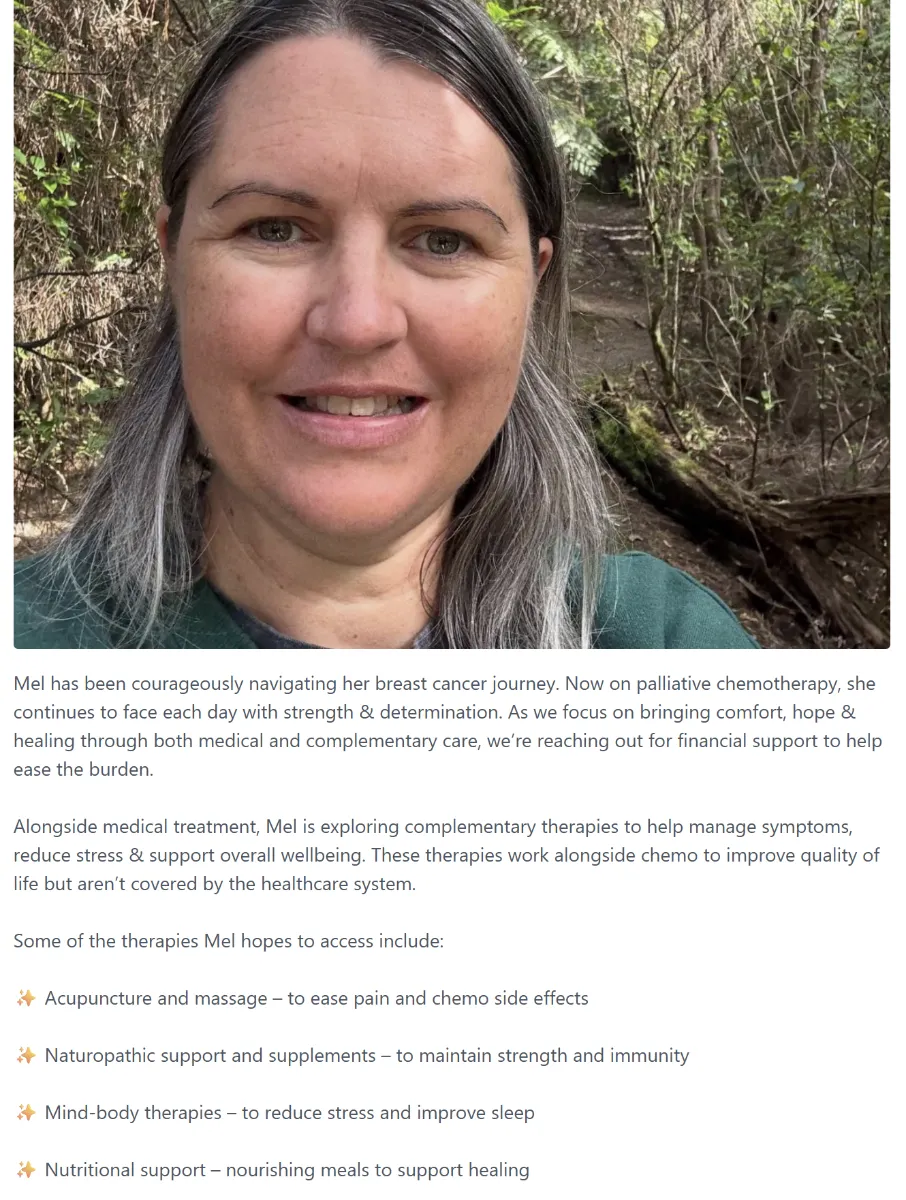
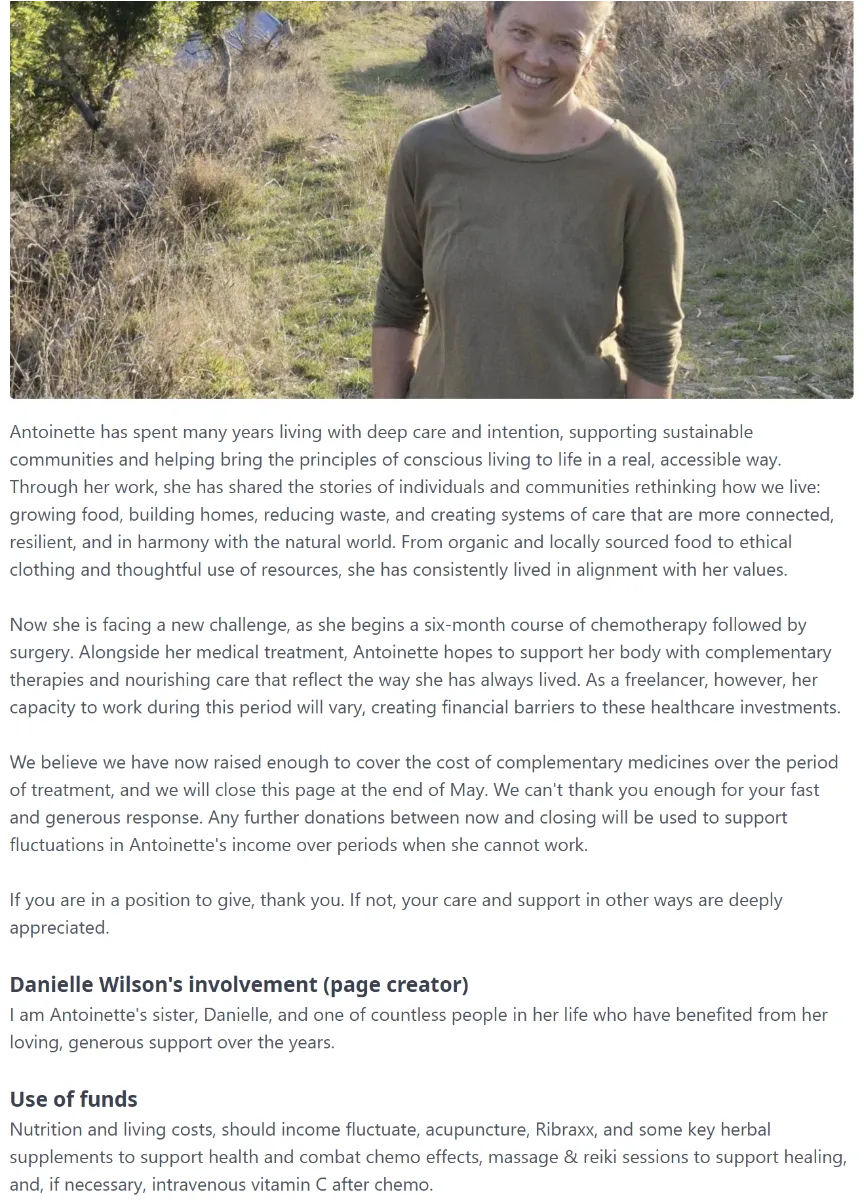
To be clear, we understand that these people are in a horrific situation, and that it’s their right to choose to deal with their illnesses in any way they want. But we also think that the medical “professionals” who are “treating” these people do not deserve even a single dollar of the funds raised through Givealittle. These practitioners are selling false hope to desperate people, and it’s sad that Givealittle isn’t willing to even try to stop their website being used as a conduit for this ill-gotten money.
Tags: givealittle, treatments, page, people, money