Iran's Potemkin Problem
Mark Honeychurch - 28th April 2026
A couple of decades ago I backpacked around Iran, and to this day I consider it to be one of the most fascinating, rewarding countries I’ve ever visited. Without meaning to bore you, here’s a short summary of some of the highlights:
I’ve seen things you people wouldn’t believe. The beautiful bridges of Esfahan, amazing ruins at Persepolis, the Grand Bazaar in Tabriz. I stayed with oppressed Kurds at the border with Iraq, made a pilgrimage to Zoroastrianism’s eternal flame safely kept in a cave in the middle of the desert, and stood on top of a tall building overlooking the impressive wind towers of Yazd. I climbed the ziggurat at Chogha Zanbil, ascended to the top of a dormant volcano at Zendane Soleyman, walked around the historic city of Bam, slept on the beach at Bandar Abbas, and travelled to Hormuz island by boat. I visited the religious city of Qom, climbed one of the Towers of Silence, watched hundreds of men self-flagellating on the streets of Tehran, saw women in the mountains taking the risk of walking in the open without a headscarf, and even managed to visit the US Embassy - which is usually closed to the public. All those moments will be lost in time, like tears in rain.
Anyway, enough of my reminiscing…
Although Donald Trump’s ill-planned war (that is also not a war) is not what I consider to be good for Iran, I do at least agree that regime change in Iran is needed - obviously there are serious issues with Iran’s current religious leadership. Iran seems to suffer from the same problem that many autocratic countries have, something that is often seen in countries like North Korea, Turkmenistan and China. It’s a form of sycophancy that even has a name - “Potemkin Village”. As Wikipedia states, “A Potemkin village is a construction, literal or figurative, that provides a façade to a situation, to make people believe that the situation is better than it actually is”. The name comes from a story about Field Marshal Potemkin supposedly using a fake, portable village to impress Catherine the Great and accompanying allies during a trip to Crimea. Supposedly the village was repeatedly set up in advance of the travelling party arriving at barren, inhospitable locations as a way to show that the Russian Empire was thriving. In reality it appears that this idea is a myth, and never happened, but we’re left with a nice phrase that I can use to describe Iran’s current predicament.
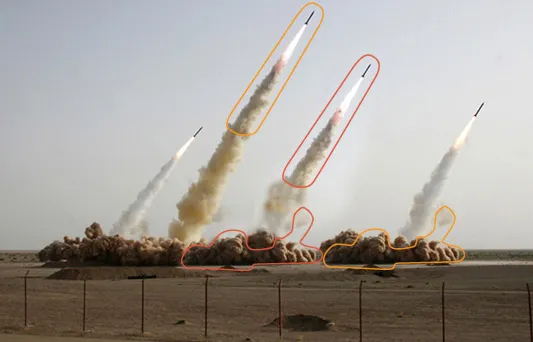
Iran has seen its fair share of “Potemkin Villages” in the past nearly five decades since the Iranian Revolution. Whether the fakery is aimed to boost someone’s political profile domestically, or to strike fear into the heart of Iran’s enemies internationally, the subterfuge has often been laughably bad. The three images below show just how bad these fakes can get. In order, they are:
-
a copy/pasted rocket launch with the cloned elements marked in red (this was done to cover a failed launch of one of the rockets),
-
a drone image that was stolen from a Japanese university and lightly photoshopped to remove some windmills, and
-
an image of a jet supposedly in-flight, that in reality is a composite of two images - one a stock image of Mount Damavand in Iran, and the other a picture of a non-functional plane on the ground at an air show (the components are on top, and the composites below).
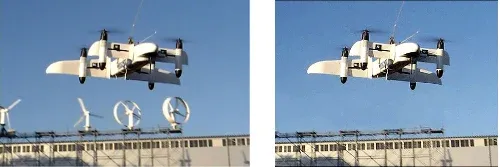

Other military fakes have included a submarine launch that turned out to be footage of a Chinese sub, and big promises about both the IAIO Qaher-313 and HESA Kowser aeroplanes that were untrue back when they were unveiled, promises that are still unrealised today.
In recent years this trend of lying to try to make Iran’s technology seem more impressive than it actually is seems to have been getting worse. Here are some of the most egregious examples I’ve found from the last two decades:
Back in 2007 Iran’s Health Minister announced that an Iranian company had invented a new treatment for HIV/AIDs. However, it turned out that the product, IMOD, was a mixture of herbs (rose hip, nettle and tansy), along with selenium, that has been “electromagnetically treated”. There’s a dearth of studies on the product outside of Iran (and a lot of international skepticism), but many studies produced within the country, many of them constituting a “fishing expedition” to see if IMOD (also known as Setarud) can treat a range of conditions, including type 1 diabetes, Alzheimers, strokes, canine visceral leishmaniasis, ageing and more.
Future prediction computers have been touted not once but twice in Iran. Firstly, back in 2013, a young inventor called Ali Razeghi claimed to have made a briefcase-sized device containing both hardware and software that he had developed, and that using this software he could predict events up to 8 years into the future with 98% accuracy. Although the media mostly called this invention a “time machine”, this was a misnomer that seems to have come from Razeghi’s claim that the device “will bring the future to you”. The device was apparently registered with the Center for Strategic Guidance for Inventors and Initiatives, which sounds official until you find out that the CEO of the organisation is… Ali Razeghi. If you want to know more, this translated article is a good start.
Following on from this fantastical claim, during a meeting in 2023 where Iranian president Raisi was meeting with the “top 1%” of scientists, a university professor, Davood Domiri-Ganji, claimed that he’d figured out that the government could use the popular Python programming language to read the future - with an ability to predict medicine, military, and economic developments. The incident was quickly named “Python-gate” by switched-on Iranians online, as it was obvious just how embarrassing it was internationally to have someone so uninformed meeting with the president. Apparently Davood also talked about how our bodies already contain Artificial Intelligence, although I couldn’t find any more details about this claim or what it meant. A quick look of Davood’s academic output shows that he’s no stranger to the Python programming language, having published several papers where he has used the language to process data, so maybe this was just a case of him becoming a little overly-enthusiastic when talking with a superior.
In early 2020 the Iranian Revolutionary Guard announced that they had designed a handheld COVID 19 detector, based on “magnetic resonance”. Major General Salami described the operation of the device:
“A sample of the virus is placed within the device and as the device scans the perimeter it looks for a match, once it finds one it pinpoints it and tells us”
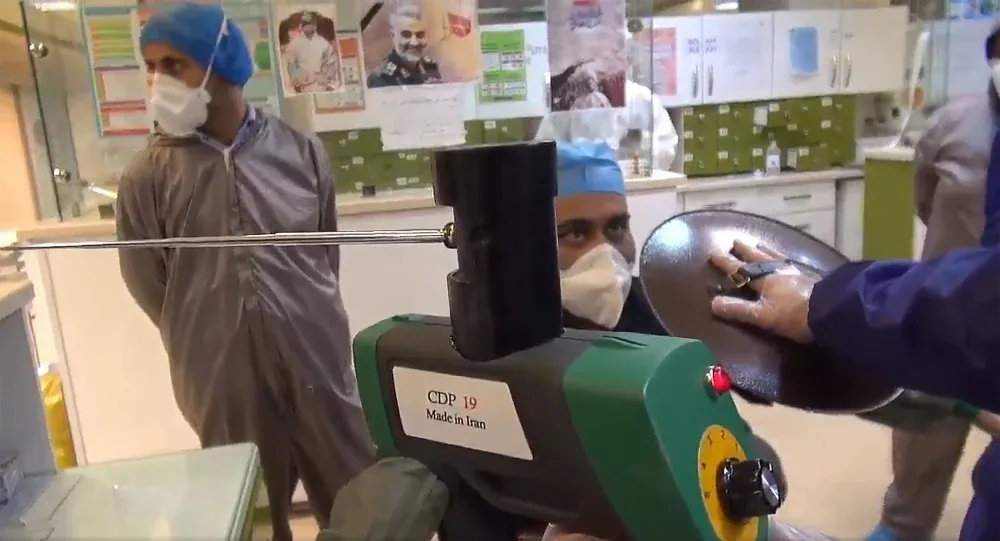
Between the description and the image above (showing a plastic device with an extendable metal antenna on a hinge), seasoned skeptics might find that their alarm bells are ringing, and that the ADE 651 “bomb detector” debacle has sprung to mind. And it turns out that Kambiz Golshani, an Iranian inventor, has been pushing this device for a couple of decades in Iran, promising that it can do everything from detecting groundwater and copper, to helping with fuel smuggling, finding hidden explosives and locating lost aeroplanes and corpses. In reality, this is nothing more than a dowsing rod, incapable of detecting anything, and powered by the Ideomotor Effect.

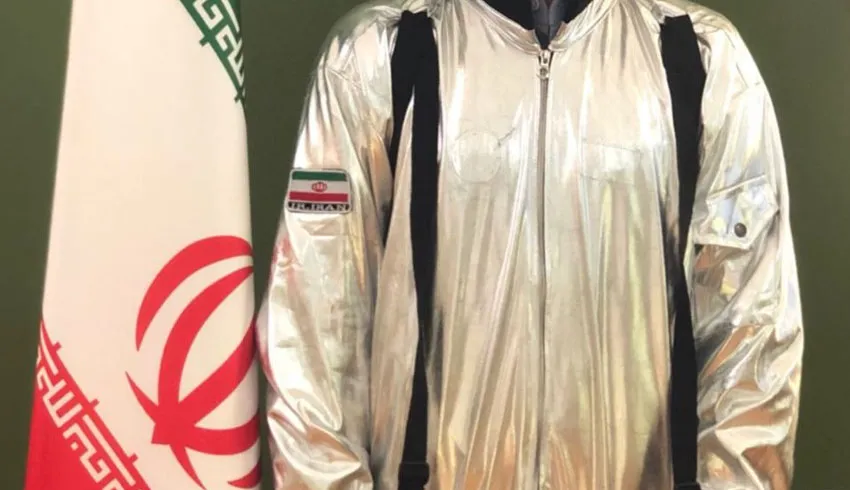
In 2020 Iran’s Minister of Information and Communications Technology posted a picture on Twitter of a new Iranian-designed spacesuit. This turned out to be a cheap halloween spaceman costume being sold on Amazon with some of the badges removed and replaced with more official-looking badges. Here’s a comparison of the two, and if you look closely at the front of the second image you should be able to see where the two badges on the front of the costume have been removed.

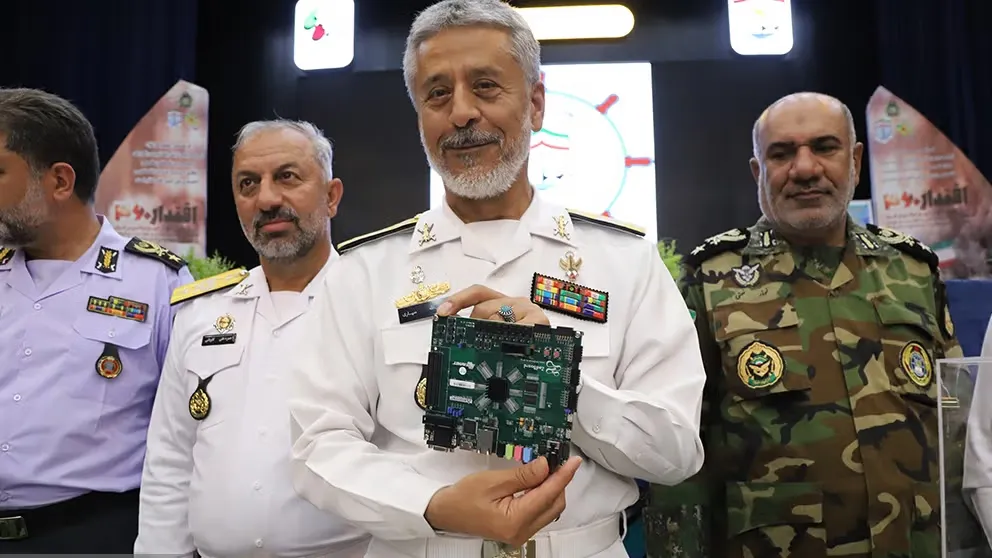
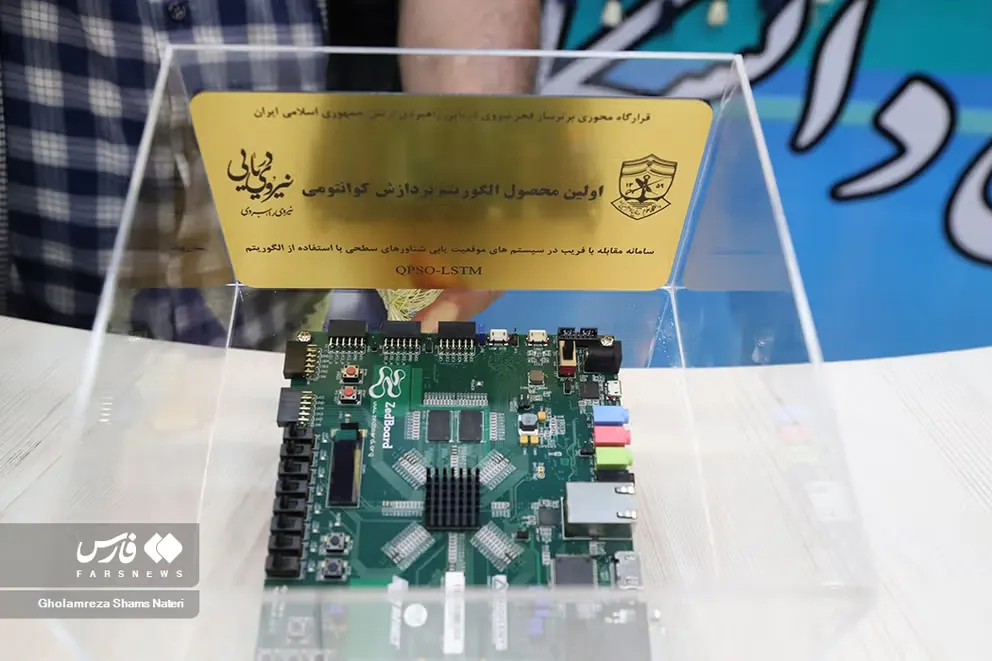
In 2023 Iran’s Navy announced that it had created a quantum computer, proudly displaying the device at a press conference. Rear Admiral Habibollah Sayyari said that it was “a system to counter navigation deception in detecting surface vessels using the quantum algorithms”. In reality, it was an FPGA (Field Programmable Gate Array) board that can be purchased from its maker, Diligent, for about $1,000. Although FPGA is cool technology, allowing IC hardware to be reconfigured on the fly, it’s a long way from being “quantum”.

It turns out that this issue of academics being willing to be economical with the truth in an effort to impress the powers that be is well-known to academia. There’s even a paper from Stanford where what appear to be five members of the Iranian diaspora have written in detail about the problem. The paper from 2019, titled “The Scientific Output of Iran: Quantity, Quality, and Corruption”, tries to figure out what’s behind this issue:
“Iran’s high-ranking officials and state media frequently boast about a recent miracle that has happened in the country’s scientific output (or scientific production, as it is often called). To what extent are these claims true? Which socioeconomic, political, and demographic factors might have contributed to this process? Besides quantity, how has the quality of scientific output in Iran evolved over time? How does Iran perform in this realm compared to other countries? And, what have been the positive implications and negative side effects of the state’s policies for boosting research and innovation?”
The paper lists “academic corruption” and a publish or perish mentality as major factors behind some of the worst behaviours that they’ve seen - behaviour that has apparently led to a state where Iran “holds the top rank of paper retraction rates in the world”. As the paper’s Summary says:
“If there is no fundamental change in the current paradigm, the ultimate outcome of such scientific policies will be nothing but a facade of scientific accomplishment with a disproportionately small contribution to real scientific progress and an even smaller impact on the welfare of the nation.”