Climate Platitude Bingo
Reef Spotter - 17th February 2026
On a fine summer evening in South Canterbury in early December, I set off for a public meeting at the Phar Lap Raceway in Timaru. I’d seen an advertisement in the local newspaper for a “Climate Change Tour” hosted by Groundswell and the Methane Science Accord.

The speaker was Dr. William Happer, an affable 86-year-old professor emeritus from Princeton University. The groups had sponsored him to fly out from the U.S. for a nine-day tour of ten mostly provincial centres to share his stance on climate change, which, according to the advertisement, is that “…carbon dioxide has only a modest (not catastrophic) effect on climate, and that increased amounts in the atmosphere can benefit plant growth.”
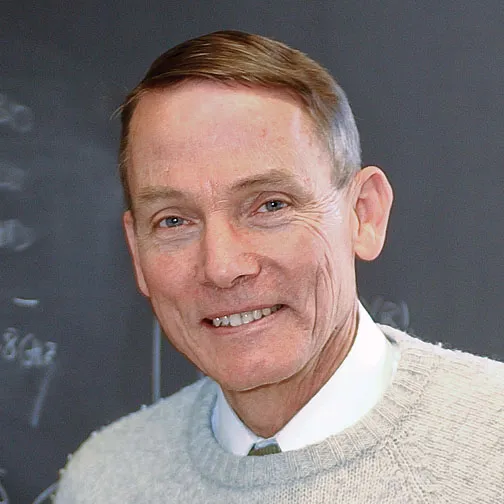
I was aware of William Happer after attending an earlier Groundswell-sponsored tour in 2023 featuring another elderly American scientist, Thomas P. Sheahen, who championed an unpublished 2022 paper by Happer and A. Van Wijngaarden claiming that methane is not a “relevant” greenhouse gas.
Groundswell has received considerable attention in the past, most notably for their “Howl of a Protest” and later “Mother of All Protests” held in centres around New Zealand in 2021 to oppose regulations designed to protect water quality and indigenous biodiversity. The Methane Science Accord is a more niche organisation focused on lobbying the New Zealand government against taxing ruminant methane. This group has been spun up around questionable science, including the 2022 Happer & Van Wijngaarden document, and an earlier 2018 piece by Tom Sheahen and retired AgResearch ruminant scientist Jock Allison - a fulsome debunking of which is provided by University of Canterbury climate scientist David Frame in the NZ Farmers Weekly opinion piece: Methane myths come up against textbook science.
As well as being unconvincing iconoclasts, Sheahen and Happer are leaders of different tax-deductible, not-for-profit educational organisations - the Science and Environmental Policy Project (Sheahen) and the CO₂ Coalition (Happer) - which provide entire burrows full of rabbit-hole material for a curious person to explore, especially with resources like DeSmog Blog, Exxon Secrets, and the book The Merchants of Doubt by Naomi Oreskes and Erik M. Conway. Both organisations have direct and indirect funding links to ExxonMobil and various right-wing think tanks such as the Cato Institute, the Marshall Institute, and the Heartland Institute.
There is an amusing account of a Greenpeace prank on William Happer’s Wikipedia page that exposes his ethical elasticity. Unfortunately, this prank was not part of the line of questioning during a recent appearance by Happer and his colleague Richard Lindzen on the Joe Rogan Podcast in November. An excellent skeptical account of that episode can be heard on episode #46 of the Know Rogan Experience podcast.
I had never been to the Phar Lap Raceway before, but I knew I was heading in the right direction when I found myself following an immaculate red mid-’90s Ford Falcon ute with a Jesus fish on the back. To my surprise, there were at least 70 vehicles in the car park, overflowing into a neighboring paddock. I gathered my things and joined the queue into the meeting room - before realising that several men in army fatigues were standing at attention, and a bloke in a ghillie suit was by the front door. After half a minute of growing consternation about the apparent militarisation of Groundswell, I was relieved to realise that I had mistakenly lined up for the Timaru Air Training Corps maneuvers. Once in the correct meeting room, it was standing-room only, with at least one hundred mostly grey-haired men packed into a fairly large space. After a brief introduction from the MC, Dr. Happer launched into his PowerPoint presentation titled Cattle, Greenhouse Gases and Climate with surprising gusto for a man of his age, despite having already given one presentation earlier in the day in Christchurch.
It would be tedious to fact-check every claim and assertion made over the next 50-minute lecture and subsequent 40-minute Q&A session. However, the main body of the lecture consisted of jargon-heavy assertions sprinkled with sarcastic snipes against “the geniuses in charge” and authoritative hot takes such as:
“If all 1.5 billion ruminant livestock on the planet were killed, then it would only reduce temperatures by 0.1°C.”
“Animals have always released methane, and the emissions of domesticated livestock are equivalent to the wild animals they’ve replaced.”
“We could double CO₂ to 800 ppm and it would have virtually no impact on climate.”
“Warming caused by CO₂ and methane is too small to measure.”
“Positive feedbacks don’t occur in nature - all feedbacks in nature are negative. This is the Le Chatelier Principle.”
“Nobody knows why methane levels in the atmosphere are increasing at 0.5% per year.”
The final 15 minutes of the presentation were dedicated to the real take-home message: that CO₂ is good for plants, and more CO₂ is better. Happer’s reasoning is that plants reduce the number of stomata (leaf pores) when CO₂ increases, reducing water loss from transpiration (“100 molecules of H₂O lost for every one molecule of CO₂ gained!”). Therefore, plants growing in a more CO₂-rich atmosphere are more drought-resistant.
Happer’s concluding remarks referred the audience to a book first published in 1841 entitled Extraordinary Popular Delusions and the Madness of Crowds by William Mackay, claiming that “climate alarmism” is an example of a popular delusion, and that fanatical victimisation of cattle at the urging of teenage girls like Greta Thunberg has historical precedent. “It’s only the university educated that think this stuff is true; most people in the real world know that there is nothing wrong.”
Questions from the audience covered a broad range of topics, including: Why are there fossils in the desert? Have you been invited to speak to the UN Climate Committee? (“No, I’ve been banned.”) Would halving CO₂ be dangerous? And “What about vaccines for cows?” My favorite response was Happer’s reply to “Why are they causing a panic?” - apparently a combination of financial motivations of the news media (“bad news sells”) and a global post-WWII conspiracy to motivate collaboration between world powers: “People need purpose, and what better purpose than saving the world? Look up the Club of Rome - they wrote it all down!”
In his final platitude for the evening, William Happer suggested we might be reaching “peak climate hysteria” and cited a new poll of under-25s in the United States showing that younger people are less likely to believe in climate alarmism. Unfortunately, according to Happer, the 25–45 age group remains decidedly committed - and with apparently no irony whatsoever, the 86-year-old declared that we might have to wait for that age group to “die off”.