All tags

Articles tagged with "truth"

Twisting the truth

It's weird not having had a newsletter out last week. Hopefully you didn't miss us too much! As our sole editor I'll be keeping to a biweekly schedule for now - although if we get more content coming our way from readers and committee members, who knows, I may be able to return to producing the newsletter on a weekly basis. For now, you can expect to read something from myself, Bronwyn and Craig every fortnight, and then we'll be recording our podcast in the days following the newsletter's release, and chatting about either our articles or something else that tickles our fancy. If you feel moved to write an article for us, just send your article to news@skeptics.nz and we'll let you know if we plan to publish it, which is very likely to be the case as we love reading all your thoughts on skeptical topics, and I'm sure our audience does too. And, once your article's been published, we'll probably want you to join us on the podcast to talk about it as well - but only if you're comfortable with doing that.

QAnonsense

QAnonsense

Using an older algorithm, GPT-2, with a fairly small data set that it had been pre-trained on, I fine tuned this particular piece of software on the entire back catalogue of QAnon posts. Below are 6 QAnon posts - three are the genuine article, and three are fakes created by GPT-2. Can you figure out which is which?

There is no religion higher than Truth

There is no religion higher than Truth

As promised, myself and another couple of skeptics recently visited the Theosophical Society's building in Wellington to hear their National President, John Vorstermans, give a talk titled “_The Ageless Wisdom_”. The Society has a great little building on Marion Street, with a comfortable library of esoteric mystical books at the front, and a large main room with lots of wood and painted mystical symbols. It has a particularly Masonic feel to it.

Nuclear secrets

You may remember an article we published about unreasonable fears around nuclear power. It argued that the price of energy in human lives has been much higher in other forms of energy, with coal as the clear leader in causing harm.

Skeptics in the media

Wellington ratepayers foot bill for pseudoscience

A small success story

Just once in a while, speaking up can make a difference.

The Answer'’s not 42

The Answer'’s not 42

Hamilton is a progressive place where the difficult issues are tackled. Rather than being a cow town (we're not! we're not!), we sit around of a Friday evening and debate the Big Questions.

A Brief History of Skepticism

Around 300BCE there started a school of Greek philosophy called Skepticism. It continued for centuries, but was more like dogmatic doubt than the modern version. Bertrand Russell put their creed as "Nobody knows, and nobody can know". They may simply have a bad press. Carneades, one-time head of the skeptical academy, was accused of denying the possibility of all knowledge. In fact he seems to have denied the possibility of certain knowledge, a very different thing.

Ten Differences between Astronomy and Astrology

Alcohol makes complex astronomical concepts very difficult to comprehend. Alcohol makes complex astrological concepts much easier to comprehend. 11. Astronomers occasionally make accurate predictions. 12. Telescopes come in a staggering array of shapes and sizes. All ouija boards look the same. 13. Nancy Reagan never asked an astronomer for advice. 14. Transposing two object's coordinates makes a big difference. Transposing two people's horoscopes makes no difference at all. 15. Astronomers believe in the truth of relativity. Astrologers believe in the relativity of truth. 16. Your VISA card limit is of little interest to an astronomer. 17. Carl Sagan does not have an 0900 number. 18. An astronomer plans his evening according to the position of the stars, moon and planets. An astrologer plans his life according to the position of the stars, moon and planets. 19. The main difference between astronomers and astrologers: astronomers never try to contact dead astrologers!

Postmodernism

Postmodern thinkers claim to have broken the fetters of logic that have characterised rational discourse since the enlightenment. They claim to have ushered in a new age of freedom of communication, that rationality is no longer the only, or even the major, "communicative virtue" and that social, psychological, political and historical considerations must all take precedence over logic and reason.

New Truth's Whitianga whittler has cloudy memory

New Truth's Whitianga whittler has cloudy memory

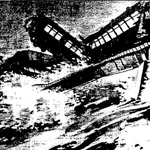
The New Truth articles on the "Disappearing Regiment" were examined in New Zealand Skeptic No. 15. A curious sequel to these stories, headed "Mystery clouds hold secret to rail horror!", appeared in New Truth's issue of 20 October 1989. After reading the "Disappearing Regiment" articles (25 August and 1 September 1989), Mr Jack Bramley, a wood carver now living in Whitianga, told New Truth of three clouds he had seen from Taupo and which had remained in the same position near Mt Ruapehu for the three days before Christmas 1953. In the article the clouds were linked to the disaster which occurred when the Wellington-Auckland express was plunged into the Whangaehu River shortly before 10.30 pm on 24 December 1953.

1989 A.G.M.

The 1989 Annual General Meeting of NZCSICOP was held at the Science Lecture Theatre, University of Canterbury, Christchurch, on 3 September 1989.

SCOOP! New Truth Recycles Old Rubbish

"Three Kiwi soldiers' shock claim 'ALIENS TOOK GALLIPOLI REGIMENT". So declared the front page of New Truth's 25 August 1989 issue.

Jam-eating ghost was not the Truth

The Press Council has not accepted that a jam-eating poltergeist was a logical explanation for a series of events reported in a Truth story.

Letter to the Editor

In your November 1987 issue, Dennis Dutton (page 3) asks whether it matters that sick people, especially cancer sufferers, are not discouraged from using "alternative" or "complementary" treatments, The answer of course is the one that he himself has given: it does and it doesn't.