New Neuralink News
Making the news this past week was Elon Musk's announcement that his company, Neuralink, has performed its first implantation of their experimental Brain Computer Interface device (BCI) into a human.
Making the news this past week was Elon Musk's announcement that his company, Neuralink, has performed its first implantation of their experimental Brain Computer Interface device (BCI) into a human.
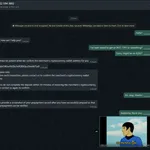
Over the last week or so I've been approached online by two scammers and, I guess because of the amount of free time I have now that I'm not attending Eastern Lightning fellowship meetings, I decided to play ball with both of them and see where the scam leads. Neither has reached the point yet where I've been asked to give them my money, but in both cases it didn't take long to see where the con would eventually come. Once we get to that point, which is likely to be in the next day or two for both, I will have a couple of fun articles to write - I've already been meticulously copy/pasting all of my chat sessions with the scammers in documents, so that I have a record of everything that goes on. As a taster, here's a fun preview of one of the incidental conversations I had with a “Customer Care” representative for a company I'm now apparently working for:

As I talked about in my introduction, I managed to catch an episode of Black Mirror on Netflix - an episode titled Joan is Awful. I'm going to discuss various plot elements, so SPOILER ALERT!
No, I'm not talking Skynet here or robots overrunning the earth. I'm talking about the more subtle tools in the background that tend to do a bunch of boring administration. You probably haven't even thought of them overly much. But they might be responsible for what your doctor decided to prescribe you on your last visit, that job you never got shortlisted for, your acceptance into a programme of study, or the reason your bag was searched at the airport.
Our annual conference starts on Friday, and for those of you who plan to come but haven't bought a ticket yet, you'd better be quick. I spent yesterday afternoon with Bronwyn and Daniel, running through a sound check at the venue, testing that the technology works as expected, finalising our catering and trying out our Friday night "entertainment” (we also had enough time to grab a quick beer at the Welsh Dragon bar, our venue for Friday evening's event).

Craig wrote last week about his experience at the Auckland Go Green Expo, and I also mentioned that myself and Bronwyn, along with Daniel Ryan, attended the Wellington Go Green Expo a couple of weeks ago. As I mentioned briefly on last week's podcast episode, apart from the frustration of the fact that the vast majority of stalls have nothing to do with going green, one particular stall annoyed me more than any other.

This past week has been replete with stories related to climate change. Firstly, there's Hurricane Ian which has wreaked havoc and destruction and loss of life in Florida most recently, but previously in Cuba and Puerto Rico. It's fairly obvious that extreme weather events are exacerbated by climate change, and that living near the coast is going to be an increasingly risky proposition for large numbers of people.

With the Russian invasion of Ukraine, propaganda raises its head. Propaganda has always been a tool of war (and peace) but we're seeing escalation to new levels.
Welcome to the NZ Skeptics Newsletter.
Disappointingly, despite the excitement, I'm sure many listeners will already have figured out what the rational explanation for this string of lights in the sky over Melbourne was: Elon Musk's Starlink, a company that is providing satellite based internet - with a few tens of thousands of satellites planned to be deployed over the next few years. There are valid questions about whether these devices are damaging to astronomy, and have the potential to clutter earth's orbit, but they're definitely not visiting aliens. If you are able to get out and see these satellites as they maneuver themselves into their operational orbits, I'd definitely recommend it. I saw them late last year, and it was an impressive sight - a real testament to modern technology.
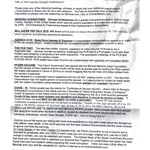
A member emailed us this week to share an unaddressed letter she received in her mailbox. Thankfully the anonymous author of the document has put in the hard work of joining all the unconnected dots of some of the conspiracies I've mentioned above, and more, and has figured out that the overall aim of the New Zealand government is transhumanism - apparently we're going to be converted to Human 2.0 via the COVID vaccine. As a technology enthusiast I'm having a hard time seeing the downside to being upgraded, although I have to admit to being worried that, given Bill Gates' involvement, my new nanobots may be running a Windows based OS. Hopefully I'll be able to flash them to a more stable BSD or Linux OS, just as soon as I figure out where my serial port is.
I've found another fun conspiracy theory - V2K. Weirdly, it stands for "Voice to Skull" and is a technology where voices can be beamed directly to your head. This is another conspiracy theory that until recently was new to me. The idea is based on the fact that microwaves can be used to create a clicking noise inside someone's head. This is known as the microwave auditory effect, and was discovered in World War Two by people who worked near radar devices. The likely mechanism for the clicking is that parts of the inner ear are being rapidly heated up by the radio waves. The microwaves can be varied to create what sounds like a human voice inside someone's head, which is pretty cool.
Pokemon Go is a new game where people have to use their phones and walk around their neighbourhood catching Pokemon (little animals) and visiting pokestops. Many churches are pokestops, as places of worship have been registered.
Many people lost a lot of money investing in non-existent data compression software because well:established principles of information theory were ignored. This article is based on a presentation to the 2010 NZ Skeptics conference.
Next time you visit the US don't miss the Museum of Unworkable Devices, the brainchild of physics Professor Donald Simanek from the University of Pennsylvania.
I am finding it difficult to respond to Alan P Ryan's diatribe (Skeptic Autumn 2004) as it borders on the incoherent and self-contradictory. I wonder if it will help if I summarise my views on moral values, about which he seems confused.
In Mendel's Footnotes: An Introduction to the Science and Technologies of Genes and Genetics from the 19th century to the 22nd, by Colin Tudge. Jonathan Cape, $59.95.