3 February 2025 - Approx. 3 min read
I'm a middle-aged guy who likes to spend time talking with Mormon missionaries, and by now I probably get visited about once every month or two by any new missionaries who turn up in the Porirua area. I had two missionaries visit me at the beginning of the new year, and another two just last week. I enjoy talking with them - both hearing their perspectives on their faith and the Mormon church, and trying to give them food for thought when it comes to some of the worse parts of their church organisation.
19 August 2024 - Approx. 2 min read
I mentioned a couple of weeks ago that I was going to attend a talk given by Sara Rahmani to the NZ Humanists in Wellington. At the talk she summarised her findings from a set of interviews she's conducted with Māori who have been happy to talk with her about their spiritual journeys with her. Although most of these journeys have been from belief to non-belief, taking a variety of different paths to get there, she has also interviewed a few people who still hold religious or spiritual beliefs.
5 February 2024 - Approx. 5 min read
A lot of skepticism these days involves battling against wrong-heading beliefs related to topics that are important to us, and to our world: whether an all-powerful God created us, and wants us to follow his strict, perversely specific and often nonsensical rules about how to live our lives; if climate change is real, and how much of a risk it is to our continued existence on this planet; the merits (or lack thereof) of alternative medicine, and the dangers they can pose to a misinformed public.
7 August 2023 - Approx. 2 min read
I read Fake Believe by Dylan Reeve earlier this year, and intended to review it at the time for the newsletter. But typically for me, life got in the way and I never got around to actually putting my thoughts on the page. And as the book has been out for almost a year now, I felt I had missed the boat. However, as Dylan will be a contestant on The Traitors NZ (starting Monday August 7 on Three) perhaps now is a good time to strike while the iron is somewhat reheated.
15 August 2022 - Approx. 2 min read
It's me again, Mark, for a third week running - as Craig is unavailable to do the newsletter again. This time it's COVID, and I can't blame him at all for not wanting to write a newsletter while getting over it.
23 May 2022 - Approx. 7 min read
Accelerated Christian Education (known as A-C-E or ACE) is in the news, and for all the wrong reasons. ACE is a homeschooling curriculum from the US (Texas) which is accredited in New Zealand, and covers children from age 5 through to college level. Here's Duane Howard, Vice President of ACE, talking about what he thinks education should be for (check out some particularly icky stuff he says around 32 minutes in):
11 October 2021 - Approx. 1 min read
Welcome to the NZ Skeptics newsletter.
16 August 2021 - Approx. 1 min read
On a lighter note, this week there were two earth-shattering events that were meant to happen. The first was the Global Prayer to End Atheism, and the second with the prediction of Trump's reinstatement as president on Friday 13th.
14 June 2021 - Approx. 1 min read

By Robert Bartholomew and Peter Hassall > > Reviewed > > Although this was published six years ago, I think it is a classic reference book that will endure. It is available in some local libraries, including the Auckland public library. > > The previous survey, “Extraordinary Popular Delusions and the Madness of Crowds” was published a long time ago now. It is a great companion reference for Lynley Hood's analysis “A City Possessed” on the Moral Panic in Christchurch surrounding the Peter Ellis case. > > I learnt several things of great interest to skeptics. For example: > > The moon hoax used pseudo-scientific terms and quoted a defunct journal. It gave a big boost in circulation to newspapers that published it. > > There was a case of anxiety hysteria in Auckland in 1973 about a smell coming from leaking drums in the Parnell wharf. Many people became ill until it was shown the substance in the drums was not poisonous. > > Medics (as in a Canadan case in 2004) can suffer from anxiety hysteria. You'd think their training might make them immune! > > Exorcism and religion can make things worse in cases of hysteria, due to excessive fear of bad spirits - as it strengthens belief in the imaginary causes of these delusions. > > Sometimes harsh conditions can trigger hysteria, and so a 'spirit' can speak out or 'cause' absenteeism from horrible institutions or work-places due to hysterical symptoms.Sometimes conditions improve as a result; whereas the victims in these institutions may not have been successful had they just protested. > > Self-mutilation can be an extreme way to gain attention, and can involve false accusations. > > False confessions are common during public moral panics. > > Sometimes, as with the Peron family case, psychiatric conditions are falsely reinterpreted as paranormal phenomena. > > Finally, skeptics have in some cases managed to help defuse panics by effectively debunking false beliefs. > > Look out for my next review, which will hopefully be on the book NOISE by Daniel Kahneman.
14 June 2021 - Approx. 2 min read
As promised, myself and another couple of skeptics recently visited the Theosophical Society's building in Wellington to hear their National President, John Vorstermans, give a talk titled “_The Ageless Wisdom_”. The Society has a great little building on Marion Street, with a comfortable library of esoteric mystical books at the front, and a large main room with lots of wood and painted mystical symbols. It has a particularly Masonic feel to it.
31 May 2021 - Approx. 3 min read
For a long time now I've been promising to take a friend of mine to a Christian Science church service. He's been interested in doing this because he was brought up in the church in America, but hasn't been back since he was a child. Finally, last weekend, the stars aligned and we managed to arrange a visit.
15 March 2021 - Approx. 2 min read
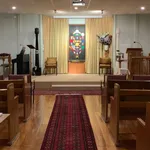
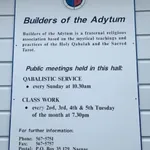
Today I finally made it to the Builders Of The Adytum, a strange group whose beliefs combine Kabbalah and Tarot into an unusual, but enjoyable, philosophy.
25 January 2021 - Approx. 2 min read
This week has been pretty interesting in the arena of skepticism. As you'll no doubt be aware, this week saw the inauguration of Joe Biden as president of the US and the beginning of his administration. We've seen various pro-science, evidence-based actions taken in just the first couple of days - for example, rejoining the Paris Climate Agreement, rejoining the World Health Organisation, and halting the Keystone XL pipeline, which I personally celebrate.
21 December 2020 - Approx. 1 min read
I told you all three weeks ago that I was going to visit the Ancient Mystical Order of Rosicrucians, and I can report that I survived the meeting intact. My friend Tim and I had a great chat with three of the group's members about their beliefs, and about the history of the organisation. Much of what we heard sounded very familiar, with an organisational structure that reminded me of Scientology (making your way up the “Bridge”) and a belief in visualisation that was akin to Rhonda Byrne's “The Secret”, where if you imagine something enough it will come true for you.
7 December 2020 - Approx. 1 min read
Scoop.co.nz published a survey looking at New Zealanders perceptions of misinformation. One finding was “The majority of New Zealanders surveyed agree that disinformation has the ability to greatly influence someone's opinion (91 percent), but far less (53 percent) acknowledge that disinformation could influence them.” This hubris is something we need to work on. That belief that it can't happen to you is the very reason wrong ideas may be lurking untouched and untested in your belief system.
1 November 2019 - Approx. 5 min read
In a preface to the 2019 conference, and with the opening event being held at Riccarton House, a supposed haunted house, we thought we'd have a quick look at some of the reputed most-haunted houses in New Zealand, and check out some of the reasons why people think the places really are haunted.
13 May 2018 - Approx. 3 min read
Dawkins has been talking to audiences in NZ, and a local pastor took to Stuff to complain about him in an article. Now, I'm not saying that Dawkins is without flaws - it's common knowledge that he often opens his mouth on Twitter before thinking about what he's saying, and he's no stranger to controversy. But pastor Geoff Robson seems to have gone overboard in trying to protect his belief.
13 March 2016 - Approx. 1 min read
A Christian blogger has warned that mandalas in adult colouring in books could be dangerous. She suggests that the magical new age claims made about mandalas are true, that they have the ability to heal if you meditate on them and that a good way to do this is to colour them in. Of course, as these magical claims are not Christian, they must be bad and Christians should stay away from them.
1 May 2015 - Approx. 10 min read
Why do individuals who read the same information react differently? To some extent, beliefs affect individuals' reactions. While this is normal, it can be problematic if beliefs interfere with objective reasoning.
1 February 2015 - Approx. 3 min read
The Humanist Society of New Zealand will be publishing a regular column called The Humanist, named after the magazine they used to produce. Below is a statement released by the Society in response to the recent Charlie Hebdo attack in Paris.
1 February 2013 - Approx. 13 min read
This could be the shining hour
1 February 2012 - Approx. 2 min read
The Believing Brain: how we construct beliefs and reinforce them as truths by Michael Shermer. Times books, New York. 386pp. ISBN 978-0-8050-9125-0. Reviewed by Martin Wallace.
1 February 2012 - Approx. 2 min read
A recent UMR Research poll has provided a snapshot of what New Zealanders believe about a range of paranormal subjects. More than half accept that some people have psychic powers; on the other hand, only 24 percent think astrology can be used to predict people's futures and two thirds do not believe aliens have visited the Earth.
1 February 2012 - Approx. 9 min read
Massive changes are transforming the skeptical movement.
1 May 2011 - Approx. 2 min read
The Moral Landscape: How Science can Determine Human Values. Sam Harris. 2010. Free Press, New York. ISBN 978-1-4391-7121-9 Reviewed by Martin Wallace.
1 May 2010 - Approx. 3 min read
Alison Campbell looks at some words that cause scientific misunderstandings.
1 August 2007 - Approx. 12 min read
Ethnic fundamentalism is a form of 'secular religion', an oxymoron that resists criticism. This article, originally presented at the NZ Skeptics conference in Auckland, September 2006, interrogates the beliefs of those who insist that ethnicity plays the primary and determining in creating the person. Are such beliefs merely old-fashioned and discredited racism in a new guise?
1 May 2007 - Approx. 2 min read
The God Delusion, by Richard Dawkins. Bantam Press, $40. Reviewed by Vincent Gray.
1 November 2002 - Approx. 9 min read
Skeptics - always in two minds about something…
1 August 2001 - Approx. 1 min read
The Gallup Organization released the results of its new poll on paranormal beliefs in June, which indicate increases in the percentage of Americans who believe in communication with the dead, ESP, ghosts, psychic healing and extraterrestrial visitation (see http://www.gallup.com/poll/releases/pr010608.asp).
1 February 1998 - Approx. 11 min read
One of the memorable presentations at the 1997 Skeptics' Conference was David Novitz's assessment of whether organised scepticism has a place in a liberal democratic society.
1 May 1997 - Approx. 2 min read
Britain's The Skeptic magazine celebrated its tenth anniversary with a Top-Ten survey of paranormal phenomena of the decade.
1 February 1997 - Approx. 4 min read
Dr Mann's essay in this issue will annoy some readers, but it belongs here because it deals with one of the key debates of our time.
1 November 1996 - Approx. 2 min read
One of the interesting things about the Skeptics is the wide range of opinions that can be found in our group -- not to mention the ever-readiness to express them. So I was interested to read Frank Haden's column on the conference and how he found it.
1 November 1994 - Approx. 4 min read
A friend of mine once visited a faith-healer, one of the religious variety from the United States who periodically come to New Zealand to swell their bank balances. She attended the meeting because of a persistent pain in her elbow. Despite my suggestions that it was only tennis elbow, she was worried and thought perhaps the pain was serious. She had an aisle seat near the front and during the proceedings the "healer" approached her and asked about the pain in her arm. Apparently she hadn't told anyone why she was there. She was impressed.
1 May 1994 - Approx. 8 min read
What is it that keeps superstitions going in the face of our increasing knowledge about the world?
1 August 1993 - Approx. 11 min read
This article is an abridged version of the fourth article in a series on philosophy and the paranormal. Here Dr Grey discusses David Hume's analysis of miracles and his view that belief in miraculous events is always unjustified. He also investigates the nature, virtues and dangers of different skeptical viewpoints.
1 February 1993 - Approx. 10 min read
An American study reported in the GP Weekly (2 Sep 1992) found that chronic fatigue syndrome was indistinguishable from depressive disorders. (Refer also Skeptic 21) Patients diagnosed as having CFS were likely to believe that their illness had a viral cause, but it is more likely that CFS is a new age variant of the 19th century neurasthenia.1
1 February 1993 - Approx. 1 min read
Dr J.F. De Bock gave the 1992 Conference an update on the study of UFOs.
1 November 1992 - Approx. 3 min read
Are Skeptics pussy-footing around by not attacking the major source of superstition and pseudoscience -- religion?
1 May 1992 - Approx. 10 min read
A scale replica of the Great Pyramid of Egypt has been built in Coromandel as a chapel and healing centre.
1 February 1992 - Approx. 6 min read
The debate over how "dry" a skeptic should be in promoting skepticism does not appear to take into account the dangers of ridicule in hardening the very views we are attempting to counter. This is particularly so in schools, where both teachers and pupils have things to learn.
1 February 1992 - Approx. 8 min read
In the arguments for and against being definitively skeptical, the social climate and moral responsibilities of skepticism are often overlooked. This is an abridged version of the after-dinner speech given at this year's NZCSICOP Conference.
1 May 1991 - Approx. 5 min read
Calls for Maori input in the science classroom are fine for encouraging students in the belief that science is relevant to their lives, but could also be used to cut them off from the international scientific community.
1 August 1990 - Approx. 1 min read
The above is a suggested logo for NZCSICOP. It was designed by a Wellington Skeptic, Hugh Young. Hugh has provided the following commentary:
1 August 1990 - Approx. 2 min read
I have just got around to reading the article "Science vs Religion" in Skeptic No. 11, and am still wondering why it was written for such a journal (or was it?).
1 February 1988 - Approx. 2 min read
Sir, — I share Colin Bell's concern about what goes on in our universities and what sort of watching brief the university councils keep on their tutors (March 2).