Give me 3D printed dinners (please)
Katrina Borthwick - 8th December 2025
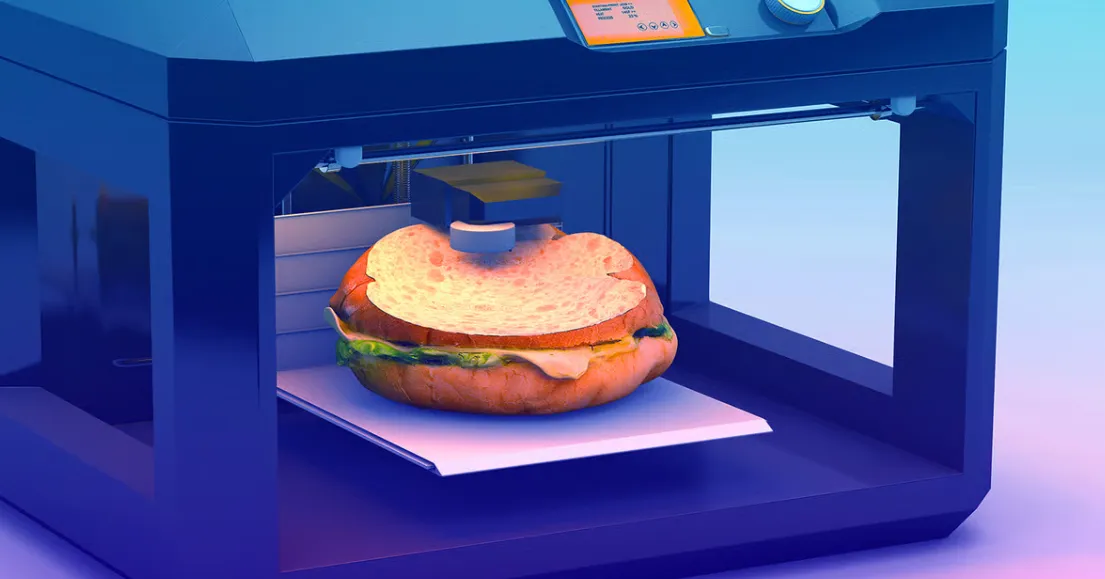
Imagine coming home from a long day at work and you forgot the groceries and haven’t got anything to cook. Just as you’re about to panic-order some Uber Eats you remember you can just boot up your 3D printer, whack in some basic ingredients, and a little while later out pops a perfect burger! I know this sounds like something from Star Trek, where Captain Picard could dial up anything from lobster ravioli right through to a “tea, Earl Grey, hot”. But thanks to advances in food engineering, we might be closer than you think. 3D food printing is a rapidly developing technology that has attracted interest from engineers, chefs, health professionals and the occasional sci-fi nerd.
Researchers are actively working on ways to make food customisable, nutritious and convenient. But how far away is 3D food printing? Will I be able to get one in my kitchen, or will it end up just being something used by big factories to produce yet more processed foods?
How does 3D food printing work?
To imagine 3D food printing, imagine a standard 3D printer - the kind that can be used at home or in a factory to make plastic toys. Now switch the plastic for edible ingredients that come as thick pastes, and you have a food printer. Don’t do this at home though - you do need a special printer, and your resident nerd will not be happy if their beloved printer gets covered in goo.
Things like dough, chocolate, veggie puree, and whey protein are ideal. The printer extrudes this goop layer by layer. So you can build a meal that has exactly what you want in it, where you want it, and in theory, looks exactly like you want it to look. This allows the operator to perfectly control what nutrients are in the food they make. Or, if you are a pastry chef, you can make amazing structures that are not possible to create the usual way. So, if my daughter wants a spiderman-shaped gluten free cookie fortified with vitamin B12 with a crispy outside, soft middle, and tomato sauce flavoured icing - then it could theoretically be possible. Or perhaps instead I could pick from predesigned snacks, a bit like Netflix or even a browser for patterns in user-created libraries. Kind of like people do for resin or filament 3D printers now.
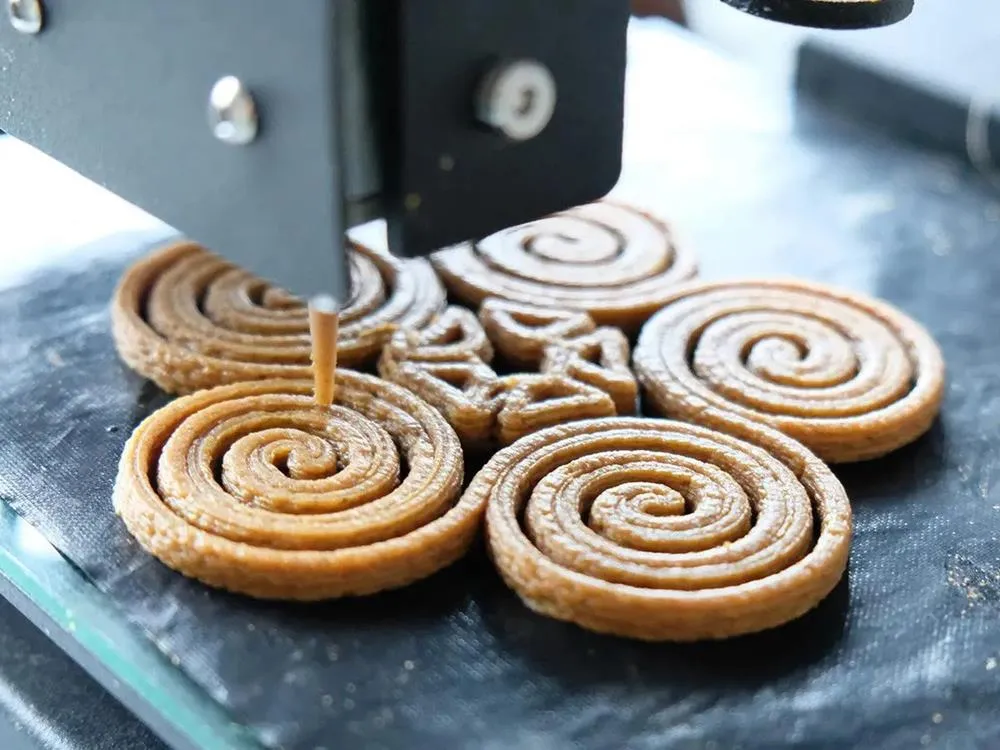
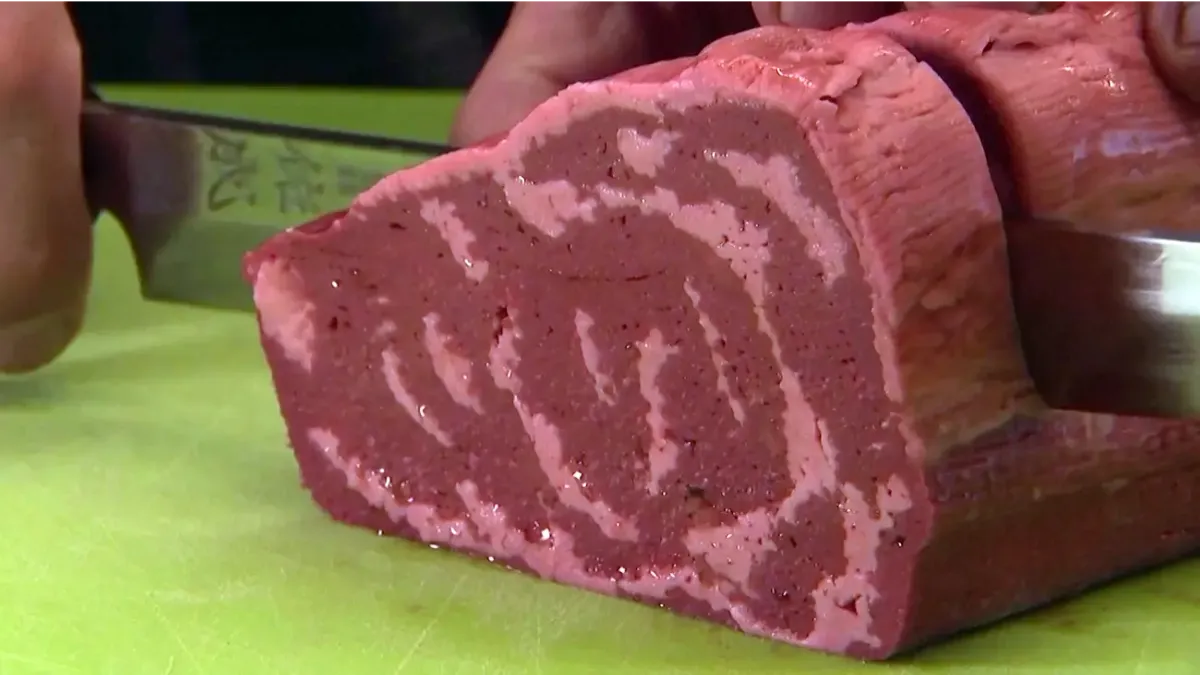
There has been some real progress in the area of plant-based meat and cheese alternatives, with printed cheeses coming out with some convincing textures. But there is a real challenge getting the texture and flavour of real meat right. Imagine meat with the texture of cheese. Eww. As you would have gathered, the printing process lends itself to goopy, homogeneous stuff sometimes called ‘food ink’. There are currently real limitations on texture, shapes and food combinations. A roast dinner with all the trimmings is a long way off. Although this goopiness doesn’t sound particularly appealing for anything but foods that are already well processed, it actually is ideal when creating food for people with swallowing difficulties (such as dysphagia).
So what is holding us back?
Well, a major barrier is the cost. Apparently a 3D food printer costs between US$1,000 and US$6,000 for a consumer or restaurant model. Unfortunately, most of the lower end printers just print chocolate. So if you want one that can do pastes, purees, and meats as well as chocolate, then you will want something like the Felix Food 3D Printer featured in the video below. That’s going to set you back at least US$3,600. You’ll note from the video that pastes are ‘user prepared’, so basically you blend and mix up a smooth paste in a big bowl… At this point it feels a lot like baking, with dishes, and a blender - not the lazy outcome I was aiming for at all.
The other barrier is speed. At present the technology is such that it just takes longer than cooking food normally, especially if it’s a fiddly recipe. From that video you can see just how long it takes just to make basic cookie shapes. You’d need the patience of a saint to sit through that. And those cookies don’t even have any choccy bits, it’s restricted to whatever goop went in. Lumpy things are not allowed.
Oh yes, and look at all the machinery involved. Now, for those that own an espresso machine, think of all the parts that need cleaning, and that can result in you not using it as much as you should because you just can’t be bothered with the cleanup. Take that and multiply it by ten, then add meat and veggies for an extra biohazard mess. It’s going to get pretty yuck very fast if not cleaned, and the risk of contamination feels close to 100%. Which makes me wonder about how the regulations on food safety would go?
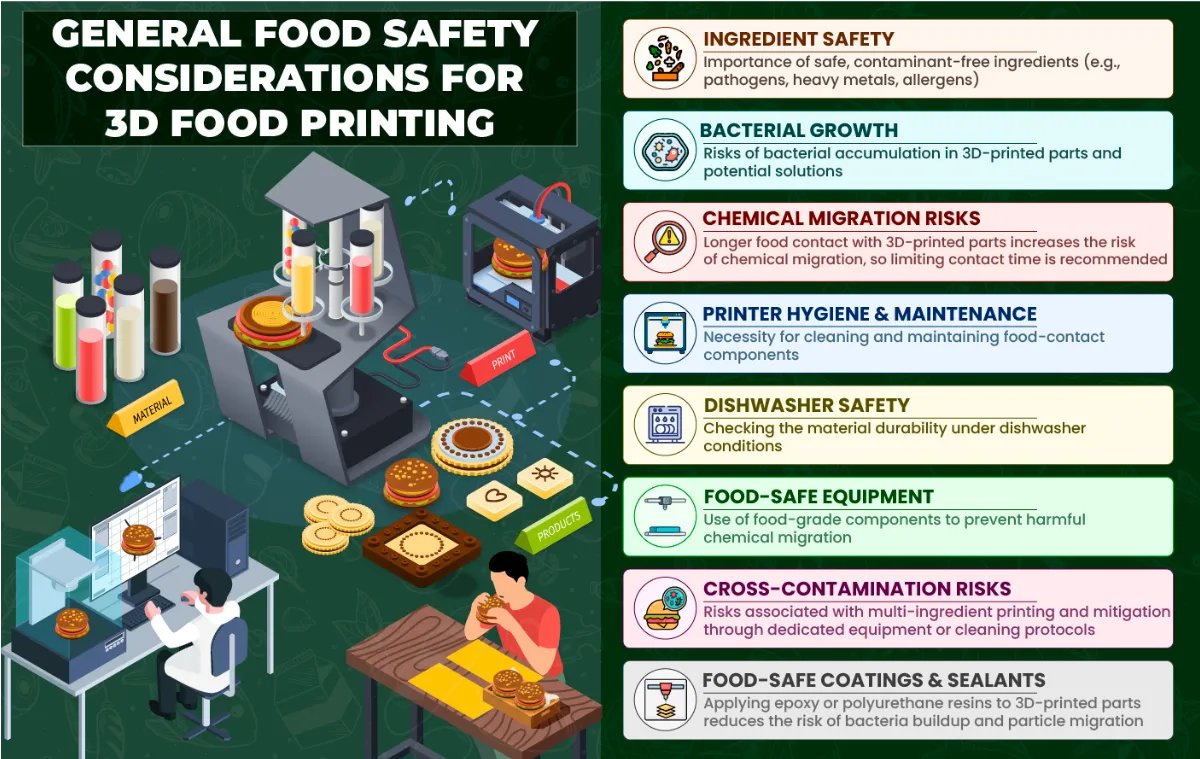
Like any technology that has any kind of serious uptake, these printers should work better and come down in price in the future. And perhaps they will start selling paste kits and fancy ways of cleaning them too. Hopefully not with wasteful disposable parts, like those capsule coffee machines.
Environment and economics
So one train of thought goes that 3D food printing reduces food waste by using everything, having precise portion control, making sure everything on your plate is what you want to eat, and reducing transport emissions (no uber eats). There is some evidence this helps by up to 13%, but I’m still worried about cleaning products and disposable parts or packets.
If you were going to invest in the 3D food printing industry right now, you are really looking for any place where there are a lot of people who are having trouble with swallowing. The way to go would be big - factories, care homes, hospitals, snack manufacturers. The main costs are the costs of the printer and ingredients, so there is money to be made in volume.
Personalised nutrition, healthcare and astronauts
The ability to control nutrition so closely could be helpful for athletes, health nuts, and those with health conditions such as diabetes. It would also give people on necessarily restrictive diets more options. Like gluten-free lobster ravioli….
Oh yes, and since astronauts live off paste (ugh), and are a little out of reach of any uber eats driver, a 3D printer could make a lot of sense to make their meals just a bit more inspiring.
So will I get one? I think there is a long way to go before 3D food printing will change the way I prepare food at home. They need to crank up the convenience factor and turn the cost way (way) down before I add another small appliance to my kitchen collection (aka graveyard).