Can Elephants Hold Their Drink?
Mark Honeychurch - 8th December 2025
A few months ago, I attended a talk given at the Wellington Humanists about consciousness. In the middle of the talk we were shown a short, 5 minute segment of a documentary piece that shows animals, from elephants all the way down to caterpillars, getting drunk after eating fermented marula fruit.
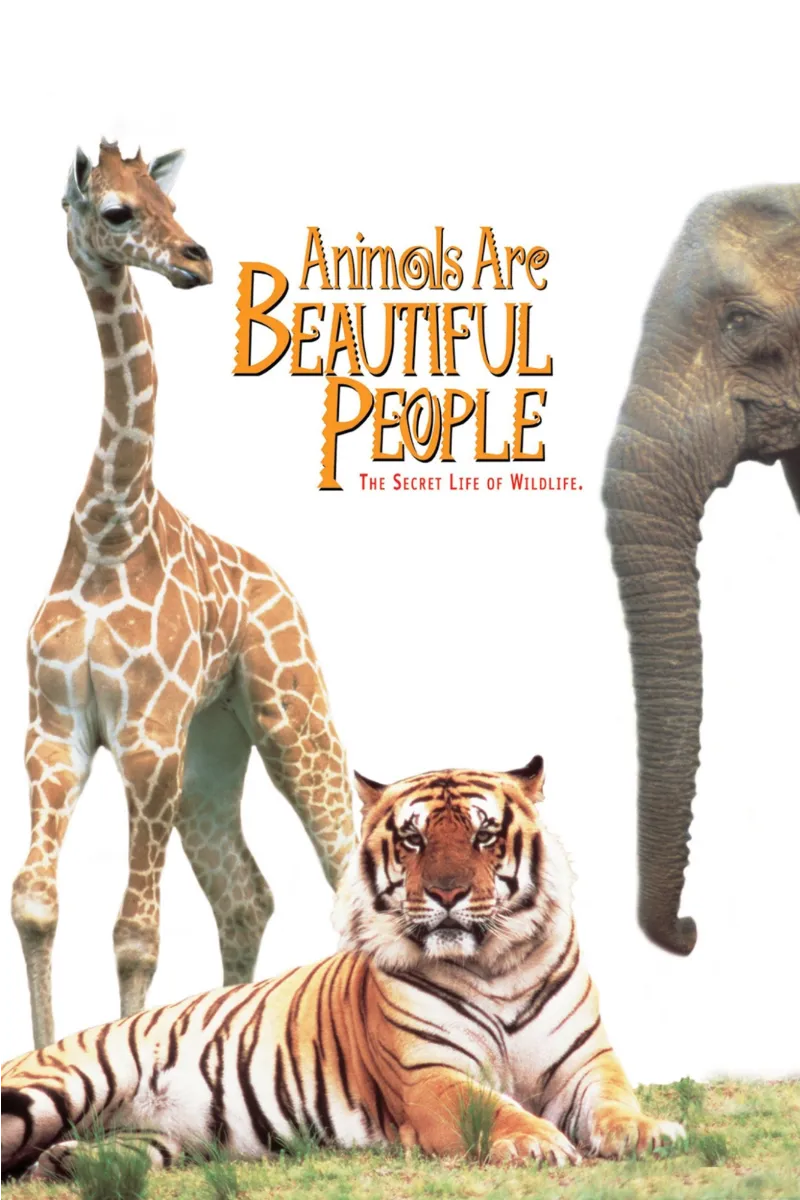
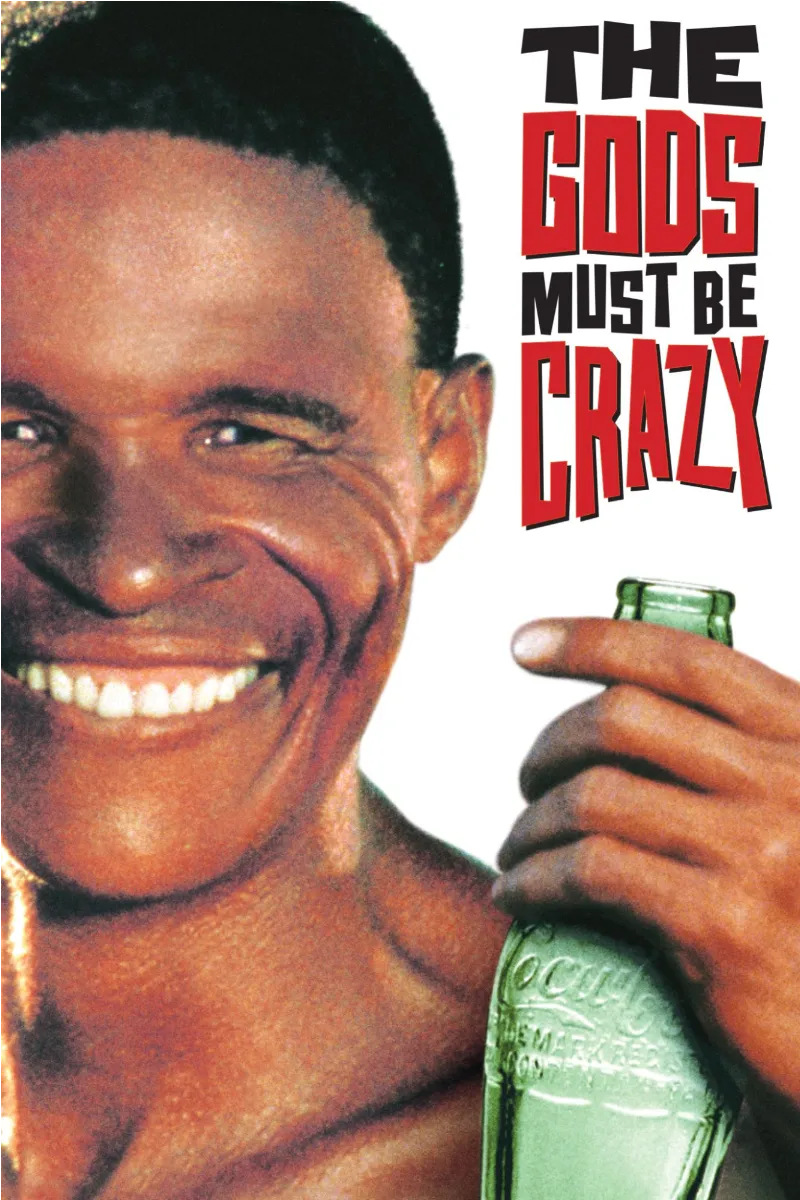
The source for this clip is a 50 year old comedic documentary called “Animals Are Beautiful People”, created by the same director who made the movie “The Gods Must be Crazy” (and its lesser-known sequel), Jamie Uys.

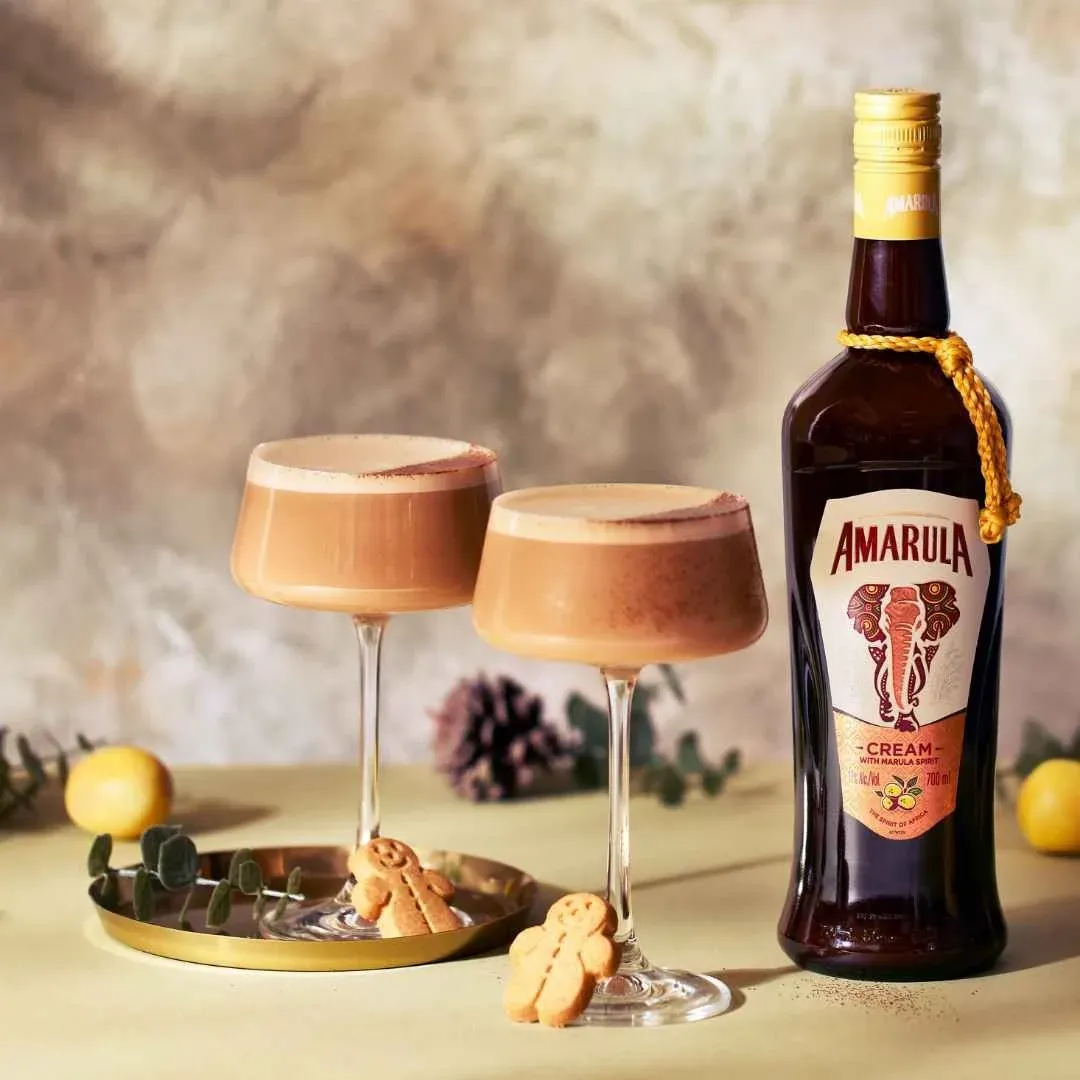
Marula is the fruit that’s used to make a drink that you’ve probably seen in Duty Free shops in airports around the world but never tasted, Amarula. It’s described as citrusy with hits of vanilla and caramel, with the citrus flavour coming from the marula fruit.
My skeptical radar went off as soon as I saw this footage of animals who have supposedly become drunk from eating fruit on the floor - it all just looked too good to be true. I’m sure most people know the story of the Disney movie White Wilderness, where lemmings were supposedly coaxed by the movie’s producers into falling down a cliff into the sea.
For that story, the Disney video claims that it’s debunking the myth that lemmings jump into the sea to commit mass suicide. In reality, they just replaced it with another myth - the claim that the lemmings were attempting to migrate across a lake, but in their confusion attempted to cross the Arctic ocean instead. The voiceover for the piece states:
In this land of many mysteries, it’s a strange fact that the largest legends seem to collect around the smallest creatures. One of these is a mousy little rodent called the lemming. Here’s an actual living legend, for it said of this tiny animal that it commits mass suicide by rushing into the sea in droves. The story is one of the persistent tales of the Arctic. And as often happens in man’s nature lore, it’s a story both true and false, as we shall see in a moment.
Ahead lies the Arctic shore, and beyond the sea. And still the little animals surge forward. Their frenzy takes them tumbling down the terrace cliffs, creating tiny avalanches of sliding soil and rocks and seemingly indestructible lemmings.
They reach the final precipice. This is the last chance to turn back. Yet over they go, casting themselves bodily out into space.
All seem to survive the ordeal, for now they begin to swim, not toward land, strangely, but away from shore, toward the far horizon. Others find the beaches by roundabout ways, and they too plunge into the waves. It’s not given to man to understand all of nature’s mysteries. But as nearly as he can surmise, it would appear that the lemmings consider this body of water just another lake. And if it’s a lake, then it must have a farther shore. And so they strike out boldly.
But gradually strength wanes, determination ebbs away. And soon the Arctic Sea is dotted with tiny bobbing bodies.
And so is acted out the legend of mass suicide and destruction of a species it would seem to be.
The reality, as described on Wikipedia, is that the scene was wholly contrived:
In 1982, the CBC Television news magazine program The Fifth Estate broadcast a documentary about animal cruelty in Hollywood called Cruel Camera, focusing on White Wilderness, as well as the television program Wild Kingdom. The host of the CBC program, Bob McKeown, discovered that the lemming scene was actually filmed at the Bow River near Canmore, Alberta, and that the same small group of lemmings was transported to the location, jostled on turntables, and repeatedly shoved off a cliff to imply mass suicide. According to a lemming expert, the particular species of lemming is not known to migrate, much less commit mass suicide…
Wildlife photographer and filmmaker James R. Simon, who worked freelance for Disney on numerous True-Life Adventure films, is credited as being the person responsible for staging the lemming sequence. The Walt Disney Family Museum maintains that Simon committed the act without the knowledge or approval of Walt Disney or anyone else at the Disney studio.
Given this historical instance of subterfuge in a nature “documentary” movie, I wondered whether the footage I was watching from the Animals Are Beautiful People documentary had also been faked. The scenes of animals feeding on hundreds of marula fruit and then falling over, accompanied by comedic music, seemed too good to be true. I was skeptical of the idea that this fruit was fermenting enough in a couple of days to create meaningful amounts of alcohol - amounts that would be enough to affect animals from caterpillars and monkeys all the way to large birds and elephants. I was also unsure whether all of these animals, with their varying biology, were capable of getting “drunk”.
The tone of the voiceover that accompanied the video didn’t fill me with confidence either:
This affluent society has become blase and bored with life. Things are just too easy in the Okavango Basin. They no longer have a zest for living, like their country cousins out there in the inhospitable desert. Here life offers no challenge, and many of them have become slobs and easy riders. The only excitement in their lives comes in high summer when the marula trees are in full fruit.
At first the marulas are very tasty and hard to get at. You have to be either agile or strong to get your share. But after a few weeks the marulas get overripe, and they start dropping from the trees. Then all the animals wade in and gorge themselves on the rotting fruit. It starts fermenting in their tummies, and turns into a very potent brew. So on the way home things start happening to them.
I pulled out my phone in the middle of the talk and started googling, to see if there was anyone online who was expressing skepticism. The first article that I found, titled “Do African animals get drunk from marula fruit? Or is it a myth?” on the Africa Freak website, confirmed my suspicions:
“Animals Are Beautiful People” was a critical and commercial success, blending stunning Southern African wildlife scenes with comedic relief.
The locations in the film include the Namib desert, the Kalahari desert, and the Okavango Delta.
The footage for the documentary, portraying wild animals getting drunk after eating marula fruits, became an immediate hit and even received a Golden Globe award for best documentary.
Today, millions of people think that elephants get drunk on marula fruit.
The question is: is it really true? Does marula fruit make animals drunk?
I’m sorry to disappoint you, but the story is an absolute myth.
Jamie Uys’ footage was completely staged, and the animals were, believe it or not, fed with alcohol.
The director and crew first soaked the marula fruits in booze, then filmed the scenes to make the story appear more believable.
I sat there in the meeting feeling smug for a few minutes, happy that my suspicions had been confirmed. But then I had to check myself. What kind of website was Africa Freak? And what citations did that article have to back up their claims that the footage was staged?
The article has no sources listed for this claim, and it was written by Matthew Theys, the founder of the Africa Freak website who describes himself as “Curious by nature” and “Spiritual”. The website says the article was published in 2021, but has comments going back to 2009, so I suspect that this is the real year of publication. Since 2009, Michael has been responding to comments but not once does he supply any evidence for his claim. A couple of times he linked to a 2005 National Geographic article titled “Elephants Drunk in the Wild? Scientists Put the Myth to Rest”, but that article doesn’t make the claim about Jamie Uys deliberately getting animals drunk - in fact, it doesn’t mention the director (or his movie) at all.
What that article does mention, though, is a study published in 2006 (but made available to the article’s author back in 2005) about the likelihood of elephants being able to get drunk from fermented marula fruit - titled “Myth, Marula, and Elephant: An Assessment of Voluntary Ethanol Intoxication of the African Elephant (Loxodonta africana) Following Feeding on the Fruit of the Marula Tree (Sclerocarya birrea)”. This paper was written by three academics from the University of Bristol’s School of Biological Sciences, and tries to answer the more scientific question of whether elephants are actually getting drunk on marula fruit. The abstract states:
Africa can stir wild and fanciful notions in the casual visitor; one of these is the tale of inebriated wild elephants. The suggestion that the African elephant (Loxodonta africana) becomes intoxicated from eating the fruit of the marula tree (Sclerocarya birrea) is an attractive, established, and persistent tale. This idea now permeates the African tourist industry, historical travelogues, the popular press, and even scholastic works. Accounts of ethanol inebriation in animals under natural conditions appear mired in folklore. Elephants are attracted to alcohol, but there is no clear evidence of inebriation in the field. Extrapolating from human physiology, a 3,000‐kg elephant would require the ingestion of between 10 and 27 L of 7% ethanol in a short period to overtly affect behavior, which is unlikely in the wild. Interpolating from ecological circumstances and assuming rather unrealistically that marula fruit contain 3% ethanol, an elephant feeding normally might attain an ethanol dose of 0.3 g kg−1, about half that required. Physiological issues to resolve include alcohol dehydrogenase activity and ethanol clearance rates in elephants, as well as values for marula fruit alcohol content. These models were highly biased in favor of inebriation but even so failed to show that elephants can ordinarily become drunk. Such tales, it seems, may result from “humanizing” elephant behavior.
The conclusion has more to say:
When fruit are available, elephants may feed on them to the exclusion of other items and feed to excess, but even so, inebriation is highly unlikely. Other variables include access to fruit and the rate of alcohol clearance in elephants. Lone individuals will have relatively greater access to marula fruit. While it must be concluded that elephants likely cannot become sufficiently intoxicated by the fruits of the marula, physiological knowledge of how elephants deal with alcohol is practically nonexistent. Unregulated behavior of elephants in the field and as featured in Zulu accounts may be due to an intoxicant other than alcohol. For example, the bark of marula is home to beetle pupae traditionally used by the San people to poison their arrow tips. Marula fruit are extraordinarily high in some vitamins, including nicotinic acid, and large doses may cause overt effects. Furthermore, unexpectedly aggressive behavior is most often reported for bull elephants, and if the marula fruit is a prized food item, then the observed behavior may simply be defense of that valued food source. Field data are few, but a study by Mathonsi (1999) found that approximately 90% of the marula fruits were passed without being “squeezed, squashed or processed in any way.” While keeping the fruit whole might allow fermentation to persist, protected within the fruit body, it seems very unlikely that the elephants truly access all of the fruit content. Furthermore, elephants show a distinct preference for fruit still on the tree rather than those ripening on the ground. It is improbable that enough of the fruit on the tree could simultaneously achieve sufficiently alcoholic status, although an elephant may select those that do. Assuming that all other model factors are in favor of inebriation, then intoxication would minimally require that the elephant avoids drinking water and consumes a diet of only marula fruit at a rate of at least 400% normal maximum food intake and with a mean alcohol content of at least 3%. On our analysis, this seems extremely unlikely. Elephants display many behavioral characteristics viewed as positive traits in humans, often causing us to identify with them in anthropocentric ways. Thus, like beauty, it seems that the tipsy pachyderm may exist in the “eye of the beholder,” a view bolstered perhaps by a mutual desire for the fruits of the marula tree?
So, the takeaway message from that paper seems to be that it’s unlikely that elephants could eat enough fruit to get drunk, but that it’s hard to say for certain as “physiological knowledge of how elephants deal with alcohol is practically nonexistent”.
As if this in-depth paper isn’t enough, a more recent paper from 2023, titled “The marula and elephant intoxication myth: assessing the biodiversity of fermenting yeasts associated with marula fruits (Sclerocarya birrea)” has been put together by scientists from Botswana, Italy and Portugal. Their paper is more thorough in its search for the truth, and the abstract talks about their efforts to document the different yeasts that may be responsible for fermenting the marula fruit in Africa:
The inebriation of wild African elephants from eating the ripened and rotting fruit of the marula tree is a persistent myth in Southern Africa. However, the yeasts responsible for alcoholic fermentation to intoxicate the elephants remain poorly documented. In this study, we considered Botswana, a country with the world’s largest population of wild elephants, and where the marula tree is indigenous, abundant and protected, to assess the occurrence and biodiversity of yeasts with a potential to ferment and subsequently inebriate the wild elephants. We collected marula fruits from over a stretch of 800 km in Botswana and isolated 106 yeast strains representing 24 yeast species. Over 93% of these isolates, typically known to ferment simple sugars and produce ethanol comprising of high ethanol producers belonging to Saccharomyces, Brettanomyces, and Pichia, and intermediate ethanol producers Wickerhamomyces, Zygotorulaspora, Candida, Hanseniaspora, and Kluyveromyces. Fermentation of marula juice revealed convincing fermentative and aromatic bouquet credentials to suggest the potential to influence foraging behaviour and inebriate elephants in nature. There is insufficient evidence to refute the aforementioned myth. This work serves as the first work towards understanding the biodiversity marula associated yeasts to debunk the myth or approve the facts.
This abstract, counter to the previous study’s more doubtful conclusion that “on our analysis, this seems extremely unlikely”, takes the stance that “there is insufficient evidence to refute the aforementioned myth”. The paper’s contents look into what percentage of alcohol different yeasts might create inside a marula fruit (up to 4% or maybe even 5%), how quickly this fermentation happens, whether fermentation could continue inside an elephant’s stomach, how much fruit an elephant is both able to consume and likely to consume, and more
The conclusion summarises most of this very briefly:
The inebriation of elephants is a persistent myth that has baffled humankind. To debunk or approve of the myth, studies on the presence of fermentative yeast species to account for sufficient ethanol to inebriate elephants are important. Our work suggests that there is a high diversity of fermentative yeasts resident on the marula tree fruits whose fermentative capacity could be responsible for the inebriation of elephants. The yeasts were dominated by members of the Saccharomycetaceae family whose elevated fermentative capacity is in agreement with our findings. Although the inebriation of elephants is dependent upon many other factors such as the amounts of ethanol per given fruit and the ability to efficiently metabolise ethanol, the fermentative capacity of yeasts is an important trail towards understanding inebriation of elephants from ingestion of marula fruits. In addition, our study revealed that marula-associated isolates produce varying amounts of aromatic chemicals, which could be essential in establishing the foraging behaviour of elephants towards the potentially inebriating and fermented fruits. However, more research is needed to explore the inebriation potential of all the diverse non-Saccharomyces and Saccharomyces yeasts in controlled mixed culture fermentations and the ability of the elephants to match the fermented juice to inebriating levels.
Both papers stress that, although some of their calculations are based on scaling up how much alcohol it takes to get a human drunk by weight, this may not be a fair assumption to be making. The more recent paper goes into more detail on this, considering some of the biological factors involved in the breakdown of alcohol:
Recent studies suggest that class IV gene alcohol dehydrogenase gene (ADH7), a gene involved in the breakdown of ethanol, in both African and Asian elephants is non-functional on the ADH7 gene, which makes them breakdown ethanol about 40 times faster than most primates. Therefore, there is a possibility that even lower amounts of ethanol than known could inebriate elephants when compared to human beings if the inability to detoxify themselves of ethanol is important. Therefore the inebriation myth requires a multi-dimensional approach and may not be debunked by assuming the size of the body logic, the amount of ethanol compared to the amount that is known to intoxicate human beings. Although other possible ethanol breakdown pathways not involving the ADH7 gene may exist in elephants, there isn’t enough evidence thus far to reject the inebriation myth.
Having skimmed these two articles, in the question and answer portion of the talk I voiced my skepticism of the clip we had been shown, and summarised the two papers. I also suggested that it’s probably unethical to deliberately get an elephant drunk, so we may never know whether elephants are able to hold their drink, or if they’re lightweights.
A few days later, I did some more reading. At the other end of the scale to the elephants, I’m guessing that caterpillars, which were also mentioned in the documentary, are most likely to be lightweights. An Australian Geographic article suggests that some caterpillars are immune to cocaine, and a Reddit thread has someone asking a question about whether their pet caterpillar can get high, but sadly I couldn’t find any definitive information on drunk caterpillars - just an unsupported claim about butterflies getting drunk that someone posted on Facebook. However it seems that most animals, all the way down to insects such as fruit flies, do get drunk, due to similar brain structures and chemistry, and caterpillars are very small, so it’s likely that they are easily capable of consuming enough alcohol from fermented fruit to cause them to be inebriated. However, what that inebriation would look like when it comes to their behaviour is anyone’s guess, and the footage in the documentary just shows a caterpillar walking up a branch, with no unusual or erratic movement at all.
I also drew a blank on the original question - whether the footage in the Animals Are Beautiful People was faked, and if the creators deliberately made the animals drunk to capture the footage. Given how many of these types of nature documentaries are stitched together from a variety of sources, my suspicion is that this segment likely contains a bunch of footage of animals falling over while going about their daily lives that could be construed as them being drunk, and that this has been spliced together with some footage of animals eating the marula fruit to give the impression that eating the fruit is the cause of the erratic behaviour. It may be that the documentary makers went so far as to deliberately get animals drunk, but I see no need to do this in order to fake the footage. All you’d need to do is point a camera at animals for long enough and, like humans, eventually they’ll do things that look like they’re not in control. They may take a mis-step, fall over, or move erratically to try to dislodge a parasite. There are many reasons why animals might move in ways that look nonsensical to us, but would make sense in the context of their lives and habits.
However this footage may have been collected and edited, it seems unlikely that it’s all genuine. Questions have been asked online about other scenes in the movie, such as when a communal birds’ nest is supposedly set alight by the sun’s rays being concentrated through a drop of water, and a scene detailing a stand-off between an elephant and a snake, where there are no shots showing both animals at the same time. We also know that a lot of the scenes in nature documentaries even today are faked in order to get that perfect shot. Tricks can be used to get animals to behave the way you want them to, close-ups can be recreated as lifelike models in a staged environment, and sounds are often created in a studio to match the visuals that were captured in the wild.
Many nature documentaries, while faking some of their footage, at least try to fake it as a way of allowing people to see on screen the kinds of behaviours that have been observed in nature by scientists. Other, less scrupulous, documentaries may at times invent non-existent behaviours, or try to recreate behaviours that are only rumoured to exist, as a way to make their movie more sensational and ultimately make them more money. Thankfully it seems that the former is more prevalent these days, but it always pays to be skeptical about what you see in these documentaries, and understand that most of the time what you’re seeing on screen is not an accurate reflection of what actually happened in front of the camera.