13 April 2026 - Approx. 8 min read
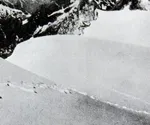
It all started in 1958 when Hillary and the British physiologist and mountaineer Griffith Pugh questioned whether Everest (29,031 ft or 8,848.86 m) could be climbed without supplemental oxygen, possibly achieving this by acclimatising at 20,000 ft for several months. Hillary surmised that the prolonged period required for acclimatisation meant that this trek would be far more costly than his first Everest climb. This was a fair assumption to make, as the expedition with which he made his first summit is said to have cost between £15,000 and £30,000, and took seven weeks to reach the summit, including leaving Kathmandu, and acclimatising over a period of weeks at multiple camps up the mountain. Cost was just one of several barriers to climbing Everest in the 1950s. By the time the Silver Hut Expedition set off, just 7 other people in 3 different expeditions had summited Everest between Hillary's first success and September 1960. Further, these expeditions are the only expeditions that are believed to have even occurred during this time. This time, Hillary estimated that this experiment could cost up to $120,000 USD.
9 October 2023 - Approx. 3 min read
1980: Colin Gardener and his neighbour Helena Bradley see a lioness near Gardener's home in Wellington. Which is notable because New Zealand has no indigenous big cats. A police search around the Meadowcrofts property turns up nothing. A few days later, Gardener and another neighbour, Maurice Bradley, catch another glimpse of the creature and determine that it is not a lioness but just an unusually big ex-domestic cat. - 2021: After 23 years, Christchurch City Council call time on paying The Wizard of New Zealand. The Wizard aka Ian Brackenbury Channell, was paid $16,000/year by the council for acts of wizardry and other wizard-like services. At the time, Channell has received $368,000 for his services.
13 September 2021 - Approx. 1 min read
As I've written in the past, NZ Skeptics often receive comments in our inbox and people often criticise us for parroting the mainstream media (usually abbreviated to MSM). Recent commenters have criticised us for sharing articles from the BBC, amongst others.
16 August 2021 - Approx. 2 min read
Welcome to the NZ Skeptics newsletter.
12 April 2021 - Approx. 1 min read
Research by the American Center for Countering Digital Hate has revealed that almost two-thirds of all misinformation about vaccines being spread on social media platforms such as Facebook and Twitter arose from just twelve individuals and their associated organisations. And on Facebook they account for 73% of all anti-vax content.
15 February 2021 - Approx. 3 min read
One of the joys or risks (depending on your perspective) of writing these newsletters is that we sometimes receive negative feedback. A few weeks ago I wrote about QAnon and the realisations that believers were having that the predictions of Q hadn't panned out. From this I received the following feedback. My comments in [red].
4 June 2017 - Approx. 2 min read
Although there is a history in skepticism of people being "skeptical" of climate change, modern skepticism understands that there is a broad consensus amongst scientists that climate change is both real and caused by humans.
1 February 1991 - Approx. 4 min read
"Repetitive strain injury": an iatrogenic epidemic of simulated injury.
1 November 1990 - Approx. 4 min read
Anabolic steroids were in the news during the Commonwealth Games and Dr Michael Kennedy has been studying their use by athletes for the past ten years. His conclusion is that "anabolic steroids have no effect on aerobic sports, such as running and swimming, but may lead to a small improvement in the performance of trained weightlifters." He quotes a 1972 study that showed when athletes were given placebo and told they were steroids, they got stronger and trained harder.
1 August 1990 - Approx. 4 min read
A recent leading article in The New Zealand Medical Journal looked at Diet and Behaviour. Food intolerance was strongly associated with the mother's level of education. A little knowledge is a dangerous thing? As regards the putative link between sugar and problem behaviours the article says "'...it is just as likely that restless or aggressive children seek out more sugar as that sugar causes the inappropriate behaviour." The authors conclude "...it should be recognized that modification of a particular child's diet is almost always accompanied by changes in management."
1 February 1989 - Approx. 2 min read
President Reagan has made executive decisions, including the scheduling of a missile treaty signing, based on advice his wife received from an astrologer, according to sources close to the Reagans.