24 November 2025 - Approx. 3 min read
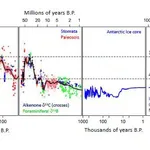
I am writing in the hope that my current confusion might be cleared up by the membership of the NZ Skeptics. This concerns climate change, and more specifically the need to reduce carbon emissions – the level of CO2 in the atmosphere.
9 June 2025 - Approx. 17 min read
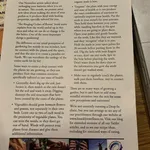
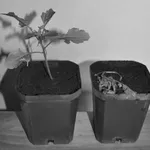
Recently someone shared with me an article from the March 2025 issue of the “Brooklyn Tattler”, a monthly magazine for the residents of Brooklyn, Wellington. The article in question was written by someone from the Brooklyn Wellness Hub, a group of “natural” health practitioners local to the area. The obvious nonsense that I was being shown was part of a list of tips for growing vegetables and fruit in your garden, and it advised readers to:
27 April 2021 - Approx. 1 min read
Essential oils are one of those trendy products that seem to be very popular at the moment, and they seem to be a great money-maker for their manufacturers and retailers, with the estimated market size of over $17 Billion dollars globally in 2017.
15 March 2021 - Approx. 1 min read
Rebecca Booth, from Fairlie in the South Island, recently found a seven leaf clover. The Stuff article about this find mentioned that this is not the first clover-related find Rebecca has had. Apparently earlier this year, in January, she found both four and five leaf clovers.
1 November 2018 - Approx. 18 min read
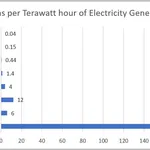
New Zealand has a nuclear free policy. In relation to weapons, I totally agree with that. A nuclear bomb is an obscene and horrible device and the sooner the world can see its way to eliminating all of them, the better. But what of nuclear energy? Should that share the same horror? Lots of people think it does, but why?
1 November 2018 - Approx. 4 min read
Air New Zealand has just announced The Impossible Burger is now available to a minuscule number of their customers, a move described as an “existential threat” by New Zealand First's Mark Patterson. So what is all the fuss is about?
1 February 2014 - Approx. 3 min read
Alison Campbell learns some interesting facts about water chemistry
1 May 2012 - Approx. 5 min read
Pictures don't lie, right? Of course they do. And they were deceiving us long before Photoshop made the manipulation of images almost child's play.
1 November 2010 - Approx. 3 min read
Alison Campbell finds some claims about raw foods hard to swallow.
1 November 2001 - Approx. 1 min read
Scientific studies suggest "organic" foods are neither healthier nor safer than genetically modified products or those grown conventionally.
1 February 2000 - Approx. 12 min read
The Swedish chemist Berzelius coined the term "organic" for substances that could only be made by living organisms and not synthesised by humans. His German friend Wöhler synthesised urea in 1828 proving Berzelius wrong: there was no such distinction. Another brilliant German chemist, Liebig, then used "organic" to mean carbon-compound chemistry, extending this to include the chemistry of living organisms and so beginning biochemistry.
1 May 1993 - Approx. 4 min read
Our everyday "cuppa" comes from the plant Camellia sinensis and it, together with a number of other common drinks including coffee, cocoa, guarana and maté contain small quantities (10-100 mg per cup) of caffeine, a mildly stimulatory alkaloid. In addition many people enjoy hot and cold beverages made from a wide variety of other herbs such as chamomile and dried raspberry leaves.
1 February 1991 - Approx. 7 min read
Dr Michael Evans, a former student of Atlantic College, came last week to give a Friday evening lecture on anthroposophical medicine (A.M.). From what J can gather, it seems to be a system of medicine founded at the instigation of Rudolph Steiner, who claimed that a science limited to what was perceptible by the physical senses and using only analytical thinking would not be capable of understanding the fundamental life processes of man. A.M. believes that many illnesses are not wholly or ultimately explicable in terms of disordered physics and chemistry, but that the subject of the illness is lacking in some "vital essence" or that the vital essence has been disturbed in some way. It questions the reductionist approach of breaking down processes to the cellular or molecular level because: :