8 January 2024 - Approx. 8 min read
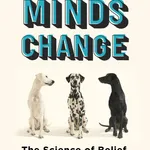
I recently read David McRaney's book (on Kindle, from Amazon) on the recommendation of Melanie Trecek-King - one of our international guests at last year's conference in Dunedin. I was interested to read the book to gain insights into how to change peoples' minds about things that they're wrong about - or perhaps change my own mind about things I'm wrong about!
16 January 2023 - Approx. 1 min read
This is my first newsletter for the year. I had an enjoyable Christmas and New Year and had some nice time off from work.
11 April 2022 - Approx. 2 min read
This evening I attended a meditation session with the OTO (Ordo Templi Orientis - an occult group made famous by Aleister Crowley). I'm not sure what I expected, but the session was advertised as a welcoming environment where it was okay to attend but not participate. This sentiment was echoed by the host when myself, Bronwyn Rideout and others arrived at the event. We were walked through several meditation techniques, starting with singing a song accompanied by a live guitar - Kiss the Earth by Ajeet Kaur (you can have a listen at the top of this article).
21 February 2022 - Approx. 3 min read
Adventures of a Psychologist by Michael Corballis 2021 published by Routledge. Available on Amazon.
1 November 2017 - Approx. 2 min read
I enjoy a good coffee, a bit of light astrophysics chat with Neil de Grasse Tyson, and spring with its blossoms and daffodils.
1 February 2012 - Approx. 3 min read
Michael Edmonds' article in the latest issue (NZ Skeptic 101) was very interesting, especially laying out the groundwork for non-chemists. If I still had science classes, I would have them all read it and may pass it on to some friends to use.
1 November 1997 - Approx. 1 min read
Scientology recently offered $12 million to FACTNet, an Internet library providing information on the dangers of mind control and cults, including information critical of Scientology. FACTNet's directors turned down Scientology's proposal, because it contained terms they considered unacceptable.
1 August 1992 - Approx. 2 min read
It's a mindbending situation, but I guess you'd have to call me a skeptical believer. Like parapsychologist Susan Blackmore, personal experience inclined me towards the idea that supernatural events really happen.
1 May 1990 - Approx. 5 min read
The following article appeared in The New Zealand Herald of 6 September 1989. It was the most comprehensive coverage of the 1989 Conference to appear in the national press.
1 August 1989 - Approx. 2 min read
This is the definitive book on the scientific arguments for creationism, it is exhaustive and thorough. It is a massive book, 550 double column pages, 600 references cited, a 13 page index, 54 chapters with about 10 illustrations per chapter. As far as I can see, it covers all the main points at issue; the nature of Science, pseudoscience, entropy Omphalos, radioactive dating and creationist arguments for a young cosmos and young earth. However it is especially strong on geological arguments as befits the author, formerly Professor of Geomorphology at Columbia. Nearly half the book deals with this aspect, covering the Biblical view of the Flood and creationist ideas on plate tectonics, the rapid deposition of sedimentary rocks, evaporites and petroleum and ore deposits. It then deals with the scientific account of these matters and finally gives a thorough account of our evolutionary history. It is especially good on human evolution.
1 February 1989 - Approx. 6 min read
I have been reading Neil Postman's Amusing Ourselves to Death (Methuen 1987) and very interesting it is too. Postman takes some vicious swipes at Television; although tolerant of Dynasty, Dallas and Sledge Hammer he is unrelenting in his condemnation of its 'best' programmes. His main point is that TV is killing off our abilities to think and express ourselves logically. I will summarise briefly; to catch the full flavour of Postman's invective you will have to read the book.
1 August 1987 - Approx. 1 min read
Your state of mind can make you sick or speed your recovery from illness. This idea is hardly new but only now is it gaining respect and attention from Western doctors. The result is a variety of new medical therapies being developed for the future. This approach, called holistic medicine, is based on four general principles.
1 November 1986 - Approx. 1 min read
To investigate scientifically and with an open mind, claims and events of an apparently paranormal nature. 2. To report the results of these investigations and where possible, to provide rational, scientific explanations. 3. To provide reliable information about paranormal claims. 4. To encourage a more critical attitude to pseudoscience and to bogus paranormal claims, and to alert people to the dangers of uncritical acceptance. 5. To increase public awareness of the difference between legitimate science and pseudoscience. 6. To investigate the psychological, social, and ideological factors behind belief in the paranormal.