Herewith Climate
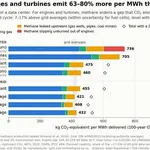
On The Climate Brink on the 27th of October Zeke Hausfather wrote that “Off-grid data centers have 60-80% higher emissions”.
On The Climate Brink on the 27th of October Zeke Hausfather wrote that “Off-grid data centers have 60-80% higher emissions”.

My wife and I have been away on holiday for the last month in the UK. If you're a regular reader of the newsletter you'll have noticed that Mark dropped me in it for turning up at Loch Ness in Scotland to check out the nessie experience. Mark set the expectation that I'd be writing an article about it.
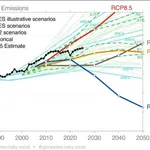
On The Death of RCP 8.5 (RCP = Representative Concentration Pathway of CO2) This was reported on by Zeke Hausfather et al, 19/5/26 at The Climate Brink.
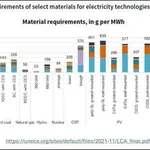
In a recent Skeptics Newsletter, I was a bit miffed about what I see as a lack of scepticism around the so-called 'energy transition'. Patrick highlighted a blog projecting that global investment in renewables would soon be more than spent on fossil fuels. And then there was the link to rewiring Aotearoa. I think it's important for us to be a bit skeptical about this so-called energy transition - which isn't happening, despite all the hype. There has indeed been addition of renewable energy, but no transition because we keep using more energy (from 2021 to 2024 fossil fuel additions still outstripped renewables 2.6:1).
It's always good when we get feedback to this newsletter, and it doesn't even have to be positive! Unlike many groups, we're the kind of organisation that relishes constructive criticism and correction - and so this week's first three articles are great to have received. Firstly Mike Joy has taken the time to expand on the concerns he had about an area of climate change and fossil fuel dependence that he thought we haven't covered very well in the past. Patrick Medlicott has responded to Mike's concerns, agreeing with him that renewable energy sources aren't currently replacing fossil fuels - they're just being added on top of fossil fuel use. On a tangentially related topic, Tyler has written about Katrina's treatment of microplastics, arguing that although we don't yet know if microplastics are a problem, it may be prudent to treat them as if they are.
This is a summary of the talk given by Dr Roderick Carr, the previous New Zealand climate change Commissioner, to Ora Taiao, the group of health professionals concerned about climate change and health.

There are so many things going on in the climate space at the moment that it is difficult to keep up with them all. My sources of recent information are Dr Catherine Dyer, Bernard Hickey, and Peter Bale from the Kākā - a weekly podcast on political economy, climate change, and international affairs (from Dr Robert Patman University of Otago), together with invited guests each week from other areas of interest including economists and politicians. I believe this is a worthy site of usually peer-reviewed information concerning these topics. I would like to make a plug for the Kākā, which unfortunately is a pay site (but most reliable news these days is). For under $20 a month, one receives a daily briefing and a set of links to other sites (also often unfortunately behind paywalls). Many people might say it is mildly left of centre, and it is certainly not particularly complimentary of our present government. It is available through a platform called Substack, interestingly enough run by a young expatriate New Zealander.

It appears to be common knowledge that the petrol with a higher octane rating means more power and better fuel economy. The purpose of this short article is to explain why this is a myth, and why both fuels will work as well in a car designed to run a particular fuel. So, spending extra money on premium fuels when your car's owners manual says 91 is suitable, will not give you better economy or more power.
In depressing (but expected) news this week, it seems that it's highly unlikely we'll be able to constrain global warming to 1.5C, and that we're on a path of irreversible damage to the climate which may well lead to catastrophic failure of the climate and likely extinction of vast numbers of species including humanity. It may not happen in my lifetime, but I do worry for the future young people today.

You probably already heard that Exxon knew about climate change back in the 70s and 80s, and chose to double down on the misinformation, but now, as an EV driver myself I was interested to learn the latest news to come out about climate change denial relating to big Auto, specifically Ford and GM. In the first part of an investigation by E&E News, we find out that the automakers were well aware that car emissions caused climate change 50 years ago. Their own scientists were telling top executives that emissions from the vehicles they were producing would lead to climate change.

A friend sent me a video the other day about a fuel saving device for your car. The video was quite well done, and like so many videos on FB had no voice over - instead having a soundtrack, along with large subtitles telling the story:
Readers of the NZ Skeptic may find this a bit hard to believe, but New Zealanders seem to be a fairly sceptical bunch overall (Sunday Star-Times, 11 September).
I have just visited another universe; it seems a much more interesting place than the dull old world we are forced to inhabit.
A Sprite in your Spirit, a Bogle in your Benzine, a Fury in your Fuel, a Greyhound in your Gasoline. With acknowledgement to the oil company which, many years ago, urged us to "Put a Tiger in your Tank."
It may interest skeptics to know that I have solved the world's energy problems. The concept is surprisingly simple... but then works of great brilliance often are.