20 September 2021 - Approx. 3 min read
I have three school age kids, and so I'm no stranger to Blue's Clues. I've watched many episodes with both Steve (Steve Burns) and Joe (Donovan Patton) hosting the show alongside the animated dog Blue, following the clues each week. Steve left the show back in 2002, but he made the news recently when he released a feel-good video:
1 August 2019 - Approx. 3 min read
You may remember an article we published about unreasonable fears around nuclear power. It argued that the price of energy in human lives has been much higher in other forms of energy, with coal as the clear leader in causing harm.
1 February 2019 - Approx. 4 min read
I was very honoured at this year's conference to be awarded the NZ Skeptic of the Year. That honour has made me reflect on what it means to me to be a skeptic and why I decided to jump into the role of tweeter as well as editor.
1 May 2018 - Approx. 1 min read
In case you've missed it there is an awful lot going on in the Skeptical world all the time, right here in New Zealand.
29 April 2018 - Approx. 1 min read
I've found another fun conspiracy theory - V2K. Weirdly, it stands for "Voice to Skull" and is a technology where voices can be beamed directly to your head. This is another conspiracy theory that until recently was new to me. The idea is based on the fact that microwaves can be used to create a clicking noise inside someone's head. This is known as the microwave auditory effect, and was discovered in World War Two by people who worked near radar devices. The likely mechanism for the clicking is that parts of the inner ear are being rapidly heated up by the radio waves. The microwaves can be varied to create what sounds like a human voice inside someone's head, which is pretty cool.
1 February 2018 - Approx. 3 min read
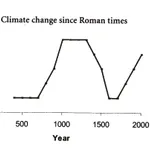
It has felt this summer like we are on a highway to hell. The roads themselves have been literally melting, and we had better get used to it. We are heading to a new climate reality, with more and more records being broken around rising temperatures, fires, droughts and other extreme weather events.
5 February 2017 - Approx. 1 min read
This is an argument I've never heard before against an idea I occasionally hear - that belief in science is just like religion, because it requires faith. In fact, I last heard this argument only a couple of weeks ago.
1 May 2012 - Approx. 5 min read
Alison Campbell considers the current state of tertiary education.
1 May 2005 - Approx. 10 min read
When it comes to environmental issues, it's not always easy for a skeptic to decide where to stand
1 August 2001 - Approx. 2 min read
The Misinformation Age has arrived at last
1 August 1988 - Approx. 8 min read
Since the founding of CSICOP in 1976, and with the growing numbers of localized skeptical groups, the skeptic finds more ways to state his or her case. The broadcast and print media, along with other forums, provide more opportunities for us to be heard. For some of these occasions, we have the luxury of carefully planning and crafting our response. But most of the time we have to formulate our response on the spot. But, regardless of the circumstance, the critic's task, if it is to be carried out properly, is both challenging and loaded with unanticipated hazards.
1 May 1987 - Approx. 4 min read
David gave an account of three psychics he has studied, Kreskin, Geller and Colin Emery. It has taught him a great deal about human nature.
1 May 1987 - Approx. 4 min read
Pseudoscience in its various manifestations is now enjoying enormous popularity, is increasingly well organised and politically powerful. We can not identify pseudoscience by its errors. Seven hundred years ago Astrology was as wrong as now but was not pseudoscience, we might call it protoscience. The discovery of Polywater and the rush of confirming experiments was not pseudoscience. We know now that it was due to contaminated apparatus and wishful thinking and no one now has any evidence for it, so eventually its errors became known,